War does not justify silence on human rights violations – Tetiana Pechonchyk at the presentation of a study on journalists’ self-censorship
On 12 December 2025, in Kyiv, the Ilko Kucheriv Democratic Initiatives Foundation, in cooperation with the Kyiv International Institute of Sociology (KIIS), presented the results of a new study on journalists’ self-censorship in wartime. The study was part of a project implemented by the foundation with the support of the Friedrich Naumann Foundation for Freedom in Ukraine. It was a continuation of previous studies conducted by the Human Rights Centre ZMINA in 2019 and 2023, in collaboration with the Democratic Initiatives Foundation and with the support of Freedom House.
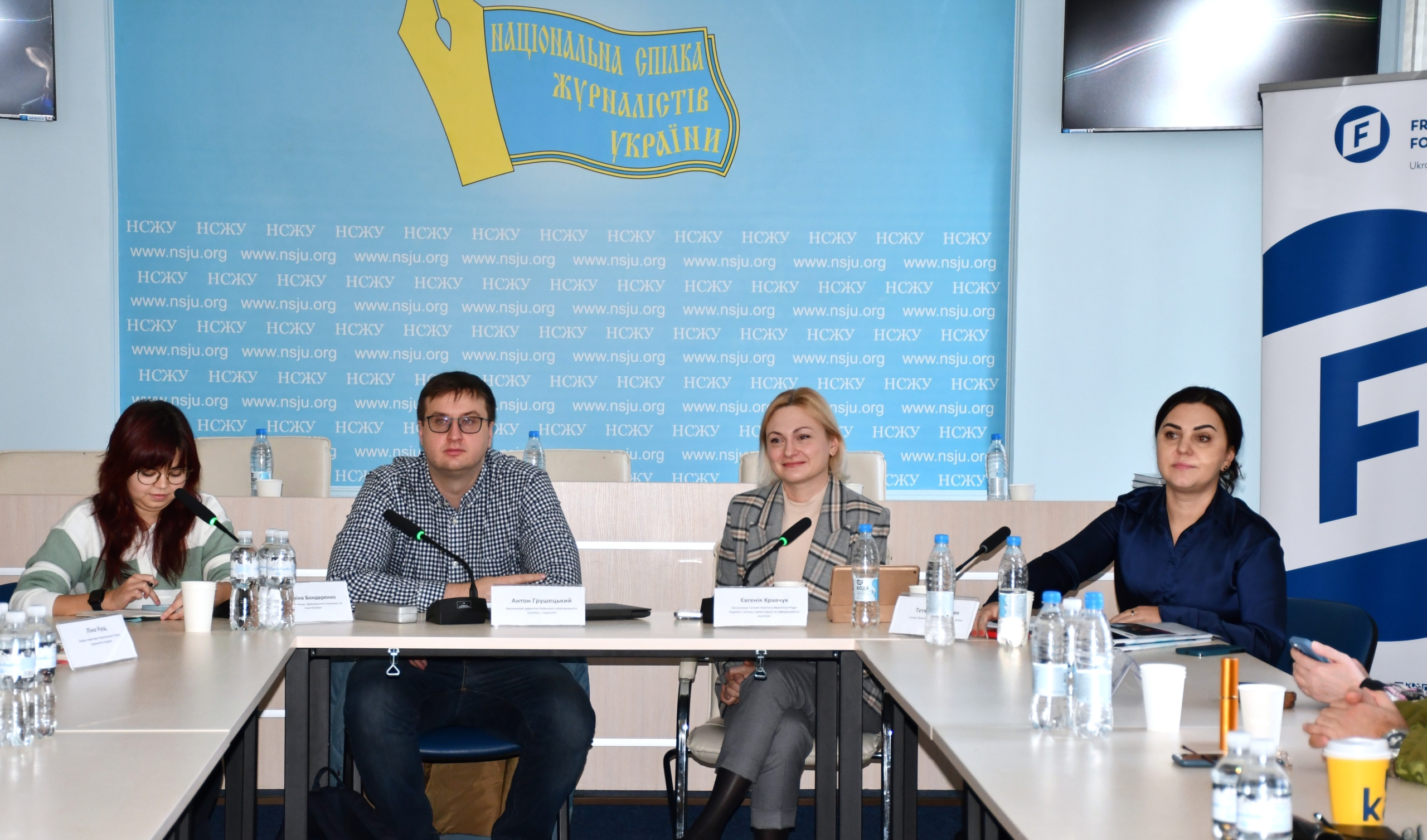 Photo: Polina Bondarenko, Anton Hrushetskyi, Yevheniia Kravchuk, Tetiana Pechonchyk
The event was attended by representatives of national and regional media, journalist associations, professors and students from relevant universities, as well as members of the Ukrainian parliament.
Against the backdrop of war, 73% of journalists have resorted to self-censorship at least once: key conclusions of the study
According to the results of the study, a high level of self-censorship was observed among the surveyed journalists, largely depending on the nature of the news stories. 73% of respondents reported having decided at least once not to publish a piece of material. The highest level of self-censorship was observed in stories related to potential violations in military structures (in particular, denial of medical assistance – 61%, use of force by the Territorial Centres of Recruitment – 36%). This is consistent with the findings of the in-depth interviews, in which journalists described issues related to mobilisation and the activities of military authorities as the most sensitive and risky to publish.
Although most journalists explain their reluctance to publish by citing doubts about the accuracy of the information (up to 69%), researchers emphasise that fact-checking is only part of the solution. This is especially true when it comes to news involving military structures.
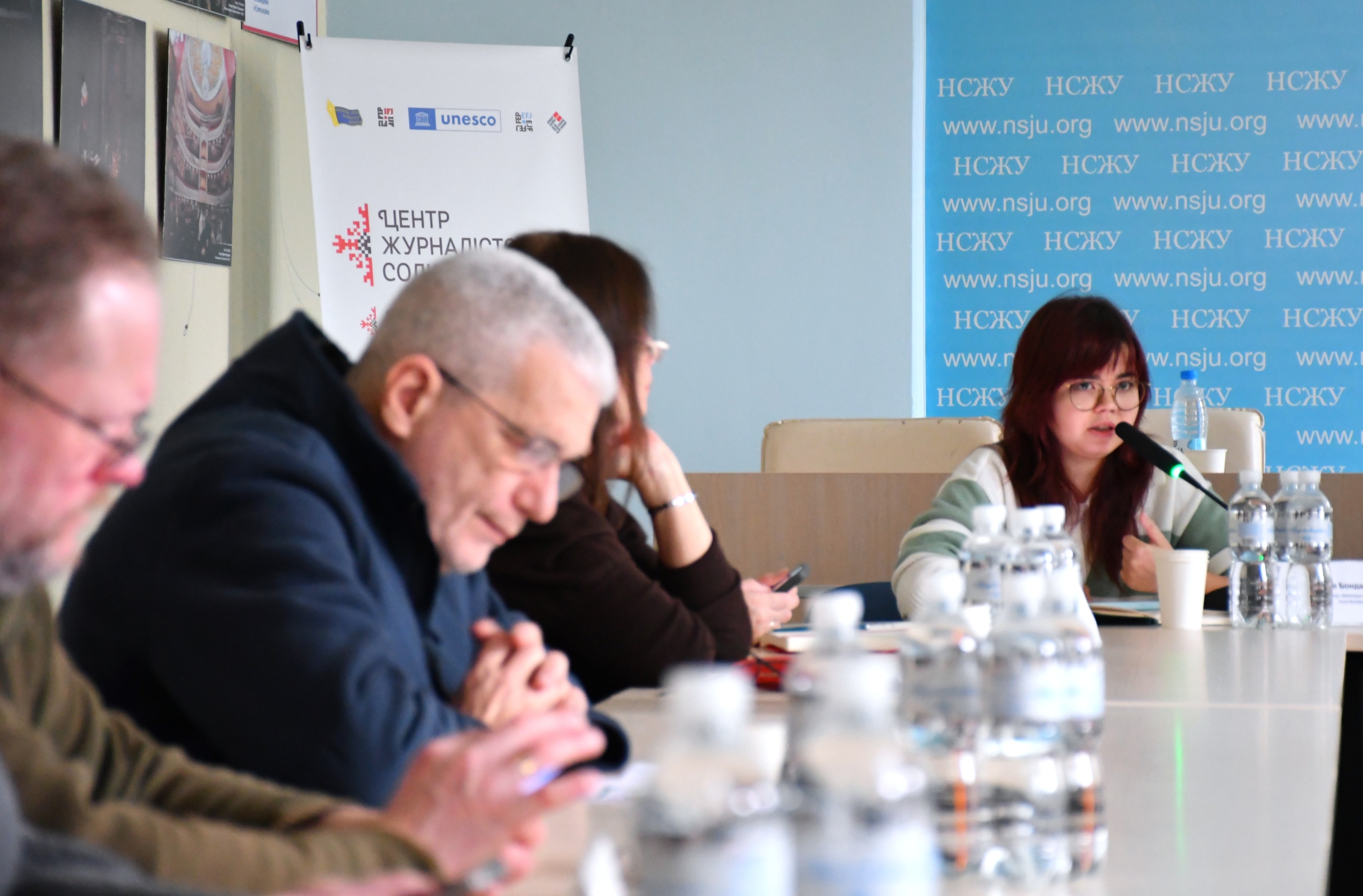 Photo: Polina Bondarenko
In many cases, other, much more complex factors influence the decision: fears that the material could harm the country’s defence capabilities; the risk that the news will be used by Russian propaganda; ethical doubts about whether publication will harm specific military personnel; excessive caution, when journalists are afraid to publish even socially important information if they cannot perfectly comply with all standards.
The report refers to this as “legitimising self-censorship through standards”: journalists may reject a topic not because it is poor quality or unreliable, but because they are concerned about the potential harm to the country in a state of war.
These results, as emphasised by Polina Bondarenko, an analyst at the Ilko Kucheriv Democratic Initiatives Foundation, demonstrate that journalists’ behavioural decisions are much more complex than they seem, and that the context of changing perceptions of news is critical.
How a full-scale invasion changed journalistic practices for disseminating information
After the presentation of the research results, the participants in the discussion shared their observations on the factors that influenced editorial decisions before and after Russia’s full-scale invasion of Ukraine.
Nataliia Lyhachova, Editor-in-Chief of the Detector Media publishing group, spoke about the influence of social pressure and the fear of “going against the trend”, especially on polarised topics: “People are afraid to take a step that could be perceived as wrong, and this has a significant impact on the choice of topics and the wording of materials“.
Oksana Romaniuk, Director of the Institute of Mass Information, drew attention to the important difference between self-censorship and professional caution: “Not publishing unverified information is not self-censorship, it is professionalism. Journalists must be able to distinguish risky information from unverified rumours“.
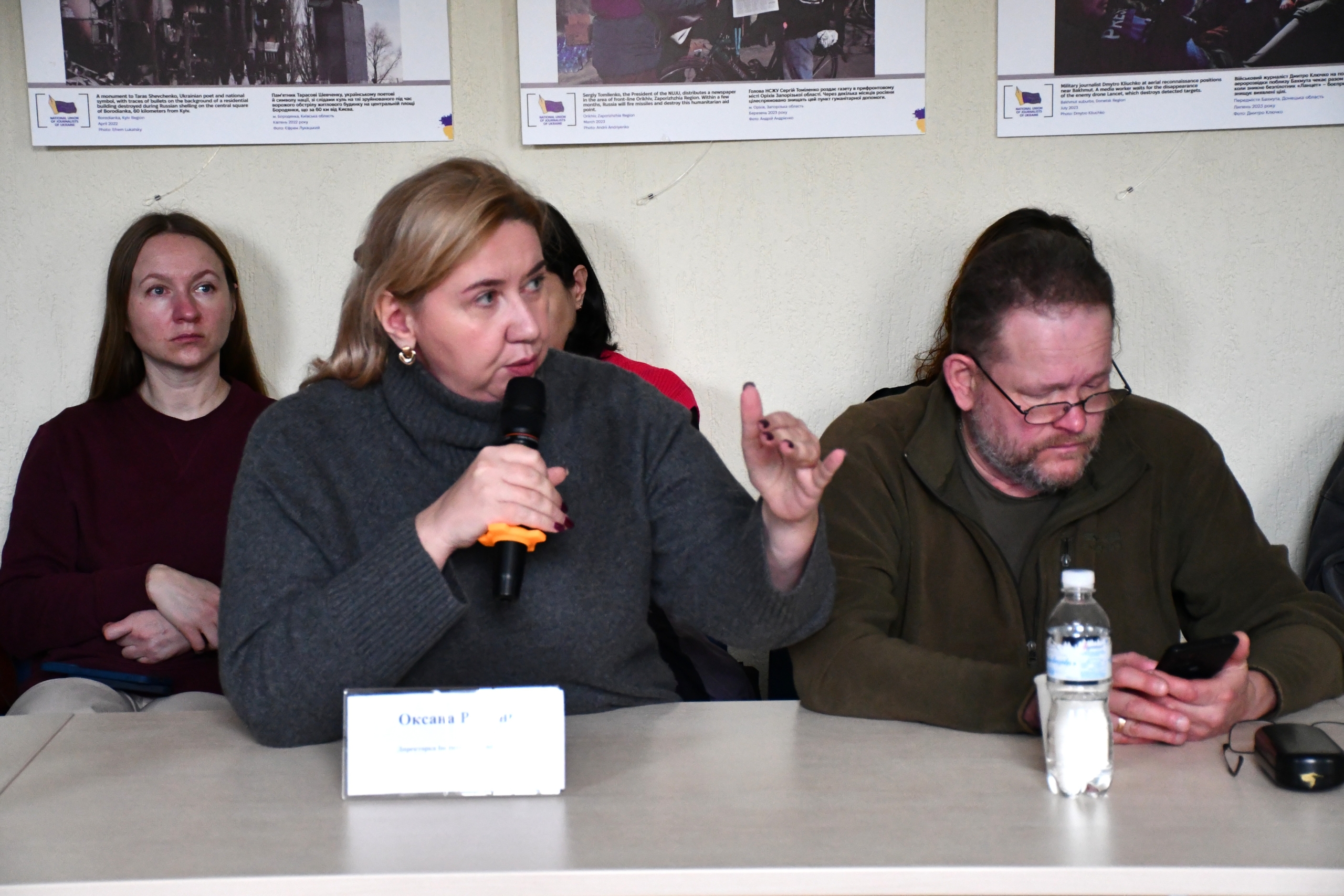 Photo: Oksana Romaniuk
During the discussion, particular attention was paid to the role of anonymous Telegram channels, as mentioned by Ukrainian MP Yevheniia Kravchuk. According to her, these channels increasingly distort the context of news, forcing editorial offices to act more cautiously: “When anonymous sources or channels appear that actively manipulate facts, editorial offices are forced to double-check any information. This creates an atmosphere of heightened caution and sometimes indirectly encourages self-censorship“.
She added that this practice does not always mean abandoning important topics, but it does significantly influence the wording of articles and the choice of sources: “Editors often ask themselves, ‘Are we prepared to take the risk of publishing this information?’ – and the answer to that question determines whether the article will be published“.
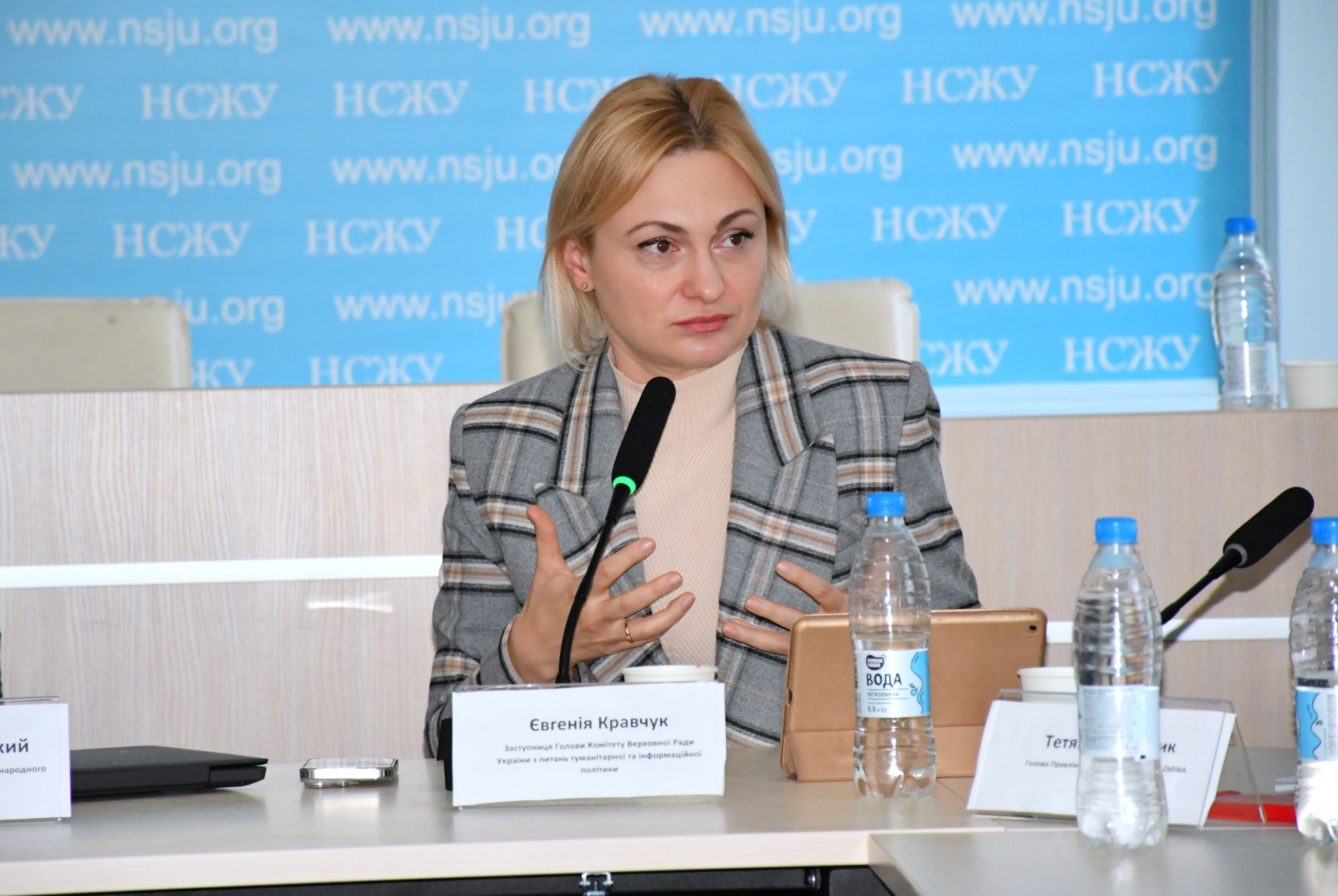 Photo: Yevheniia Kravchuk
Tetiana Pechonchyk, Head of the Board of the Human Rights Centre ZMINA, emphasised the importance of distinguishing between areas where restrictions on information are truly justified and those where silence harms society: “War justifies restrictions only where there is real damage to defence capabilities. But when it comes to corruption, human rights violations or abuse of power, the benefits of disclosure far outweigh the potential harm. We must talk about these phenomena, not silence them – otherwise self-censorship becomes dangerous for society as a whole“.
She also recalled that the results of previous studies on media self-censorship, in particular the one conducted by the Human Rights Centre ZMINA together with the Ilko Kucheriv Democratic Initiatives Foundation in 2023, show that: during a full-scale war, journalists rarely face direct bans or censorship from the state or owners – the main pressure comes from within the professional community and society.
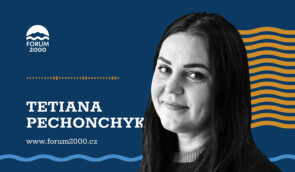
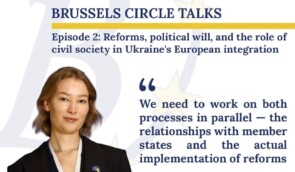
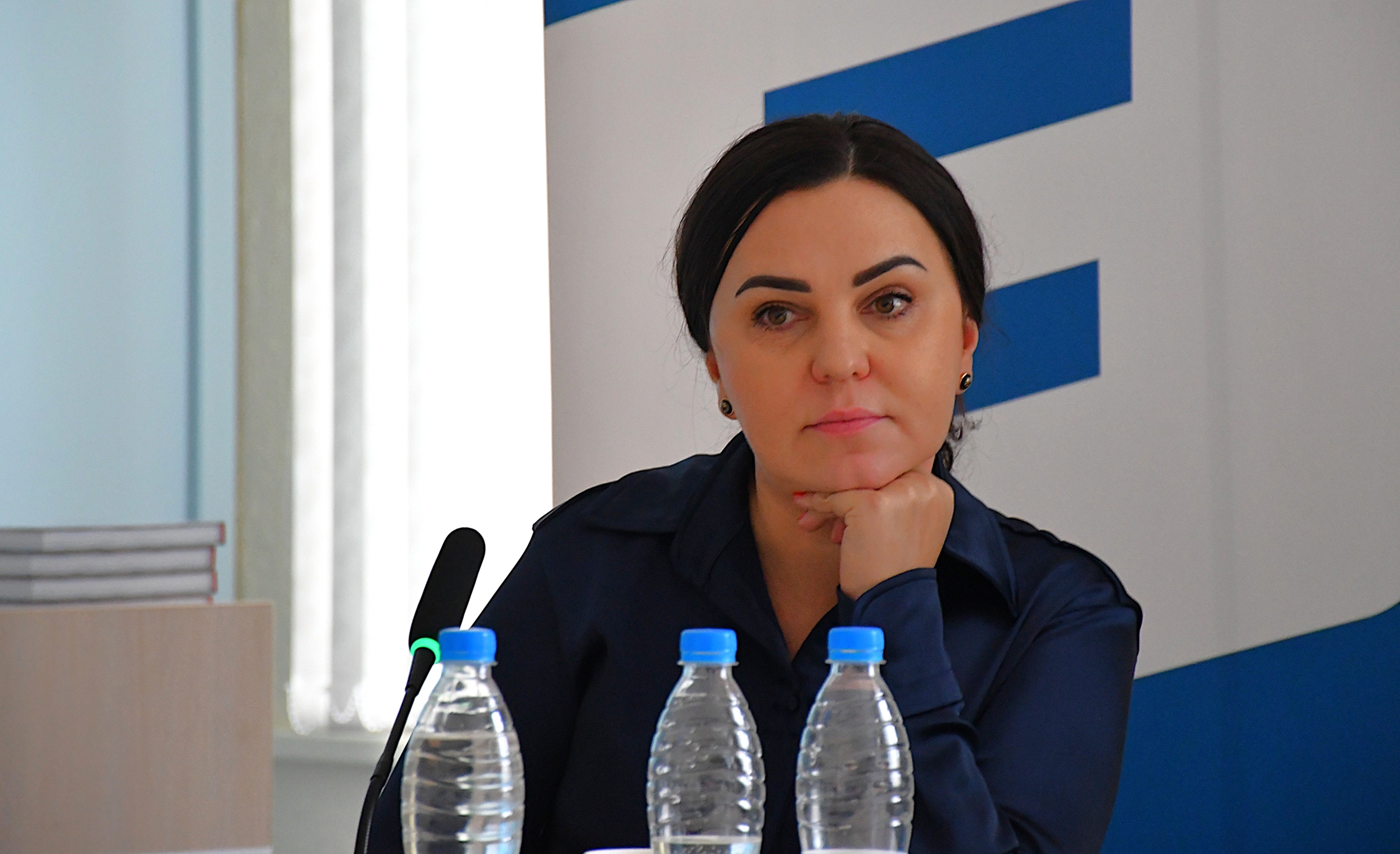 Photo: Tetiana Pechonchyk
“At that time, we saw that 78% of journalists felt an increase in self-censorship during the war, and this figure remains virtually unchanged today. In a previous study, 62% of journalists considered Telemarathon to be a form of censorship, and two-thirds said it should be shut down. But the main conclusion remained unchanged: journalists are mostly confronted not with orders from the authorities or owners, but with their own internal convictions about what can and cannot be published. So the issue of self-censorship remains very complex,” Pechonchyk noted.
The full analytical report is available on the Democratic Initiatives Foundation’s website.
You can view the previous sociological study “Challenges to freedom of speech and journalists in wartime: sociological research“, prepared by the Human Rights Centre ZMINA in cooperation with the Ilko Kucheriv Democratic Initiatives Foundation and supported by Freedom House in Ukraine, here.