Visible and unbreakable: ZMINA presented an analytical report on the impact of war on women activists in Ukraine
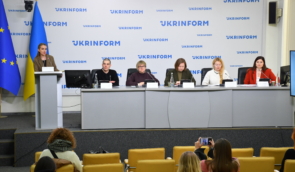
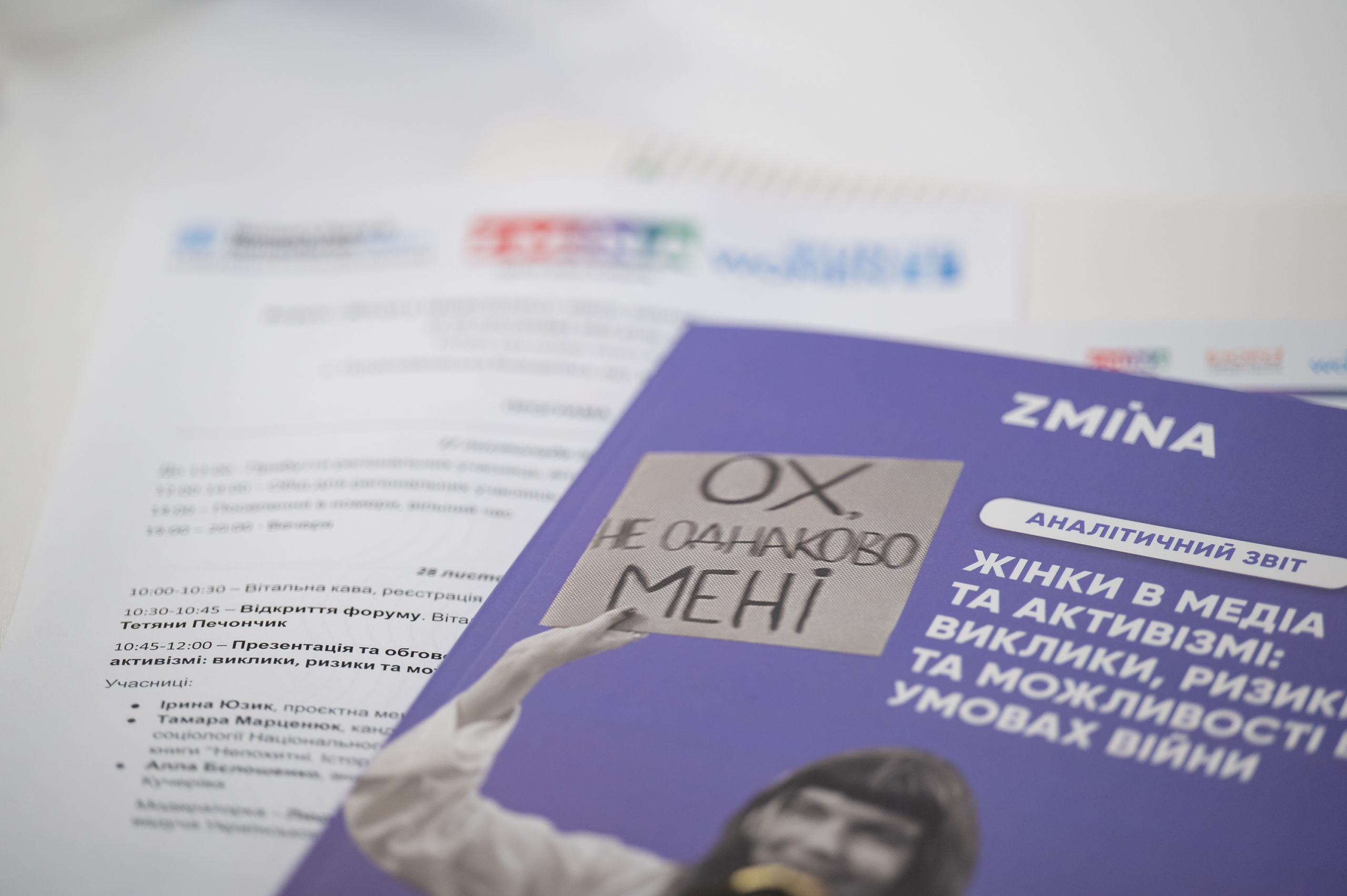
On 28 November 2025, at the Forum “Women in Human Rights: War, Challenges and the Path to Resilience”, ZMINA presented an analytical report on the situation of activists, human rights defenders, journalists and volunteers in the context of the Russian-Ukrainian war and martial law.
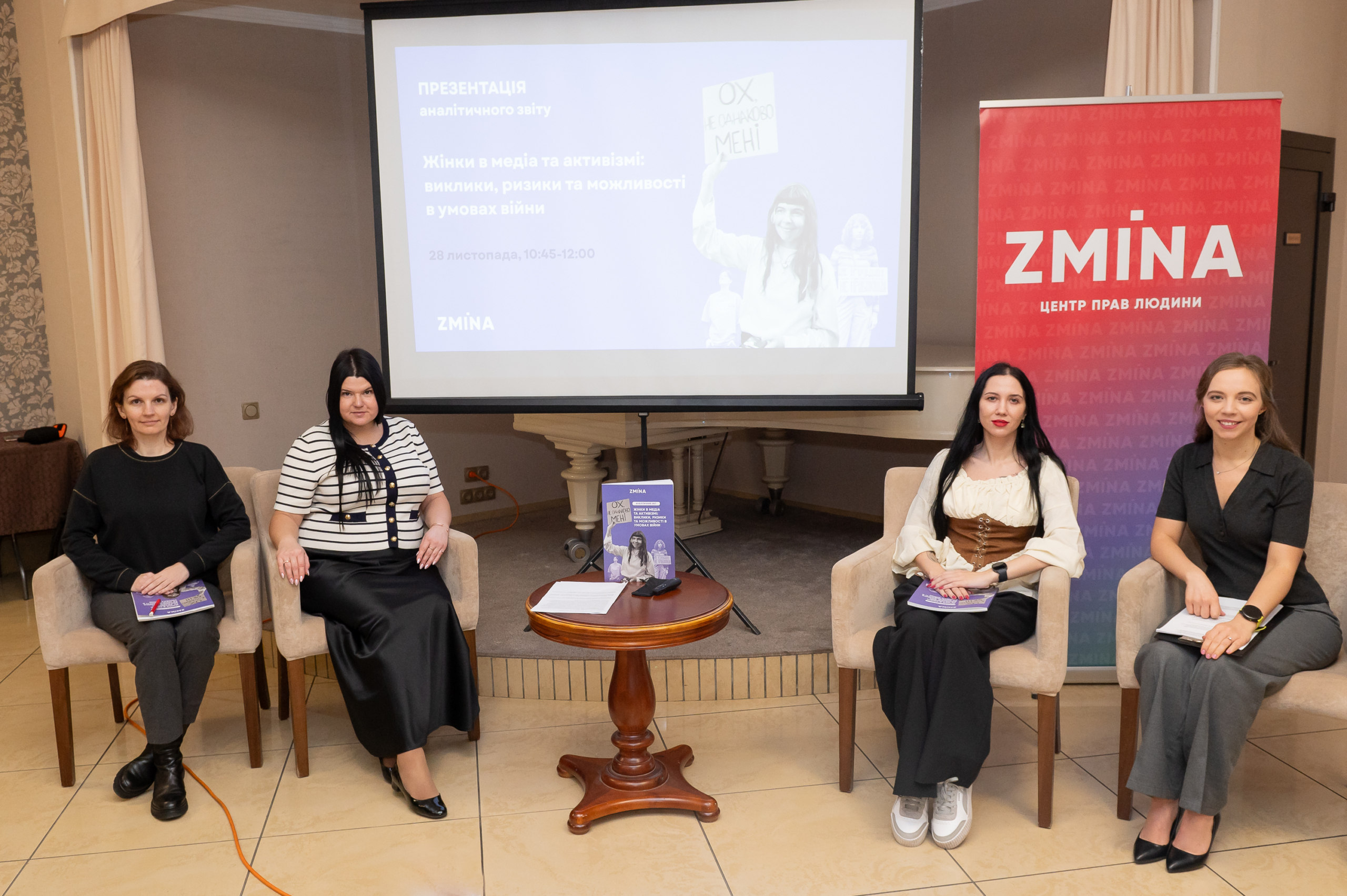 Tamara Martseniuk, Iryna Yuzyk, Alla Bieloshenko, Liudmyla Tiahnyriadno
The study “Women in Media and Activism: Challenges, Risks and Opportunities in Wartime” analyses the range of threats faced by women in the civic sector, from physical attacks and damage to property to legal pressure, online intimidation, attempts at discrediting and cyber violence. Considerable attention is paid to the gender-specific nature of persecution, which manifests itself in attempts to devalue women’s competence, attack their reputation or use sexist insults.
The final part of the study presents a set of recommendations for state institutions, international organisations and the civic sector aimed at improving the security, visibility and institutional sustainability of women’s initiatives.
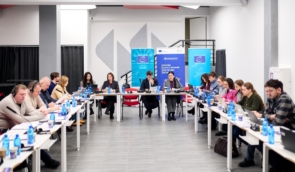
During the event, the authors of the report and invited experts discussed in detail social trends, new challenges and risks faced by women in civic life, as well as possible ways to improve the safety and support of activists in wartime. In particular, they discussed how, despite the risks, women are not ceasing their activities or changing the focus of their activism; on the contrary, because of the war, they are expanding it to include humanitarian work.
Women have become more visible in human rights and public activities
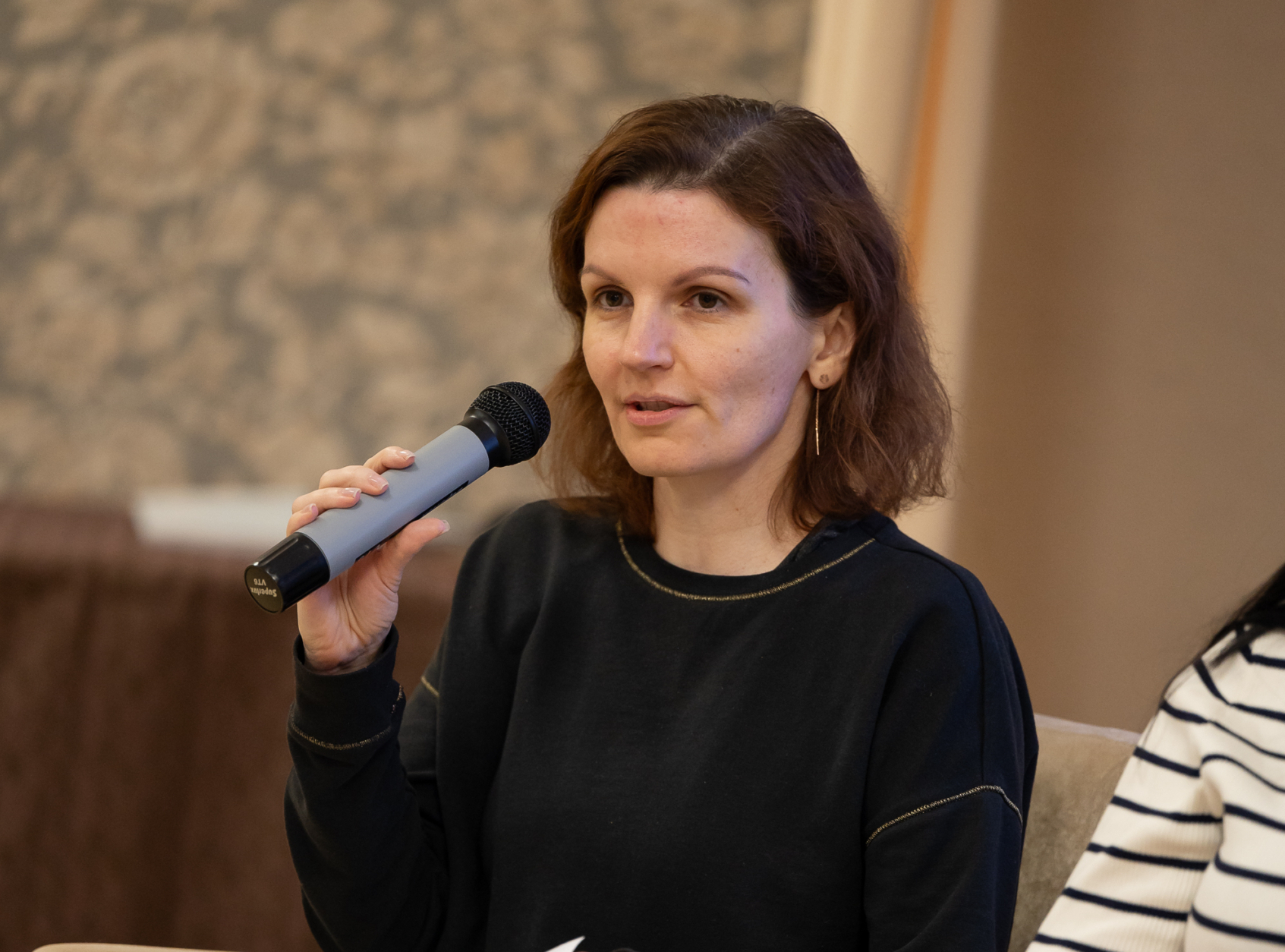
Women have been at the forefront of human rights work for many years — from the Revolution of Dignity to today’s volunteer and advocacy efforts, noted Tamara Martseniuk, candidate of sociological sciences, Associate Professor of Sociology at the National University of Kyiv-Mohyla Academy, and author of the book “Unbreakable. The History of Ukrainian Human Rights in Interviews”.
She emphasised the importance of comprehensive analytical reports that document the real situation of women activists in wartime: “This is a substantial text and a major study. It shows that women are visible in human rights protection in the broadest sense of the word“.
The researcher emphasised that the women featured in the study not only talk about their agency and achievements, but also voice the ever-changing threats they face. The most noticeable trend is the increase in digital violence and cyberstalking: “Cyber threats and digital violence are now at the forefront. And the state does not yet provide sufficient protection — these offences are mostly considered administrative, and it is very difficult to prove them“.
 Tamara Martseniuk
Martseniuk also noted that women human rights defenders need effective cooperation with the police and local authorities, and the results of the study indicate numerous gaps in this area. However, she identified networking and solidarity as key resources.
“It is networking, mutual support and solidarity that strengthen the human rights movement. There are a large number of civil society organisations and initiatives in Ukraine, and activists turn to each other for help,” said the expert.
Every woman activist in Ukraine has faced persecution
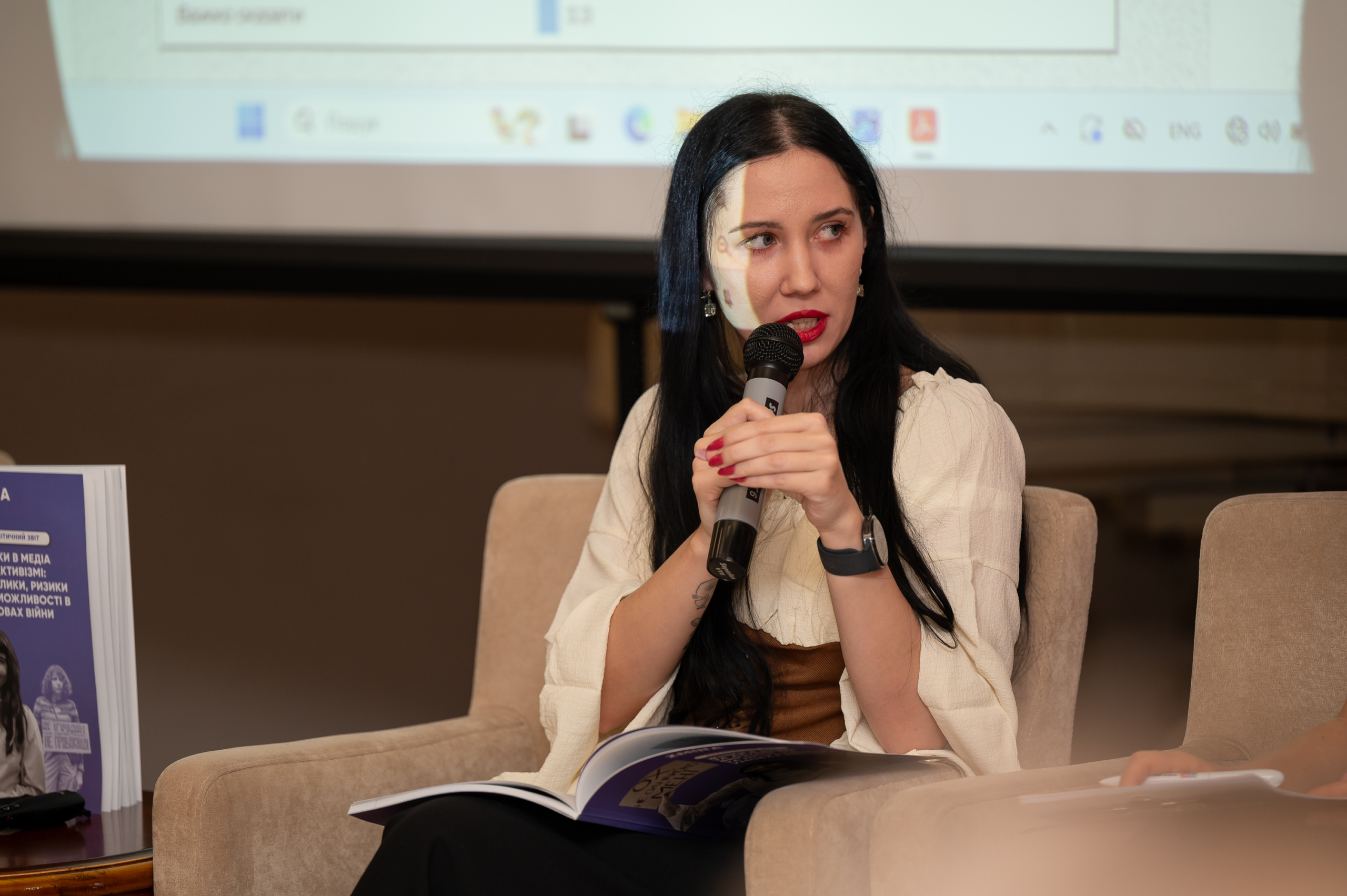
During the discussion of the report, Alla Bieloshenko, an Analyst at the Ilko Kucheriv Democratic Initiatives Foundation, presented the results of a sociological study on the risks faced by women activists in Ukraine and the impact of a full-scale invasion on their activities.
The study showed that every woman activist in Ukraine has experienced persecution.
“Not a single respondent said she had never experienced persecution. Absolutely every participant in the in-depth interviews had such an experience,” the analyst emphasised.
According to Bieloshenko, this most often involves various combinations of pressure, where psychological violence almost always accompanies physical or gender-motivated attacks: “Even during physical attacks, there is always the threat of psychological violence — threats to family, children, loved ones“.
A separate part of the speech was devoted to new challenges — artificial intelligence, deepfakes, bot farms, and the mass distribution of fakes.
 Alla Bieloshenko
The analyst emphasised that the state’s response is insufficient — from ineffective investigations to a lack of specialised psychological support: “The state is doing little to protect the rights of women activists. There is still no hotline dedicated to supporting such individuals“.
At the same time, despite the risks and pressure, women continue to work and do not abandon their mission.
“Women continue to carry out their activities and are not afraid. More than half of the respondents said they feel no fear or feel it minimally,” said Bieloshenko, adding that solidarity and networking are the main pillars of support for women in the sector.
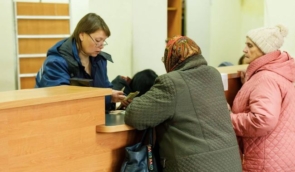
A separate section of the study shows that the full-scale invasion has not changed the priorities of activists, but has added new areas of focus, such as humanitarian aid, support for internally displaced persons and military families.
Society has returned to old practices of assault — and women are once again the first to be targeted
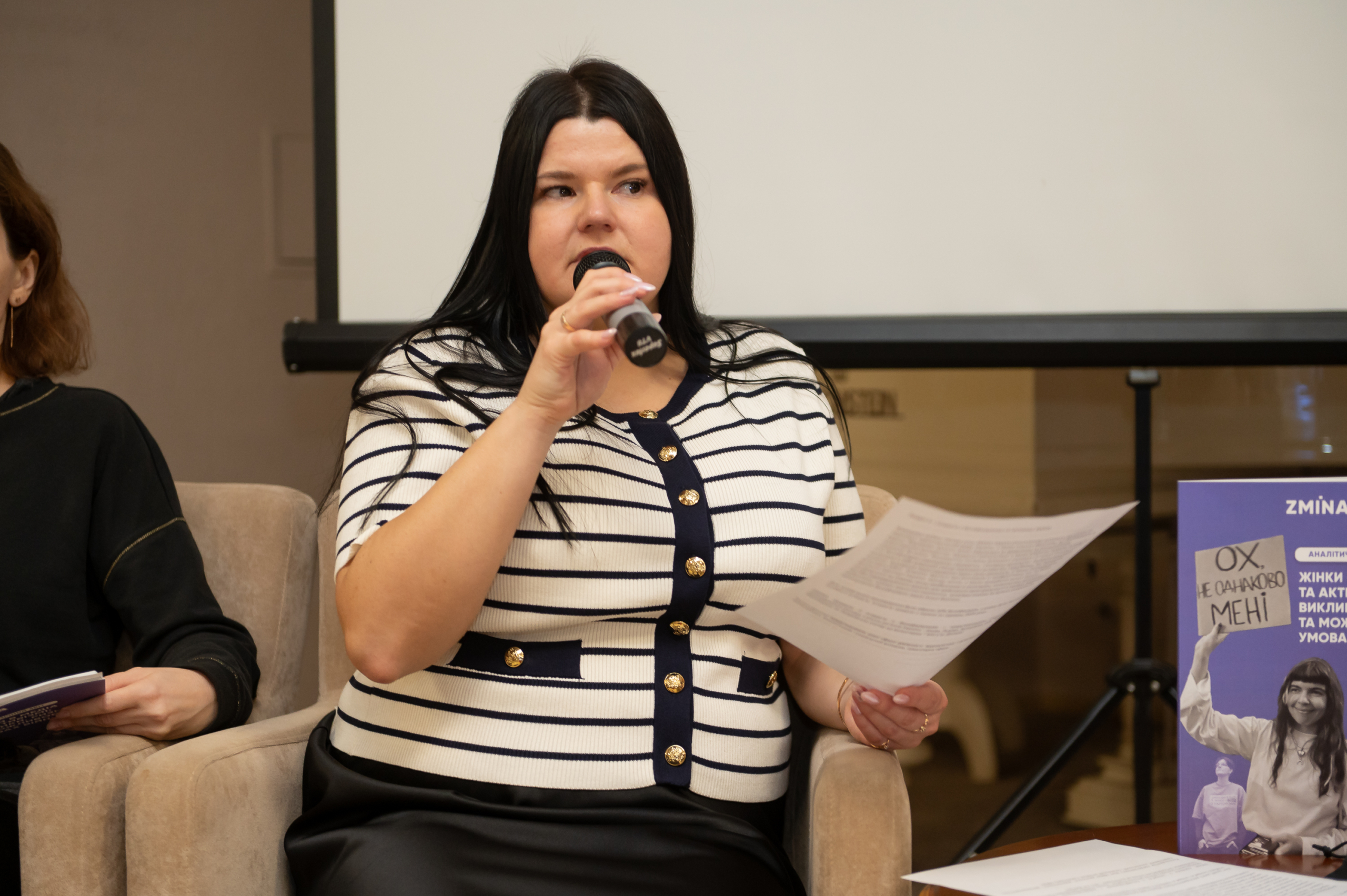
Iryna Yuzyk, human rights defender and Project Manager of the Human Rights Centre ZMINA, focused on the results of documenting cases of pressure and persecution of women activists and human rights defenders. She presented the second and third chapters of the study, prepared by journalist and researcher Anastasia Rodi.
Yuzyk noted that ZMINA has been systematically monitoring and documenting the persecution of activists throughout the country for many years. Thanks to this, it is now possible to see the overall dynamics and understand which forms of pressure have become the most dangerous: “We contact every activist who has experienced pressure or persecution, conduct in-depth interviews and document the case. This creates a large database that shows how everything has changed over the years“.
Yuzyk noted that ZMINA has been systematically monitoring and documenting the persecution of women activists throughout the country for many years. Thanks to this, it is now possible to see the overall dynamics and understand which forms of pressure have become the most dangerous: “We contact every woman activist who has experienced pressure or persecution, conduct in-depth interviews and document the case. This creates a large database that shows how everything has changed over the years“.
According to the human rights defender, in the first year of Russia’s full-scale invasion of Ukraine, society shifted its focus to other priorities, such as helping the military and the front lines. At that time, there were also virtually no attacks or persecution of activists in the territories controlled by the Ukrainian government. However, in 2023–2024, the situation began to change: “Our opponents learned to live in wartime conditions and resumed their activities. Intimidation, persecution, threats, smear campaigns, destruction of the reputation and image of women activists. They once again found the time and resources for this“.
 Iryna Yuzyk
Yuzyk also discussed in detail the various forms of pressure and threats documented by the ZMINA team: “The study recorded 32 separate cases involving women activists and journalists that occurred between July 2024 and June 2025 and were selected from a much broader database. These include various types of threats: from Russian shelling to physical attacks, damage to property, cyberbullying, obstruction of professional activities and SLAPP lawsuits, i.e. legal persecution“.
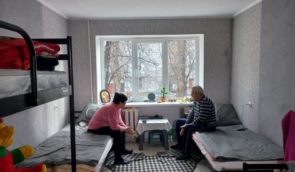
In conclusion, the human rights defender spoke about the assistance provided to women activists by the Human Rights Centre ZMINA. To date, with technical support from UN Women in Ukraine and funding from the UN Women’s Peace and Humanitarian Fund (WPHF), the organisation has already supported 68 women, 36 of whom received legal assistance and 37 received emergency assistance (some women received both types of assistance). Emergency assistance included: relocation from dangerous regions, housing rental, medical and rehabilitation support, psychological assistance (the most common requests), and protective equipment: bulletproof vests, helmets, tourniquets, surveillance cameras, and panic buttons.
“We don’t just document — we rescue women from danger… Activists often said, ‘Without exaggeration, this changed my life. Help came at a critical moment — and gave me the strength to hold on’,” said Iryna Yuzyk.
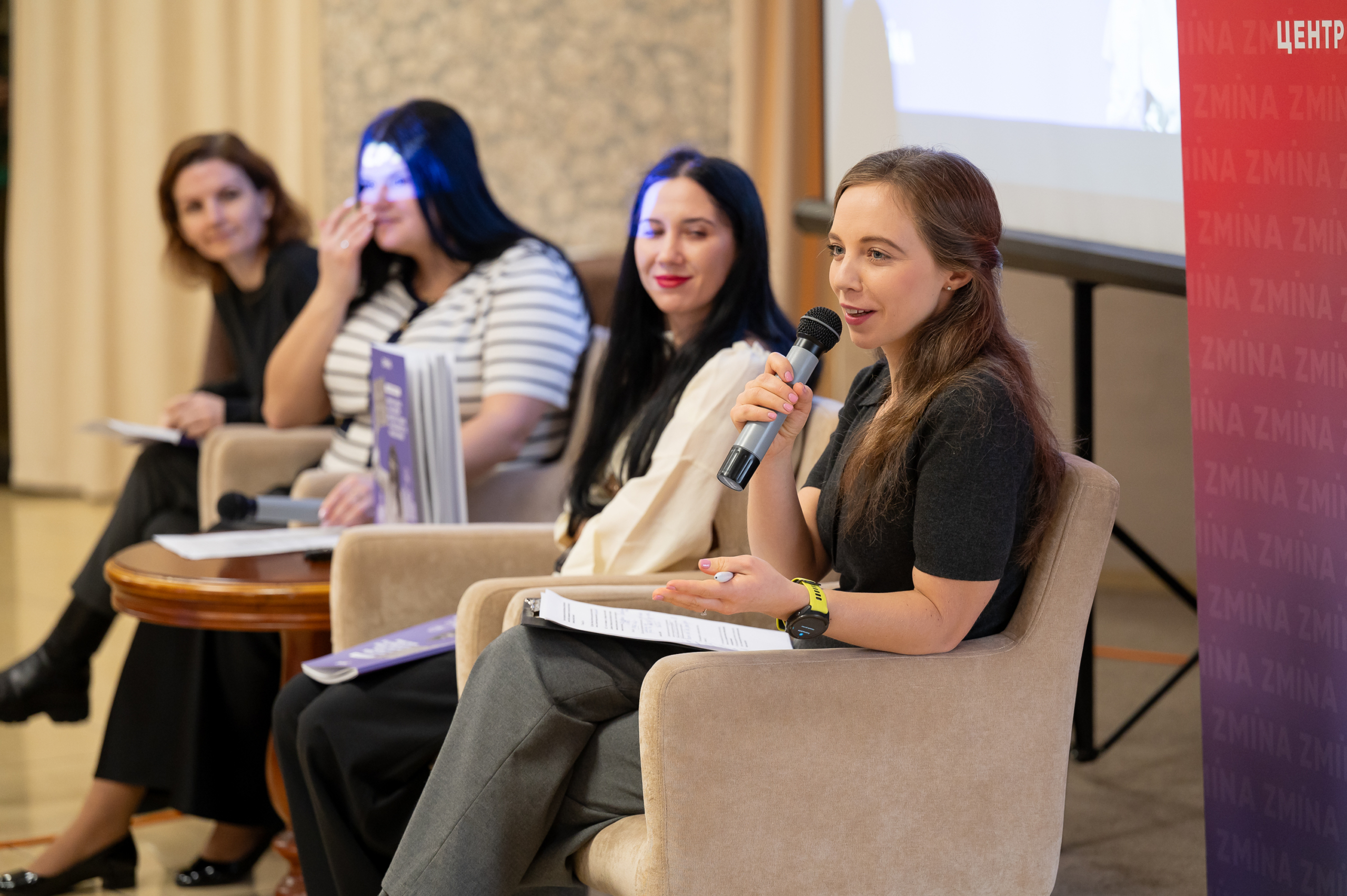 Liudmyla Tiahnyriadno
The discussion was moderated by Liudmyla Tiahnyriadno, Journalist with the Human Rights Centre ZMINA and a presenter on Ukrainian Radio.
The event can be viewed on the Facebook page of the Human Rights Centre ZMINA.
The full text of the analytical report “Women in Media and Activism: Challenges, Risks and Opportunities in Wartime” is available here.
Photo credit: Valeriia Mezentseva
If you have found a spelling error, please, notify us by selecting that text and pressing Ctrl+Enter.