Human rights defenders held a solidarity campaign about imprisoned staff of the Monitoring Mission at the OSCE Ministerial Council
The OSCE Ministerial Council took place in Vienna on 4–5 December. During the meeting, ZMINA project manager Viktoriia Nesterenko participated in bilateral meetings with officials, during which she raised the issue of Russia’s unlawful detention of Ukrainian civilian and political prisoners. In particular, ZMINA, ULAG and Marharyta Shabanova conducted a solidarity campaign in support of three imprisoned OSCE staff — Dmytro Shabanov, Maksym Petrov and Vadym Golda.
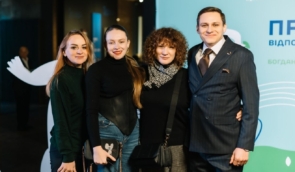
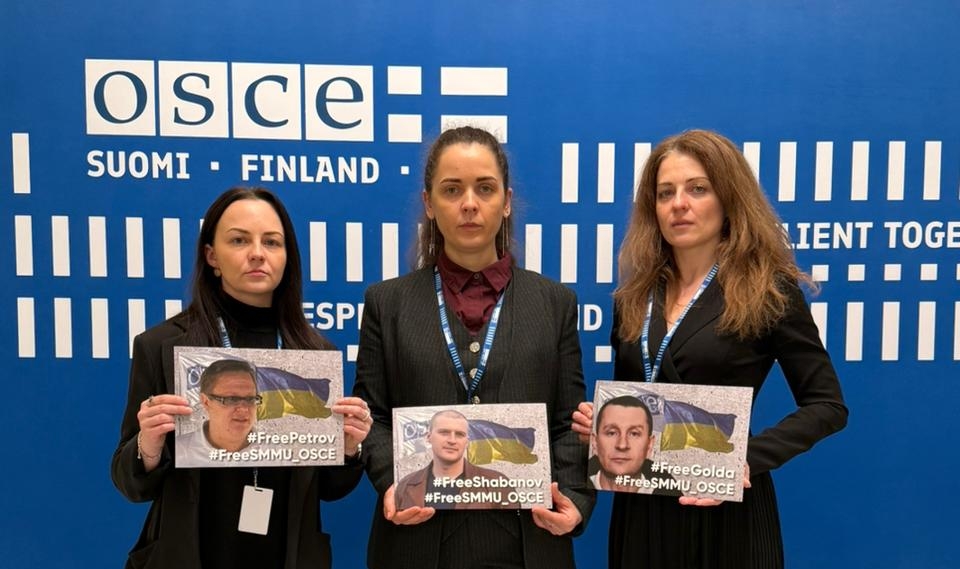 Photo: Viktoriia Nesterenko (ZMINA), Marharyta Shabanova, Yevheniia Kapalkina (ULAG) (from left to right)
This year’s Council was represented at a high level: nearly 40 foreign ministers arrived at the Hofburg, where the ministerial event took place. During the opening ceremony, Finnish Foreign Minister Elina Valtonen emphasised:
“We have spared no effort to secure the release of the three OSCE officials — Vadym Golda, Maksym Petrov, and Dmytro Shabanov — still in detention. Their families wrote to me with a plea that weighs heavily on my heart, and I quote: “We wake each morning with one wish — that our loved ones return to our families, only to endure another day of uncertainty, fear and silence.“
She assured that the OSCE is using all possible channels to secure their immediate release. “They must be released immediately,” Minister Valtonen concluded.
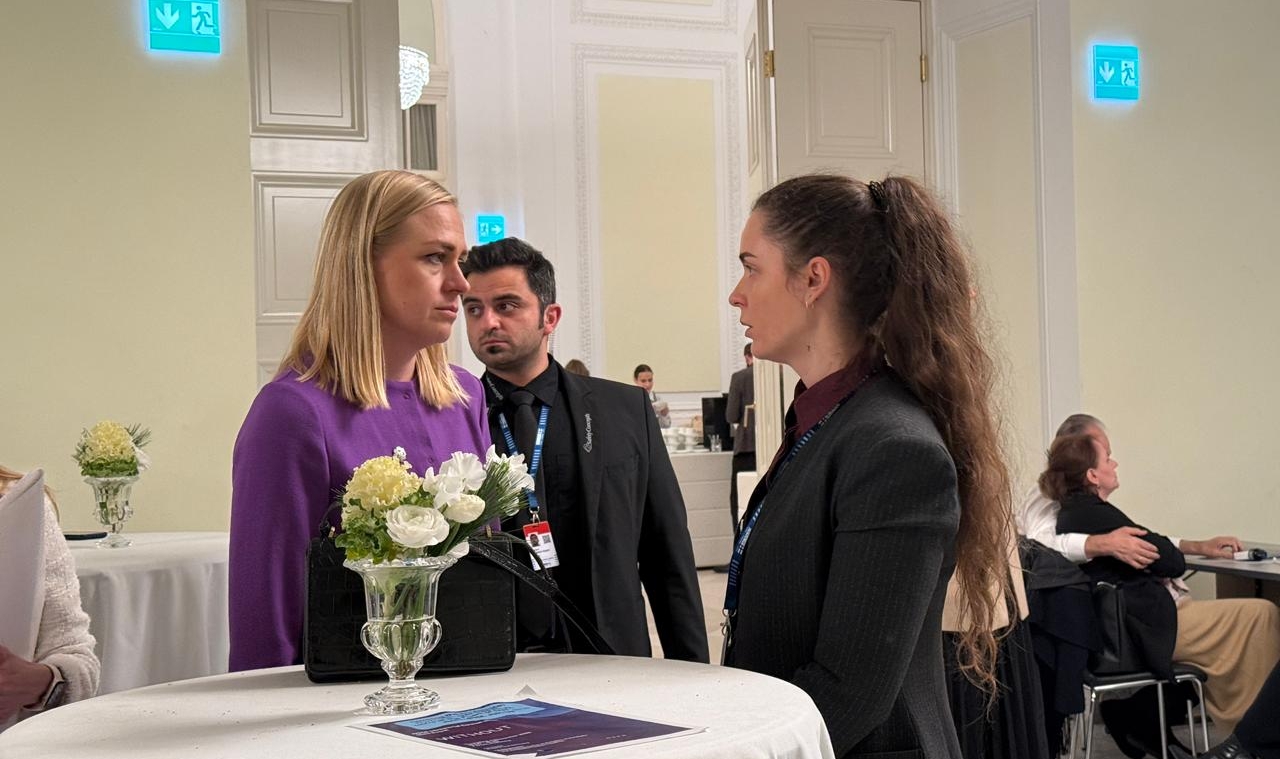 Photo: Finnish Minister for Foreign Affairs Elina Valtonen and Marharyta Shabanova, wife of imprisoned Dmytro Shabanov
The Ukrainian delegation was led by Foreign Minister Andrii Sybiha, who also called for the immediate release of three unlawfully detained OSCE staff and raised this issue at bilateral meetings, in particular with OSCE Secretary General Feridun H. Sinirlioğlu.
The need to return Shabanov, Petrov and Golda home from Russian captivity was also raised by the President of the OSCE Parliamentary Assembly, Pere Joan Pons, and delegations from numerous countries to the OSCE during their speeches at the main panel of the Council of Ministers.
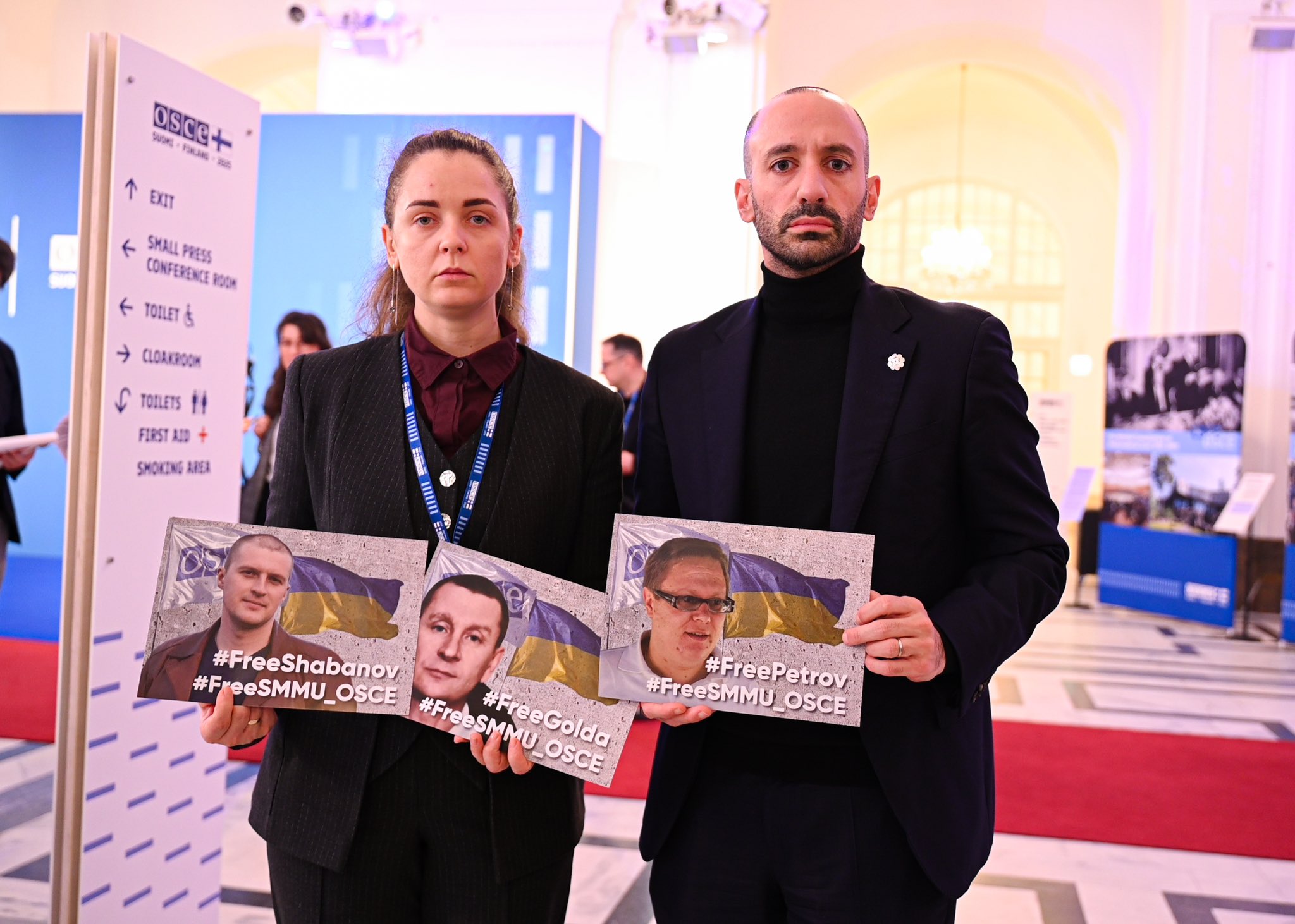 Photo: French Minister Delegate for Europe Benjamin Haddad and Marharyta Shabanova, wife of imprisoned Dmytro Shabanov; Credits: Benjamin Haddad
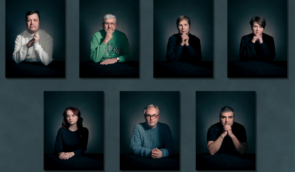
In addition, ZMINA, ULAG (Ukrainian Legal Advisory Group) and the wife of one of the imprisoned OSCE staff, Marharyta Shabanova, conducted a solidarity campaign. A banner with portraits of the unlawfully imprisoned staff was hung in the corridors of the Hofburg, and information materials calling for their release were distributed to delegations. Participants learned more about the OSCE Special Monitoring Mission staff who have been imprisoned in Russia for more than three and a half years.
“Dmytro Shabanov was part of the OSCE mission that monitored the contact line in Donbas until 2022. Under false pretences, Russian troops detained him and two of his colleagues. More than three years later, they remain in captivity. We call for the release of all political prisoners,” emphasised German Foreign Minister Johann Wadephul.
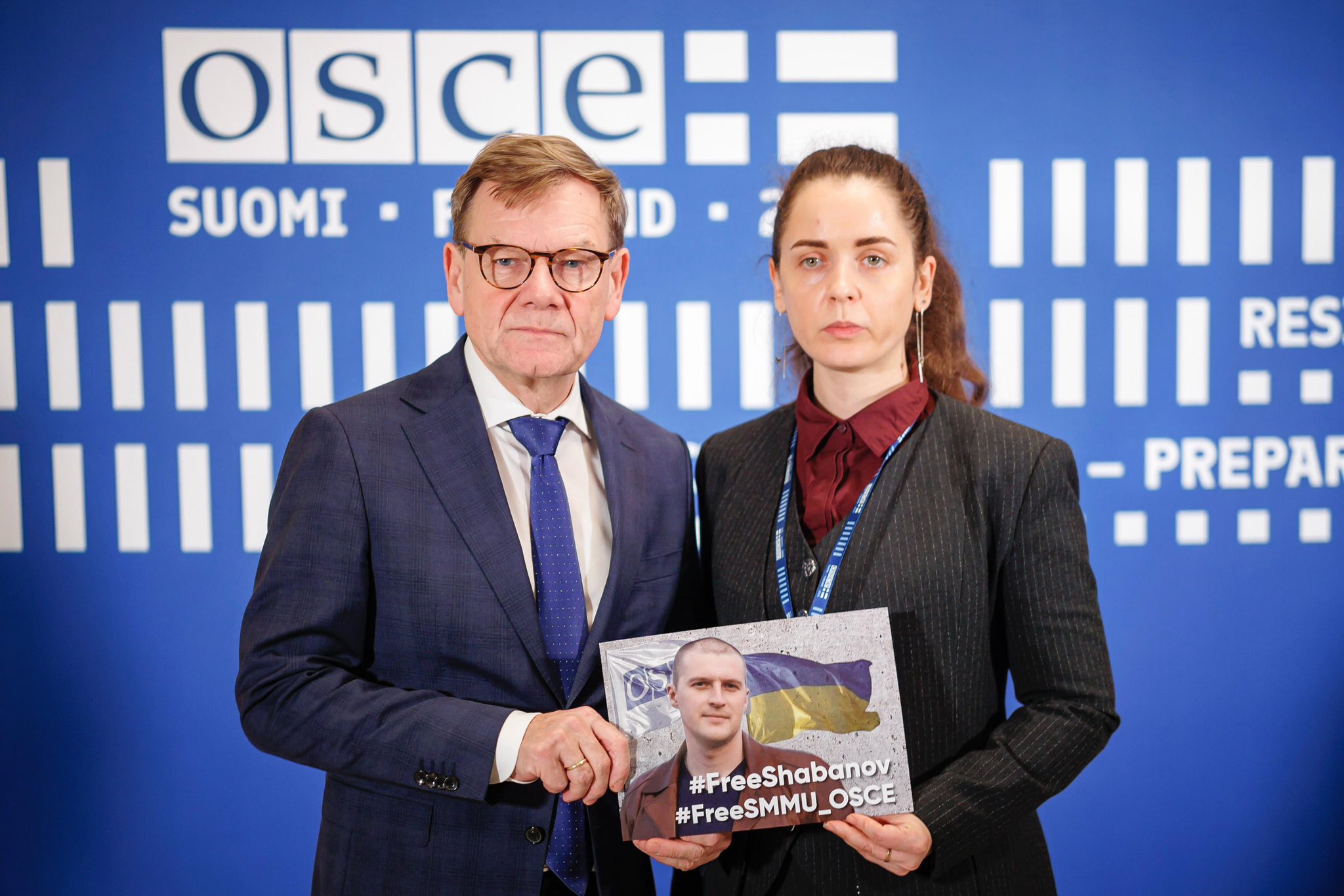 Photo: German Foreign Minister Johann Wadephul and Marharyta Shabanova, wife of imprisoned Dmytro Shabanov; Credits: German MFA
Indeed, Dmytro Shabanov (security assistant), Vadym Golda (security assistant) and Maksym Petrov (interpreter) were detained in the occupied Luhansk and Donetsk regions in 2022, despite having documents confirming their immunity. Shabanov’s whereabouts were unknown for three months; he was held in isolation and interrogated to force him to sign a confession. Petrov was also tortured to extract a confession.
Subsequently, the men were sentenced to 13 years’ imprisonment on trumped-up charges and transferred to colonies deep inside Russia, where conditions are harsh, and prisoners are physically and psychologically humiliated. Gold was sentenced to 14 years in a strict regime prison on trumped-up charges of “espionage”.
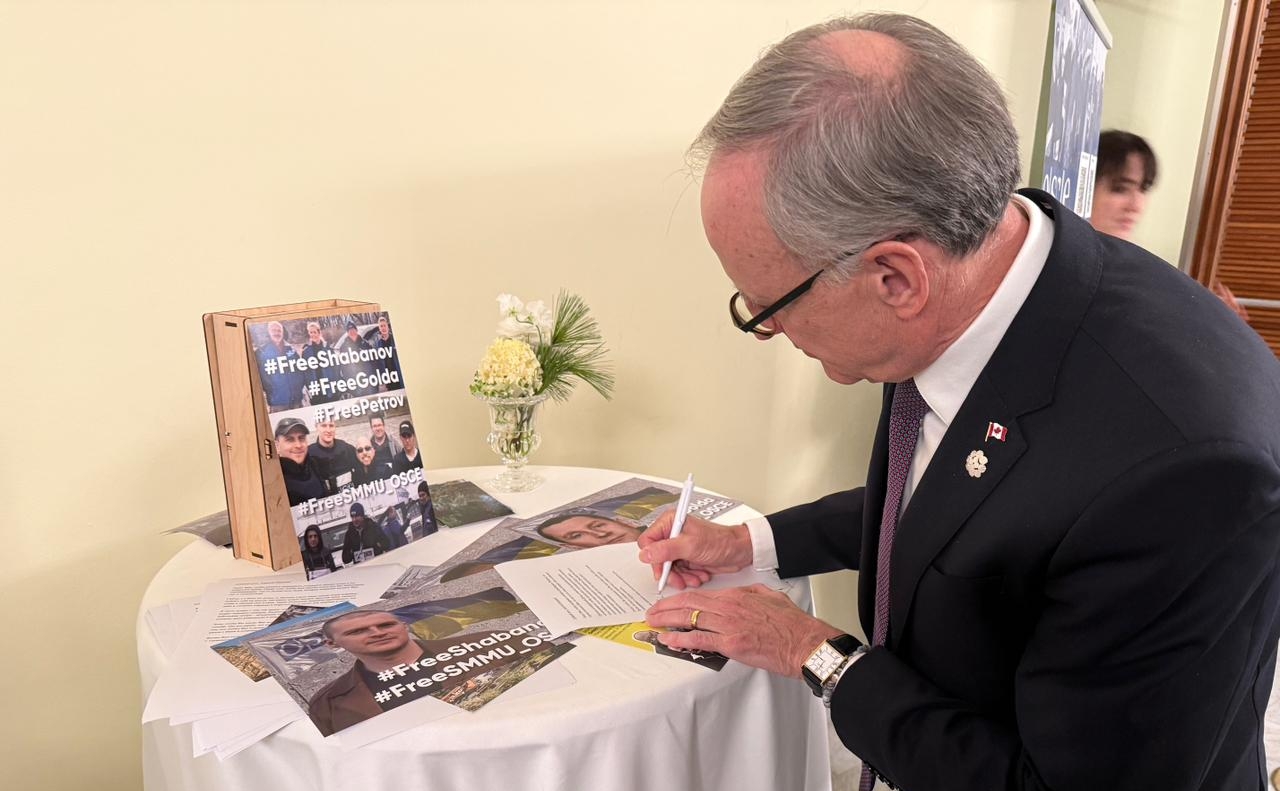 Photo: Rob Oliphant, Member of Parliament of Canada, Parliamentary Secretary to the Minister of Foreign Affairs, signs a letter to imprisoned OSCE staff
Over the course of two days, Dutch Foreign Minister David van Weel, German Foreign Minister Johann Wadephul, French Minister for European Affairs Benjamin Haddad, Canadian Member of Parliament and Parliamentary Secretary to the Minister of Foreign Affairs Rob Oliphant, Czech Foreign Minister Jan Lipavský, as well as ambassadors and diplomats to the OSCE from Canada, Estonia, Iceland, Italy, Ireland, Norway, the United Kingdom, Finland, Sweden, Ukraine and other countries signed letters to detained Shabanov, Petrov and Golda and called for their release in their statements and publications. As a result of the solidarity action, more than 40 letters were collected.
“After almost 4 years of illegal detention by Russia, it is time for them to return to their home and families,” wrote the Permanent Mission of Italy to the OSCE.
“I am not asking for the impossible — I am asking for actions, for humanity, and for urgent support from the global international community to help my family finally see my beloved husband, Dima, and, respectively, to help Petrov’s and Golda’s families see their loved ones released from this wrongful detention. A unified approach involving OSCE participating states, the Secretary General, the OSCE Parliamentary Assembly and the human rights community is crucial. I hope that there is one common understanding that releasing my husband and his colleagues from this detention is a human life at stake,” empasized Marharyna Shabanova, wife of wrongfully imprisoned Dmytro Shabanov.
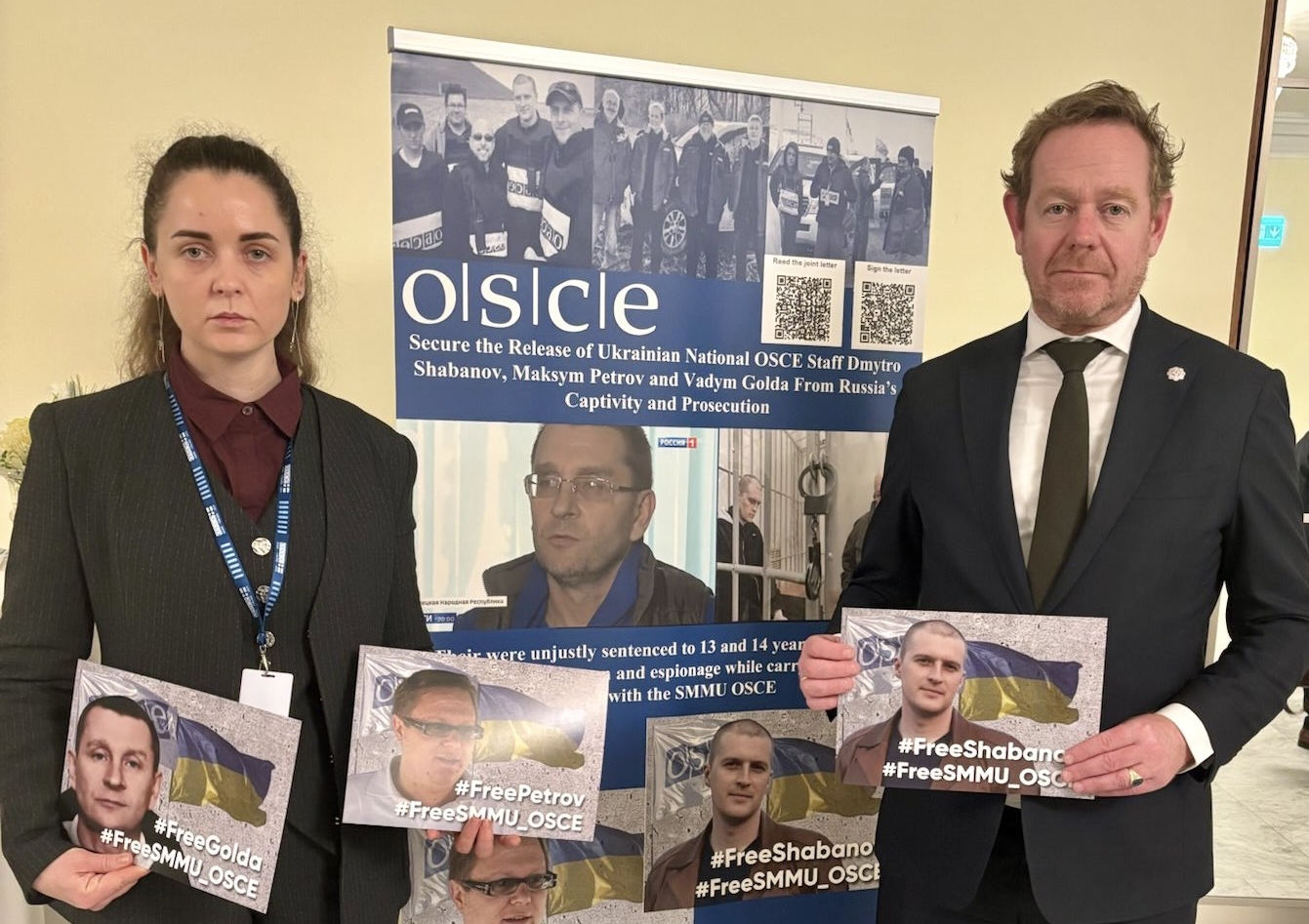 Photo: Dutch Foreign Minister David van Weel and Marharyta Shabanova, wife of imprisoned Dmytro Shabanov
“Solidarity campaigns make it impossible for the Russian authorities to achieve what they always hope for — silence. When diplomats, ambassadors and foreign ministers of various countries speak publicly about Ukrainian political prisoners in the Russian Federation, their every word gives a kind of “immunity” for the continued detention of these people,” explained Viktoriia Nesterenko, Project Manager of ZMINA.
She said that the letters and public statements made by diplomats make it clear to the Russian authorities that their situation is attracting the attention of the international community, that these people are valuable, and that this is therefore a matter of international responsibility, creating reputational and diplomatic risks for the Kremlin.
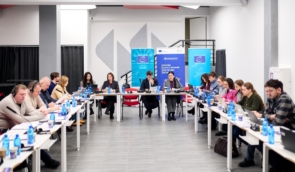
On the eve of the OSCE Ministerial Council, OSCE Parallel Civil Society Conference was also held, where Viktoriia Nesterenko presented the results of monitoring violations of the rights of political prisoners unlawfully detained by the Russian Federation. According to her, over the past two years, at least three political prisoners have died as a result of not receiving medical care, and at least 80 more people in pre-trial detention centres and penal colonies in the Russian Federation and occupied Crimea require urgent medical attention. In total, human rights defenders are aware of about 100 cases where the lack of medical care, inadequate conditions of detention and the use of violence have significantly affected the condition of prisoners.
As part of the Parallel Conference, a campaign was also launched to write letters to imprisoned OSCE staff, which was joined by activists from various countries. Nesterenko noted that solidarity in this form is not a symbolic gesture: “This is one of the tools of pressure that can influence the decision to release these people and bring them home.“
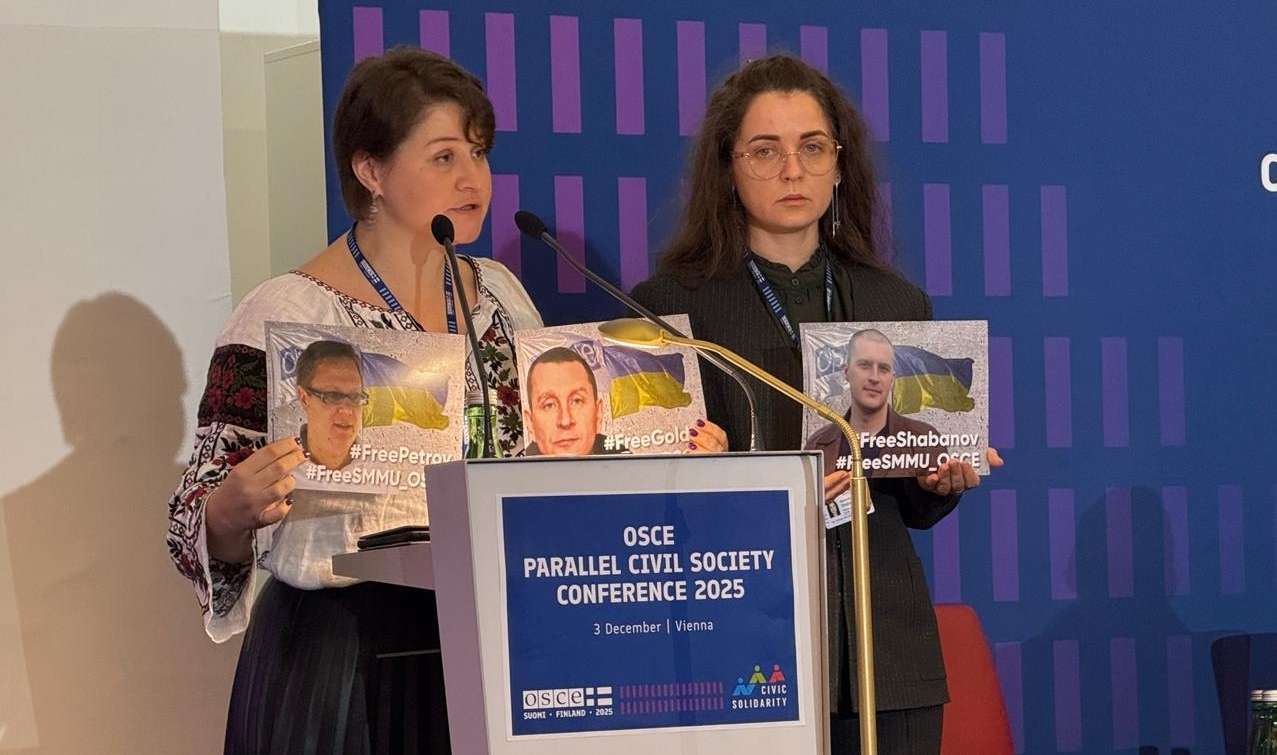 Photo: Oleksandra Romantsova from the Centre for Civil Liberties and Marharyta Shabanova during the Parallel Conference
For reference: The OSCE (Organisation for Security and Co-operation in Europe) is an international organisation comprising 57 countries in Europe, North America and Asia. It is dedicated to promoting peace, security, human rights and democratic standards in Europe and neighbouring regions. By decision of all member countries, the OSCE Special Monitoring Mission to Ukraine was launched to monitor the security situation, record violations of the ceasefire and report on events on the ground from 2014 to 2022. Three of its employees — Shabanov, Petrov and Golda — were detained by Russians in the occupied territories of Ukraine and have been unlawfully held behind bars for more than 3.5 years.
The OSCE Ministerial Council is an annual meeting of the foreign ministers of participating States, where issues of security, international policy and human rights are discussed and political declarations are adopted.
The OSCE Parallel Civil Society Conference is a forum for non-governmental organisations and activists that took place on the eve of the Ministerial Council. This platform allows civil society to discuss human rights violations in the region, present reports and propose solutions to diplomats.
If you have found a spelling error, please, notify us by selecting that text and pressing Ctrl+Enter.