
The Crimean Prosecutor’s Office has initiated the first proceedings concerning a crime against humanity following a submission by ZMINA
The Prosecutor’s Office of the Autonomous Republic of Crimea and the city of Sevastopol (ARC) has initiated criminal proceedings under Article 442-1 of the Criminal Code of Ukraine – “Crimes against Humanity” – following a submission by the Human Rights Centre ZMINA concerning the systematic persecution of Ukrainian citizens through the deprivation of their right to a fair trial in occupied Crimea.
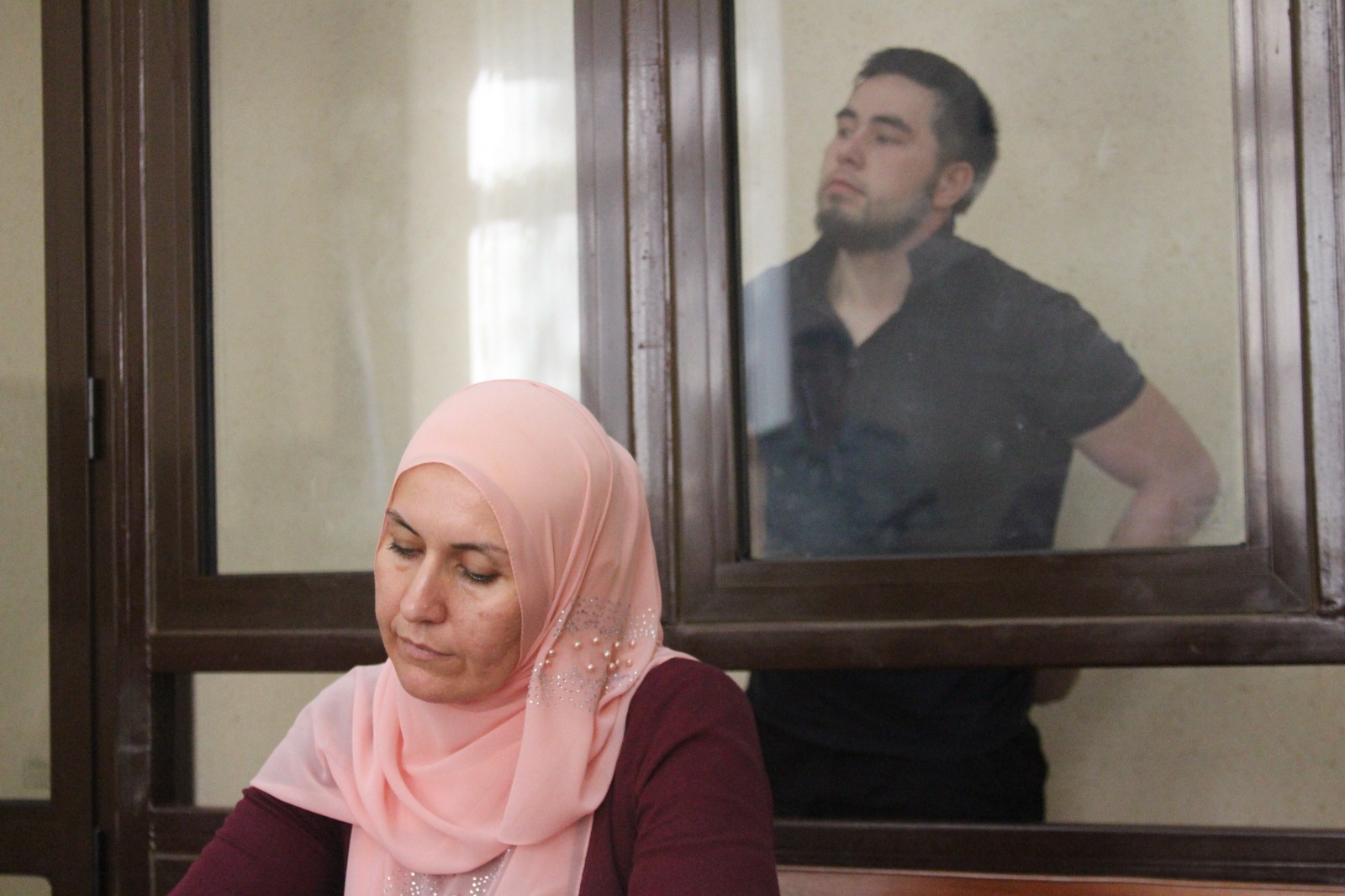 Photo: Eskender Abdulhaniiev, a defendant in the Krasnohvardiiske “Hizb ut-Tahrir case”, and lawyer Lilia Hemedzhi. Photo credit: Oleksandra Yefymenko
This is the first criminal proceeding under this Article to be registered by the Prosecutor’s Office of the ARC following the introduction of the relevant provision into Ukrainian legislation.
“The registration of the first proceedings concerning crimes against humanity marks a transition to a new level of legal assessment of the aggressor’s actions. Work on this case will allow us to lay another brick in the foundation of national practice in investigating the most serious international crimes. We will not only investigate individual crimes, but will also provide a legal assessment of the Russian Federation’s systemic policy in occupied Crimea as a widespread and systematic attack against the civilian population“, said Vitalii Sekretar, First Deputy Head of the Prosecutor’s Office of the Autonomous Republic of Crimea and the city of Sevastopol.
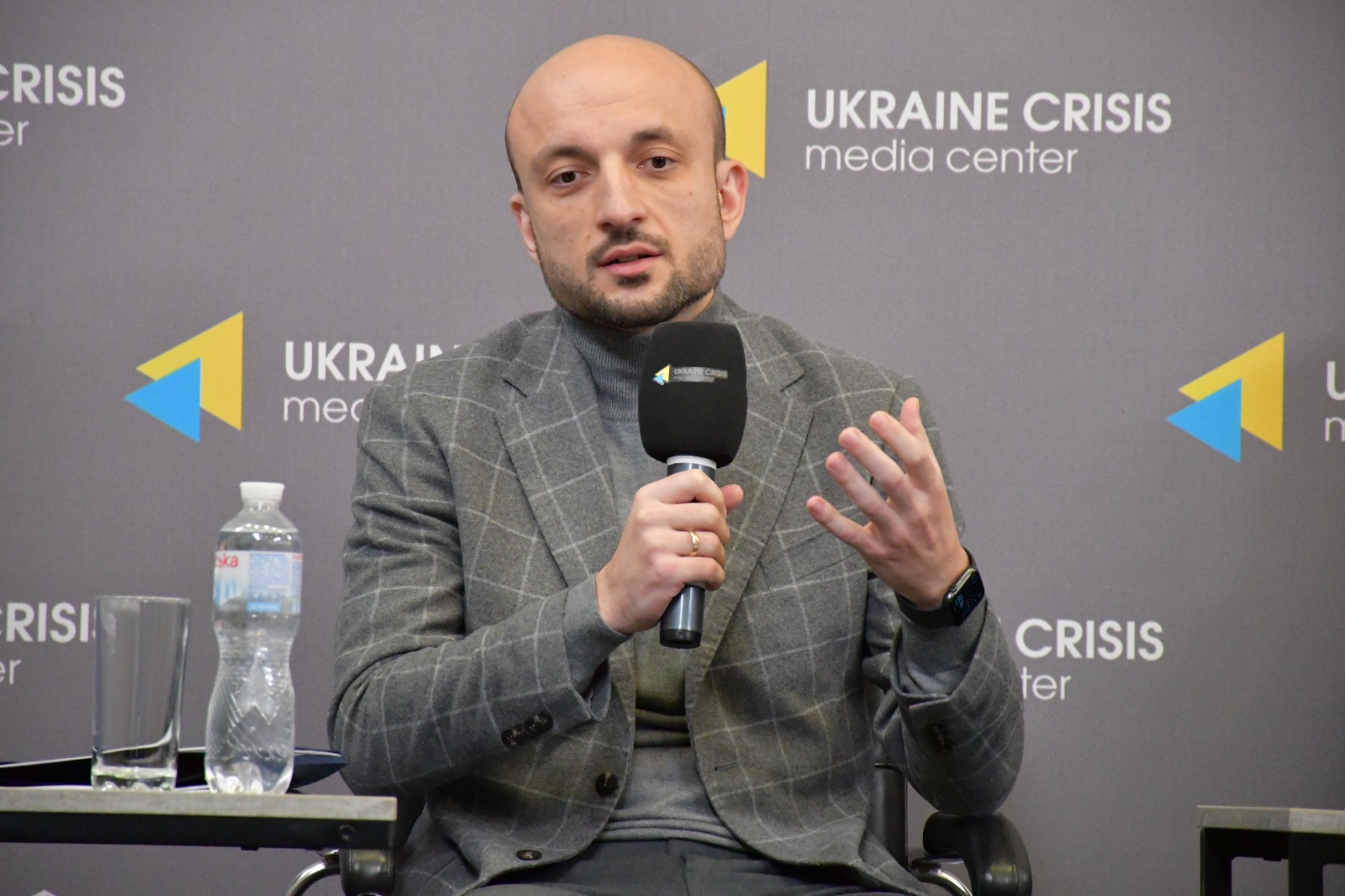 Photo: Vitalii Sekretar
He added that the aim of the Prosecutor’s Office of the ARC and the city of Sevastopol is to expose the entire mechanism of the persecution of Ukrainians.
“Classifying the actions of the aggressor state and its occupation administration specifically as crimes against humanity enables justice to hold the entire chain of command accountable – from the ideologues of the criminal policy to its direct perpetrators on the ground“, noted Vitalii Sekretar.
The crime report submitted by the Human Rights Centre ZMINA states that, following the occupation of Crimea, Russia established on the peninsula a system of politically motivated judicial persecution of Ukrainian citizens – Crimean Tatars, activists, journalists, human rights defenders and others whom the occupation authorities consider disloyal.
According to the Human Rights Centre ZMINA, this policy is implemented through Russian courts, the prosecution authorities, the FSB and other security agencies, and is accompanied by systematic violations of the right to a fair trial, unlawful detentions, torture, the use of fabricated evidence, and discriminatory persecution on national or political grounds.
The statement emphasises that the persecution of civilians through the denial of the right to a fair trial may qualify as a crime against humanity under Article 7 of the Rome Statute of the International Criminal Court.
“The judicial persecution carried out by the Russian Federation against Ukrainian citizens in the occupied territory, including Crimea, takes place within a coherent system involving state authorities at all stages. These are not isolated violations. The state policy of the Russian Federation is aimed at using such persecution to suppress resistance and control the population in the temporarily occupied territories through intimidation and the threat of criminal prosecution“, said Onysiia Syniuk, Head of the Research Department at the Human Rights Centre ZMINA.
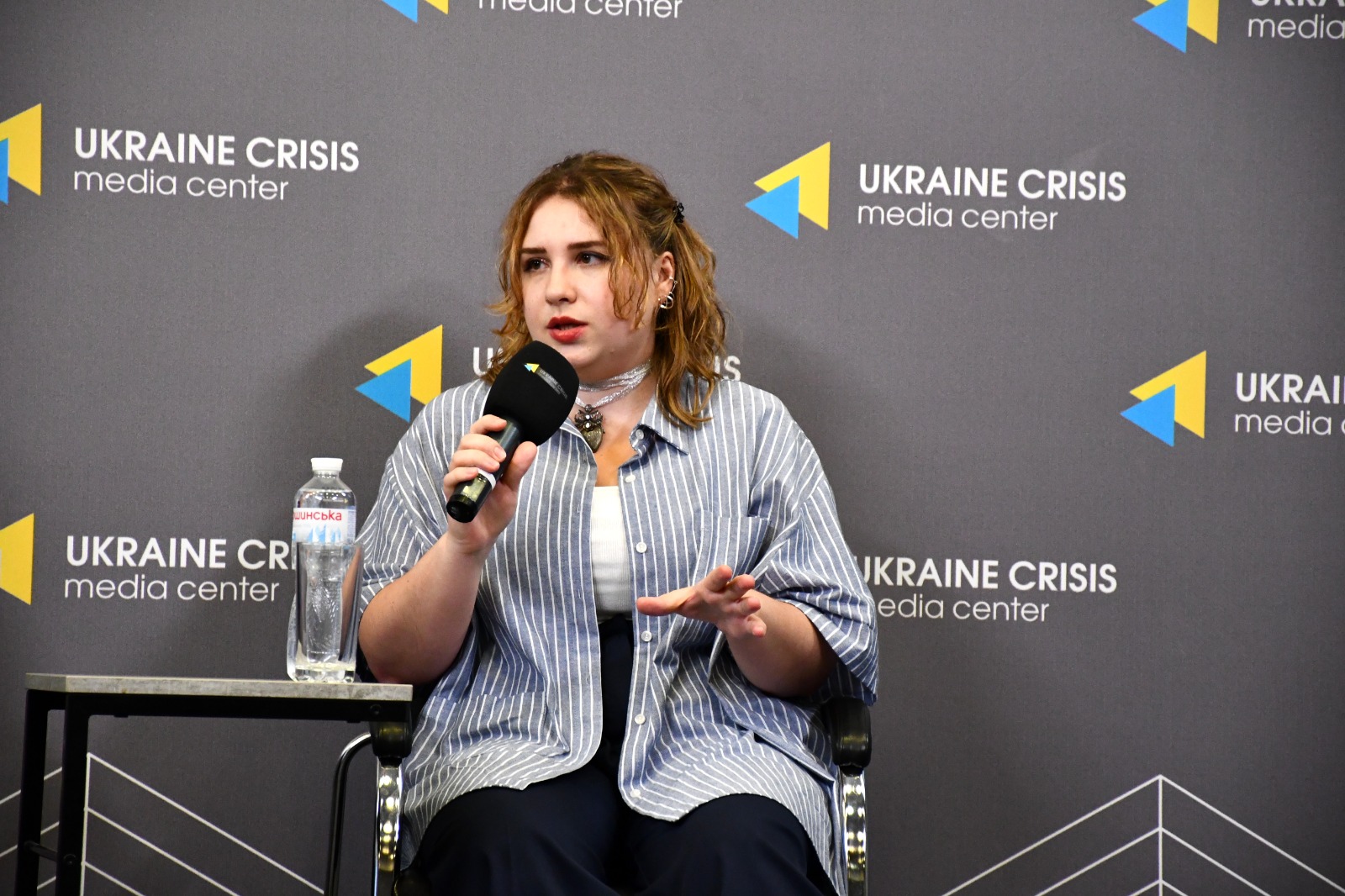 Photo: Onysiia Syniuk
According to her, investigating this violation as one bearing the characteristics of a crime against humanity is important for tracing its systematic nature, documenting the evolution of this policy since 2014, and identifying the hierarchy of those responsible – up to the senior leadership of the Russian Federation, rather than only the direct perpetrators.
Human rights defenders also refer to the judgment of the European Court of Human Rights in the case of “Ukraine v. Russia (re Crimea)”, in which the ECtHR concluded that the judicial system established in Crimea after the occupation cannot be regarded as “established by law”, and that the persecutions were directed, in particular, against Crimean Tatars and pro-Ukrainian activists.
Article 442-1 on crimes against humanity was introduced into the Criminal Code of Ukraine in October 2024, following the ratification of the Rome Statute and the adoption of legislation implementing the norms of international criminal and humanitarian law. It provides for liability for widespread or systematic attacks against the civilian population, including persecution on political, national or ethnic grounds.
In its submission, ZMINA calls on the investigation to consider Russia’s actions as part of a unified state policy of persecution in the occupied territories of Ukraine, ongoing since 2014 and intensified following the full-scale invasion.
The submission is based on years of monitoring of politically motivated court proceedings in Crimea, as well as analytical research by the Human Rights Centre ZMINA on systemic violations of the right to a fair trial during the Russian occupation, including trials since 2014.