How the war is transforming human rights work: ZMINA and NGO Symbol held a discussion in Kharkiv on key changes in the sector
On 15 November 2025, the Yermilov Centre in Kharkiv hosted a panel discussion entitled “The human rights community in Ukraine during the war: how are we changing?”, organised by the NGO Symbol and the Human Rights Centre ZMINA. The event was part of the exhibition project’s public programme, “Show Your Documents…”, dedicated to rethinking documentation as a tool for preserving human dignity in times of war.
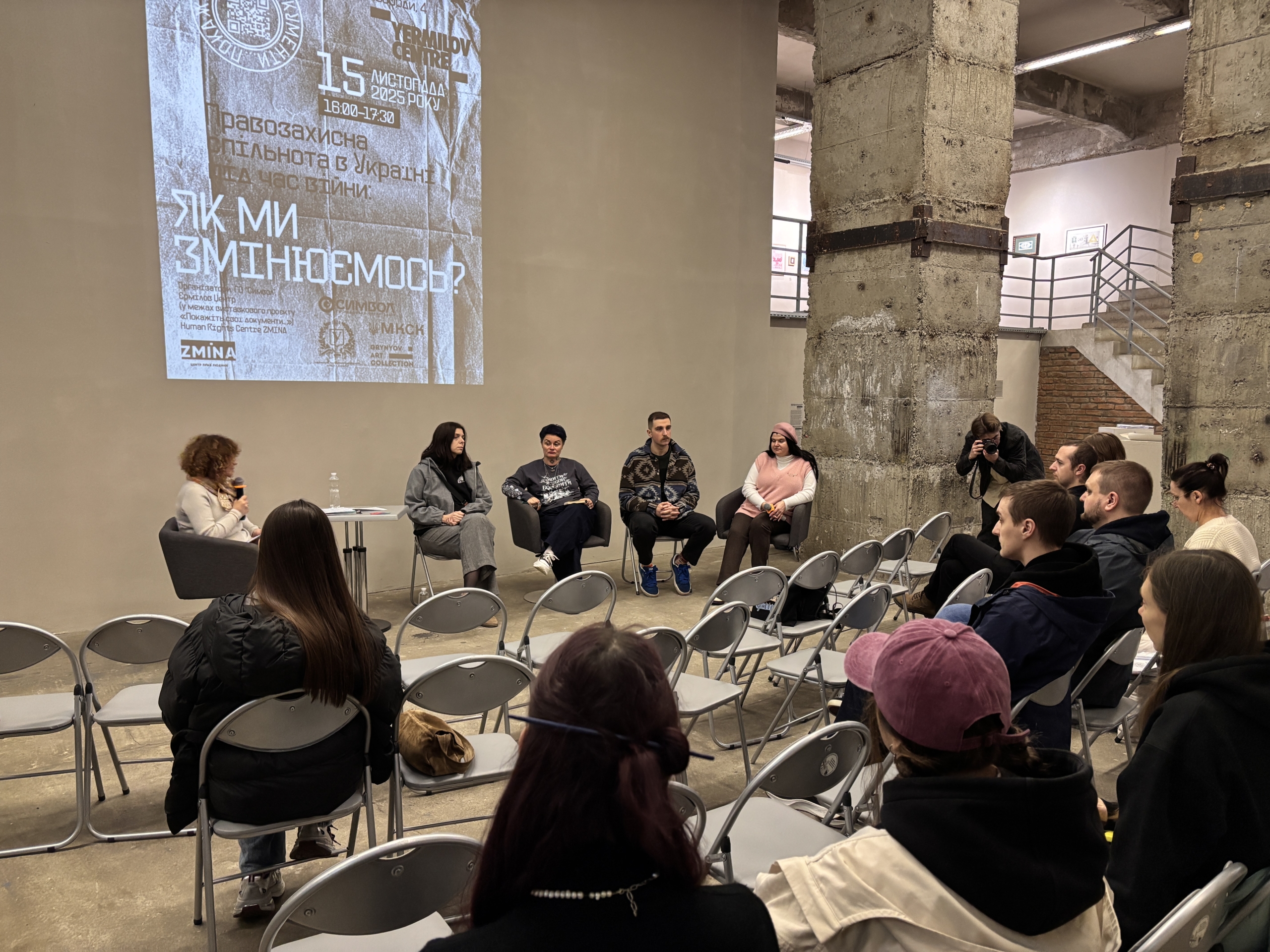
The participants discussed how the full-scale invasion changed the nature of human rights work — from traditional monitoring and advocacy to daily work documenting war crimes, interacting with frontline communities, and supporting displaced persons and mobilised people.
From a “humanitarian sprint” to the new conditions of a marathon
The speakers noted that the war has changed not only the tools, but also the very logic of human rights work, requiring the sector to shift its focus and develop new strategies.
Anna Sharyhina, President of the NGO Women’s Association Sphere, emphasised the need to understand that war is not a sprint or a marathon, but a new working environment. According to her, in 2022, human rights defenders were forced to focus on humanitarian aid. Still, in 2023, organisations began to return to educational activities, adding relevant areas such as training in psychological and basic first-aid self-help.
“Most likely, everyone would say: ‘Oh, we gave up everything and started doing humanitarian work. We started delivering and carrying food to whoever we could reach…’. And that was probably what distracted us a little and gave us new meaning to live and even get out of bed,” Sharyhina shared.
 Photo: Iryna Skachko, Anna Sharyhina
Pressure, repression and the information war: the challenges of the fourth year
One of the key challenges that was actively discussed was the increase in social pressure, censorship and the return of old methods of persecuting activists.
Iryna Yuzik, Project Manager of the Human Rights Centre ZMINA, noted a significant increase in the burden on active citizens, especially women. She highlighted the return to smear campaigns that were used against activists even before the full-scale war:
“The solidarity we had at the beginning started to fade. And along with that, the pressure, threats, harassment, persecution, and smear campaigns against civil society activists returned“.
Yuzik cited examples of campaigns against anti-corruption activists, which prompted ZMINA to launch a new line of work — protecting civil society representatives and NABU detectives who have been targeted by “campaigns of persecution, searches, and criminal cases”.
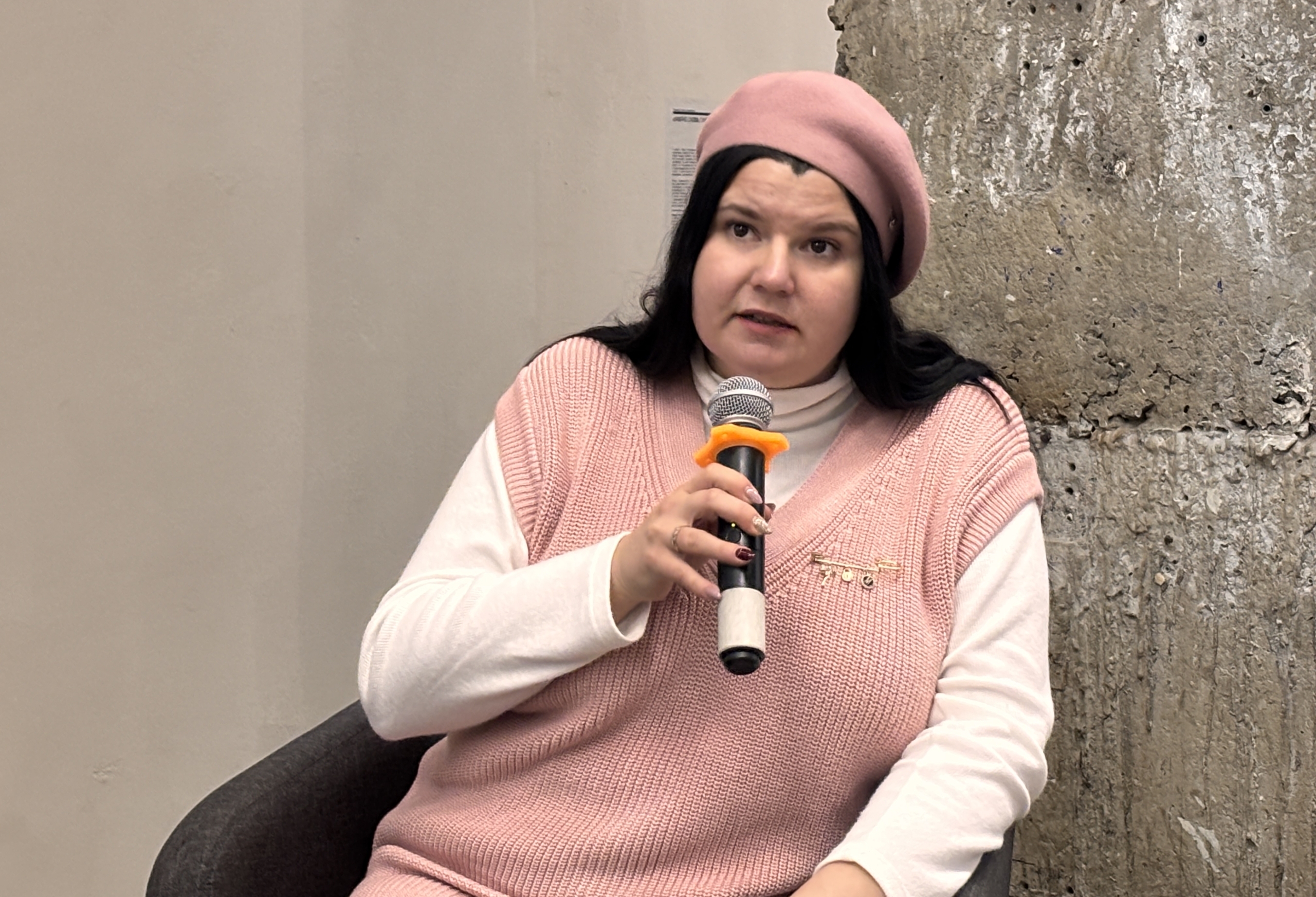 Photo: Iryna Yuzik
The problem of censorship and self-censorship is exacerbated by social pressure, Anna Sharyhina confirmed: “People are simply ready to tear someone apart for expressing an unbiased opinion“. This forces human rights defenders to consider the risks of harming the state when covering sensitive investigations.
New priorities: Military rights and countering cognitive warfare
Against the backdrop of the war, a new category has emerged within human rights work — the rights of service personnel.
Maksym Potapovych, an LGBTQ+ activist and serving soldier of the National Guard of Ukraine “Charter” unit, noted that the rights of military personnel have been a priority since 2023. He stressed the importance of taking into account the double discrimination faced by women in the military and members of vulnerable groups in the Defence Forces.
Potapovych also noted that Russia actively uses human rights issues and internal conflicts to divide Ukrainian society:
“Unfortunately, Russia is now actively using human rights work to divide Ukrainian society… The main feature of Russia’s cognitive war against Ukraine is to break our will to resist“.
 Photo: Anna Sharyhina, Maksym Potapovych
Iryna Skachko, a journalist of the Kharkiv Human Rights Protection Group (KHPG), spoke about the radical narrowing of the KHPG’s thematic focus, most of whose efforts are now directed towards documenting war crimes. She also confirmed that the KHPG has taken on some of the functions of the state, providing a comprehensive referral network of support (legal, psychological and medical assistance) for those affected:
“Our activities have narrowed somewhat, because almost all our efforts are focused on this wave of war crimes“.

In conclusion, the speakers agreed that unity between three forces—the military, society, and government—is necessary to preserve statehood and sustain resistance. The task of the human rights sector is to increase visibility and public awareness of its role in shaping the memory and future of a democratic Ukraine.
The event was moderated by Inna Ilchenko, Project Manager of the Human Rights Centre ZMINA.
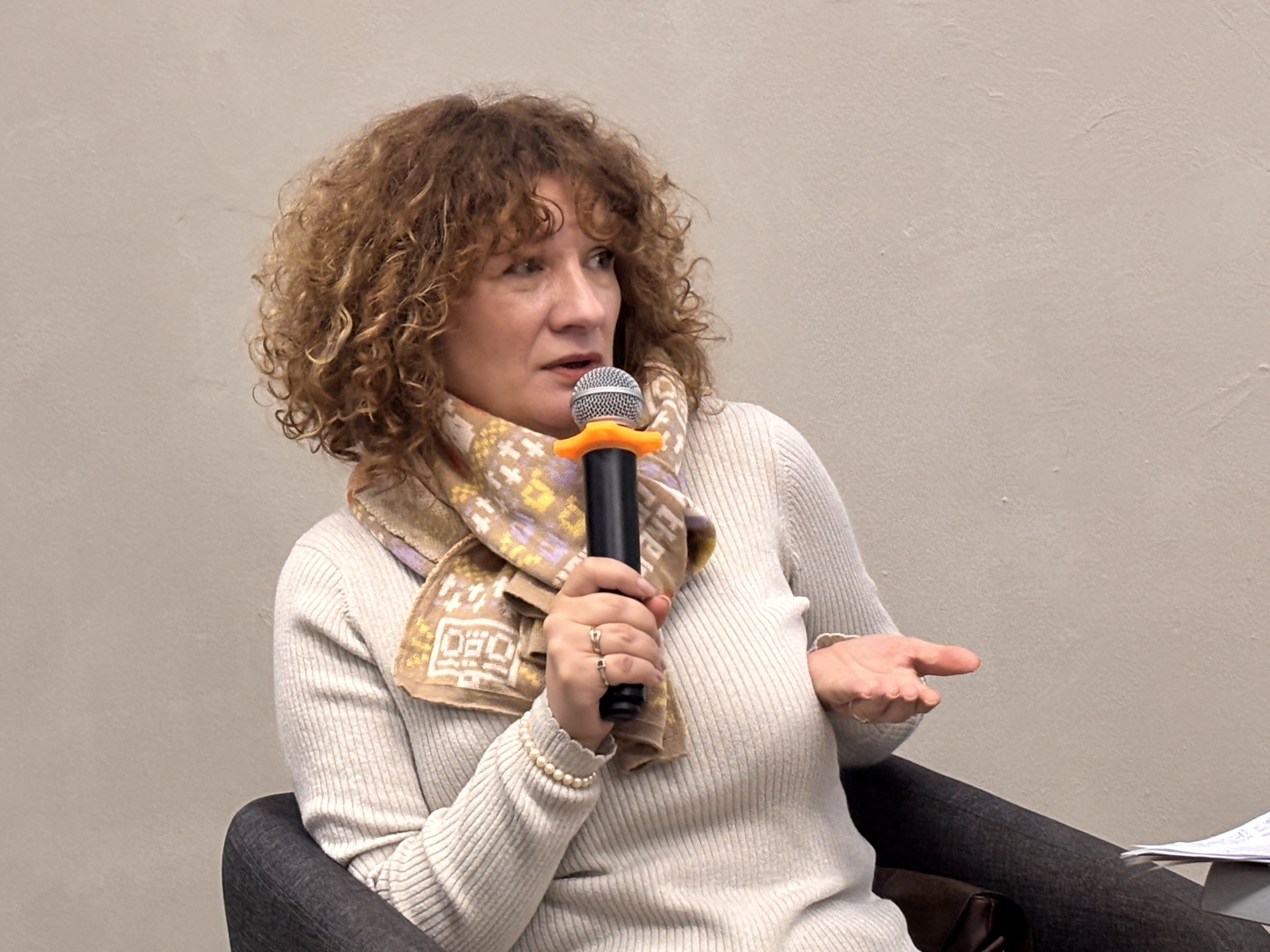 Photo: Inna Ilchenko
If you have found a spelling error, please, notify us by selecting that text and pressing Ctrl+Enter.