Institutional independence and compliance with international standards: expert discussion on the draft law on the Ombudsman held in Kyiv
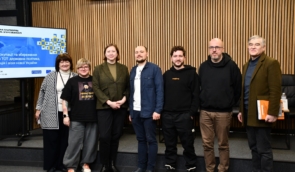
On 17 December 2025, the Secretariat of the Ukrainian Parliament Commissioner for Human Rights hosted an expert discussion “The New Law on the Commissioner. What amendments are needed and what are the prospects for their adoption?”. Organisers: Office of the Ukrainian Parliament Commissioner for Human Rights and the Human Rights Centre ZMINA.
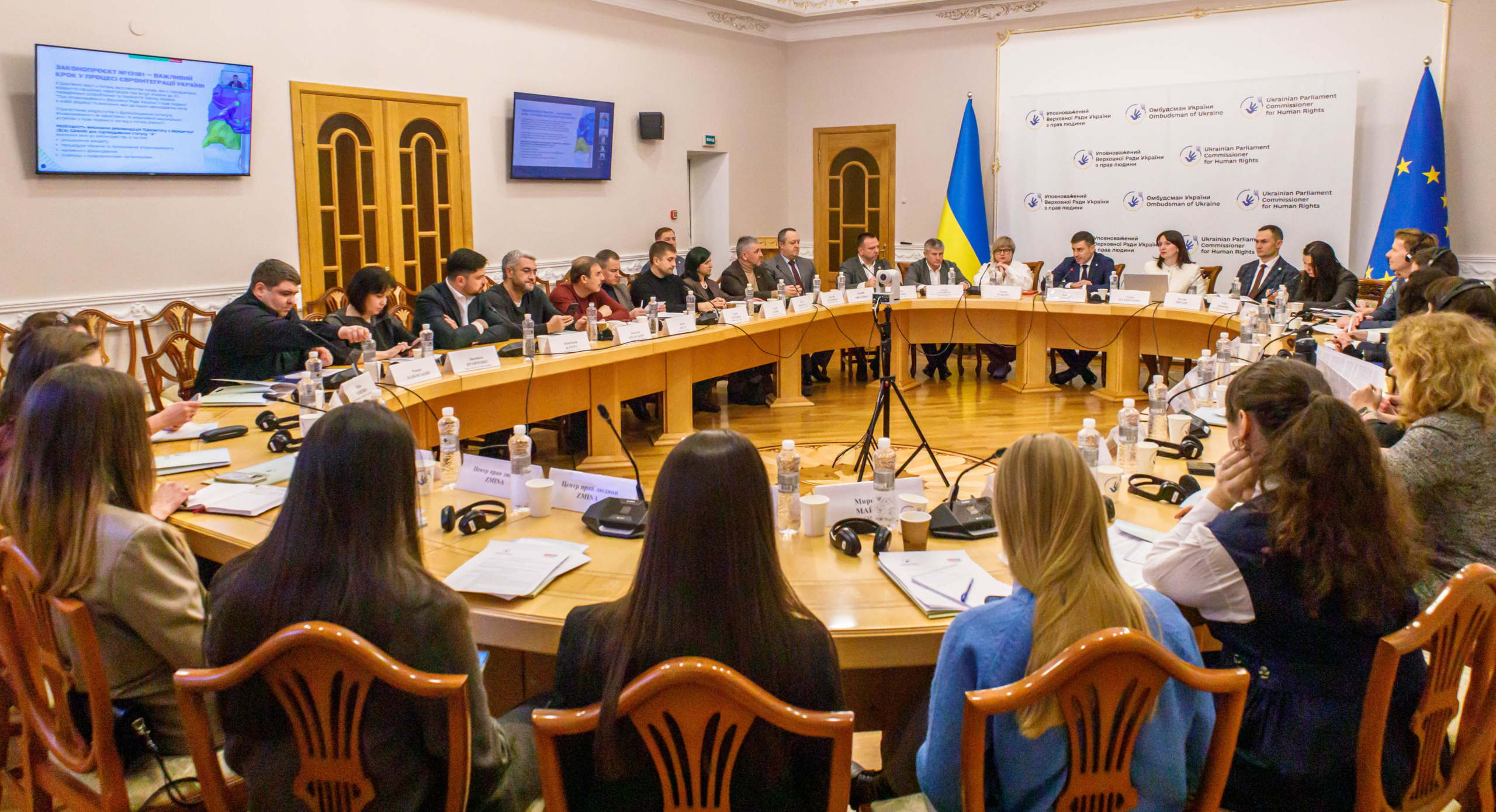
The event brought together representatives of parliament, the Office of the Commissioner, human rights organisations, and international partners. In total, around 70 participants from different regions of Ukraine took part in the discussion.
They discussed the need to update the Law of Ukraine “On the Ukrainian Parliament Commissioner for Human Rights”, the key provisions, positive aspects and problematic points of draft law No. 13181, its compliance with international standards, as well as the reasons why the document remains stalled in parliament.
The Ukrainian Parliament Commissioner for Human Rights, Dmytro Lubinets, addressed the participants with a welcoming speech, emphasising the importance of updating the legislative framework for the effective work of human rights institutions.
He noted that draft law No. 13181 is part of Ukraine’s European integration course and is linked to the implementation of the Rule of Law Roadmap and the condition for maintaining “A” status in accordance with the Paris Principles. “This law will send a clear signal to both the international community and the citizens of Ukraine about the state’s readiness to build strong and effective institutions in the field of human rights protection“, the Commissioner emphasised.
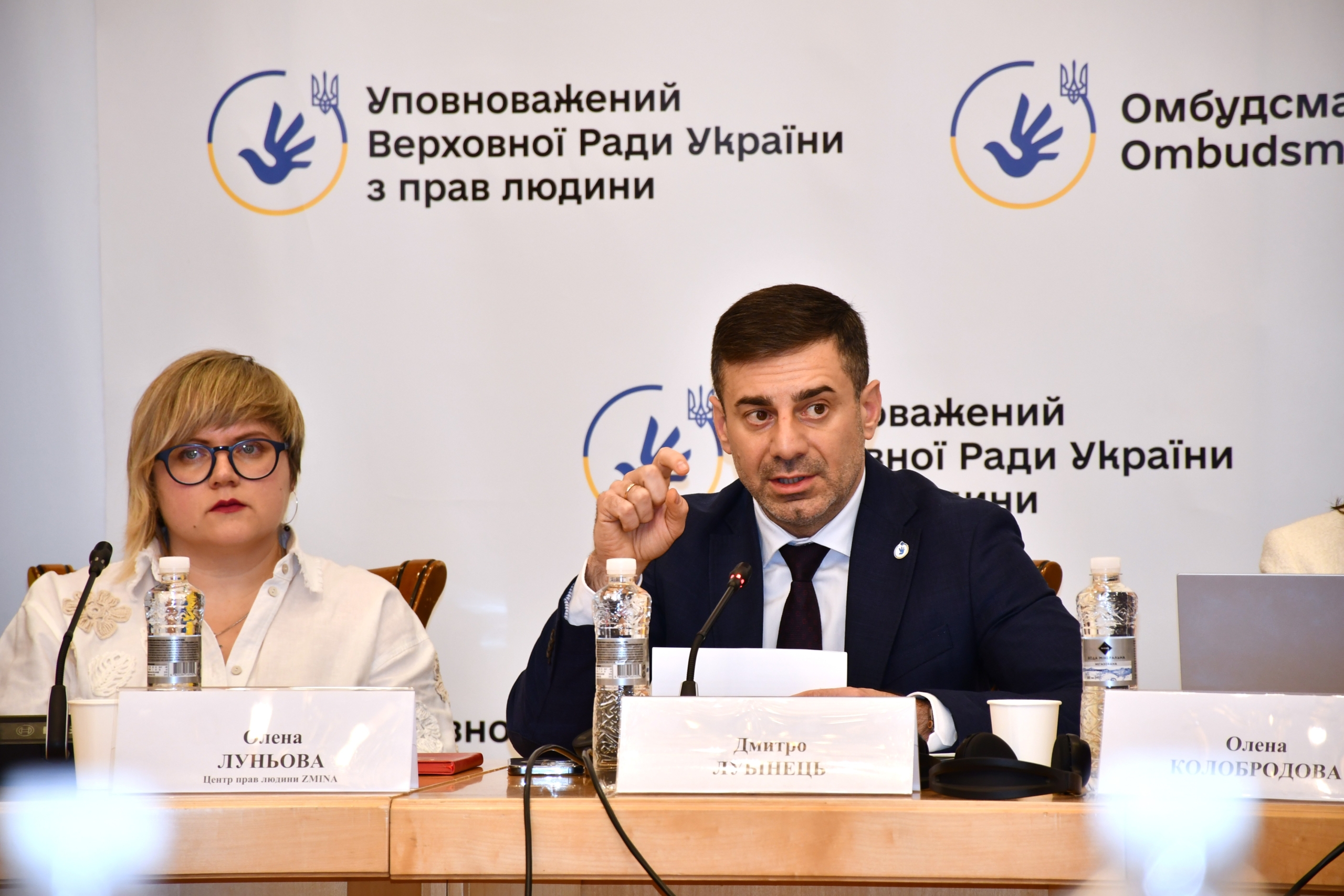 Photo: Alena Lunova, Dmytro Lubinets
He also outlined the key innovations envisaged by the draft law. These include comprehensive changes aimed at strengthening parliamentary control in the field of human rights, clarifying the requirements for candidates for the position of Commissioner, in particular, lowering the age limit to 35, as well as streamlining the institutional architecture and creating the legal preconditions for ensuring the financial independence of the institution.
According to Lubinets, the draft law pays particular attention to strengthening guarantees for the functioning of the National Preventive Mechanism, as well as establishing special powers in the field of child rights protection, anti-discrimination and international cooperation.
In conclusion, Lubinets called on MPs not to delay the decision and to support the draft law in the first reading, with further thorough revision of the document in the relevant committee of the Verkhovna Rada of Ukraine.
First Deputy Chairman of the Verkhovna Rada Committee on Ukraine’s Integration into the European Union Vadym Halaichuk emphasised in his speech that bringing the legislation on the Ukrainian Parliament Commissioner for Human Rights into line with international standards is an integral part of Ukraine’s European integration commitments and one of the important elements of fulfilling the criteria for accession to the European Union: “According to the conclusion of our Committee, the draft law does not contradict European law and the Paris and Venice principles. The Committee made comments regarding recommendations for broader involvement of civil society organisations in the candidate selection process and how the Ombudsman will implement these principles“.
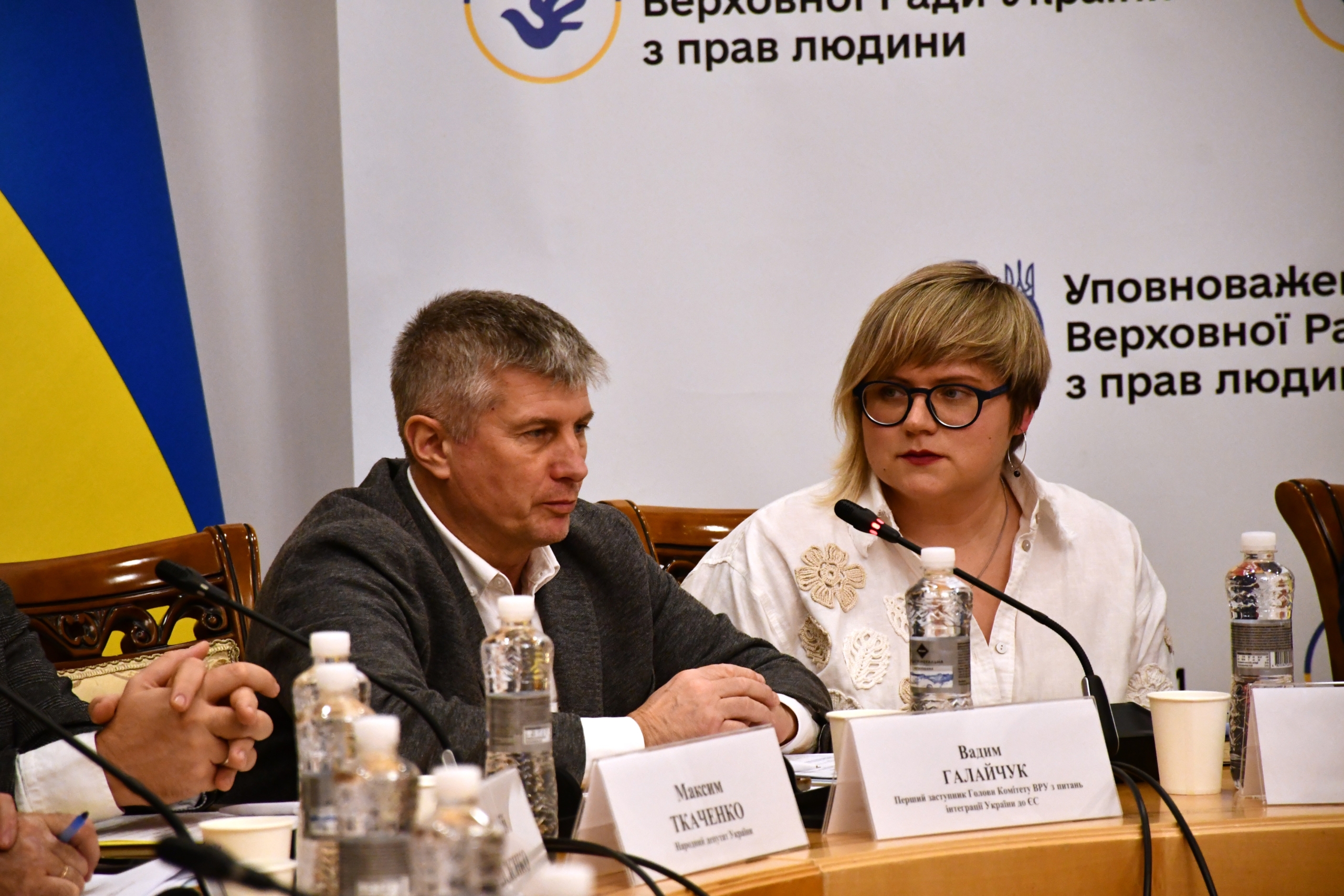 Photo: Vadym Halaichuk, Alena Lunova
 During the event, special attention was paid to analysing the provisions of draft law No. 13181 from the perspective of the Paris Principles and standards for the work of national human rights institutions. Representatives of human rights organisations emphasised that, in its current form, the document poses a number of risks to the independence and institutional capacity of the Commissioner.
Tetiana Pechonchyk, Head of the Board of the Human Rights Centre ZMINA, noted that passing the law without substantial revisions may not strengthen, but rather weaken, the national human rights institution.
She emphasised that the document contains a number of positive provisions that the human rights community has long supported and advocated for. In particular, this includes lowering the age limit for candidates for the position of Commissioner. Among the positive innovations, the Head of the Board of ZMINA also mentioned the expansion of the institution’s powers in the field of international cooperation and human rights protection, granting the Commissioner the right to appeal to the Verkhovna Rada with proposals on the ratification of international treaties in the field of human rights, facilitating the documentation of war crimes in the context of Russia’s armed aggression against Ukraine, participation in the return of Ukrainian citizens from the territory of the aggressor state, as well as the possibility of initiating the creation of temporary investigative or special parliamentary commissions.
At the same time, Pechonchyk outlined the key reservations of the Human Rights Centre ZMINA, which primarily concern the involvement of civil society in the activities of the Commissioner’s institution, in particular in the procedure for their election.
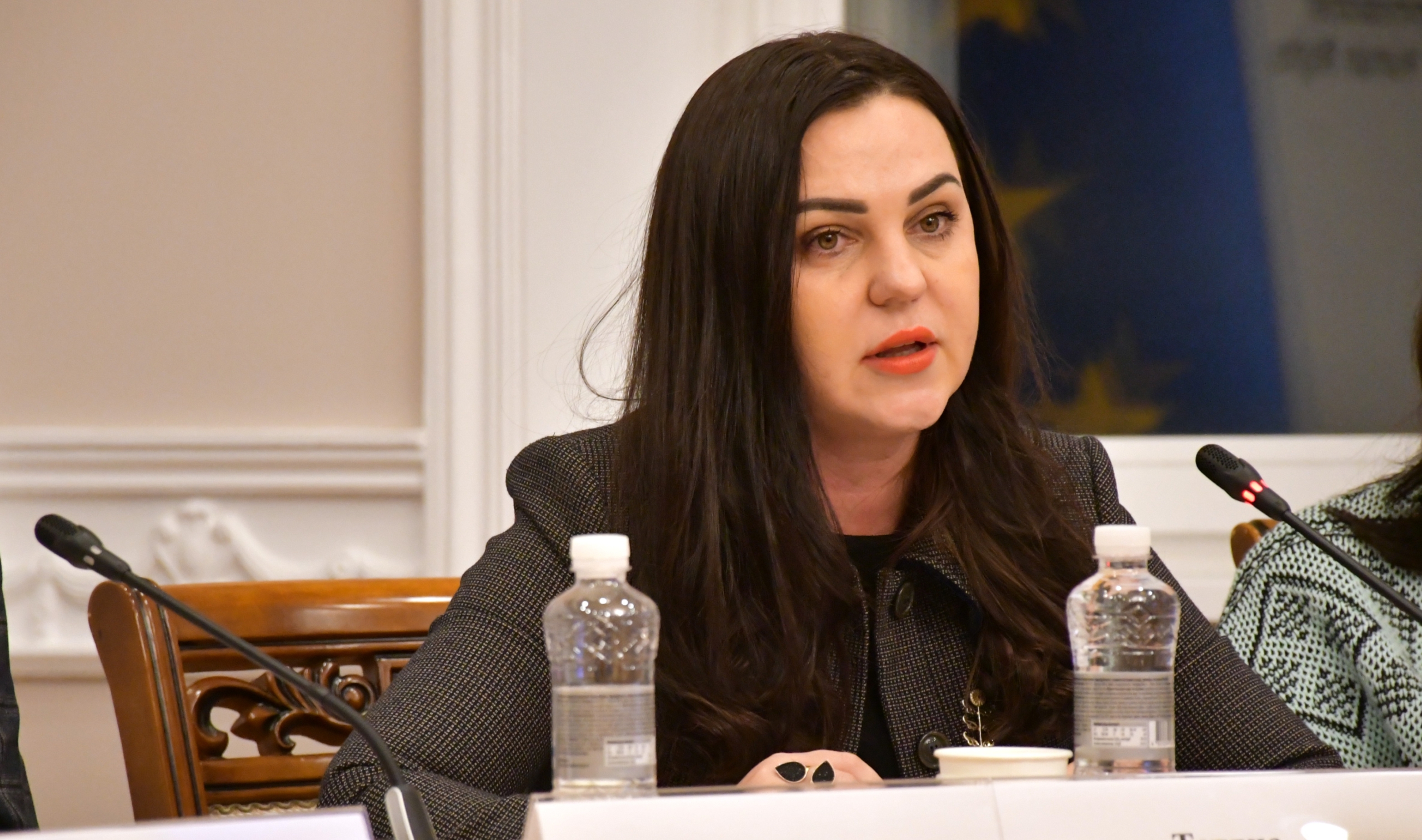 Photo: Tetiana Pechonchyk
According to her, the procedure for voting for candidates for the position of Commissioner proposed by the draft law does not comply with international standards: “The UN Paris Principles provide for ensuring pluralistic representation of legal, civil society and other societal actors in the procedures for establishing a national human rights institution. However, under this draft law, the procedure in practice remains unchanged“.
The Head of ZMINA noted that the second systemic issue is the overly broad scope of entities subject to the Commissioner’s oversight. She noted that the draft law provides for the possibility of submitting the Commissioner’s response acts not only to state authorities and local self-government bodies, but also to NGOs, enterprises and institutions, which, in her opinion, goes beyond the constitutional mandate of the institution.
“The Commissioner must first and foremost consider complaints regarding human rights violations by state authorities. Such broad control powers over NGOs are excessive and problematic from the point of view of the Constitution“, Pechonchyk emphasised, adding that the Human Rights Centre ZMINA supports the approach of adopting the draft law in the first reading, followed by thorough revision taking into account the comments of the human rights community.
The civil society representatives and human rights defenders paid particular attention to the procedure for electing the ombudsman. In their opinion, the open roll-call voting for candidates proposed in the draft law does not allow MPs to make decisions independently of the will of political factions, which makes it difficult to elect truly independent candidates. According to human rights defenders, the election of the ombudsman should take place by secret ballot.
During the discussion, participants also focused on the practical steps needed to finalise the draft law for the second reading, in particular the importance of involving experts and international partners in this process.
Svitlana Kolyshko, Project Manager for Human Rights and Access to Justice at the United Nations Development Programme in Ukraine, drew attention to the issue of the independence of the Commissioner’s institution and the level of trust in it. She emphasised that the effective work of the institution depends not only on formal legal norms, but also on how clear and protected its independence is for all participants in the process: “If independence is not obvious and clear to everyone, even a professionally strong leader will always be at risk of either rejection or premature termination of their powers“.
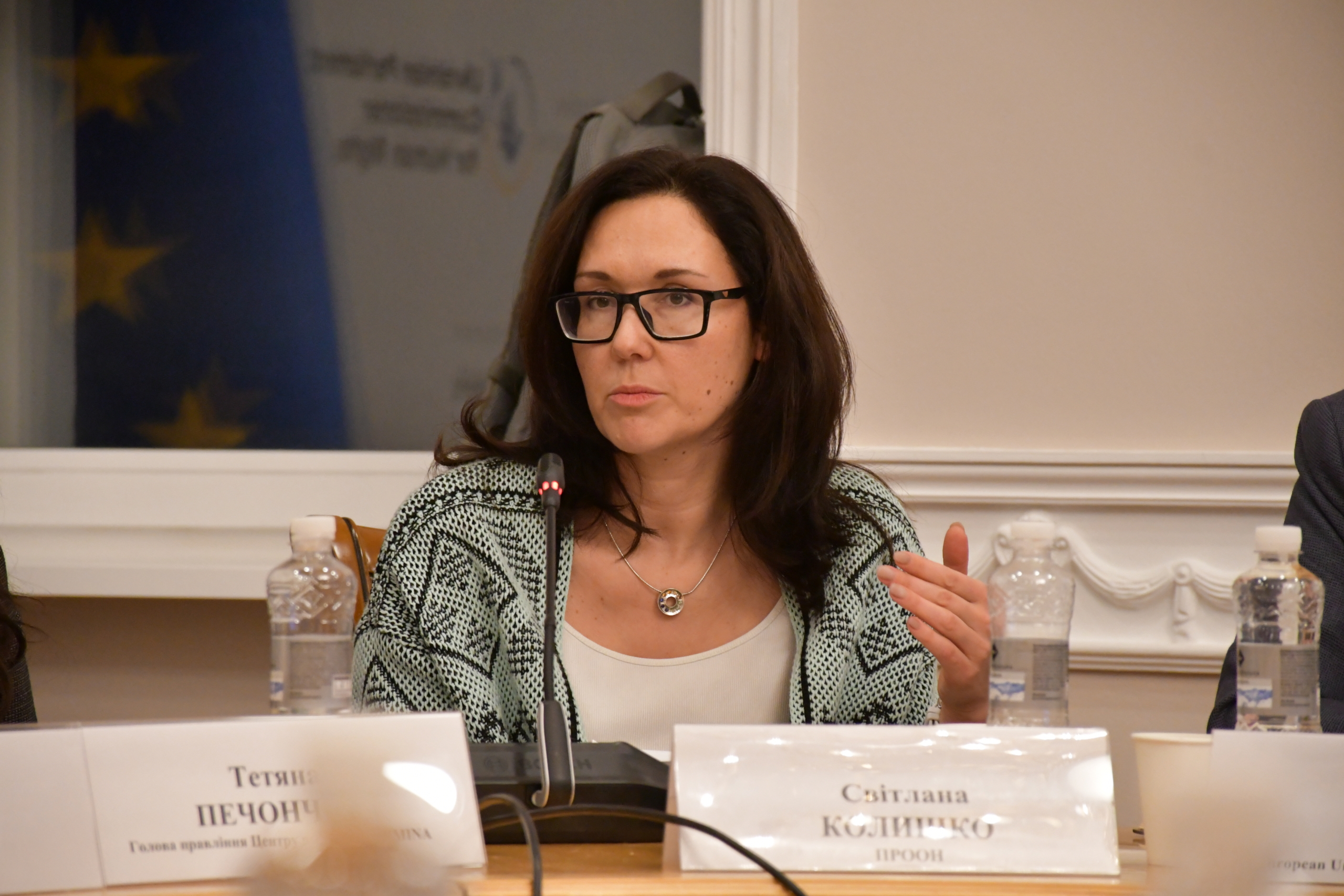 Photo: Svitlana Kolyshko
She also emphasised that the financial independence of the institution is key to implementing its expanded mandate, including human rights monitoring, implementation of recommendations and legal awareness-raising activities. Without adequate funding, it is impossible to ensure the effective work of the Secretariat and the high-quality performance of the Ombudsman’s functions.
“Ukraine already has a strong national human rights institution. Our task is to ensure that it remains independent and becomes even stronger“, Kolyshko concluded.
Volodymyr Yavorskyi, Programme Director at the Centre for Civil Liberties, noted that the draft law does not address the key systemic problems of the institution. He also drew attention to the need for separate reforms in the areas of personal data protection and anti-discrimination, as well as the importance of harmonising legislation with the Constitutional Court’s ruling on citizens’ right to appeal.
Yavorskyi also added that the proposed procedure for electing the Commissioner does not guarantee the independence of the position and does not provide for public participation: “Under the current version of the law, candidates must have experience in human rights activities, but this requirement has never actually been enforced. The draft law adds a provision on “at least ten years of experience in the field of protecting human and civil rights and freedoms”, but its content and verification criteria remain vague and declarative“.
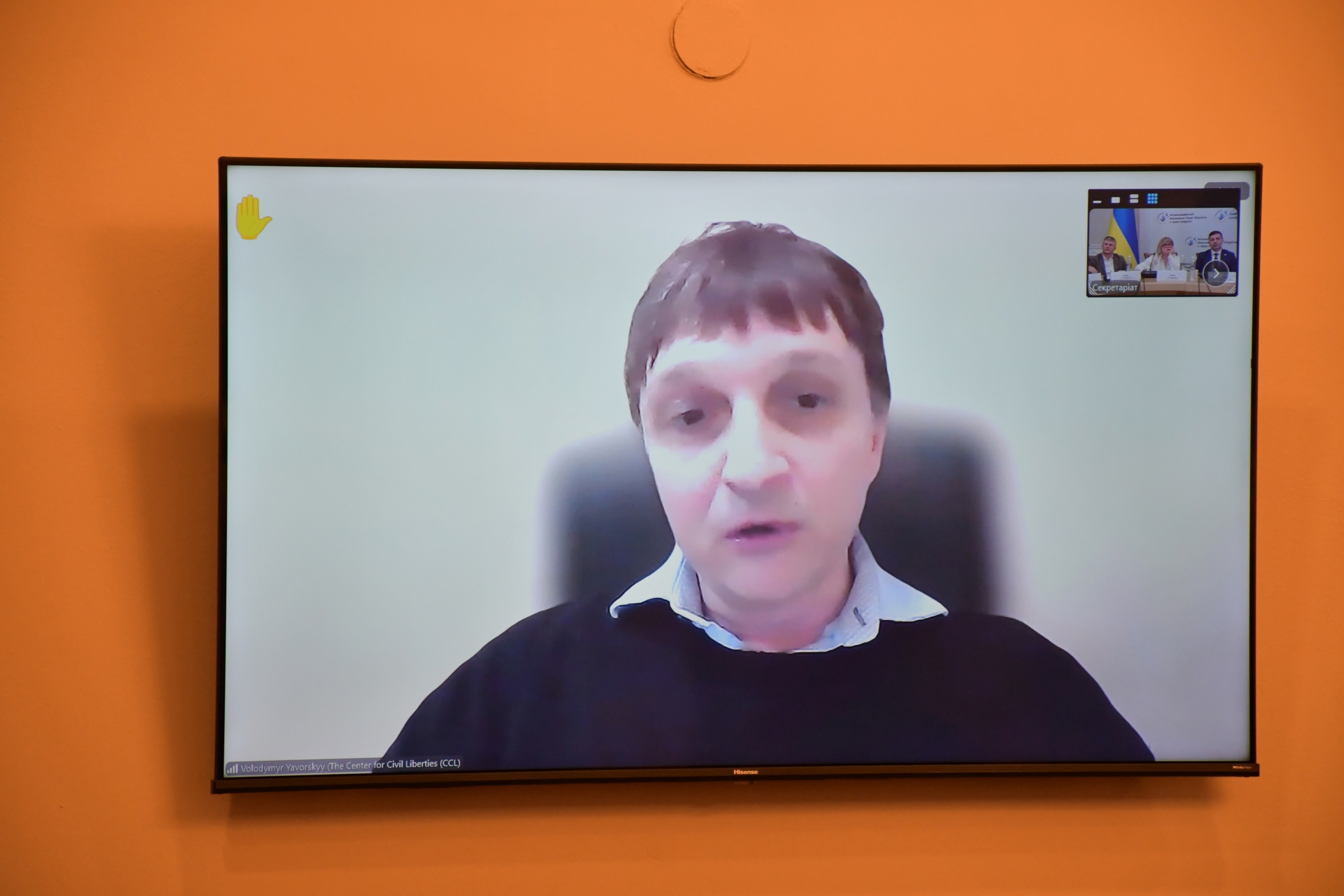 Photo: Volodymyr Yavorskyi
The event was moderated by Alena Lunova, Advocacy Director of the Human Rights Centre ZMINA
As a result of the discussion, participants agreed that the adoption of a new law on the Ombudsman would only be possible subject to its substantial revision in line with international standards and the preservation of the institution’s genuine independence.
We would like to remind you that the Human Rights Centre ZMINA previously published a detailed analysis of draft law No. 13181, in which it emphasised that the proposed version of the Law of Ukraine “On the Commissioner of the Verkhovna Rada of Ukraine for Human Rights” does not fully comply with international standards, in particular the Paris and Venice principles. Key concerns include the risks of excessive parliamentary influence on the Commissioner’s activities, unclear guarantees of institutional independence, and problematic approaches to the formation and functioning of the Secretariat.
This event was organised by the Human Rights Centre ZMINA in cooperation with the Office of the Ukrainian Parliament Commissioner for Human Rights and with the support of the project “Strengthening Ukraine’s EU Accession in the Rule of Law” (3*E4U), implemented on behalf of the German Federal Foreign Office by Deutsche Gesellschaft für International Zusammenarbeit (GIZ) GmbH as part of the project “Human Rights at the Centre of Ukraine’s European Integration”, which is implemented by the NGO Information Centre for Human Rights with the support of GIZ.
If you have found a spelling error, please, notify us by selecting that text and pressing Ctrl+Enter.