Manifesto for the Day of Resistance to the Occupation
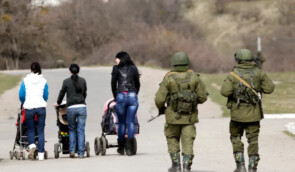
In 2014, Russia launched a war against Ukraine, which began with the occupation of the Crimean Peninsula. For more than 12 years, part of our country’s territory has been under Russian control. Millions of Ukrainian citizens live in danger every day because of the occupation. Russia unlawfully detains and tortures thousands of civilians, abducts, militarises and indoctrinates Ukrainian children, imposes its own citizenship on the residents of the territories it has seized, confiscates property and commits other crimes, turning them into daily practices. People under occupation live in conditions of daily coercion and the absence of a state that can protect their rights. Despite this, Ukrainian citizens under occupation resist every day.
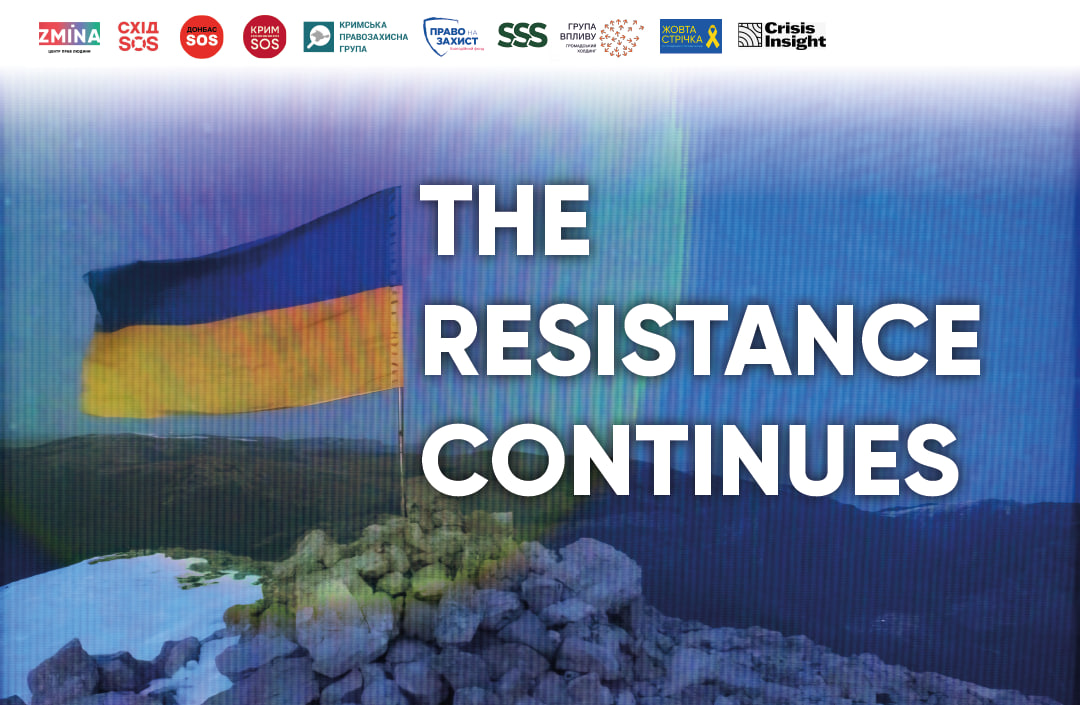
This resistance reminds the world of Russia’s crime of aggression and calls upon active, coordinated and real action from democratic countries where human rights are not just empty words. History proves once again that appeasing an aggressor encourages them to commit even more crimes.
We, representatives of civil society organisations dealing with the protection of the rights of victims of war, including residents of the temporarily occupied territories,
consider that the only reason for the prolonged occupation of part of Ukraine’s territory is the aggression of the Russian Federation. The only way to protect our citizens living in the temporarily occupied territories of Ukraine is to completely de-occupy these territories and restore Ukrainian state authority over them;
affirm that the duration of the occupation does not make it normal, and we have no right to become accustomed to people’s suffering and to devalue their fight by remaining silent;
acknowledge that while the occupation continues, our people remain — those living in cities and villages seized by the Russian Federation and those who have been forced to leave. These people require systematic state support and protection;
insist that Ukraine should maintain ties with the residents of the temporarily occupied territories, provide comprehensive assistance for their relocation, and create conditions for their reintegration into the territories controlled by the Ukrainian government;
are convinced that measures to ensure national security must take into account the conditions in which Ukrainian citizens live and should not be used as a justification for excessive restrictions on the rights of residents of the temporarily occupied territories;
emphasise that it is important to speak about the temporarily occupied territories and the people who live there in a balanced and responsible manner, without politicising or stigmatising the experience of living under occupation. It is important to avoid statements that create prejudice or hostility, and instead send a clear message to citizens under occupation: Ukraine remembers them, will not abandon them, and is working to protect them and return their territories;
call upon international partners to ensure support for the Defence Forces of Ukraine and the protection of civilians throughout the entire sovereign territory of Ukraine, and to oppose pressure on the Ukrainian authorities to agree to an expansion of territories occupied by the Russian Federation.
The Manifesto is open for signature.
Support it and join the collective position in defence of Ukrainian citizens living under temporary occupation.
The Manifesto can be signed here until 1 March 2026.
After the collection of signatures is completed, the Manifesto will be submitted to the Office of the President of Ukraine, the Cabinet of Ministers of Ukraine, the Verkhovna Rada of Ukraine and other state authorities and international partners of Ukraine.
Every signature matters.
- The Human Rights Centre ZMINA
- NGO Donbas SOS
- CF EAST-SOS
- CF Right to Protection
- NGO Civil holding GROUP OF INFLUENCE
- NGO Crisis Insight
- NGO CrimeaSOS
- CO Stabilization Support Services
- Crimean Human Rights Group
- The “Yellow Ribbon” civil resistance movement against the occupation
- Yelyzaveta Kutsuk, Communication Manager, NGO Donbas SOS
- Svitlana Barysheva, Appeals Intake Specialist, Donbas SOS NGO
- Olena Demeshko, Communications Specialist, NGO Donbas SOS
- Oleksandra Dvoretska, Human Rights Defender, Co-Founder, CF East SOS
- Dina Urikh, Programme Director, CF Plakhta
- Dmytro Yaprakh, Legal Advocacy Adviser, RCC
- Yuliia Zakladna, Director, Charitable Foundation NASHI
- Olena Barchuk, Deputy Chair of the Board, Charitable Organisation Rokada Charitable Foundation
- Petro Hrabovyi, Officer for Pre-Integration Work, Goethe-Institut e.V.
- Anna Ovcharenko, Director, NGO Tochka Skhodu
- Daria Svyrydova, Partner, AZONES Law Firm
- Khrystyna Solonenko, Donetsk, Yellow Ribbon movement
- Liliia Aleksandrova, Activist, the Yellow Ribbon movement
- Veronika Nosal, Activist, the Yellow Ribbon movement
- Viktor Shkurko, Investment Analyst, JSC Concern Galnaftogaz
- Yana Burlutska, Co-Founder, NGO Camellia
- Serhii Lushnikov, Director, LLC DZPM
- Artur Sumarokov, Playwright, Film Critic
- Yuliia Tsarkova, Civic Activist
- Hanna Budii, IDP
- Natalia Kurbatova, IDP from Donetsk
- Iryna Dumych
- Tetiana Petrushyna
- Olha Pantelieieva
- Maryna Kuzhdina
- Oksana Shkarun
- Yevhen Hordiienko
- Veronika Sheldahaieva
- Arina Sharapova
- Sofiia Lysenko
- Rostyslav Karpenko
- Tetiana Musiienko
- Anatolii Kovalenko
- Lidiia Kuzemska
- Viktor Yelnikov
- Tetiana Radchenko
- Olha Kadochnykova
- Esma Idrisova
- Kateryna Myronova
- Mariia Kondratiuk
- Denys Soldatov
- Nataliia Shevchuk
- Mariia Kotsiubynska
- Iryna Duhynets
- Olha Sladkova
- Hanna Chulturova
- Mykhailo Nabokin
- Yevhen Benzyn