Ukrainian human rights defenders called for strengthening support for the International Criminal Court amid political pressure
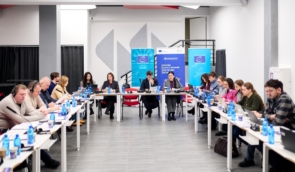
Against the backdrop of increased political and financial pressure on the International Criminal Court (ICC), Ukrainian human rights defenders held a special event during the 24th Assembly of States Parties to the ICC, where they expressed solidarity with the Court and emphasised its key role in ensuring global accountability for the most serious international crimes. The side event, “Through Ukraine’s Lens: Defending the ICC Now for All Victims of Atrocity Crimes”, was organised by ZMINA, MIHR and ULAG. Participants discussed the resilience of international criminal justice, preserving the independence of the ICC, and the importance of its work for victims of war crimes in Ukraine and around the world.
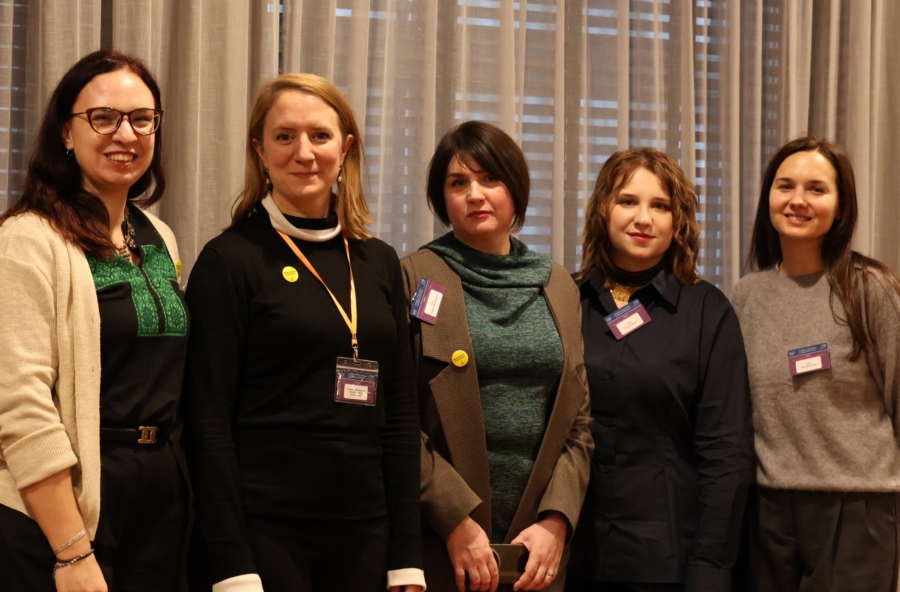 Photo credits: Coalition for the International Criminal Court (CICC)
According to Alix Vuillemin, Executive Director of the Womenʼs Initiative for Gender Justice, who moderated the discussion, the ICC currently lacks funding, faces excessive workload and attempts at political influence.
“Despite this, the ICC remains a global mechanism capable of responding to the most serious crimes. Ukraine demonstrates this particularly clearly: with the start of the full-scale invasion, numerous accountability mechanisms have been activated, from national investigations to cases under universal jurisdiction. Our task is to understand how the ICC can function in the circumstances in which it finds itself and how we can strengthen it at this time,” she noted.
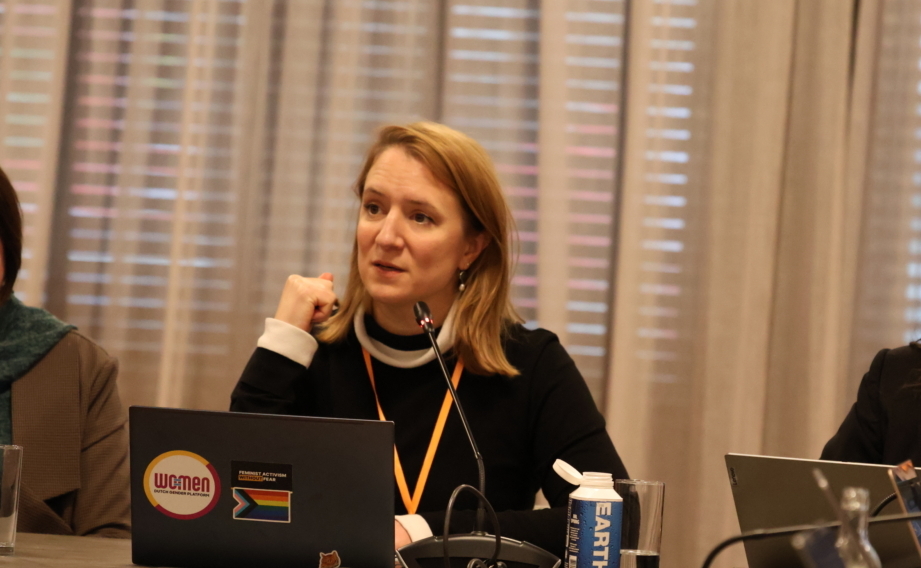 Photo: Alix Vuillemin; Credits: Coalition for the International Criminal Court (CICC)
According to Ukrainian human rights defenders, Russiaʼs armed aggression against Ukraine is a test of the Courtʼs institutional capacity and should demonstrate whether the Court is capable of acting. For example, in the field of investigating crimes against humanity, which Ukraine has only recently criminalised, a significant proportion of these crimes committed between 2014 and 2024 can only be investigated by the ICC without hindrance.
“Working on Ukrainian cases is an opportunity for the ICC, but the ICC is also an opportunity for Ukraine. If the Court achieves results in such cases, it will strengthen confidence in international justice as a whole. If this does not happen, the global legal system will face much more complex challenges,” emphasised Anna Rassamakhina, Head of the War and Justice Department at the Media Initiative for Human Rights.
She also emphasised that the ICC is of global importance and is not a mechanism focused on any one conflict. That is why Ukraine is interested in the effectiveness of the Court, which currently remains perhaps the only instrument in the international justice system for bringing international criminals to justice.
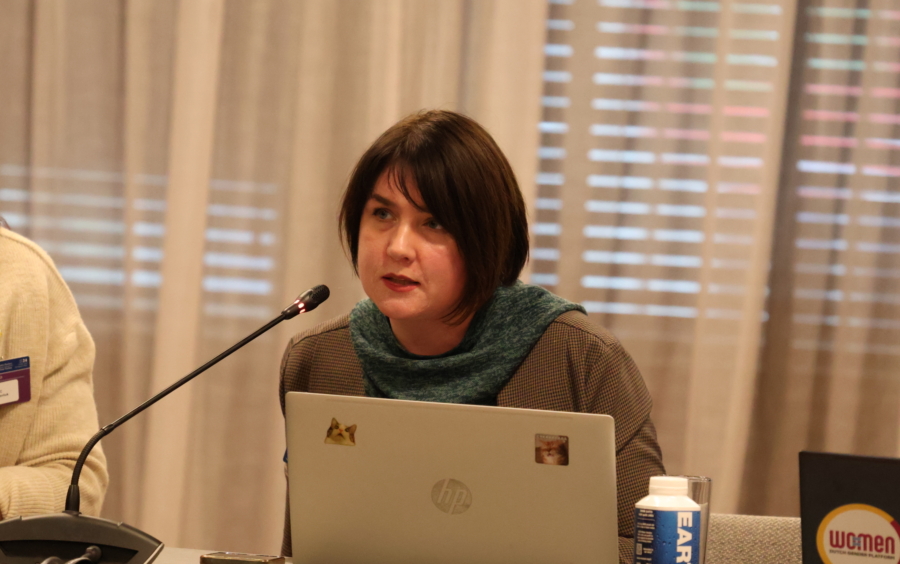 Photo: Anna Rassamakhina; Credits: Coalition for the International Criminal Court (CICC)
According to Onysiia Syniuk, Head of the Analytical Department of the Human Rights Centre ZMINA, the trends in recent peace negotiations — demands to grant amnesty to all war criminals and disregard for basic norms of international law — are directly related to the attitude of individual participating states towards the ICC.
“Refusal to cooperate with the Court is a vicious circle. It is both a symptom and a cause of the devaluation of the obligations undertaken by the ICC member states, as well as an undermining of its authority. We need a strong, impartial, non-politicised international tribunal. But this requires building a broader coalition for the ICC beyond the traditional European bubble. The reason why some states outside the European continent are not more actively involved in the Courtʼs activities is that they are disappointed with the ICCʼs response to situations in their regions. And that is precisely why they are most interested in making the Court stronger and more effective,” Syniuk emphasised.
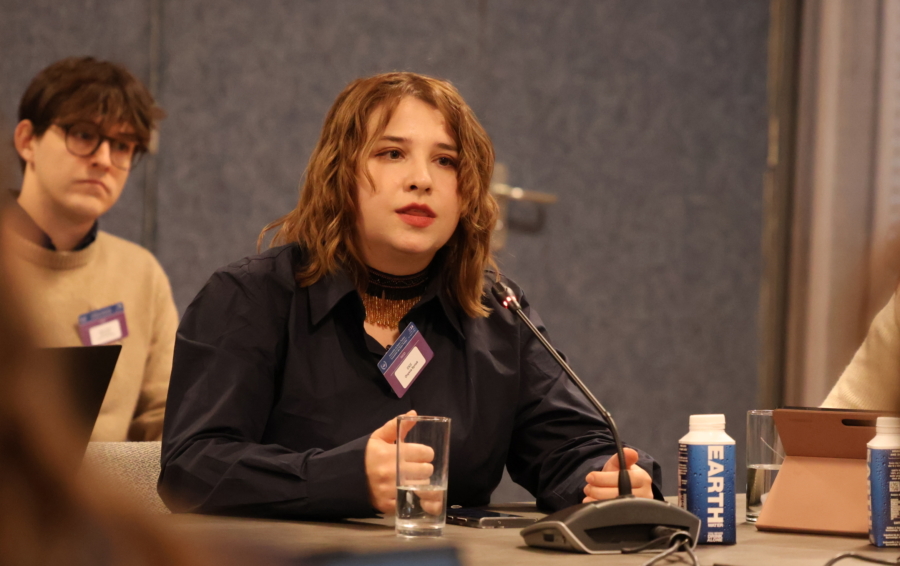 Photo: Onysiia Syniuk; Credits: Coalition for the International Criminal Court (CICC)
Alina Pavliuk, Legal Coordinator and Analyst at ULAG, recalled that the worldʼs response to Russiaʼs full-scale aggression in Ukraine in 2022 was a striking example of how political will strengthens the mechanisms of justice. At that time, it was the decision of the ICC member states that enabled the Courtʼs prosecutor to quickly launch an investigation into the situation and open a field office in Ukraine. According to the expert, this demonstrated the international communityʼs ability to act not only at the political level, but also in terms of achieving justice.
“Over the past three years, other countries have consistently focused their attention on Ukraineʼs national justice system. The development of capacity to investigate serious international crimes through direct expert assistance and technical support has contributed to strengthening positive complementarity in Ukraineʼs cooperation with the Court. Despite all the attention and support for Ukraineʼs national efforts in the field of justice, we still see many challenges to the effective functioning of the system. We must be realistic and not expect the national system to be able to ensure accountability without integration into a broader architecture of justice,” said Pavliuk.
She noted that against the backdrop of changing international priorities and growing pressure on the ICC, the level of support for Ukrainian judicial institutions has declined significantly. As a result, many victims in Ukraine are increasingly relying on the ICC as the last resort for justice.
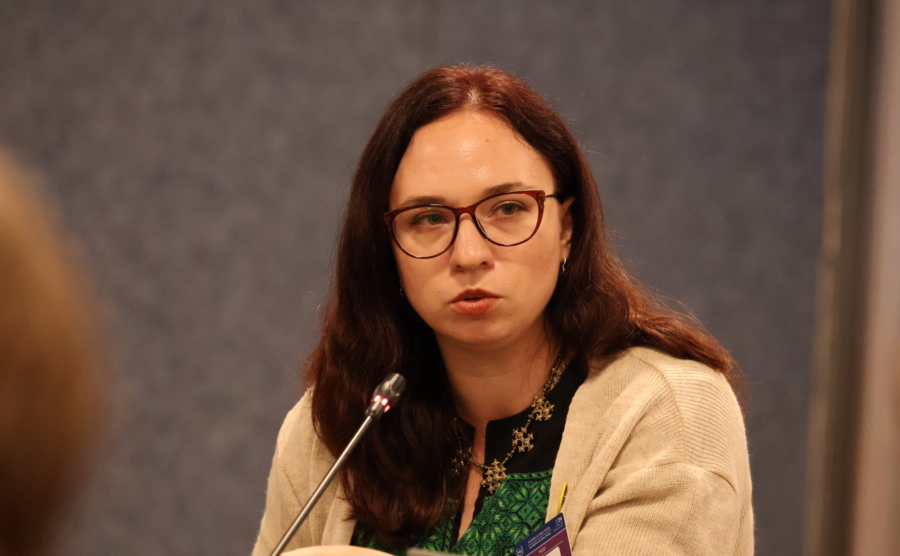 Photo: Alina Pavliuk; Credits: Coalition for the International Criminal Court (CICC)
In addition, member organisations of the Ukraine 5AM Coalition issued a statement during the General Debate of the 24th Assembly of States Parties to the ICC. They emphasised the critical role of the Court in Ukraine and beyond and urged member states to defend the institution, promote further progress in the investigation of international crimes committed through Russian aggression against Ukraine, and support victim-oriented justice.
If you have found a spelling error, please, notify us by selecting that text and pressing Ctrl+Enter.