Human rights organizations call on the government to ensure dignified evacuation and accommodation for people in need of inpatient care
Amid the ongoing armed aggression by the russian federation, it is the state’s responsibility to safeguard the lives and well-being of people who cannot evacuate on their own and require inpatient care after displacement.
Human rights organizations call on state authorities, local governments, and national and international partners to ensure that such individuals are evacuated and accommodated in safe and dignified conditions. At the same time, it is crucial to implement transitional solutions within the support system during periods of war and mass displacement, particularly as part of the ongoing deinstitutionalization reform, which must continue to consider wartime challenges.
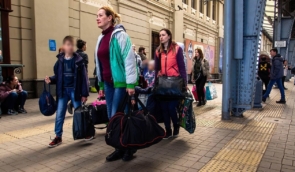
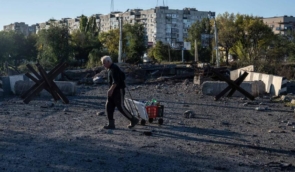
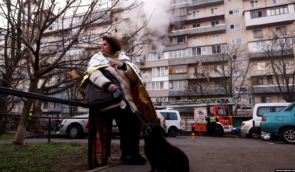
Evacuation efforts continue across several frontline regions, with the largest operations in the Donetsk and Dnipropetrovsk regions. More than a million people require evacuation, including at least 100,000 children and people with limited mobility. Many of them need continuous care, social support, medical treatment, and, critically, accessible and appropriately adapted housing. However, according to the National Social Service of Ukraine, by the end of 2025, only 147 beds were available in residential institutions and inpatient departments – far fewer than needed to meet the scale of current evacuations.
Local authorities have been compelled to use existing community residential care facilities to provide emergency accommodation and support for evacuees in need of care. While this placement ensures immediate safety, continuity of care, and access to social services, it can become long-term due to a lack of clear procedures regarding the length of stay, assessment of individual needs, extension or termination of placement, and transition to services in host communities.
The state has introduced a support mechanism under Resolution No. 888 of the Cabinet of Ministers of Ukraine (06.08.2024), which provides social services, including inpatient care and supported accommodation, for internally displaced persons on the principle of “money follows the person.” This aligns with the goals of deinstitutionalization reform, raising standards for living conditions and service quality. Yet, these reforms are designed for gradual transformation and do not account for the scale of mass displacement. The limited number of facilities and services that meet these standards means there are not enough ready spaces to quickly accommodate evacuees, causing delays and prolonged stays in transit centers.
In the context of large-scale evacuations, Ukraine must simultaneously address two interrelated yet seemingly contradictory tasks. On the one hand, it is crucial to immediately save lives and relocate people to safer regions. On the other hand, it is necessary to ensure their eventual exit from existing institutions as services and forms of living that align with the deinstitutionalization reform are rolled out. This involves supporting and adapting existing institutions as tools for crisis response to humanitarian needs, while planning and gradually introducing new support formats in the community.
In this context, it is essential to provide a regulatory and organizational transition period for implementing the deinstitutionalization reform, taking into account the martial law regime and the large-scale displacement of the population. This period should be clearly time-bound and focused on a gradual exit from crisis forms of placement, while simultaneously introducing alternative support models and developing a comprehensive system of social services in host communities.
We support the initiative of the Ministry of Social Policy, Family and Unity to begin working on amendments to Government Resolution No. 888 and consider it crucial to continue improving the resolution to better address the needs of evacuation, accommodation, and care for people requiring support under martial law conditions.
We call on the Cabinet of Ministers of Ukraine to:
- Define mechanisms for crisis temporary accommodation and social support for people who cannot live safely on their own and require external care. This should include a clear specification of the grounds, duration, and conditions for extending or terminating such accommodation, as well as procedures for periodic assessment of individual needs and decision-making regarding further forms of social services.
- Recognize social services for inpatient care and assisted living provided to evacuated and internally displaced persons as services of national importance, ensuring their guaranteed funding from the state budget of Ukraine.
We call on international and national partners to provide financial and technical assistance for:
- Ensuring the evacuation and support of evacuees, including people who require inpatient care;
- Creating appropriate and safe conditions for temporary accommodation, and strengthening the capacity of existing institutions that receive evacuees with limited mobility;
- Developing social services in local communities and supporting the implementation of deinstitutionalization reform.
February 18, 2026
ZMINA Human Rights Center
East SOS Charity Foundation
Crisis Insight
Stabilization Support Services Charity Foundation
Donbas SOS NGO
CrimeaSOS NGO
Crimean Human Rights Group
Civil Holding “Group of Influence”
ROKADA Charitable Foundation
Right to Protection Charitable Foundation
If you have found a spelling error, please, notify us by selecting that text and pressing Ctrl+Enter.