How European integration can become an instrument for protecting the rights of IDPs and residents of the TOT: ZMINA presented a new analysis
The Human Rights Centre ZMINA presented an analytical report “European integration of Ukraine: new instruments and incentives to ensure the rights and opportunities of internally displaced persons and residents of the temporarily occupied territories of Ukraine”.
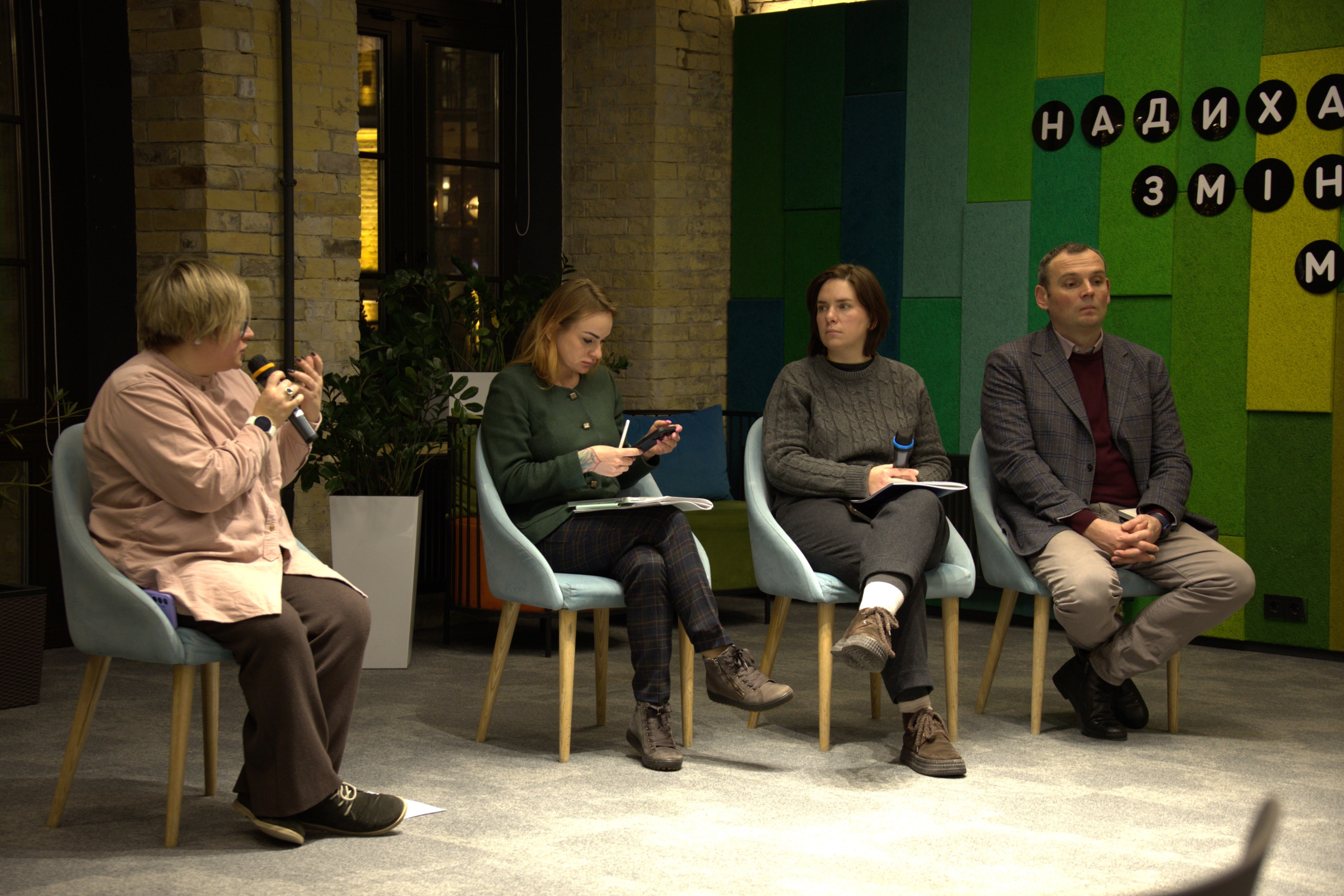 Photo: Alena Lunova, Kseniia Hedz, Olha Kuryshko, Oleksandr Kliuzhev
During the public presentation and discussion, human rights defenders, representatives of Parliament, the Ombudsman’s Office, state institutions and civil society discussed how systematically the rights of internally displaced persons (hereinafter — IDPs) and residents of the temporarily occupied territories (hereinafter — TOT) are integrated into Ukraine’s negotiation process with the EU and how European integration can serve as an instrument for overcoming the consequences of Russian aggression.
During the presentation of the analytical report, one of its authors, Oleksandr Kliuzhev, an expert on democratic development, electoral and European integration processes, stressed that the initial hypothesis of the study was the need to reform the existing European integration documents of Ukraine: “We proceeded from the hypothesis that our main efforts should be directed at reforming the documents that already exist at the level of the Ukrainian state within the framework of Ukraine’s negotiations with the EU“.
At the same time, according to him, the findings of the study revealed a significantly more complex picture. The key challenge identified by the analysis is the balance between the pace of European integration and public trust, in particular the trust of groups affected by the war.
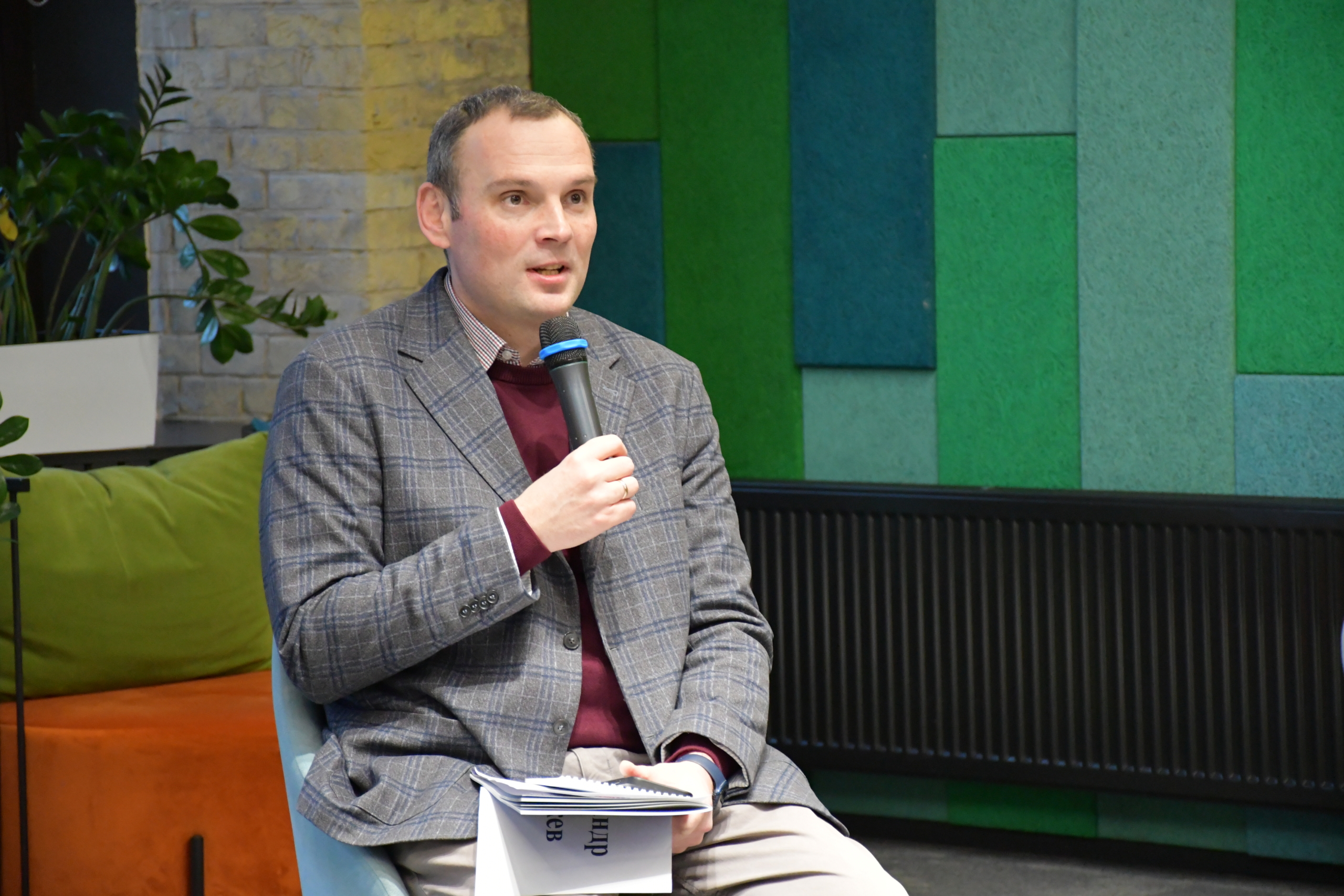 Photo: Oleksandr Kliuzhev
Kliuzhev warned that prolonged waiting of the results without tangible changes may lead to disappointment, as has already occurred in other candidate countries.
He noted that within the report the authors formulated general recommendations on how to avoid this “fatigue”, in particular, through more active use of European financial and political mechanisms to address the problems of IDPs and residents of the TOT.
Kliuzhev emphasised that the topic of the rights of war victims still remains insufficiently integrated into Ukraine’s negotiation documents with the EU: “Our study shows: the issues of the rights of internally displaced persons and residents of the temporarily occupied territories are often mentioned declaratively, but are not systematically integrated into roadmaps, negotiating positions, and reports within the framework of the EU enlargement process“.
According to him, the risk of such an approach is that reintegration and protection of the rights of victims are perceived as a separate humanitarian policy, rather than as a cross-cutting element of the rule of law, social policy, security, and recovery.
Diana Deputat, Co-author of the analytical report, legal analyst of the Human Rights Center ZMINA, explained that the study was aimed at assessing how systematically the issues of the rights of IDPs and residents of the TOT are integrated into key European integration instruments: “We analysed the negotiating framework, the Ukraine Facility, the annual reports of the European Commission within the Enlargement Package, as well as the Roadmap on the Rule of Law“.
According to her, there is currently no separate negotiation track dedicated to these issues, and Ukraine’s negotiating framework is generally typical for all/other candidate countries.
At the same time, in the financial instrument Ukraine Facility, which provides for 50 billion euros in assistance to Ukraine for the period 2024–2027, the topic of IDPs still appears: “The issue is raised partially, in particular regarding the creation of opportunities for the return of internally displaced persons and for persons who have temporary protection in the EU, as well as their reintegration into Ukrainian society“.
Deputat emphasised that European integration opens up much broader instruments for Ukraine to protect the rights of victims than is often realized at the national level: “European integration is not only about adapting legislation. It is about access to financial, institutional and political mechanisms that can be used to compensate for damage, restore communities, protect the rights of IDPs and residents of the TOT, and preserve human capital“.
 Photo: Diana Deputat
She also emphasised that without a clear vision for the reintegration of war victims, Ukraine risks losing some of the opportunities provided by the negotiation process with the EU.
After analysing the European Commission reports, Deputat drew attention to the evolution of the focus: in 2023, issues were raised mainly in the context of how Russia violates human rights in Ukraine. In 2024, the focus appeared on state policy – the National Strategy in the field of human rights, the reintegration of territories and the population. In 2025, according to her, the European Commission even more clearly outlined the protection of the rights of IDPs and residents of the TOT as a priority for Ukraine, in particular in the issues of citizenship, access to education and social services.
At the same time, the analyst emphasised that a number of critically important problems are still not being properly taken into account: “This concerns the consideration of information from documents on health status, property damage, and property rights, which is important for the Register of Damage for Ukraine and international compensation mechanisms“.
In conclusion, Diana Deputat stressed: “If these issues are not taken into account at this stage of the European integration process, they will only become more acute in the future. That is why the state must integrate them into policy development already at this stage“.
Dmytro Lubinets, the Ukrainian Parliament Commissioner for Human Rights, highlighted the difficult balance between the Ombudsman’s independent mandate and participation in the European integration process. He criticised the tendency to disregard the Ombudsman institution in European integration projects: “In 2025 alone, we prepared over 400 positions on European integration documents, but the institution was not included even once as a beneficiary. Without a government letter this is impossible, and there were no such letters“.
He emphasised that Ukraine’s European course is inseparably linked to the effective, rather than merely declaratory, protection of human rights, first and foremost of those most affected by the war.
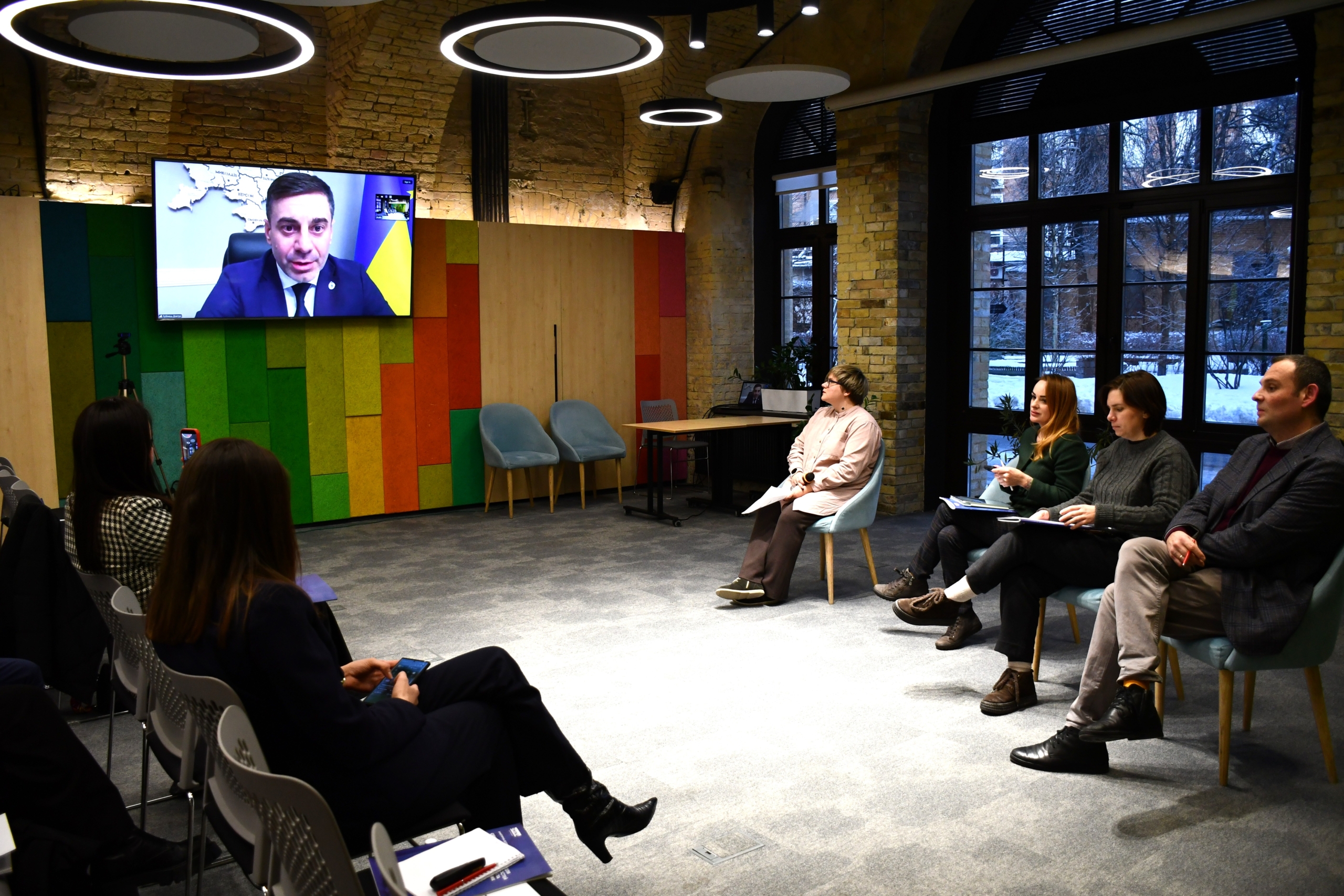 Photo: Dmytro Lubinets
According to Lubinets, the presented analytical document outlines solutions and instruments that need to be implemented now so that support for internally displaced persons and residents of the temporarily occupied territories is effective and tangible.
He noted that the success of the European integration process directly depends on how systematically Ukraine takes into account the rights of IDPs and residents of the TOT: “The Ombudsman’s Office monitors compliance with rights, considers appeals, and participates in dialogues with the EU. Last year, we received over 6,000 appeals and restored the rights of over 41,000 people from this category. We conduct legal education activities and help submit applications to the International Register of Losses“.
Lubinets expressed his willingness to support the creation of an expert platform on European integration based on the Ombudsman institution, with a special focus on the rights of IDPs and residents of the TOT, the creation of which is proposed by this analytical report.
Iryna Herashchenko, Member of Parliament of Ukraine and Co-Chair of the European Solidarity parliamentary faction, emphasised that European integration is a component of Ukraine’s victory: “For me, victory is the preservation of Ukrainian statehood and Euro-Atlantic integration. Ukraine as a member of the EU and NATO is a response to Russian aggression“.
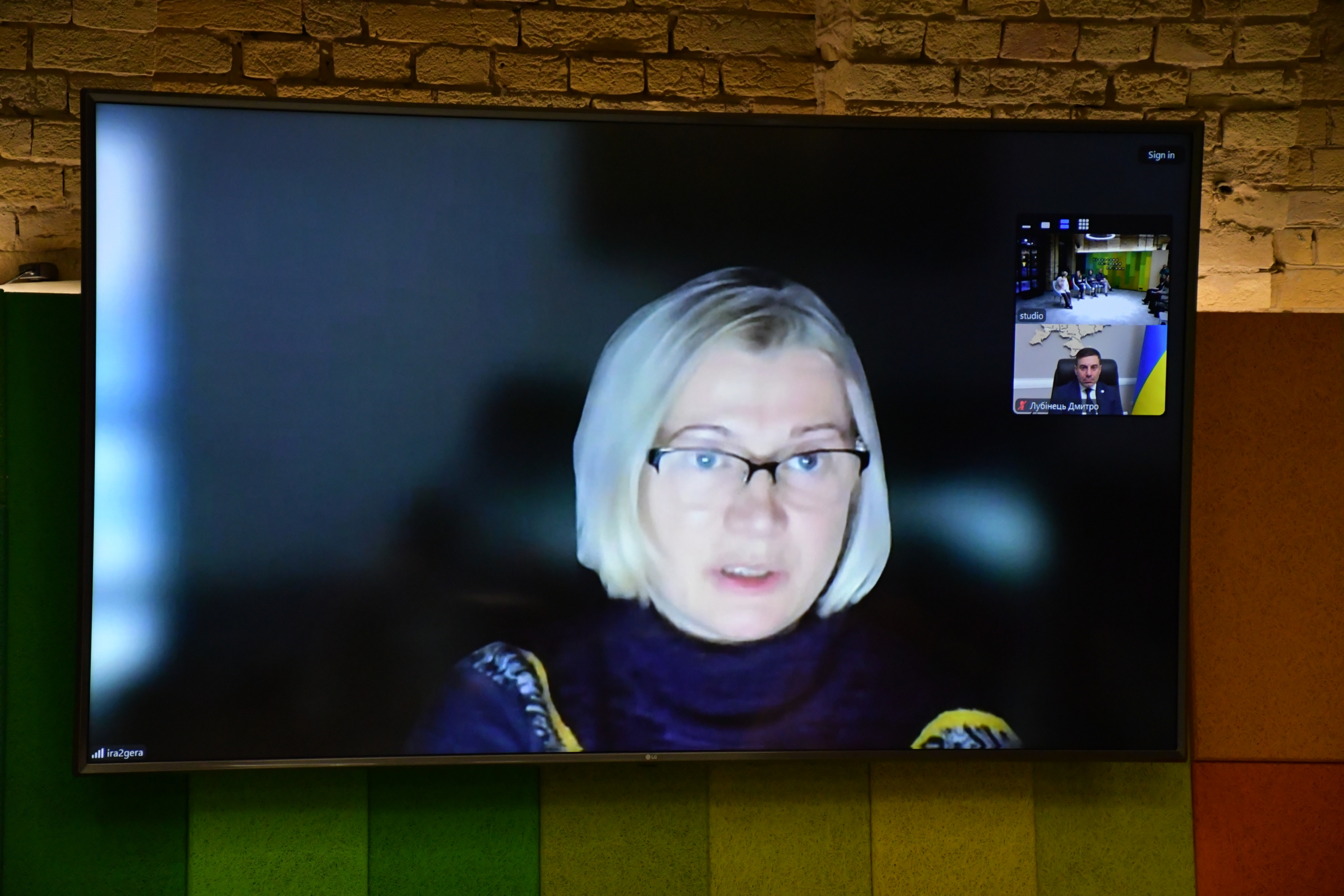 Photo: Iryna Herashchenko
Separately, the MP emphasised the importance of using frozen assets of the Russian Federation for recovery and support for victims.
“This is not only a matter of security, but also of justice for Ukrainians, in particular internally displaced persons“, Herashchenko noted.
Mariia Mezentseva-Fedorenko, Member of Parliament of Ukraine, Deputy Chair of the Committee on Ukraine’s Integration into the European Union and Chair of the Subcommittee on the Approximation of Ukrainian Legislation to EU Law, emphasised that the war has caused not only material damage but also large-scale non-material losses: “Non-material damage has been suffered not only by internally displaced persons. It also affects families who have lost breadwinners, civilians and military personnel held in captivity, and deported children and adults. This is a mass crime“.
She emphasised the direct connection between security, European integration and human rights: “Today, the security dimension of the EU is directly related to the protection of human rights — not only of member states, but also of candidate countries. This is a matter of a common European security space“.
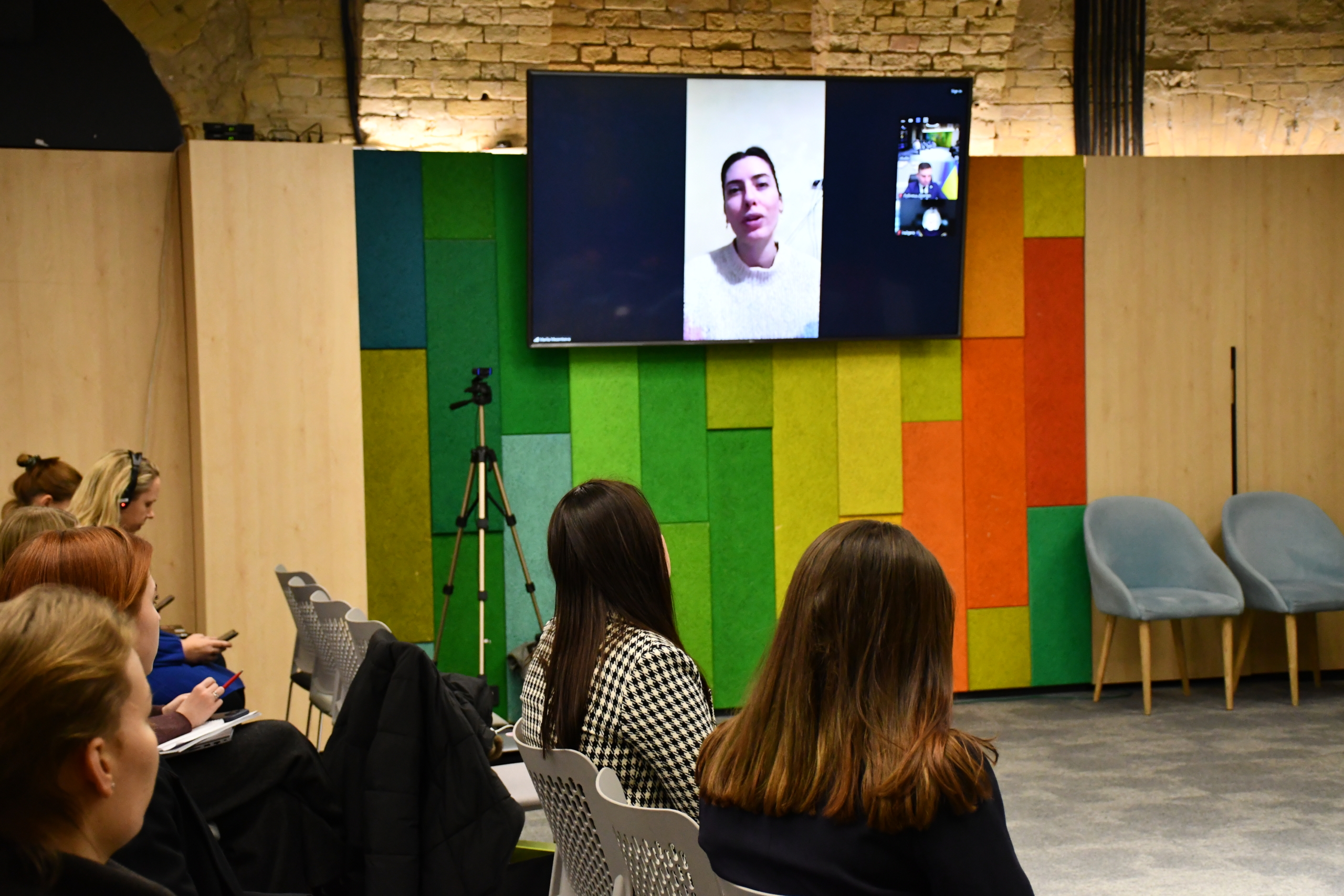 Photo: Mariia Mezentseva-Fedorenko
Olha Kuryshko, Permanent Representative of the President of Ukraine in the Autonomous Republic of Crimea, drew attention to the difficulty of practically integrating the issue of the temporarily occupied territories into negotiation processes: “European integration concerns the entire country. Temporarily occupied territories are part of Ukraine, and their exclusion from the negotiation process will not contribute to reintegration“.
She emphasized that the current model with dozens of negotiating groups makes it difficult to systematically consider the TOT issue and needs to be revised: “There should be a common vision that allows for the inclusion of the occupied territories in all negotiation clusters — from the environment to the rule of law.”
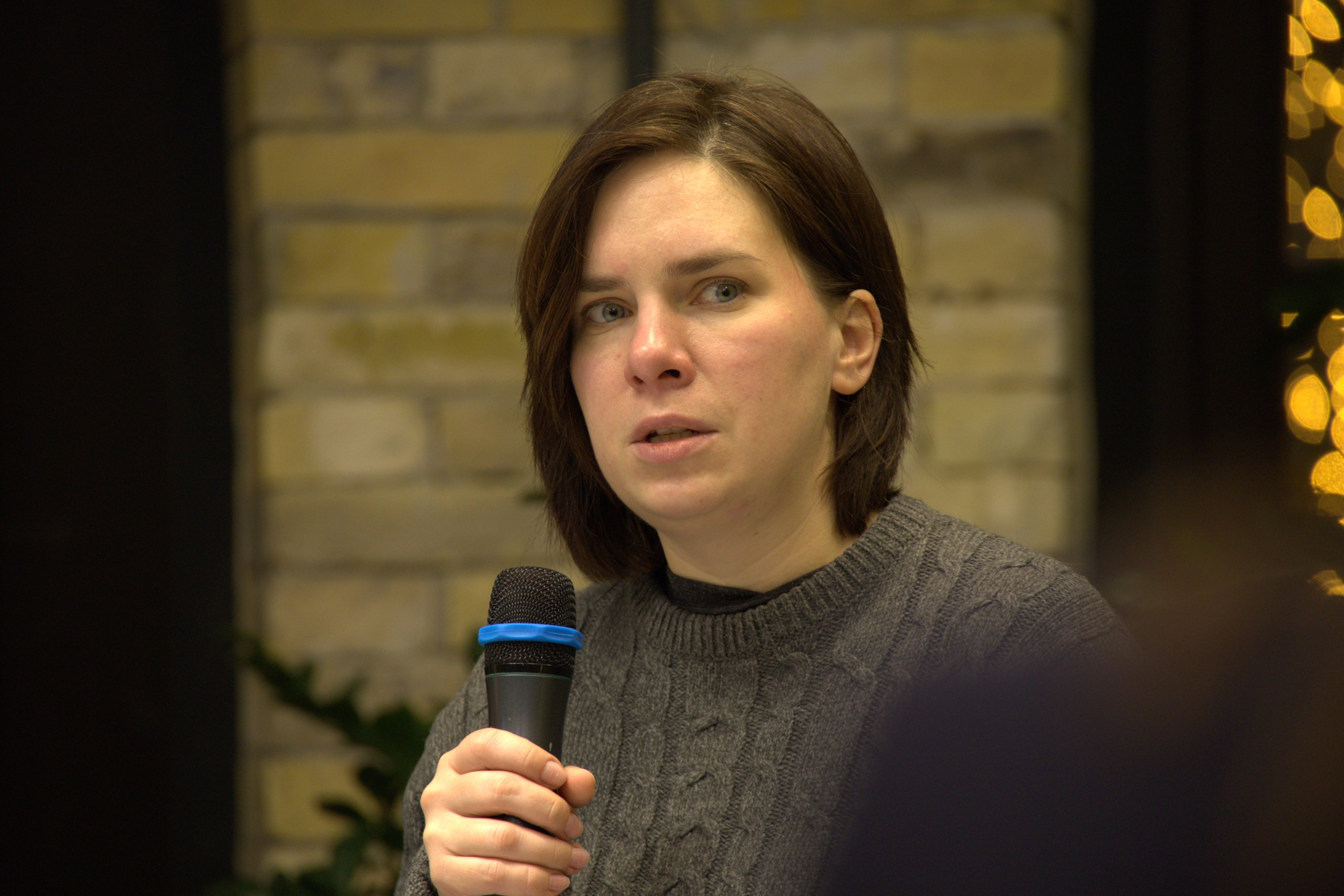 Photo: Olha Kuryshko. Photo credit: Mission of the President of Ukraine in the Autonomous Republic of Crimea
The participants of the event also discussed the risks of underestimating the topic of reintegration in European integration documents, the role of the EU as a humanitarian and security actor, the potential of the EU migration policy for the restoration of deoccupied communities, and the need for institutional solutions for systematic work with the rights of IDPs and residents of the TOT.
The event was moderated by Alena Lunova, Advocacy Director of the Human Rights Centre ZMINA.
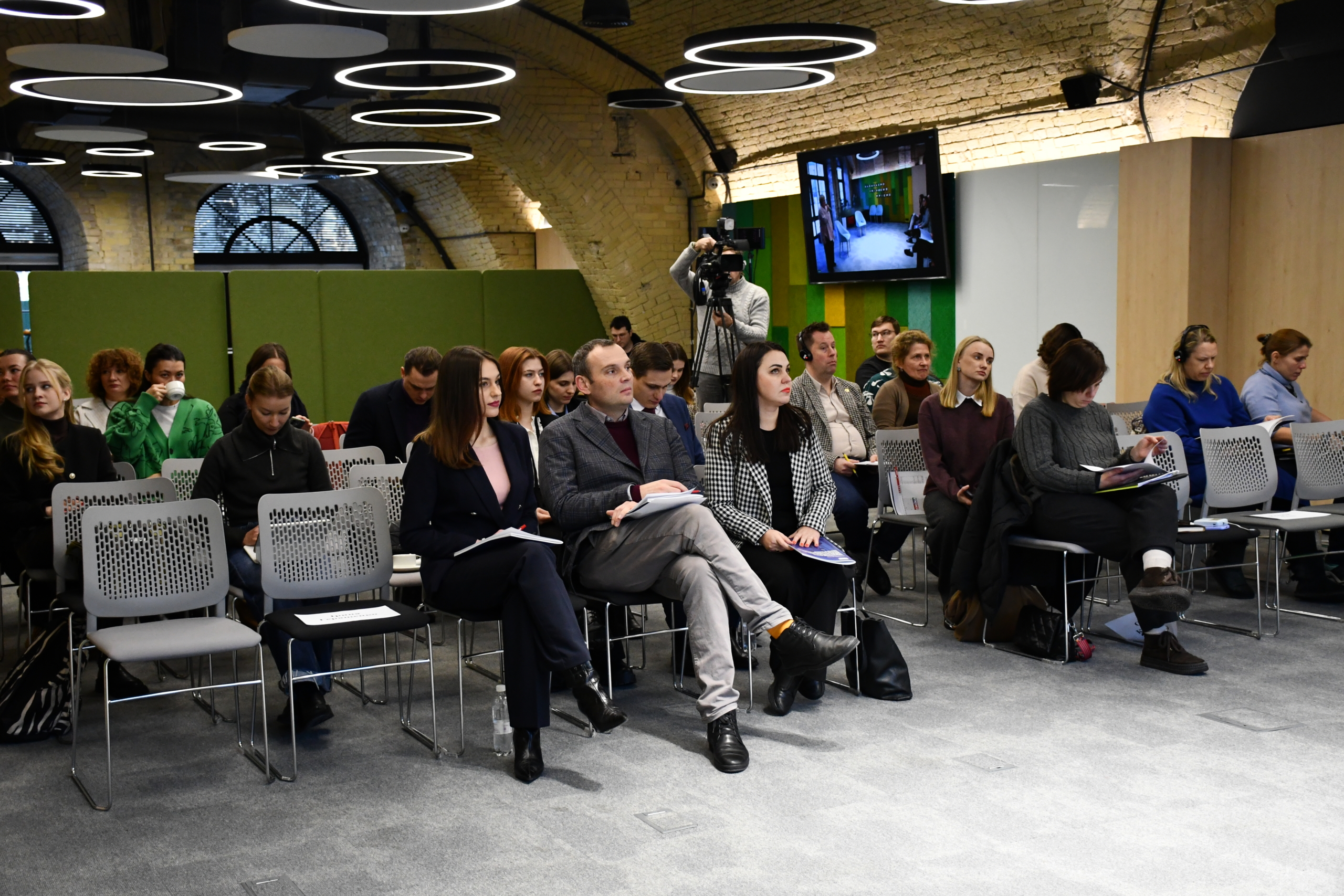
The presentation of ZMINA’s analytical report served as a platform for shaping a shared vision of how Ukraine’s European integration, in the context of the full-scale war, can become an instrument for restoring justice, strengthening the rule of law, and reinforcing social cohesion.
The full text of the analytical report is available in Ukrainian and English.
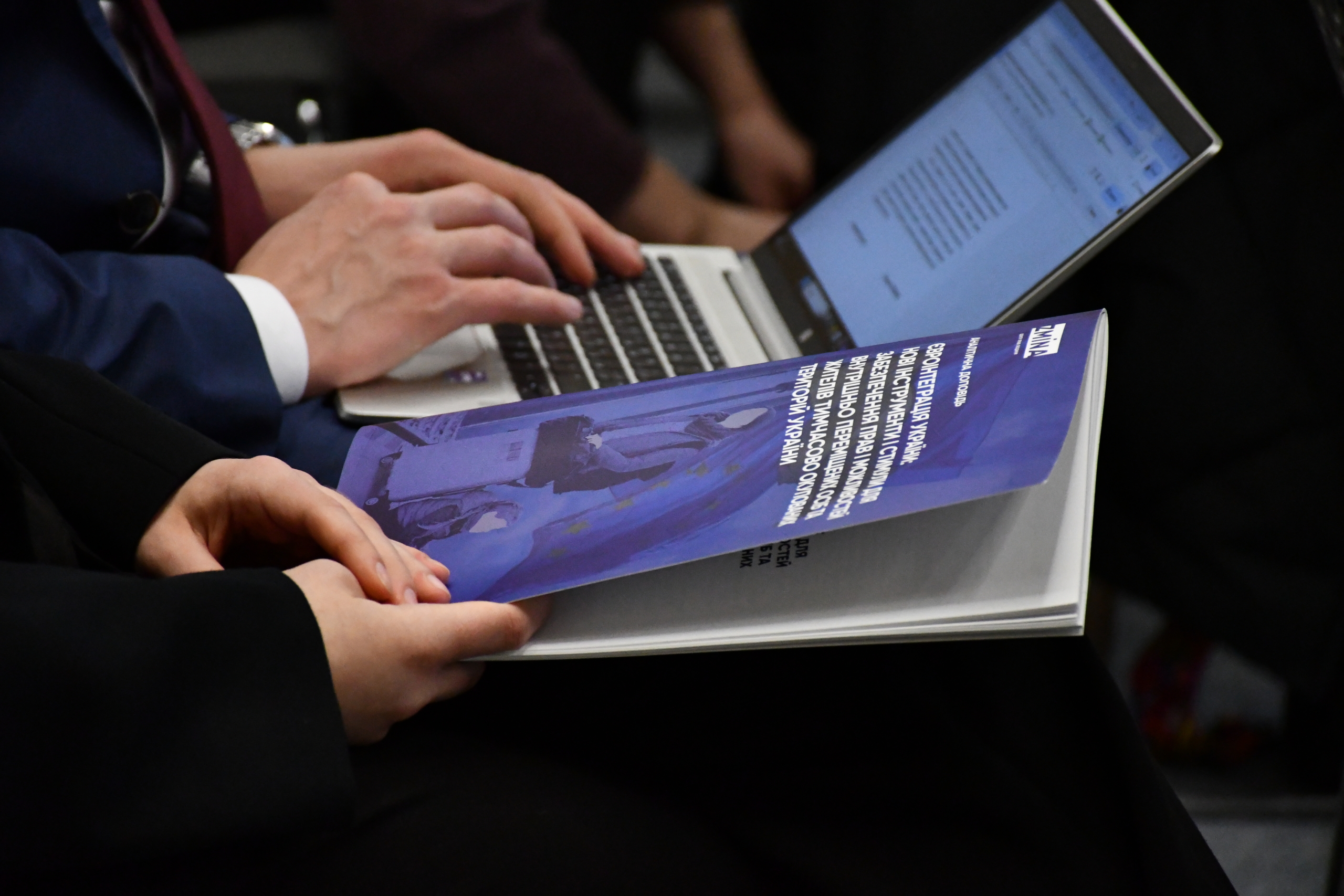
The event was organised by the Human Rights Centre ZMINA with the support of the project “Strengthening Ukraine’s EU Accession in the Rule of Law” (3*E4U), implemented by Deutsche Gesellschaft für International Zusammenarbeit (GIZ) GmbH on behalf of the German Federal Foreign Office, within the framework of the project “Human Rights at the Centre of Ukraine’s European Integration”, implemented by the NGO Information Centre for Human Rights with the support of GIZ.