How war crimes are documented in Ukraine
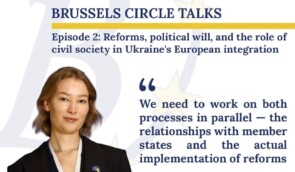
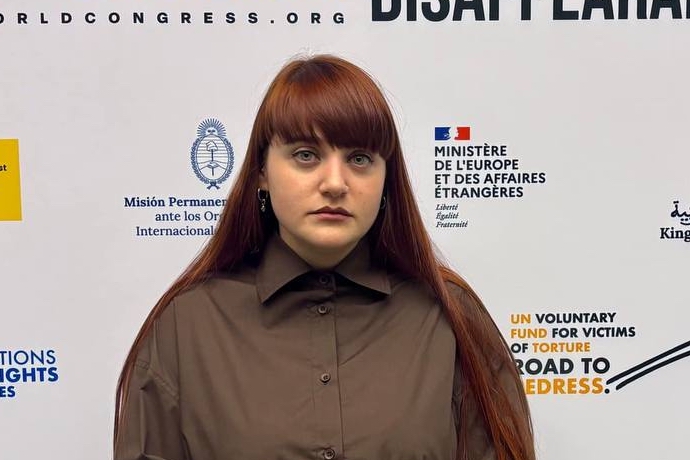
Yelyzaveta Sokurenko is a journalist and human rights advocate whose work sits at the intersection of documentation, accountability, and the lived realities of war. With more than eight years of experience in social reporting for leading Ukrainian media, she has focused much of her career on investigating international crimes and amplifying the voices of those most affected by them.
She currently leads the war crimes documentation department at the ZMINA Human Rights Centre, where she oversees efforts to collect, verify, and analyze evidence of abuses committed during Russia’s war against Ukraine. Her work combines rigorous analytical reporting with a victim-centered approach, addressing cases of arbitrary detention, enforced disappearance, torture, and other forms of ill-treatment. In doing so, she contributes to both national and international efforts aimed at documenting violations and advancing pathways toward justice.
In this interview, Sokurenko offers a detailed account of how war crimes are documented in practice, and why methodology matters as much as evidence itself. She explains how structured interviews, centralized databases, and multi-source verification allow investigators to move beyond isolated testimonies and identify recurring patterns of abuse.
Those patterns, she argues, reveal a system: civilians targeted based on perceived disloyalty, detained without due process, and subjected to physical, psychological, and sexual violence across a network of facilities. She also underscores the ethical demands of this work, particularly the importance of survivor-centered approaches that prioritize consent, confidentiality, and long-term safety. Ultimately, Sokurenko makes the case that accountability depends not only on documenting atrocities but on doing so with precision, consistency, and an awareness of how evidence must function in court.
This interview has been edited and condensed for clarity.
Scott Douglas Jacobsen: What methods are most effective for identifying and verifying patterns of arbitrary detention among civilians?
Yelyzaveta Sokurenko: The most effective way to detect patterns of arbitrary detention is to combine documentation of individual cases with data analysis to identify recurring elements—what we call pattern analysis. It is important not only to record individual incidents but also to systematically analyze where, when, and by whom people are detained, and what happens to them afterward.
The first key method is conducting structured interviews with victims and witnesses. Our interviews follow a consistent methodology and include the same blocks of questions (circumstances of detention, who detained the person, place of detention, transfers, interrogations, violence, and release). This allows us to compare testimonies and identify recurring patterns in the behaviour of Russian military and security services in illegal detention facilities across different occupied regions of Ukraine.
The second important method is organising cases within our internal database. When information about each detention is entered using consistent variables (date, location, unit, victim profile, reasons for detention, detention facility, types of violence), we can analyse trends—for example, which groups are detained most often, which detention sites are used, and which units are most frequently mentioned.
The third method is verifying each case using several independent sources.
Another method is analysing detention sites themselves. When many victims independently describe the same facilities, conditions, and interrogation or torture methods, this helps demonstrate the existence of a system of illegal detention, rather than isolated incidents.
It is also important to analyse the profiles of victims. If certain groups are targeted more often—for example, veterans, local officials, activists, pro-Ukrainian civilians, or people who refused to cooperate with occupation authorities—this indicates that detentions are targeted rather than random.
Since 2022, our work has focused on this systematic analysis of documented cases, allowing us to move from recording individual violations to demonstrating the existence of a policy and systematic practice of persecuting civilians, including through arbitrary detention.
You can read more in our report by clicking here.
Jacobsen: What early warning signs typically signal the emergence of a pattern of mass disappearances?
Sokurenko: In the Russian context and in the occupied territories of Ukraine, these warning signs can be observed both in legislation and in practice.
First, an important early signal is changes in legislation that expand the state’s power to prosecute individuals—for example, laws criminalising criticism of the authorities or broadening definitions of extremism, terrorism, or “discrediting the army.” These laws create a legal basis for detention and isolation without proper judicial oversight. If the judiciary is not independent and security forces are not held accountable for torture or illegal detention, this creates an environment of impunity in which enforced disappearances can become systemic.
Second, in the occupied territories of Ukraine, mass disappearances were preceded by so-called “filtration” measures—population screening, interrogations, phone checks, and the creation of lists of “disloyal” individuals. This was followed by a wave of abductions targeting local leaders—officials, activists, journalists, veterans, and volunteers—aimed at suppressing resistance and intimidating the population.
The next stage involved mass arbitrary detention of civilians, often without explanation and without access to lawyers or families. People were held in unofficial detention facilities, forcibly transferred to other occupied territories or deported to Russia, and their families were not informed of their whereabouts. The lack of information about a person’s fate or location is a defining element of enforced disappearance.
In general, early signs of a pattern of mass disappearances include a combination of repressive legislation, impunity of security forces, filtration measures, the abduction of local leaders, and subsequent mass arbitrary detention of civilians.
Jacobsen: What recurring patterns have you documented in the profiles of civilians targeted for illegal detention?
Sokurenko: Following the full-scale invasion, analysis of documented cases shows that civilians were not detained randomly—Russian forces systematically looked for indicators they considered signs of disloyalty or support for Ukraine.
One major pattern is that individuals were targeted for any sign of Ukrainian identity or pro-Ukrainian views. This could include subscriptions to Ukrainian news, Ukrainian music on a phone, photos with Ukrainian symbols, social media posts, or even private messages expressing disagreement with the invasion. Even an empty phone could be treated as suspicious, interpreted as an attempt to conceal information.
Another recurring pattern was the detention of individuals with any connection to the Ukrainian army, law enforcement, or government—even if they were civilians. Veterans, former military personnel, police officers, and civilians who assisted the Ukrainian army were all at heightened risk.
Local community leaders were also frequently targeted—activists, business owners, teachers, doctors, and other respected figures, particularly those who refused to cooperate with occupation authorities.
Detention could also occur based on broad and sometimes arbitrary indicators: speaking Ukrainian, living near Ukrainian military positions, not possessing a Russian passport, wearing khaki clothing, having patriotic tattoos, or even an untidy appearance that could be interpreted as an attempt to disguise a soldier as a civilian.
Overall, documented cases reveal a clear pattern: Russian forces applied a system of “disloyalty indicators,” detaining civilians who exhibited one or more of these traits. This suggests that illegal detention formed part of a systematic policy of identifying and persecuting civilians considered disloyal to the occupation.
Over time, Russia has also developed a legal and institutional framework in the occupied territories that effectively legitimises the persecution of civilians through criminal charges such as terrorism, espionage, or treason. Within this system, the FSB plays a central role in identifying so-called “disloyal” individuals.
As a result, arbitrary detention, enforced disappearances, fabricated criminal cases, pressure on families, and the denial of fair trial rights have become components of a broader system of political control over the civilian population.
You can read more in our report by clicking here.
Jacobsen: What forms of torture or ill-treatment most commonly appear in documented cases involving civilians?
Sokurenko: Across documented cases involving civilians, we have observed a number of recurring forms of torture and ill-treatment that appear repeatedly across different places of unlawful detention and in various occupied regions.
The most common forms include severe beatings—often with hands, feet, batons, plastic pipes, or other objects—as well as the use of electric shocks, typically applied to sensitive parts of the body. Detainees are frequently subjected to prolonged blindfolding and handcuffing, stress positions, and forced standing or sitting in painful positions for extended periods.
Another recurring practice is the use of threats, including threats of execution, threats against family members, and mock executions. Psychological violence is widespread and often accompanies physical torture. Detainees are commonly held in isolation, without access to information, communication, or legal assistance, which intensifies psychological pressure and fear.
We have also documented cases of sexual violence and sexualised torture, including threats of rape, forced nudity, humiliation of a sexual nature, and, in some instances, rape or other forms of sexual violence. Sexual violence is frequently used as a method of intimidation, punishment, or coercion.
Other forms of ill-treatment include deprivation of sleep, food, water, and medical care; overcrowded or extremely cold detention conditions; lack of sanitation; and denial of access to toilets. In many cases, these conditions themselves amount to inhuman or degrading treatment and are used deliberately as a form of pressure.
Overall, these forms of torture and ill-treatment recur across different cases and locations, indicating not isolated incidents but patterns of practice used during detention and interrogation of civilians.
Jacobsen: What patterns link specific detention environments or conditions to the use of torture, sexual violence, or other forms of abuse?
Sokurenko: From the beginning of documenting cases of torture, we have observed significant similarities in the structure of unlawful detention sites, the organisation of daily routines and schedules, the treatment of detainees, and the methods of torture used during interrogations across different occupied regions.
We have studied detention sites in the Kharkiv, Kherson, and Zaporizhzhia regions. Regardless of whether these were temporary facilities (such as basements or garages) or more formal sites (such as temporary detention centres or pre-trial detention facilities), torture was used on a widespread scale.
We also observe consistent patterns in how detainees are treated during interrogations. Torture is used not only to extract information, but also to punish, intimidate, coerce cooperation, or force confessions. Sexual violence, threats of sexual violence, and other forms of cruel, inhuman, or degrading treatment occur within the same broader context of total control, dehumanisation, and impunity.
Taken together, these recurring features across different occupied areas suggest a systematic pattern of abuse rather than isolated incidents. They may help investigators determine whether crimes were committed in accordance with shared practices, tolerated methods, or even within a broader chain of command.
Jacobsen: How do you implement a survivor-centered approach when documenting torture and sexual violence in cases involving detained civilians?
Sokurenko: The process of in-depth interviews focuses on the safety, dignity, needs, and choices of the survivor, rather than solely on collecting evidence.
Our methodology is based on the Murad Code and international guidelines for documenting conflict-related sexual violence. This means documentation is conducted with informed consent, confidentiality, risk assessment, and an understanding of how trauma affects memory and testimony.
In practice, a survivor-centred approach means participation is entirely voluntary. Individuals are informed how their testimony will be used and can refuse to answer questions or stop the interview at any time. Interviews are conducted using a trauma-informed approach—without pressure, with breaks when needed, and without requiring survivors to describe violence in detail if doing so risks retraumatisation.
In cases of sexual violence, it is important that survivors can speak with an interviewer of the gender they feel most comfortable with, and that they determine what they are ready to disclose. Many survivors do not speak about sexual violence during the first interview, but later, once trust has been established.
This approach also means that documentation does not end with testimony. We seek to ensure that survivors receive information about psychological, medical, and legal support.
Jacobsen: What safeguards are essential to ensure informed consent, confidentiality, and secure data custody in this kind of documentation work?
Sokurenko: When documenting torture, sexual violence, and unlawful detention, informed consent, confidentiality, and secure data storage are critical, as mistakes can create serious risks for survivors and their families.
For informed consent, individuals must clearly understand why information is being collected, how it will be used, who may access it, and what risks may exist. We use a consent form that confirms voluntary participation and outlines options for how the information may be used. Importantly, individuals choose what they agree to and may specify confidentiality conditions for particular data. Consent can be withdrawn at any time.
Confidentiality means that personal data and testimonies are not shared with third parties without additional consent. Access to our database is restricted, and we conduct risk assessments before publishing or sharing information with law enforcement or international mechanisms.
Jacobsen: What types of evidence are most critical for moving from documentation toward legal accountability and prosecution?
Sokurenko: When moving from documentation to accountability, the decisive factor is the quality and type of evidence that can be used in court or by international investigative mechanisms. At the same time, it is important to emphasise that, as a civil society organisation, we do not aim to replace formal investigations, but to contribute by sharing documented information.
The most important element is the testimony of victims and witnesses collected using methodologies that meet evidentiary standards. Our methodology was developed with partners and is based on international standards for documenting and investigating war crimes, including the Istanbul Protocol for cases involving torture and ill-treatment.
It is essential that testimonies are as detailed and consistent as possible, including information about places of detention, descriptions of perpetrators, chains of command, and the circumstances of detention, transfer, and conditions. Such testimonies help establish not only the occurrence of crimes but also individual or structural responsibility.
The second key type of evidence is medical and psychological documentation confirming torture, sexual violence, or other forms of ill-treatment. For understandable reasons—given conditions under occupation—many victims, particularly in 2022, do not have such documentation.
The third important category includes documents, their analysis, and information from open sources.
Jacobsen: Thank you very much for the opportunity and your time, Yelyzaveta.
Source: International Policy Digest
Author: Scott Douglas Jacobsen