Inside the legal battle over Ukraine’s stolen children
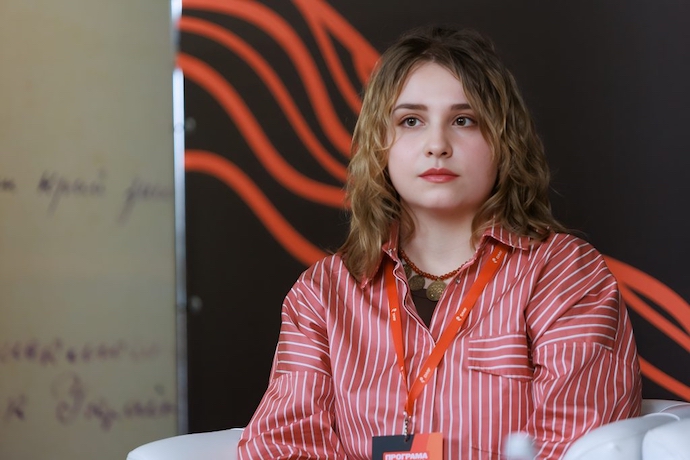
Onysiia Syniuk, Head of the Research Department at Human Rights Centre ZMINA, stands at the intersection of legal analysis and wartime accountability. Trained as an international lawyer at Taras Shevchenko National University of Kyiv, her work focuses on human rights and international humanitarian law violations arising from Russia’s invasion of Ukraine—particularly deportations, enforced disappearances, unlawful detention, and forced conscription in occupied territories.
In this interview, Scott Douglas Jacobsen speaks with Syniuk about the legal architecture surrounding the deportation of Ukrainian children and the broader, often contested framework of collaboration law in Ukraine. She outlines why the International Criminal Court (ICC) remains the central forum for prosecuting senior Russian officials, while domestic courts absorb the bulk of lower-level cases. She also unpacks the ambiguity embedded in Ukraine’s collaboration statutes, clarifies the legal distinction between evacuation and forcible transfer, and situates these issues within the overlapping frameworks of aggression, occupation, war crimes, and crimes against humanity.
Scott Douglas Jacobsen: Which accountability mechanism is most realistic for addressing the deportation of Ukrainian children—the ICC, universal jurisdiction, or a special tribunal?
Onysiia Syniuk: I will start with the special tribunal, because that is the most visible institutional development at the moment. The Special Tribunal for the Crime of Aggression against Ukraine, now being established within the Council of Europe framework, is designed to investigate, prosecute, and try those who bear the greatest responsibility for the crime of aggression against Ukraine. It is not being created to prosecute the deportation or forcible transfer of children as such. Those acts fall under war crimes and, potentially, crimes against humanity.
The special tribunal is therefore aimed at the crime of aggression, not at war crimes, crimes against humanity, or genocide directly. In that sense, it addresses the overarching illegal use of force, but not every downstream crime within the same proceeding. It has moved forward politically and institutionally, including through a bilateral agreement signed on 25 June 2025, but it is not the primary forum for charges relating specifically to child deportation.
If we are speaking specifically about President Vladimir Putin and the deportation of Ukrainian children, the ICC is the key forum. On March 17, 2023, ICC judges issued arrest warrants for Vladimir Putin and Maria Alekseyevna Lvova-Belova for the war crimes of unlawful deportation and transfer of children from occupied areas of Ukraine to the Russian Federation.
That matters because domestic courts and universal jurisdiction cases face significant immunity obstacles when the suspect is a sitting head of state or another senior official. The ICC is different because it operates under its own legal framework, and Article 27 of the Rome Statute rejects official-capacity immunity before the Court. For the highest-ranking Russian officials, the ICC is therefore the most realistic judicial avenue, even if arrest and surrender remain politically difficult.
The political environment has also become more complicated for the ICC. Sanctions and political pressure against the institution have affected its operational capacity. That does not eliminate ICC jurisdiction, but it does complicate enforcement in practice.
For other individuals, however, the picture is broader. Maria Lvova-Belova, regional officials, occupation administrators, and others allegedly involved in organizing or facilitating the transfer of children may also be investigated or prosecuted through domestic proceedings, particularly in Ukraine. Ukrainian prosecutors have already brought charges in cases involving deportation and forcible transfer of children.
The deportation of children will not be addressed through a single mechanism. It will not be only the ICC or only domestic courts. Due to immunities and other constraints, multiple avenues will be used.
There are already cases within Ukrainian domestic jurisdiction addressing deportation and forcible transfer of children as war crimes. Individuals have been charged. One set of cases concerns deportations preceding the full-scale invasion, when so-called evacuations were announced in the DPR and LPR on February 18, 2022. At that time, orphanages from territories occupied since 2014 were transferred to the Rostov region in Russia and elsewhere. Ukrainian courts are already addressing these actions.
As for universal jurisdiction, it is the least likely avenue. Most deported children remain in occupied territories or in Russia. In many countries, universal jurisdiction requires either that the victim or the perpetrator be present in the prosecuting state or that there be a relevant legal connection. This creates a narrow window.
Few countries exercise broad universal jurisdiction. Even where they do, sufficient evidence, access, and institutional capacity are still required. Therefore, universal jurisdiction is unlikely to be the primary mechanism. The ICC will address the highest-level officials, while domestic jurisdictions will handle the majority of cases.
Jacobsen: How does Ukrainian law define “collaboration,” and where does ambiguity arise in its application?
Syniuk: I will start by noting that there is no single, clear definition. The law does not provide a concise definition of ‘collaboration.’ Instead, it provides an article, adopted in March 2022 and entering into force shortly after the full-scale invasion.
There are seven main categories of activity. Two are classified as criminal misdemeanors, while the others are more serious crimes.
The first category concerns public support for aggression. This includes statements in public spaces or online that endorse Russia’s actions or occupation. It also includes activity on social media, including platforms restricted in Ukraine such as Odnoklassniki and VKontakte. Posting, reposting, or—even in some enforcement practice—liking content that supports the aggression may be treated as dissemination, since such activity makes it visible to others.
The second category involves taking non-leadership positions in occupied territories. This can include relatively minor roles, such as technical staff or service workers within those administrations.
The third category concerns propaganda in educational institutions. This includes teachers, administrators, and others responsible for implementing or promoting Russian curricula or ideological content in schools, colleges, or other educational settings. It also applies to those involved in training or supervising educators in occupied territories.
Another category is often described as economic collaboration. This includes transferring material resources to occupying forces or engaging in business activities with occupation administrations.
It is important to note that these provisions are broadly framed. The scope of what constitutes “material resources” or “support” can be interpreted widely. In practice, this gives investigators and prosecutors significant discretion, which has raised concerns about its overbroad application. For example, in the early stages following the liberation of some territories, there were cases involving individuals whose actions fell into ambiguous categories under these provisions.
Jacobsen: You mentioned early prosecutions in newly liberated regions. Which territories were those, and what patterns emerged in those cases?
Syniuk: We are referring to the Kyiv region after its de-occupation, the Kharkiv region after its de-occupation, and the right bank of the Kherson region, which was also de-occupied. These were the first major counteroffensive territories.
Ukrainian law enforcement gained access to these areas and to the people living there. They began prosecuting individuals under the collaboration provisions. In some cases, there were not only charges but also court verdicts. For example, individuals were convicted for transferring small quantities of goods, such as meat or cigarettes, to occupying forces.
This is no longer the current practice. There has been some adjustment in how collaboration is interpreted and applied. However, the law initially allowed for these outcomes because of its broad formulation.
That falls under what is often described as economic collaboration. The fifth category involves taking a leadership position in an occupying administration. This includes heads of administrations, department heads, and others with organizational or administrative authority. It also includes individuals involved in organizing referendums or elections in occupied territories. Even logistical roles, such as transporting ballot boxes, can be sufficient to establish liability.
The sixth category is sometimes called informational collaboration. Unlike the first category, which concerns expressing opinions, this involves producing or disseminating content in coordination with occupying authorities or their representatives, such as participating in media production or communications efforts.
The seventh category is the most severe. It carries penalties of up to 15 years of imprisonment. It includes joining law enforcement or military structures established in occupied territories, such as police, prosecution services, or judicial bodies. It also includes joining military formations.
It is important to note that under the Russian system, some roles that might appear civilian—such as firefighting or emergency services—can be classified within law enforcement or security structures. As a result, individuals who join such services in occupied territories have, in some cases, been prosecuted for collaboration. Ukrainian courts have issued verdicts in such cases.
These provisions do not exist in isolation. Other articles of Ukrainian law address related conduct, including treason and the provision of information about the movement or location of Ukrainian armed forces. The collaboration article specifically addresses the forms of cooperation just described.
We now have four years of practice under this article, so it is relatively well developed in terms of quantity, though not necessarily in consistency or quality.
Because the law is broadly formulated, it has been applied broadly in both investigative and judicial practice. There are also Supreme Court decisions that influence how the law is interpreted and applied.
It is important to note that the practice is not unified. There are conflicting decisions. Ukraine is not a strict precedent-based system, so courts are not formally bound by Supreme Court rulings in the same way as in common-law systems. They take them into account, and Supreme Court legal conclusions carry substantial interpretive weight, but they may still reach different conclusions.
For example, there are differing interpretations of what constitutes an “occupying administration.” One issue is whether this includes communal or municipal enterprises—entities that provide local public services but are not strictly part of the occupation authorities. One Supreme Court decision suggests that such entities may fall within the definition, while another suggests that they do not. This reflects the lack of a unified approach.
However, the dominant interpretation of the threshold for criminal liability is quite clear. Under the current wording of the law, taking up a position within an occupying structure is sufficient to establish criminal liability.
It does not necessarily matter what actions the individual performed in that role, what their specific functions were, or whether their conduct caused demonstrable harm to national security or others. The mere fact of holding the position is often treated as sufficient.
Jacobsen: To clarify a key legal issue: if criminal liability can arise simply from holding a position within an occupying structure, how do courts distinguish between formal roles and actual conduct?
Syniuk: Yes, but even if a person takes up a position and does not perform the functions associated with it—whether due to lack of opportunity or lack of intent—that does not necessarily exclude them from criminal liability.
Jacobsen: So the liability still stands. I would say it goes even further than that.
Syniuk: There are cases that illustrate this issue. First, the law distinguishes between leadership and non-leadership positions. To differentiate between them, one must examine the functions performed, particularly whether they involve organizational or administrative authority.
However, in situations where a person formally holds an administrative position but does not actually perform administrative functions, the appropriate mode of liability becomes unclear. This question is not clearly defined in the law and has not been consistently addressed in practice.
Jacobsen: What evidentiary standards distinguish forcible transfer from what is often described as “evacuation”? And where does the commonly used term “abduction” fit—or fail to fit—within legal definitions?
Syniuk: “Abduction” is a term often used in political or rhetorical contexts, and I believe it is used for that purpose. I have the same concern with it as with other imprecise terms. In Ukrainian, for example, there is sometimes an attempt to describe civilians using terminology analogous to prisoners of war—essentially “civilian POWs.” This is not a recognized legal category. Under international humanitarian law, civilians cannot be classified as prisoners of war.
For that reason, it is important to use precise terminology. In situations of armed conflict, there is an established legal vocabulary. The key terms are forcible transfer and deportation.
When movement occurs within the territory of a single state, without crossing an international border—whether de facto or de jure—it is classified as forcible transfer. When individuals are moved across an international border, it is classified as deportation.
Evacuation, by contrast, is the only lawful form of transferring civilians or protected persons in an armed conflict, particularly in occupied territories. However, it is subject to strict legal conditions.
First, there must be a valid justification. Generally, this means either a serious threat to the safety of the civilian population or an imperative military necessity. For children, the threshold is even higher. Transfer across borders requires a clear and immediate necessity related to their health or safety, along with consent from parents or legal guardians, or another authorized representative where parental rights are absent.
If these conditions are not met, the movement cannot be classified as an evacuation. It then becomes necessary to assess whether it constitutes a forcible transfer or deportation, each of which has specific legal elements. In practice, if the criteria for evacuation are not satisfied, the transfer is likely unlawful under international law.
There are also procedural obligations. The transferring authority must notify the state of origin and the International Committee of the Red Cross, and must provide sufficient information to facilitate family reunification.
Evacuation is, by definition, a temporary measure. Individuals must be returned as soon as the circumstances that justified the evacuation no longer exist. Any obstruction of return would violate international legal obligations.
Labeling an action as ‘evacuation’ does not make it lawful. The classification depends on whether the legal requirements are actually met.
Jacobsen: At a foundational level, how do the crime of aggression and the condition of occupation interact within international legal frameworks such as the Rome Statute and the Geneva Conventions?
Syniuk: International humanitarian law does not determine the legality of an occupation. It regulates the factual situation of occupation and establishes the obligations of the occupying power.
Jacobsen: Thank you—that is very clear, and it is an important point. To deport or unlawfully transfer children from occupied territory, the prior commission of aggression and the establishment of occupation are already in place. This is not a minor detail; it is foundational to the legal analysis.
Syniuk: I would add that deportation and forcible transfer are not limited to armed conflict. These acts can also be committed by a state against its own population. That is a different legal context, but it is important to distinguish between them.
War crimes require the existence of an armed conflict. Crimes against humanity, by contrast, do not require an armed conflict; they require a widespread or systematic attack against a civilian population.
Jacobsen: Verification remains a central challenge. To what extent is the difficulty in confirming deportation figures driven by lack of access and cooperation from the Russian Federation?
Syniuk: I would not say that this creates major difficulties in legal cases, but it does create challenges in political discussions and advocacy. There is a strong focus on numbers, although legally, even a single verified case is sufficient to establish a crime.
However, the Russian Federation controls both the occupied territories and its own territory. Ukraine does not have access to either. As a result, there is no direct way to verify the full scale of these transfers within those areas.
Jacobsen: Is the limited public disclosure of case details—particularly involving children—partly intentional, to protect identities and preserve evidentiary integrity?
Syniuk: Yes, that is generally correct. This is especially true in cases involving children deprived of parental care, such as those taken from orphanages. In some cases, relatives may be searching for them or advocating on their behalf, but often there are no such relatives. In those situations, the state assumes responsibility for the children.
The information available to Ukrainian authorities is often limited to records from before the occupation. After that, the situation becomes much more opaque. In some cases, Russian authorities publicly announce transfers or present them in media. In other cases, no information is disclosed.
When children are transferred into Russian families, particularly through adoption, tracking them becomes extremely difficult. They may be relocated to distant regions, grow older, and undergo changes that make identification harder. Even tools such as facial recognition become unreliable over time.
In addition, names and personal details may be altered through adoption procedures. This further complicates efforts to locate and identify these children.
Jacobsen: What role, if any, should Belarusian jurisdiction play in accountability for these transfers?
Syniuk: That is a complex question. There is a distinction between what should happen and what is likely to happen.
Jacobsen: There is a phrase “should have, would have, could have” or “shoulda, woulda, coulda”—used to reflect on past possibilities.
Syniuk: Yes, I am familiar with it. In this context, it appears increasingly unlikely that Belarusian authorities will face accountability for these actions, particularly given the current political environment.
At present, the ICC is one of the few institutions pursuing accountability in related contexts. For example, the ICC has opened an investigation into alleged crimes against humanity committed in Belarus against civilians, following Lithuania’s referral. However, accountability specifically related to the transfer of Ukrainian children through Belarus remains uncertain under current conditions.
Jacobsen: Are the limitations we see in enforcement a function of relatively young institutions like the ICC, or are they more a reflection of political constraints imposed by powerful states?
Syniuk: I would not describe international humanitarian law as new. Its modern framework dates to 1949 with the Geneva Conventions.
However, the ICC is a more recent development, as part of international criminal law. More broadly, developments in the international legal system depend heavily on the political will of states. The direction of that political will significantly influences how these institutions function.
The law itself evolves slowly. Once established, it is difficult to reverse; it can be developed further, but not easily undone. The main issue is not the existence of the law but its enforcement—that is where most complications arise.
It would not be entirely accurate to describe the United States as a major supporter of the ICC system. The United States is not a party to the Rome Statute and has historically had a complex and often critical relationship with the Court.
Jacobsen: The United States is notably the only UN member state that has not ratified the Convention on the Rights of the Child. Somalia was previously the last to ratify, but it has since done so. The United States signed the Convention decades ago but has not ratified it.
Syniuk: Yes, and a similar issue arises with the Rome Statute. The United States signed it but did not ratify it, and in 2002 notified the UN that it did not intend to become a party. Concerns about sovereignty and the potential prosecution of U.S. personnel have been central to that position.
Jacobsen: One might then expect fewer world leaders to attend UN General Assembly sessions in New York under such conditions.
Syniuk: The broader point is that the United States has not historically been a consistent supporter of this form of international criminal accountability. At present, the issue is not only non-participation but also active measures that affect the Court’s functioning.
For example, sanctions targeting the ICC have created practical obstacles. U.S. nationals working with or supporting the Court may face legal or professional risks, which can discourage cooperation. This has a direct impact on the Court’s operations.
These dynamics ultimately reflect the central role of political will in shaping how international legal institutions function, including the ICC.
The ICC arrest warrants are also a matter of political will. States Parties are required to comply with them, but in practice, compliance is uneven. We have seen this with Mongolia in relation to President Putin. We have also seen non-compliance issues involving Hungary in another case, not concerning Putin. Some ICC member states have openly resisted cooperation, and Hungary has even moved toward withdrawal.
So again, the law itself has not disappeared. It has not changed in any fundamental way, and it has not become weaker on paper. The real issue is enforceability, and enforceability depends heavily on political will.
Jacobsen: What is the current state of efforts to return deported or displaced Ukrainian children?
Syniuk: As of early March, the publicly reported figure under the Bring Kids Back UA initiative was 2,000 returned children. That remains a small proportion of the overall number of affected children. It is an important achievement, but the scale of the problem remains much larger.
I would clarify, however, that this figure does not refer only to children who were deported and then returned. It includes children from occupied territories who were returned to Ukrainian-controlled territory through different pathways. Some were deported or forcibly transferred, while others remained in occupied territory and were later brought back.
The main return mechanism has often involved non-governmental organizations working with state structures and international partners. These efforts are expensive and logistically complex. There is no direct route from Russian territory or occupied territory back into Ukraine. In many cases, children must travel through Russia and then through third countries before they can return.
There have also been mediation efforts by states such as Qatar. Those efforts have produced some returns, but the numbers remain limited. One difficulty is that Russia often frames these cases not as returns of deported children, but as “family reunifications,” sometimes even portraying them as reciprocal humanitarian arrangements. That framing obscures the underlying legal issue.
In practice, non-governmental actors remain central to the return process, but their work is becoming harder. Russian authorities continue to impose procedural obstacles, including document requirements and demands that parents or relatives travel in person to Russia to retrieve children. There is no straightforward mechanism for Ukrainian state representatives to enter Russia and recover children directly. As more return routes become known, those routes can also be restricted. This is one reason public information about return methods is often limited.
Jacobsen: What benchmarks would signal that meaningful transitional justice is taking hold in Ukraine?
Syniuk: This is one of the most complex questions, because transitional justice is a broad concept. It encompasses criminal accountability, memorialization, reparations, and other forms of redress.
It is already a sign of progress that transitional justice is being discussed during an ongoing armed conflict. Traditionally, such discussions were more often associated with post-conflict phases, even though accountability mechanisms such as the ICTY were created while the Balkan conflicts were still ongoing.
In Ukraine, however, this process began even before the full-scale invasion, following the onset of armed aggression in 2014. This earlier work is not always fully recognized by international donors, who sometimes approach the situation as though everything must be built from the beginning. In reality, Ukraine has already developed experience in supporting internally displaced persons, pursuing accountability, and addressing harms related to the conflict.
The current challenge is not to create entirely new frameworks, but to build on what already exists—identifying gaps, improving mechanisms, and adapting them to the scale of the full-scale invasion.
Another important development is the establishment of mechanisms such as the Register of Damage and the International Claims Commission process now being set up, with the convention signed in December 2025 and preparatory work launched in 2026. However, all aspects of transitional justice that involve financial reparations ultimately depend on available resources. This raises unresolved questions about the use of frozen Russian assets and related financial instruments.
Legal frameworks for reparations can be developed, but without financial backing, they are largely ineffective. This has already been demonstrated in practice. For example, Ukraine adopted legislation on interim reparations for survivors of conflict-related sexual violence. Initial payments were supported by international partners, including the Global Survivors Fund. However, when funding was reduced, the legal framework remained in place without sufficient resources to sustain payments.
There are multiple parallel efforts underway to build a comprehensive support system. At present, certain categories of victims—such as survivors of conflict-related sexual violence, internally displaced persons, and others—receive targeted attention. However, some groups, including torture survivors, have received less visibility and support.
The goal is to develop an integrated system that covers all categories of victims and addresses their specific needs. Different groups require different forms of assistance; for example, the needs of survivors of sexual violence differ significantly from those of deported children. A tailored, structured support system is necessary.
There is also ongoing work in areas such as memorialization, although that is a separate field. In terms of criminal accountability, capacity is being strengthened through training for prosecutors, investigators, and judges. These efforts are still in progress.
The central points are, first, that Ukraine is not starting from scratch, as substantial work has already been done since 2014; and second, that planning and implementation of transitional justice mechanisms must continue during the conflict, rather than waiting for a ceasefire or its conclusion.
Jacobsen: From the perspective of independent international bodies—such as UN commissions or OSCE mechanisms—which cases are most strongly substantiated, and how should their findings be interpreted?
Syniuk: Thank you, that clarifies the question. If we are referring to independent international institutions—such as UN bodies, commissions of inquiry, and other third-party mechanisms—the general direction of their findings has been relatively consistent.
These institutions generally rely on conservative verification standards. They distinguish between documented, verified cases and broader estimates. For example, the UN Independent International Commission of Inquiry on Ukraine has confirmed specific cases based on direct evidence, including documentation and witness testimony, while acknowledging that the total number of affected children is likely higher.
Importantly, these bodies have concluded that the deportation and transfer of Ukrainian children constitute serious violations of international law. In some findings, they have characterized these acts as war crimes and, in certain contexts, as crimes against humanity.
The emphasis in their reporting is not on large headline numbers, but on legally verified incidents that meet evidentiary thresholds. Even a relatively small number of verified cases can establish the existence of a broader pattern of conduct.
Across institutions, there is general convergence on several points: that unlawful transfers and deportations have occurred; that these acts are attributable to Russian authorities or affiliated structures; and that accountability mechanisms are warranted.
At the same time, these institutions consistently note the limitations they face—particularly restricted access to occupied territories and to the Russian Federation. These constraints affect the scale of verification but do not negate the underlying findings.
In summary, the general direction of international institutional assessment is cautious but consistent: verified cases establish the legal basis, while the full scale of the conduct is likely greater than what can currently be confirmed.
In the most recent report of the UN Commission of Inquiry, there is a determination that the deportation and forcible transfer of children constitute crimes against humanity. The Commission also concluded that certain acts amount to enforced disappearances of children. This represents a progression in their legal assessment.
In earlier reports, these actions had already been recognized as war crimes by the UN Commission of Inquiry and by the UN Human Rights Monitoring Mission in Ukraine. There have also been multiple OSCE Moscow Mechanism reports, including one specifically focused on children, which documented deportations and forcible transfers.
These findings are based on verified facts rather than broad numerical estimates. The reports also explicitly acknowledge their limitations. For example, the Commission has repeatedly noted that it has received no substantive responses from the Russian Federation to its requests for information.
Jacobsen: The Commission submitted dozens of such requests.
Syniuk: Yes, and they are constrained by that lack of cooperation. They also do not have access to Russian territory or to occupied territories, so their investigations rely heavily on witnesses and evidence available in Ukrainian-controlled areas.
Jacobsen: So the figure of 1,205—used as a basis for their legal conclusions—can be presented as a careful, evidence-based assessment. That is, based on the best available evidence and an impartial evaluation, the Commission and similar bodies have concluded that specific crimes have occurred.
Syniuk: Yes, that is a fair characterization. It is also important to emphasize that the number itself is not determinative of whether a crime exists. For both war crimes and crimes against humanity, the legal threshold does not depend on reaching a particular numerical scale.
Crimes against humanity require a policy and a pattern of conduct, but that does not mean a large number of victims is required. The focus is on the existence of a systematic or widespread practice.
At the same time, it is essential to clearly communicate the practical limitations faced by all investigative mechanisms—whether international or domestic. Without access to occupied territories or to the Russian Federation, and without official data from Russian authorities, verification is inherently constrained.
There are children still in occupied territories who may be transferred at any time without documentation. There are children who have lost their parents during the conflict and whose status as orphans or children deprived of parental care is not fully documented.
There are also children born in occupied territories. Under international law, these remain Ukrainian territories, as occupation is a temporary condition. However, without access, documentation, or registration in Ukrainian systems, tracking these children becomes extremely difficult.
These limitations must be clearly stated when interpreting the available data.
Jacobsen: It creates a difficult situation—children effectively existing outside formal recognition.
Syniuk: Yes.
Jacobsen: Thank you very much for your time today.
Source: International Policy Digest; Author: Scott Douglas Jacobsen