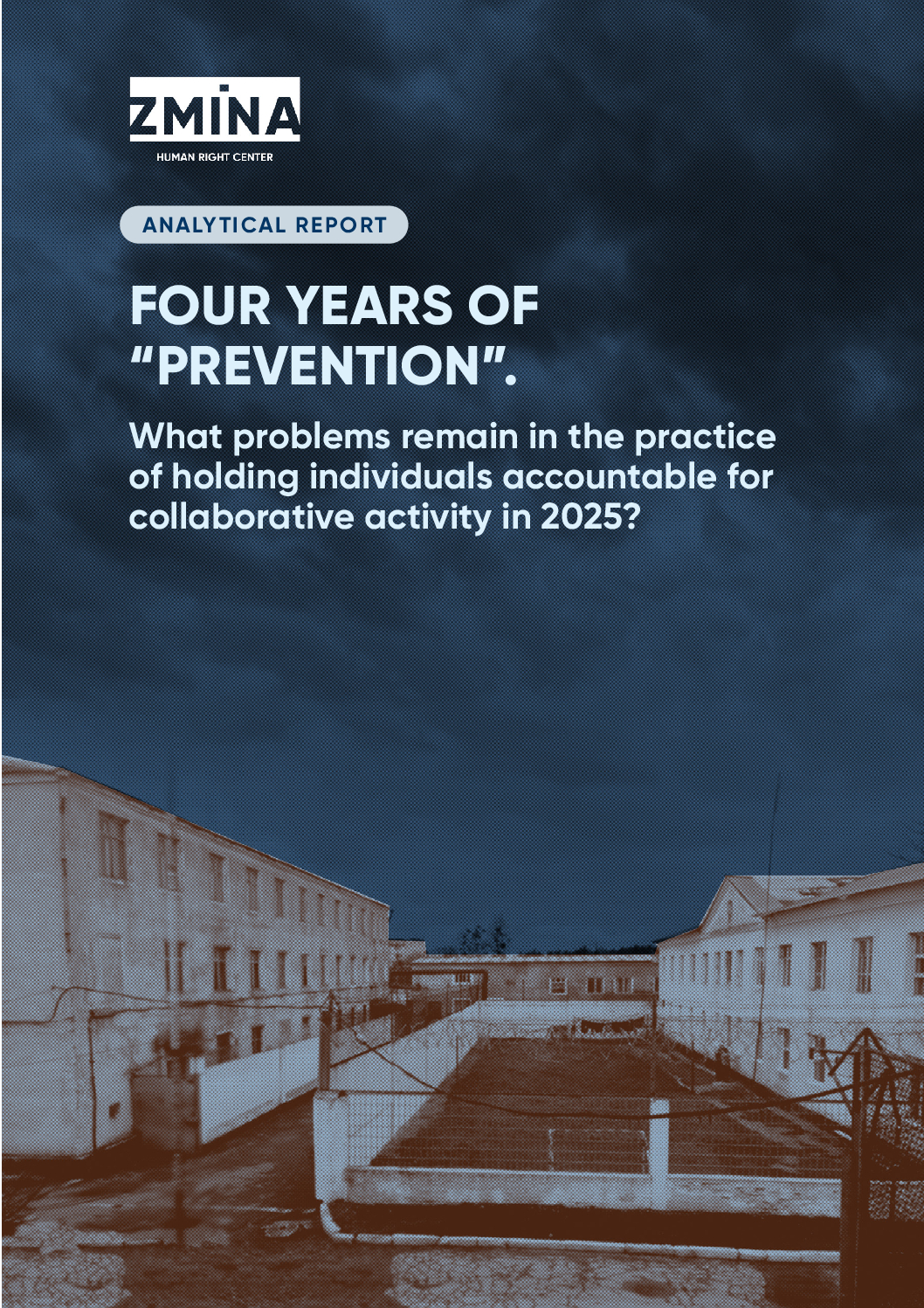
Four years of “prevention”. What problems remain in the practice of holding individuals accountable for collaborative activity in 2025?
The issue of the incompatibility of legislation on criminal liability for collaborative activity with the norms of International Humanitarian Law (IHL) and the standards of legal certainty extends far beyond purely legal analysis.
The criminalisation of life under occupation in the context of ongoing armed aggression affects state policy towards residents of the TOT of Ukraine and may also negatively impact the development of transitional justice policy. The lack of amendments to legislation on collaborative activity since the introduction of the relevant provision into the CC of Ukraine in 2022 demonstrates both the absence of political consensus in Parliament regarding the direction of changes to Article 111-1 of the CC of Ukraine and a reluctance to amend the legislative framework until the active phase of the armed aggression against Ukraine is over. At the same time, this position contradicts the objective of developing a reintegration policy for residents of the TOT of Ukraine and creates grounds for further stigmatisation of the experience of living under occupation.
This analytical report has been prepared to assess the current state and practices of holding individuals criminally liable for collaborative activity in 2025. This analysis provides a necessary basis for the development and advocacy of proposals for amendments to Article 111 1 of the CC of Ukraine.
The analytical report is available in English and Ukrainian.