ZMINA at United for Justice: the accountability system for international crimes requires a comprehensive policy approach
Onysiia Syniuk, Head of the Research Department at the Human Rights Centre ZMINA, spoke at the international conference United for Justice – “United for Justice. Accountability for Crimes Against Civilians”, held in Kyiv on 7 May. The event brought together representatives of Ukrainian state authorities, international institutions, human rights organisations and the expert community to discuss accountability for international crimes committed against civilians as a result of Russia’s aggression against Ukraine.
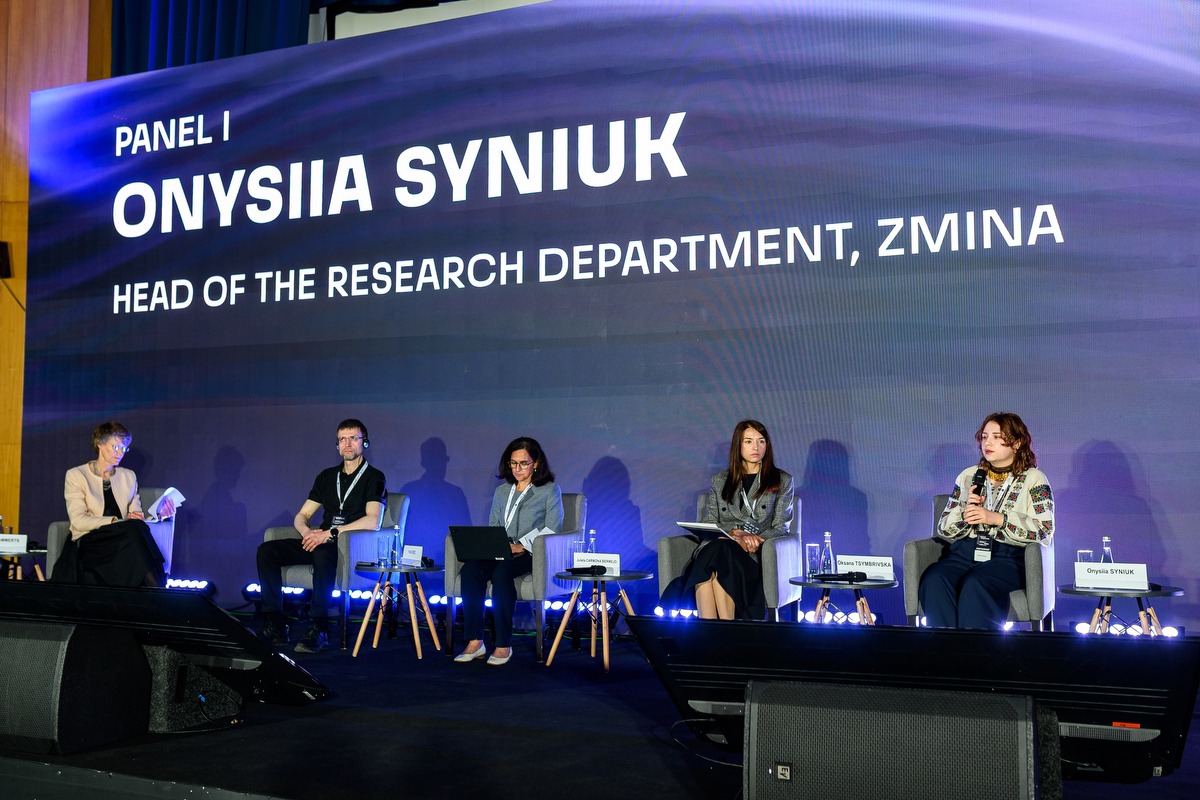
Onysiia Syniuk took part in the first panel of the Ministerial Dialogue Group dedicated to harmonising Ukrainian legislation with international standards following the ratification of the Rome Statute. Together with representatives of the Office of the Prosecutor General and Eurojust, participants discussed amendments to the Criminal Code and the Criminal Procedure Code, as well as strengthening guarantees for victims and witnesses.
During her speech, the Head of ZMINA’s Research Department stressed that the legislative amendments had been developed with the participation of a working group composed of experts and representatives of civil society, noting that such an approach represents an important and positive practice. She also emphasised that these amendments had long been awaited.
“Harmonisation is needed not only for the formal alignment of legislation with international standards. It is necessary to simplify the qualification of international crimes for investigators, prosecutors and judges, and to provide the system with a clear direction in the process of ensuring accountability“, Syniuk noted.
She pointed out that back in 2021 the Verkhovna Rada adopted Draft Law No. 2689 on the implementation of international criminal and humanitarian law norms, but the document was never signed by the President. According to the ZMINA representative, it is crucial this time that the proposed amendments are not only drafted, but also adopted and effectively implemented.
Onysiia Syniuk also drew attention to problems within criminal procedural legislation that remain outside the scope of the reform. In particular, these include the lack of regulation regarding the use of open-source intelligence (OSINT) as evidence, the absence of a defined status for international experts in criminal proceedings, and insufficient clarity regarding jurisdiction over international crimes.
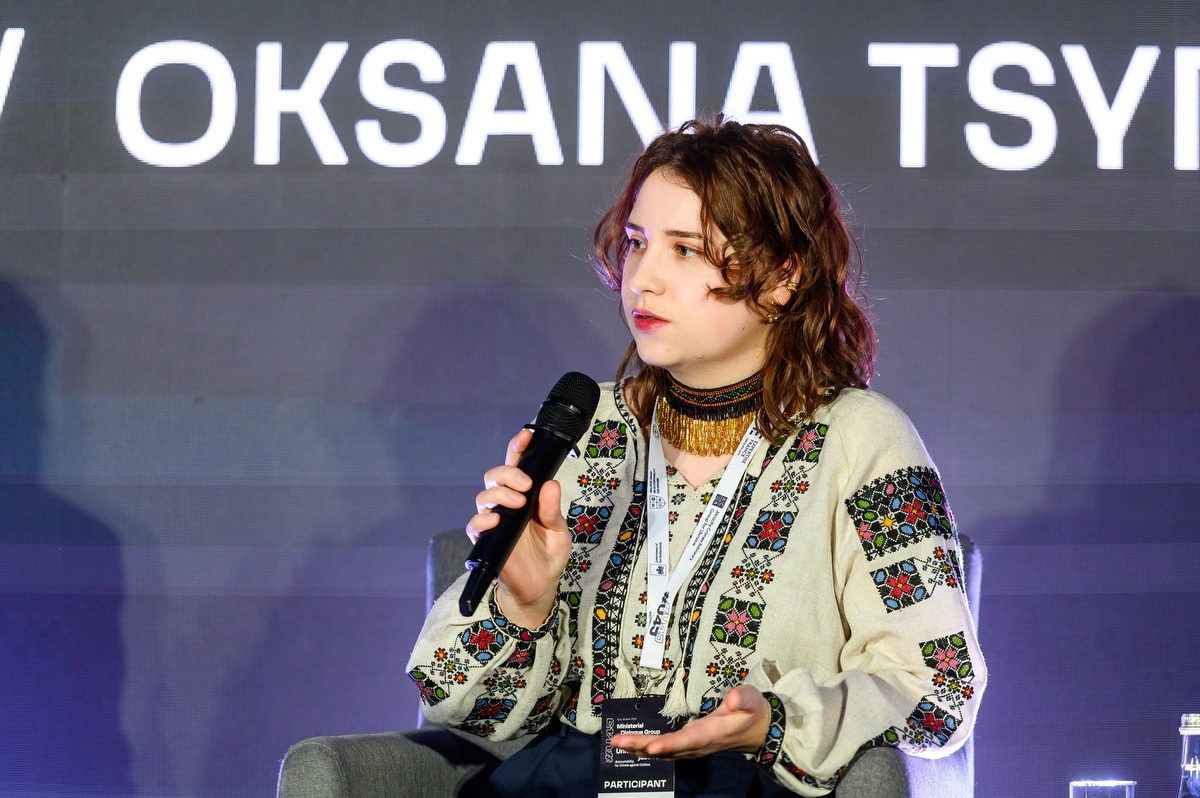 Photo: Onysiia Syniuk
According to the Head of ZMINA’s Research Department, the system also requires better coordination between the various authorities and units dealing with international crimes and crimes against national security.
Syniuk also stressed the need to establish an effective system for the protection of victims and witnesses in line with European Union standards. She noted that the working group, which includes ZMINA, has already prepared legislative proposals for the implementation of the EU Victims’ Rights Directive.
“Victims are already exhausted and vulnerable. We must make the path to justice less burdensome for them“, she stressed.
In conclusion, Onysiia Syniuk stressed the need to develop a comprehensive state policy on accountability for international crimes: “Today, the system often responds to problems in a fragmented way. However, issues related to crimes against humanity, support for victims, the prioritisation of proceedings and legislative reform cannot be addressed in isolation from one another. What is needed is a coordinated system and a clear understanding of a common goal“.
For reference
The conference “United for Justice. Accountability for Crimes Against Civilians” was organised by the Office of the Prosecutor General and the Government of the Netherlands with the support of international partners. During the event, participants discussed the harmonisation of Ukrainian legislation with international law, the investigation of international crimes, crimes committed against civilians in the occupied territories, attacks on critical infrastructure and crimes against Ukrainian children.
The photos used in this article were provided by the event organisers.