Handing over lists of political prisoners, meetings with officials and the Crimean Tatar diaspora: outcomes of ZMINA’s visit to Türkiye
Viktoriia Nesterenko, Project Manager at the Human Rights Centre ZMINA, paid a working visit to Türkiye, where she took part in a series of closed-door advocacy meetings with representatives of state institutions and the Crimean Tatar diaspora. The discussions focused on systemic human rights violations in the temporarily occupied territories of Ukraine, the persecution of civilians, journalists and Crimean Tatars, as well as efforts to secure the release of Ukrainian political prisoners unlawfully detained by Russia.
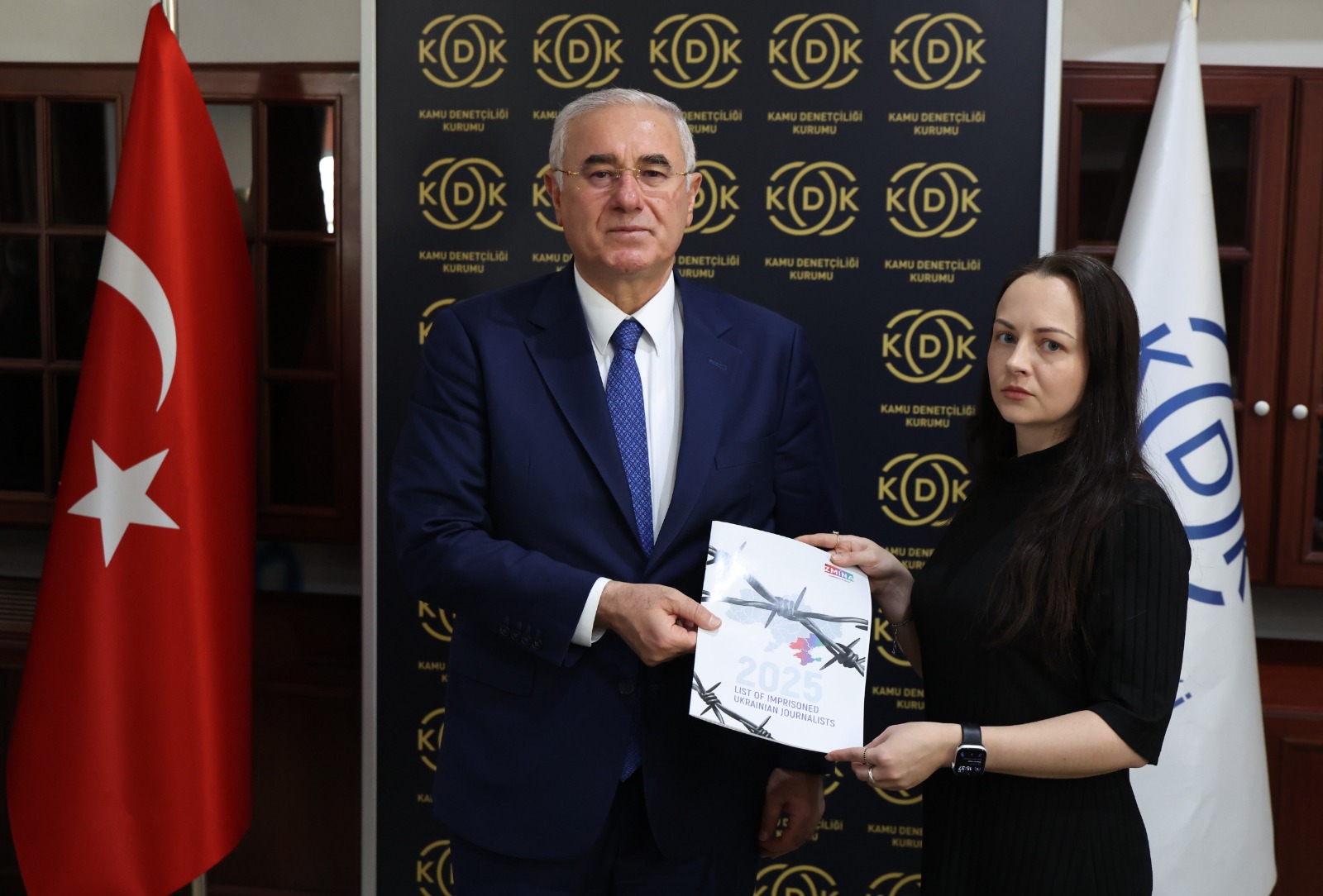 Photo: Mehmet Akarca, Viktoriia Nesterenko
In Ankara, Viktoriia Nesterenko, in cooperation with the Embassy of Ukraine to the Republic of Türkiye, held meetings with representatives of Turkish state institutions, including Türkiye’s Chief Ombudsman Mehmet Akarca and Chief Advisor to President Erdoğan, Yalçın Topçu. During meetings at the Ombudsman’s Office and the Office of the President of Türkiye, the Ukrainian side handed over updated lists of unlawfully imprisoned individuals, including a list of 26 imprisoned journalists, as well as a separate list of political prisoners, among them nine Crimean Tatar women, with a request to facilitate their release. Analytical materials documenting persecution practices in the temporarily occupied territories related to the exercise of freedom of expression were also submitted. The discussions focused on the situation of Crimean political prisoners and the intensifying repression in the temporarily occupied Crimean Peninsula linked to the exercise of freedom of expression.
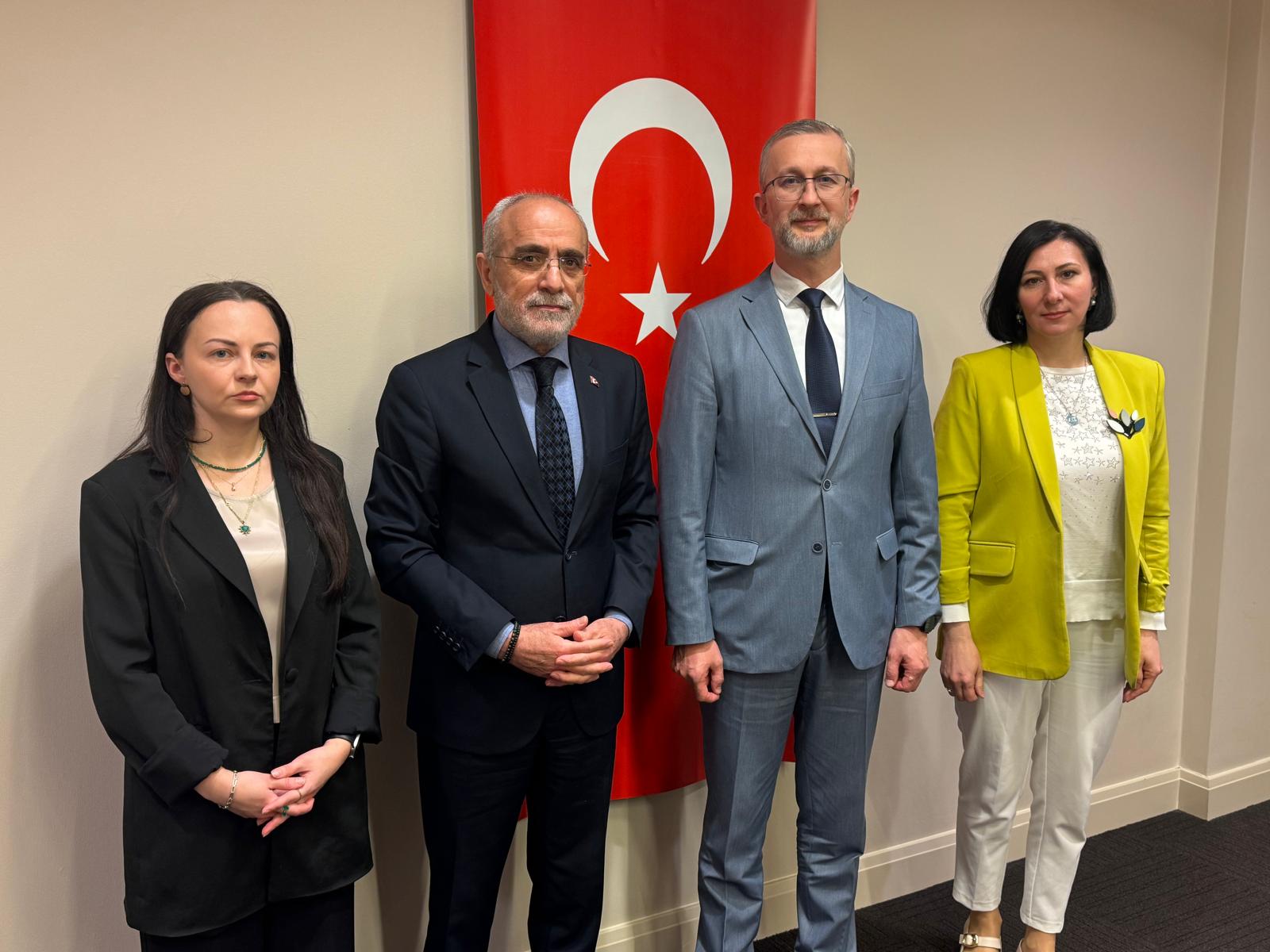 Photo: Viktoriia Nesterenko, Yalçın Topçu, Nariman Dzhelial, Anife Kurtseitova
Nariman Dzhelial, Ambassador of Ukraine to Türkiye, stressed that one of the key problems remains the uncertain legal status of some individuals unlawfully detained by Russia: “There are people whose names are known, but whose status has not been determined – whether they are prisoners of war or political prisoners. This is a serious problem“.
He also drew attention to the critical health condition of certain detainees, including Tofik Abdulhaziiev, who requires medical assistance but is effectively denied it. The human rights defenders also stressed that some of the journalists imprisoned by Russia require urgent medical care, and that this right is being systematically violated, including in the case of citizen journalist and human rights defender Iryna Danylovych.
Viktoriia Nesterenko highlighted the alarming trend of a growing number of women imprisoned in politically motivated Crimean cases – currently around 60, nine of whom are Crimean Tatar women.
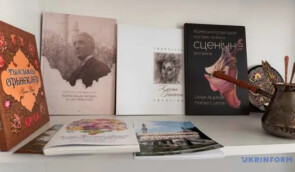
She also stressed the systematic pressure exerted on journalists and the restrictions on freedom of expression in the occupied territories. In particular, the persecution of journalist Lutfiie Zudiieva, who was added to the list of so-called “foreign agents”, was raised during the discussions. Nesterenko also handed over to institutional representatives the English-language edition of the book “Free Voices of Crimea“, dedicated to Crimean journalists unlawfully imprisoned by Russia and signed by Nariman Dzhelial.
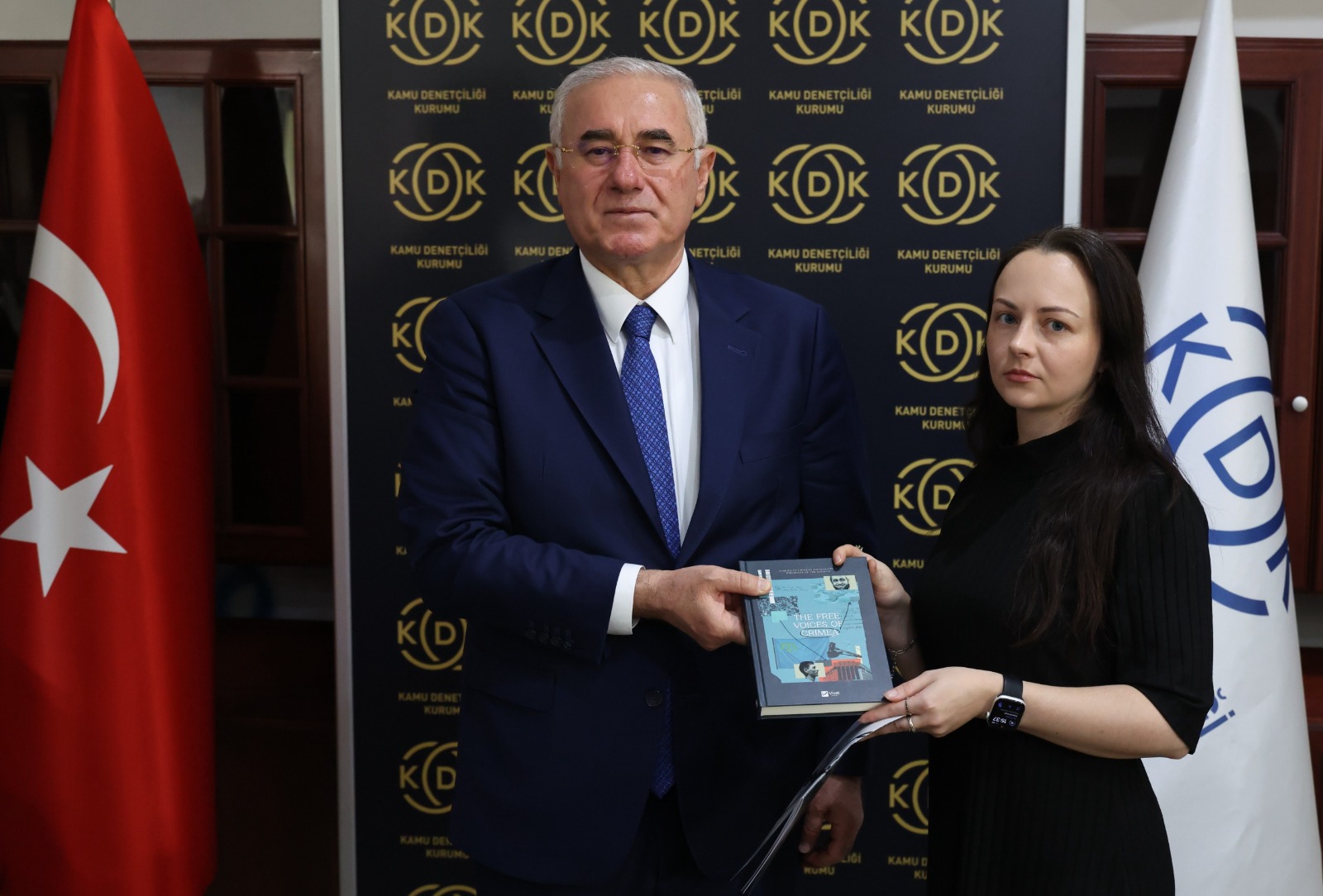 Photo: Mehmet Akarca, Viktoriia Nesterenko
Türkiye’s Chief Ombudsman Mehmet Akarca stated that the situation of Crimean political prisoners and the persecution taking place in the occupied territories requires both legal and political solutions, and reaffirmed support for Ukraine’s territorial integrity, including Crimea.
At the same time, he acknowledged the limited tools available to influence the Russian Federation regarding the release of Kremlin prisoners: “We can speak about the need for humane treatment, proper detention conditions, medical assistance and access to relatives. However, such issues are often resolved only through intergovernmental agreements“.
Akarca also stated his intention to raise the issue of political prisoners’ release at international platforms, including within the Organisation of Islamic Cooperation.
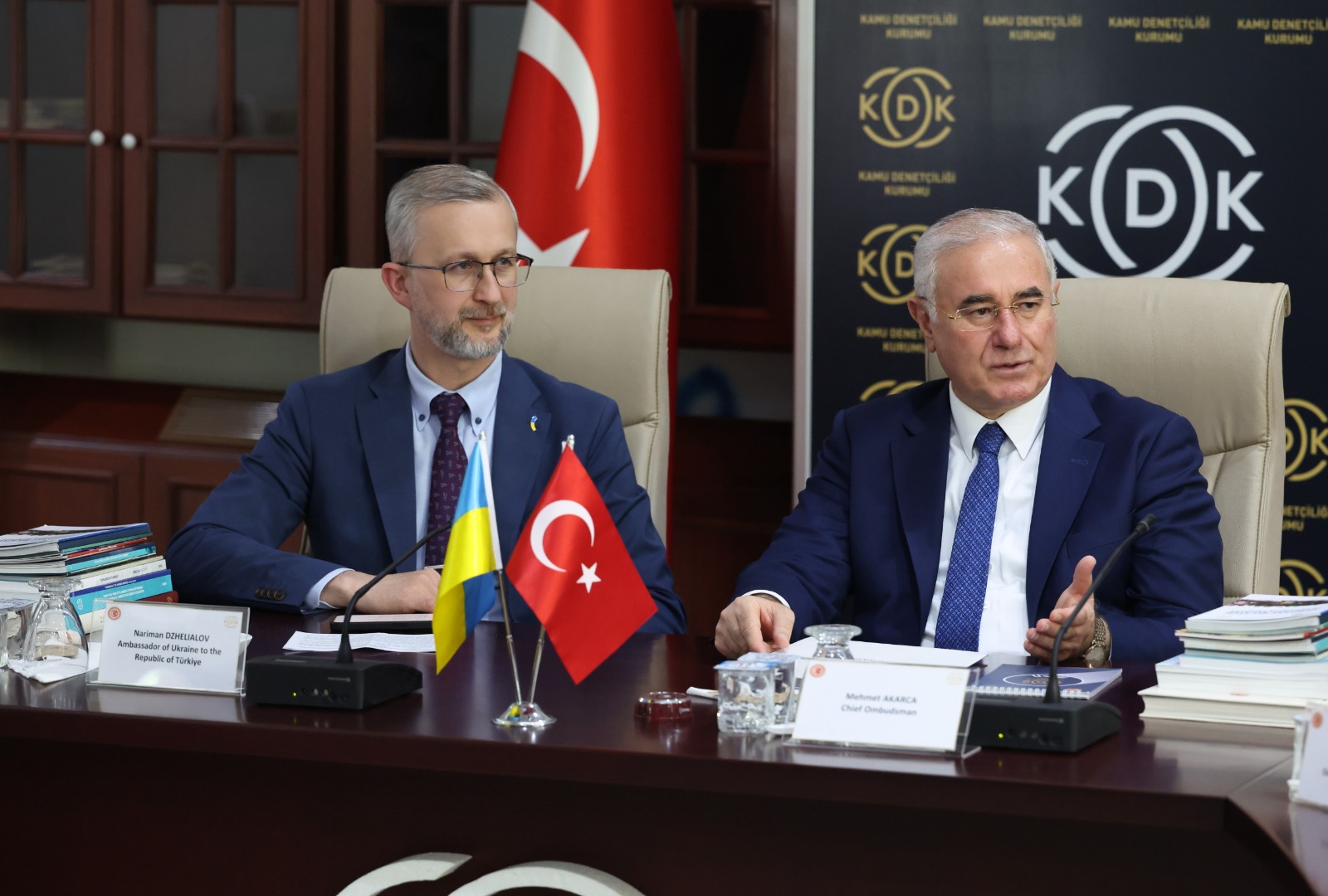 Photo: Nariman Dzhelial, Mehmet Akarca
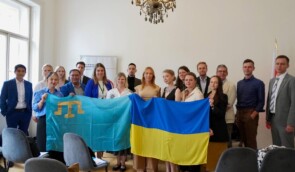
A separate part of the ZMINA representatives’ visit was dedicated to meetings with representatives of the Crimean Tatar diaspora in Ankara and Istanbul. The discussions focused on the need to strengthen awareness-raising efforts regarding human rights violations in Crimea, expand international advocacy and engage Turkish civil society in supporting political prisoners.
Particular attention was paid to the idea of systematically informing Turkish audiences about specific persecution cases, as well as coordinating joint communication campaigns with human rights organisations and diaspora groups.
According to Viktoriia Nesterenko, the visit to Türkiye demonstrated the political willingness of certain Turkish institutions to continue dialogue on humanitarian issues, while also revealing the need for clearer and more practical mechanisms for implementing agreements. She stressed that persecution in Crimea is systemic in nature and is carried out on political and religious grounds through the use of terrorism and extremism charges without proper evidence, while pressure on freedom of expression continues to intensify. The human rights defender also drew particular attention to the critical detention conditions in places of detention both in occupied Crimea and in Russia, where unlawfully convicted Ukrainian citizens are held.
A key outcome of the visit was the handover of updated lists of unlawfully imprisoned individuals and analytical materials intended to strengthen international advocacy efforts aimed at securing the release of Ukrainian citizens. Türkiye, for its part, confirmed its readiness to continue raising this issue at the international level and through diplomatic channels.