Ukrainian civil society voices highlighted by ZMINA at Democracy Defender Award Anniversary Seminar
On May 12, OSCE Participating States held the 10th Anniversary Seminar of the Democracy Defender Initiative in Vienna. The award was established in 2016 to recognise those who contribute to the promotion of democracy and the defence of human rights, in the spirit of the Helsinki Final Act and other OSCE principles. The NGO “Promo-Lex“, which protects human rights in Moldova, including in the Transnistrian region, received a Democracy Defenders Award 2026. ZMINA was awarded this title in 2022, “for outstanding contribution to promoting and protecting fundamental freedoms and human rights in both non-government and government-controlled territories in Ukraine”. ZMINA’s Senior International Advocacy Manager, Tetiana Zhukova, joined the seminar on behalf of Ukrainian civil society.
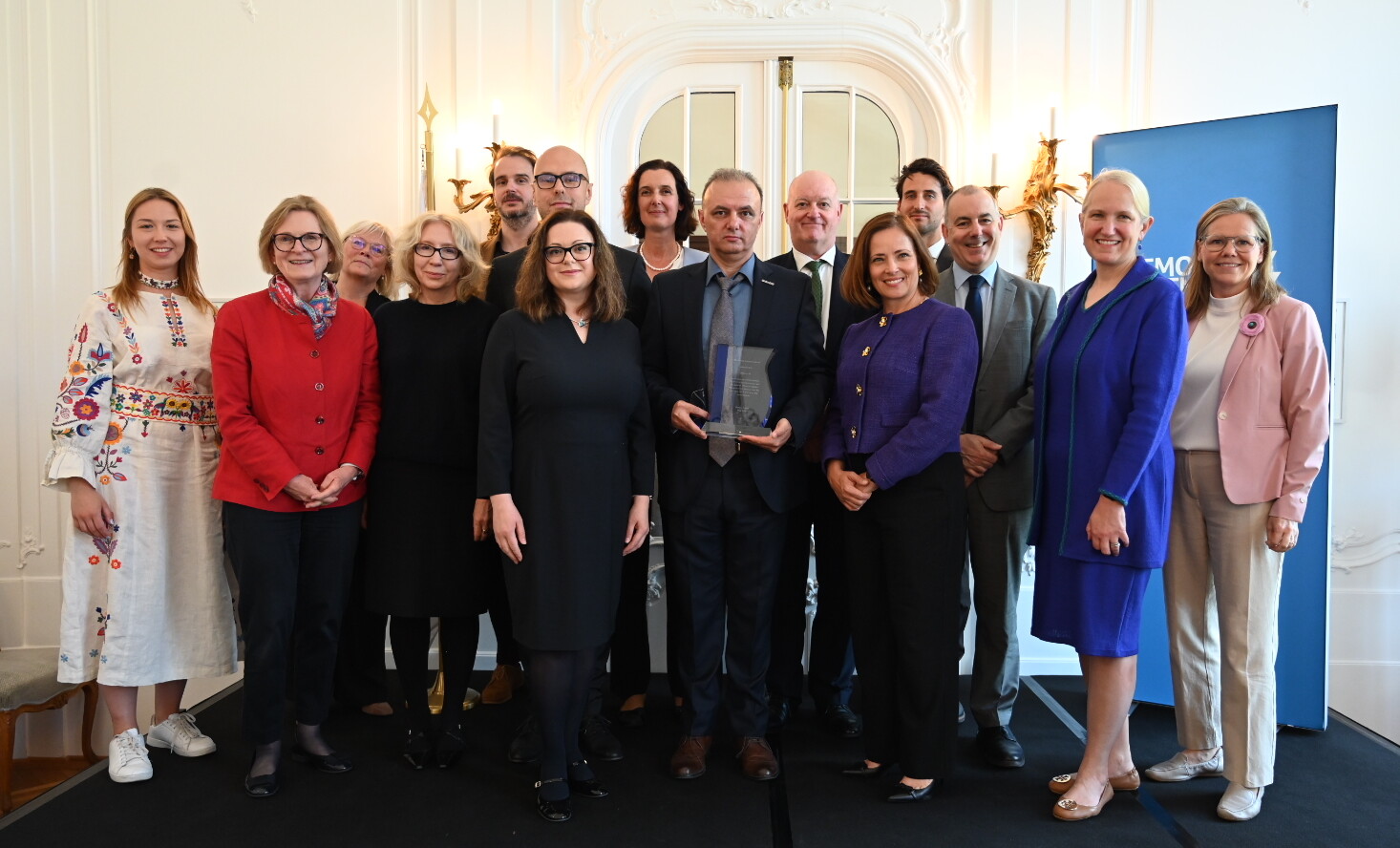
The OSCE Participating States acknowledged the important role that civil society plays in meeting human dimension commitments. Despite the efforts of civil society, the past 10 years have not seen a resolution of serious human rights and democracy challenges. Instead, we are witnessing democratic backsliding and the shrinking of civic space in many states. Civil society has been increasingly targeted by repressive legislation and transnational threats.
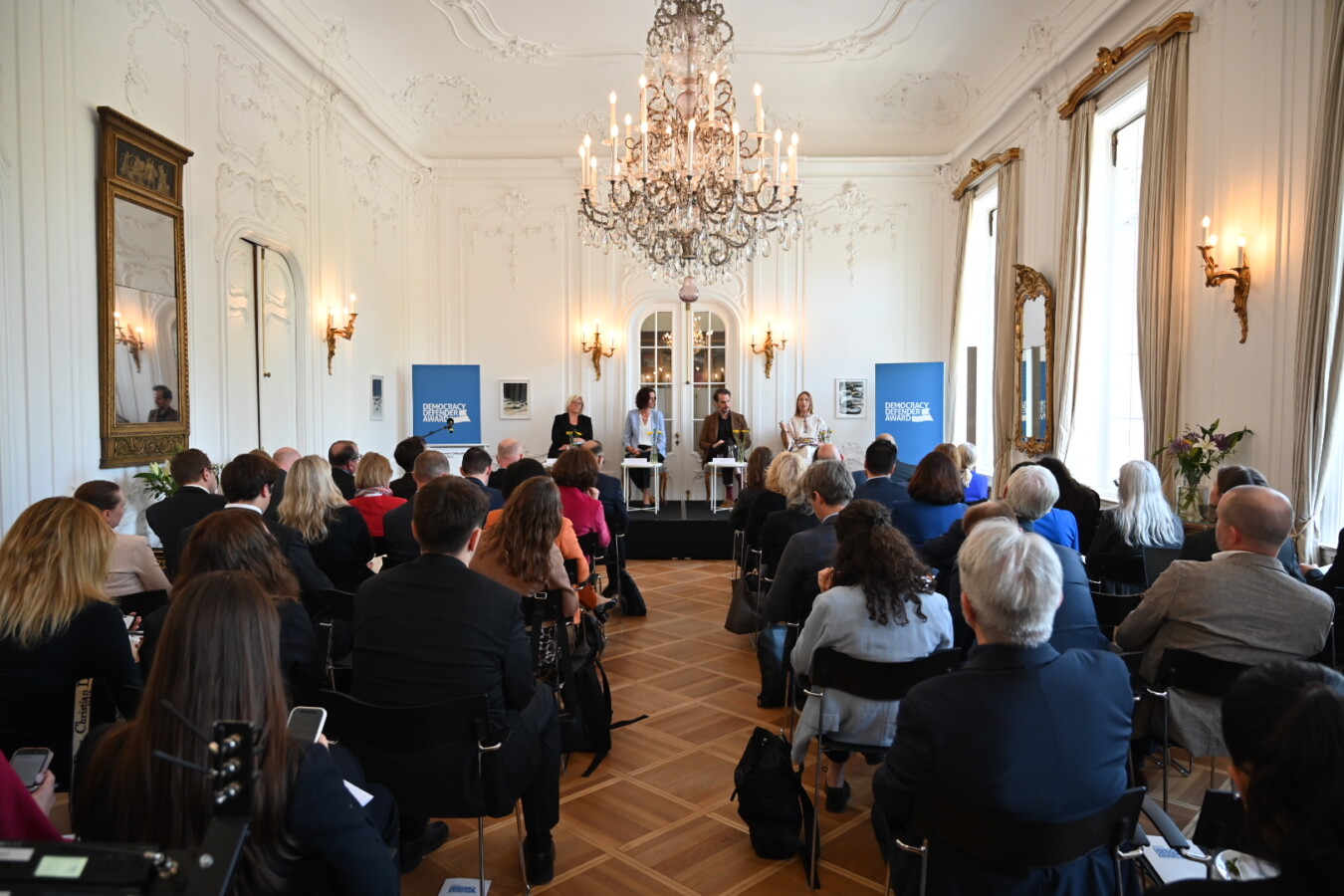
The 10th Anniversary Democracy Defender Initiative Seminar “Lessons from the Past, Challenges of the Present, Prospects for the Future” explored how civil society can help address democratic backsliding and build democratic resilience in the OSCE region. Tetiana Zhukova from ZMINA, Lotte Leicht from Climate Rights International and Dr. Filip Milačić from the Central European University, with the moderation of H.E. Monique de Ruijter, Permanent Representative of the Netherlands to the OSCE, discussed the development of civil society over the years, the challenges it faces, the ways to address them and the support needed.
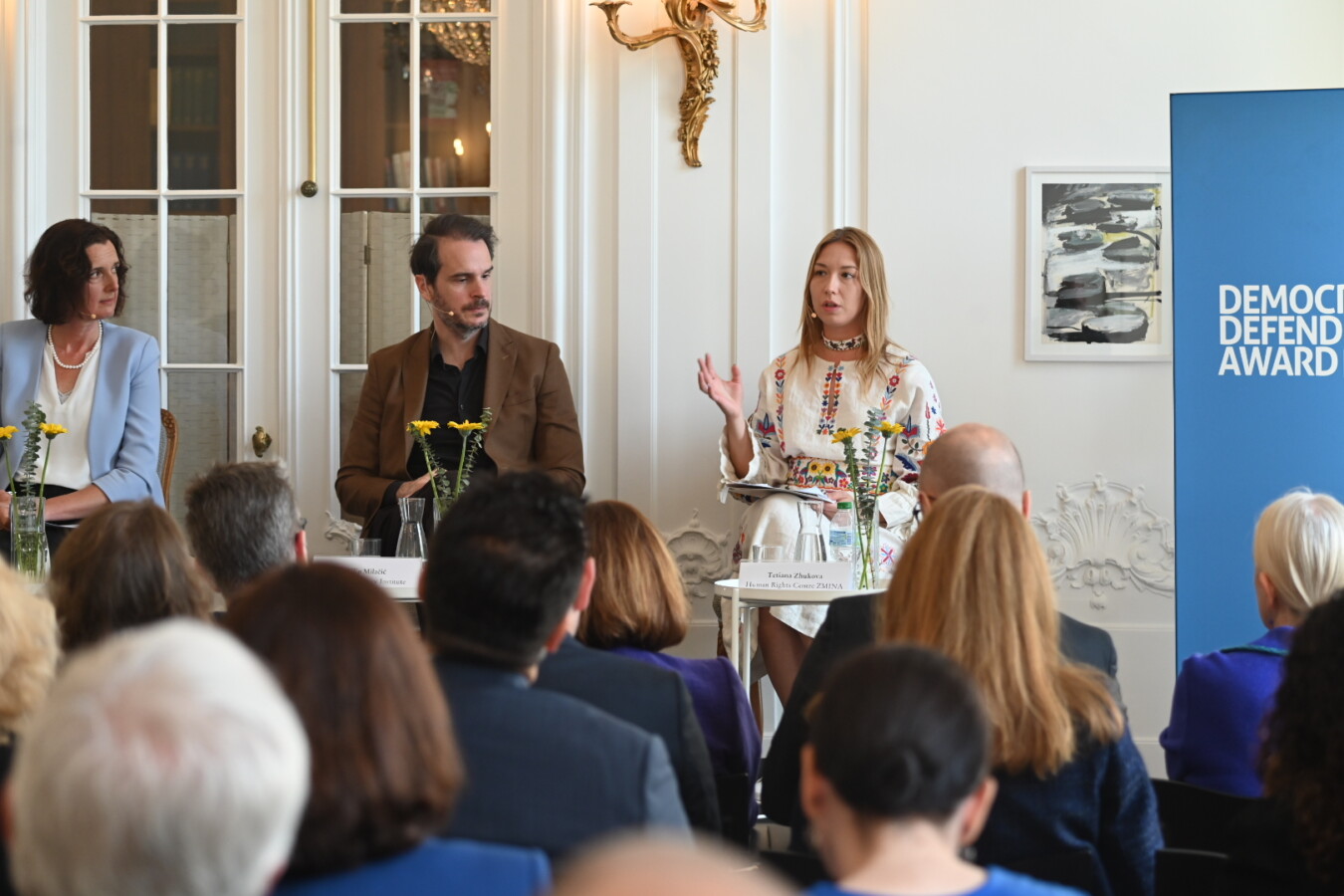
ZMINA’s Tetiana Zhukova noted that since the independence of Ukraine, civil society has constantly responded to challenges – corruption, political pressure, authoritarian tendencies and strong Russian influence. This is why Ukrainians went to the streets during the Orange Revolution and the Revolution of Dignity: “These movements became a turning point; they taught us several lessons: that civil society can become a force for democratic transformation, that we are stronger when united, and that democracy, human rights and freedoms must never be taken for granted.”
Ukrainian civil society has played an important role since the beginning of Russia’s aggression against Ukraine: providing humanitarian aid in affected areas, organizing evacuations, documenting international crimes, supporting victims, IDPs, and refugees, advocating for the release of civilian detainees and the return of deported children, promoting accountability and raising funds to support the army. It became one of the pillars that help society continue functioning when institutions are under enormous pressure.
“However, significant challenges remain. In 2025, ZMINA documented 172 cases of pressure on civil society in Ukraine, mainly caused by actions of the Russian Federation. Russian attacks targeted volunteer centres, humanitarian warehouses, animal shelters, editorial offices, evacuation vehicles, as well as journalists, volunteers and activists, resulting in destruction, death and injuries,” highlighted Zhukova.
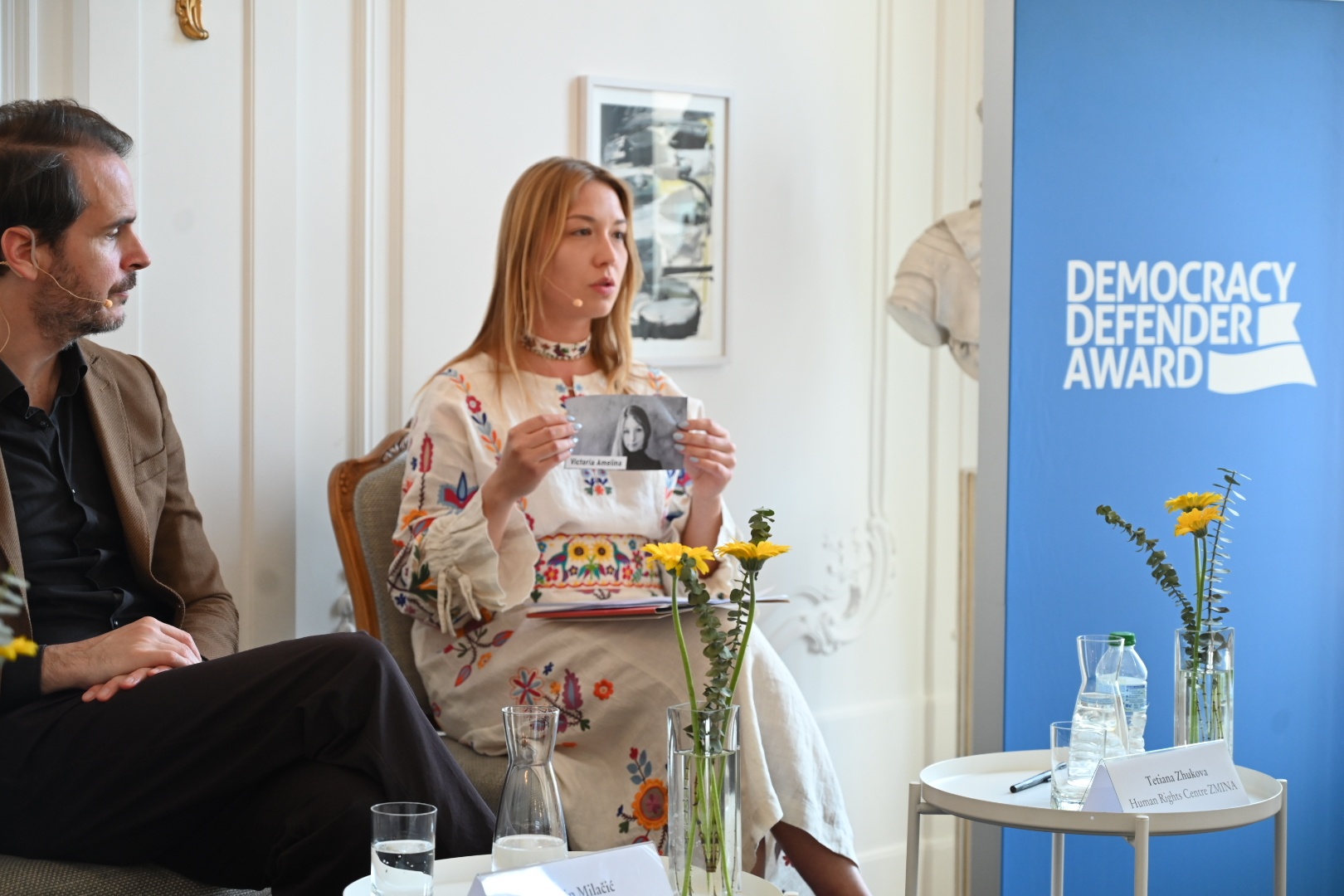
As a result, 26 civil society representatives died in 2025; in total, ZMINA documented at least 149 civil society casualties since 2022. The Senior International Advocacy Manager recalled the tragic story of Ukrainian writer and human rights defender Viktoriia Amelina, who was killed in a Russian missile strike targeting a restaurant where she was having dinner with a delegation of Colombian journalists.
“But if we want to understand why civic space matters, we should also look at what happens where it disappears. Occupation begins not only with military control but with the destruction of civic space. The first victim of Russia’s aggression in 2014 was a civilian, Crimean Tatar activist Reshat Ametov, who went on a single silent picket against the occupation of Crimea, was abducted by the Russian-controlled forces, tortured and killed,” added Tetiana Zhukova.
She described the reality faced by journalists, activists and volunteers in the temporarily occupied territories: they are persecuted, abducted, detained, tortured and sentenced to long prison terms for their active civic stance. Among the thousands of civilian detainees held by Russia, 26 Ukrainian journalists remain in detention. There are also foreign citizens, including Mariano García Calatayud, a 78-year-old Spanish activist who came to Ukraine in 2014 as a humanitarian volunteer; he was abducted by Russian forces in occupied Kherson in March 2022 and has been held incommunicado ever since.
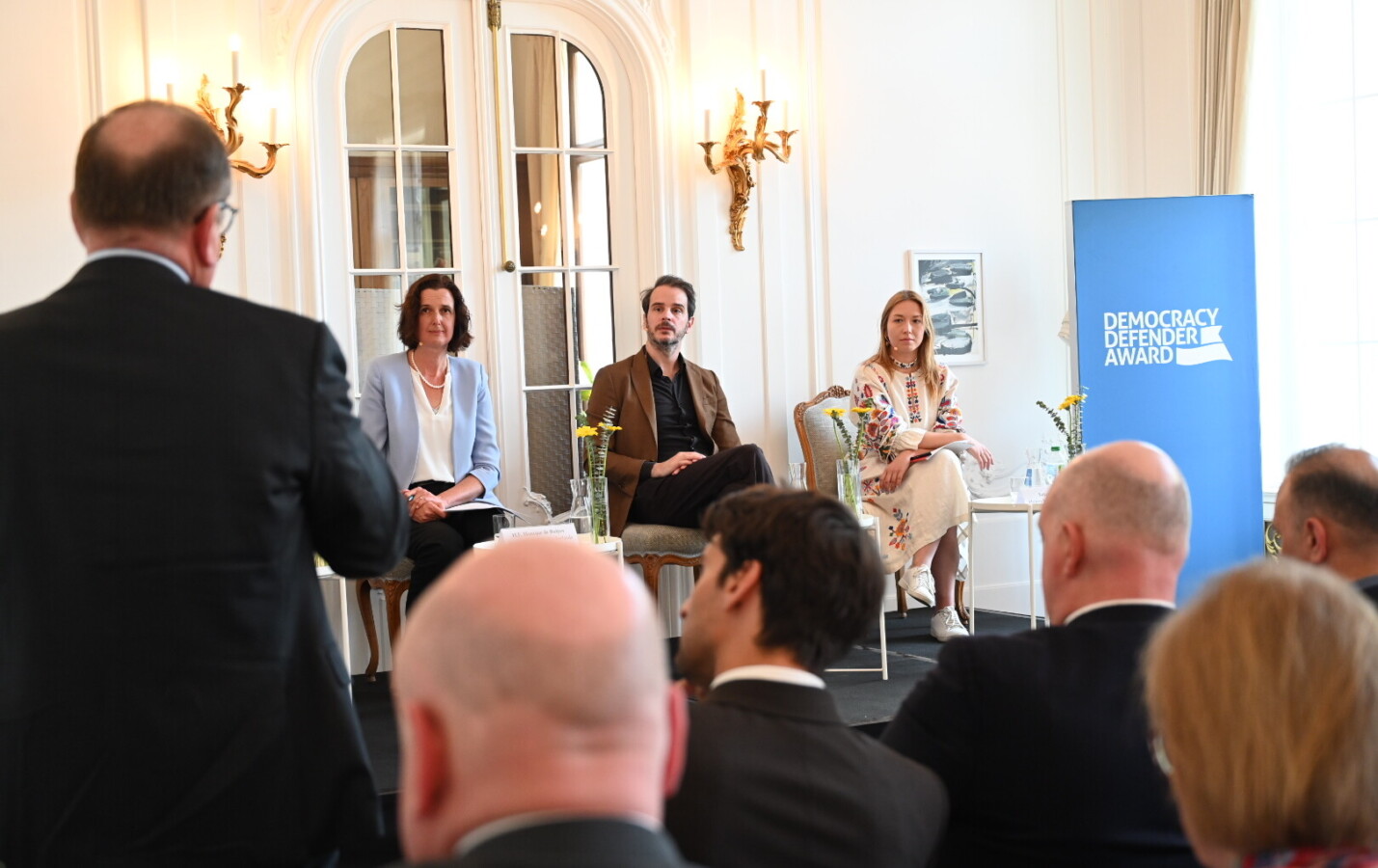
In Zhukova’s view, these violations became possible because of impunity: “Authoritarianism does not appear overnight; it develops gradually. It begins with attacks on independent media, pressure on civil society, foreign agent laws, disinformation and fear. Russia’s aggression grew through years of impunity — both domestically and internationally — in Chechnya, Georgia, Moldova, Crimea, Donetsk and Luhansk. The international response was too weak and too slow. There was too much dependence and too little political will, which allowed the situation to escalate to the point where, just 500 kilometres from here, missiles are striking hospitals, schools and homes. There was an international response, but was it enough? We see how Russian propagandists can still comfortably attend the OSCE events, even though their regime has been holding three representatives of the OSCE Monitoring Mission captive for four years.”
We continue to witness democratic backsliding across different parts of the OSCE region. Civil society monitors these developments and speaks out, even as pressure intensifies, foreign agent laws are introduced and detentions increase. This is the moment when the international community must step in.
Zhukova concluded that if we truly want to defend democracy, we must move from reactive responses to preventive action. Stronger mechanisms are needed to protect civil society before repression escalates into systematic violence. The international community must move beyond ignoring these problems and instead respond with clear condemnation, concrete action, sanctions and sustained pressure.
For reference
The Democracy Defender Award was established in 2016 to recognize a person or organization for exceptional contributions to the promotion of democracy and the defence of human rights in the spirit of the Helsinki Final Act and other OSCE principles and commitments. The aim was to reflect on the serious human rights and democracy challenges that persisted throughout the OSCE region, and to hear from those who seek change in their communities and societies. The Award was also intended to provide recognition and support to democracy and human rights defenders throughout our region.
The photos used in this article were provided by the U.S. Mission to OSCE.