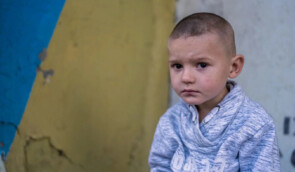
ECtHR held a hearing on Russia’s abduction of ten Ukrainian children from occupied Crimea: ZMINA and other NGOs joined as third parties
On 22 September 2026, the European Court of Human Rights held a public hearing in the case of “Ukrainian Helsinki Human Rights Union on behalf of ten Ukrainian children v. Russia” (application no. 6719/23).
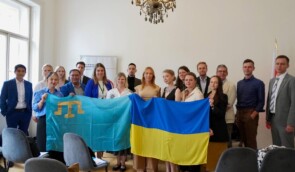
 Public hearing in the case concerning Russia’s abduction of ten Ukrainian children from occupied Crimea. Photo credit: Ministry of Justice of Ukraine
The case concerns ten Ukrainian children whose whereabouts and fate have remained unknown since the occupation of Crimea in 2014. At the time, they were between one and five years old, all in the care of the Ukrainian state and living in residential care institutions.
According to the Ukrainian Helsinki Human Rights Union (UHHRU), which lodged the application on the children’s behalf, Russia automatically imposed its citizenship on more than 4,000 children without parental care after taking control of Crimea. Despite requests from the Ukrainian authorities, the children were not handed over to Ukraine, and their details subsequently began appearing in Russian adoption databases. The ECtHR notes that the ten children in this case may have been placed for adoption, and some may already have been adopted. No information about their whereabouts has been available since 2014.
The Ukrainian Government is participating in the case as a third party. A delegation from the Ministry of Justice, led by Marharyta Sokorenko, Ukraine’s Agent before the ECtHR, presented the state’s position at the hearing.
Commenting on the hearing, she wrote on Facebook that the case was not an abstract complaint but concerned ten specific instances illustrating Russia’s systematic practices targeting Ukrainian children. Sokorenko stressed that these instances were linked to practices the ECtHR had already examined in the inter-state cases of “Ukraine v. Russia (re Crimea)” and “Ukraine and the Netherlands v. Russia“.
The Ukrainian delegation also stressed that Russia holds information about what has happened to the children but does not disclose it.
Ukraine is calling on the Court to hold Russia responsible for violating these children’s rights, as well as to order it to disclose their whereabouts and ensure their return to the control of the Ukrainian authorities.
ZMINA contributed to a joint third-party submission
Seven Ukrainian and international organisations also joined the proceedings as third parties. They submitted materials to the Court addressing, among other issues, Russia’s policy of indoctrinating and militarising Ukrainian children and erasing their Ukrainian identity.
Among them was the International Bar Association’s Human Rights Institute (IBAHRI). Helena Kennedy, a baroness and the institute’s Director, represented it at the hearing. Bring Kids Back UA, an initiative of the President of Ukraine, helped secure the involvement of the institute’s experts in the case.
The Human Rights Centre ZMINA, the Regional Centre for Human Rights and the Centre of Civil Education “Almenda” separately joined the proceedings as third parties. ZMINA and the Public Interest Journalism Lab also prepared a joint submission to the ECtHR.
Onysiia Syniuk, Head of the Research Department at ZMINA, explained the significance of the case, noting that the experiences of the ten children whose case is before the ECtHR illustrate Russia’s systematic efforts to erase Ukrainian identity.
“This is not an isolated case: it illustrates a wider pattern. What has happened to these ten children clearly reveals Russia’s broader policy and how its system for erasing Ukrainian identity has evolved. Russia began taking such measures back in 2014 by forcibly changing children’s citizenship, severing their ties with Ukraine and placing Ukrainian children with Russian families. Following the start of the full-scale invasion, these practices were adapted, accelerated and extended to all occupied territories. This case is important both for bringing these violations to light and for assessing them in legal terms. That is why, as a third party, we sought to demonstrate the broader context, as well as the deliberate and planned nature of Russia’s actions towards Ukrainian children”, said Onysiia Syniuk.
Kateryna Rashevska, a Legal Expert and Lead on International Justice and Legal Analysis at the Regional Centre for Human Rights, presented the joint position of all Ukrainian NGOs participating in the case as third parties at the public hearing.
In their submission, the human rights organisations drew the Court’s attention to the broader context of Russia’s systematic violations of Ukrainian children’s rights in the occupied territories of Ukraine. These include forcibly imposing Russian citizenship on children, unlawfully transferring them and placing them with Russian families, restricting their ability to return to Ukraine, and erasing their Ukrainian linguistic, cultural and social identity.
The authors of the submission stressed that Russia had systematically subjected Ukrainian children in occupied Crimea to forcible transfer, unlawful adoption, the imposition of Russian citizenship, militarisation and indoctrination since 2014, and had extended these practices to other occupied territories of Ukraine following the start of the full-scale invasion.
How Russia built this system in Crimea
In their joint submission, the human rights advocates examined how Russia extended its legislation to Crimea after occupying the peninsula and automatically declared Ukrainian children to be Russian citizens.
Children without parental care were entered into Russian databases, paving the way for their subsequent placement with Russian families through adoption procedures. The authors of the submission drew the Court’s attention in particular to the confidentiality of these procedures and the possibility of changing children’s personal details, both of which make it even harder to trace and return them.
The human rights advocates also examined evidence collected over many years documenting the removal of Ukrainian from education in Crimea, the use of Russian passport issuance as a means of control, and the involvement of children in Russian military activities.
According to the authors of the submission, Russia began applying these approaches in other occupied territories of Ukraine after 2022. These include militarising and indoctrinating children, promoting Russian narratives through education and extracurricular activities, and restricting children’s ability to maintain ties with Ukraine.
According to figures from the occupation authorities cited in the joint submission, only around 0.5% of school-age children in Crimea studied Ukrainian as their native language in 2024.
The joint submission thus addresses not only changes to children’s legal status but also a systematic policy aimed at reshaping their identity, their ties with Ukraine and how they see their own future.
The case goes beyond these ten children
During the hearing, the Ukrainian delegation and representatives of the third parties highlighted the broader context of the case – protecting Ukrainian children who remain in Russian-occupied territories.
In the joint submission, its authors estimate that around 1.6 million children may still be living in the occupied territories of Ukraine. These children must be protected from discrimination, militarisation, indoctrination and cultural assimilation, and must be able to maintain ties with their families and return safely to Ukraine.
Following the hearing, the ECtHR retired to deliberate. The Court will deliver its ruling in case no. 6719/23 at a later date.
A recording of the oral hearing is available on the ECtHR’s official website via this link.
The UHHRU lodged application no. 6719/23 on behalf of ten children. In April 2025, the ECtHR communicated the application to the Russian Government and invited it to submit observations. The Court noted that the applicants’ complaints concerned, among other issues, the forcible change of the children’s citizenship and their possible adoption, which they argued had deprived the children of their social identity as Ukrainian citizens.