Crimea Days 2026 brings occupied peninsula into focus in Prague and Brno
Crimea Days kicked off in Prague and Brno on September 17, bringing together human rights defenders, journalists, politicians, diplomats and members of the Czech, Ukrainian and Crimean Tatar communities for several days of discussions, film screenings, exhibitions, lectures, concerts and diplomatic events. The initiative aims to keep occupied Crimea high on the international agenda – from the voices of people living through the occupation to Crimean Tatar culture and the history of its national movement. It also looks at the wider consequences of Russia’s occupation of Crimea for international law, European security and the Black Sea region – and, ultimately, for all of us.
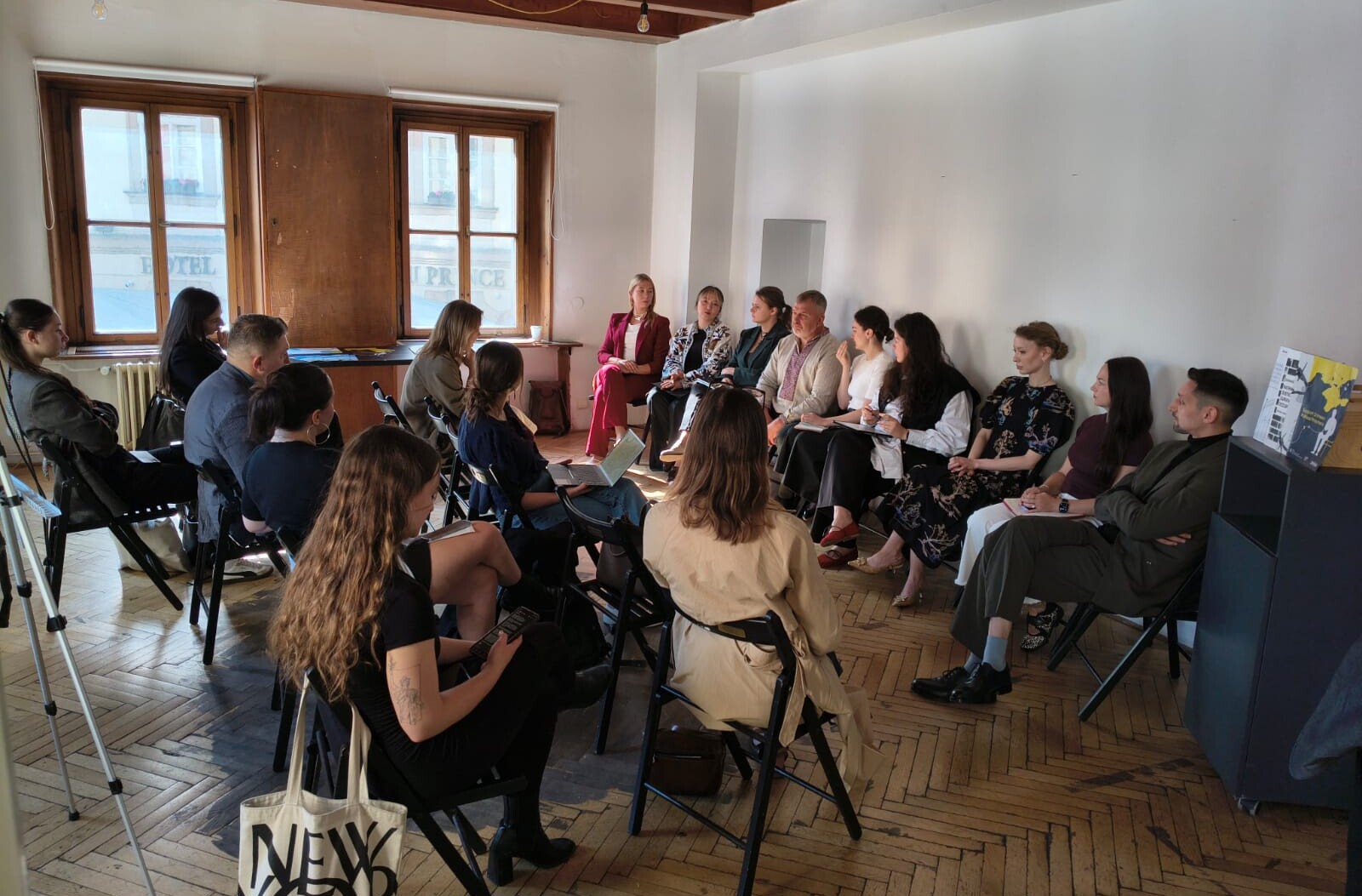
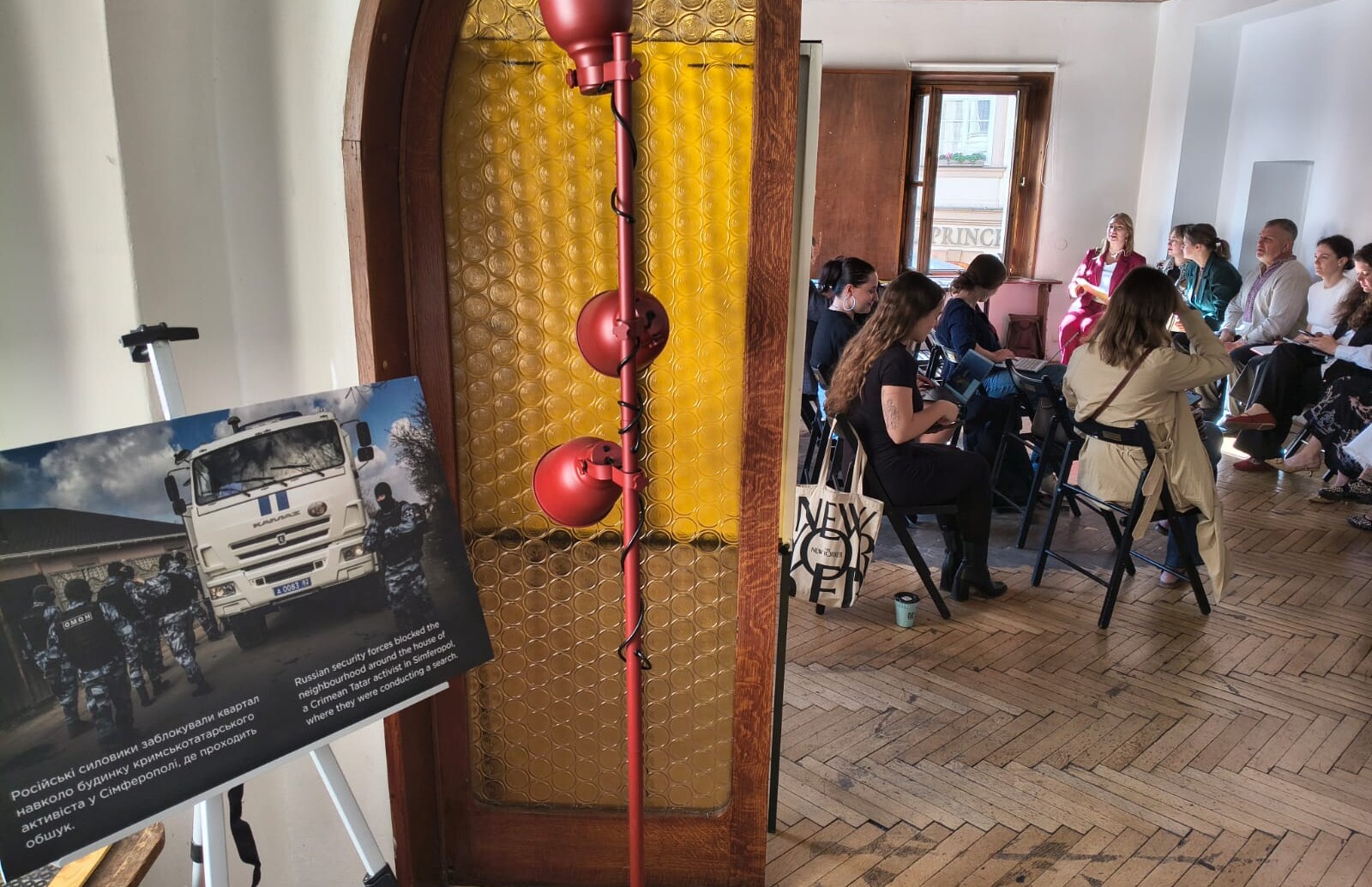
The opening day began with a press conference in Prague, where experts met with journalists to discuss some of the issues that remain at the heart of life under Russian occupation. The conversation covered the shrinking space for freedom of speech in Crimea, persecution and the growing share of women among political prisoners, as well as the systematic suppression of the rights of the peninsula’s Indigenous people. Speakers also addressed the militarisation and indoctrination of children and their forced transfer from occupied Crimea, along with the illegality of Russia’s State Duma elections held in the occupied territory and the use of propaganda and coercion to shape participation. Participants were also invited to view ZMINA’s photo exhibition “Crimea through the Eyes of Citizen Journalists: 10 Years in Captivity”, which portrays the realities faced by residents of occupied Crimea on a daily basis.
The discussion repeatedly returned to a broader question: what happens in Crimea does not stay in Crimea. “The lack of response against Russia’s occupation of Crimea enabled what we see now: Russian aggression against all of Ukraine. This all started there. This is why Crimea needs to stay in all discussions related to Russia’s war,” said Mariia Sulialina of the Centre of Civil Education “Almenda”.
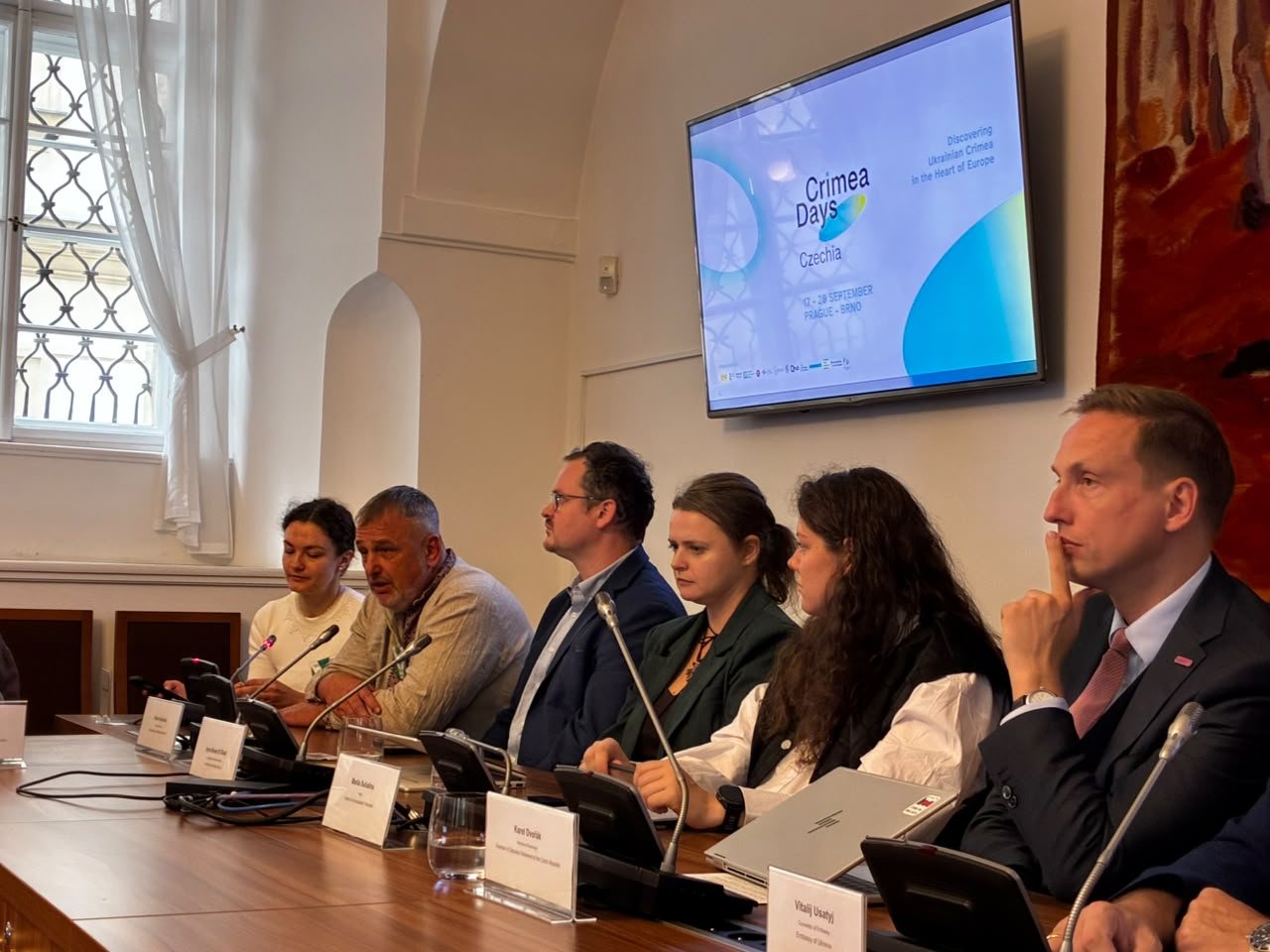
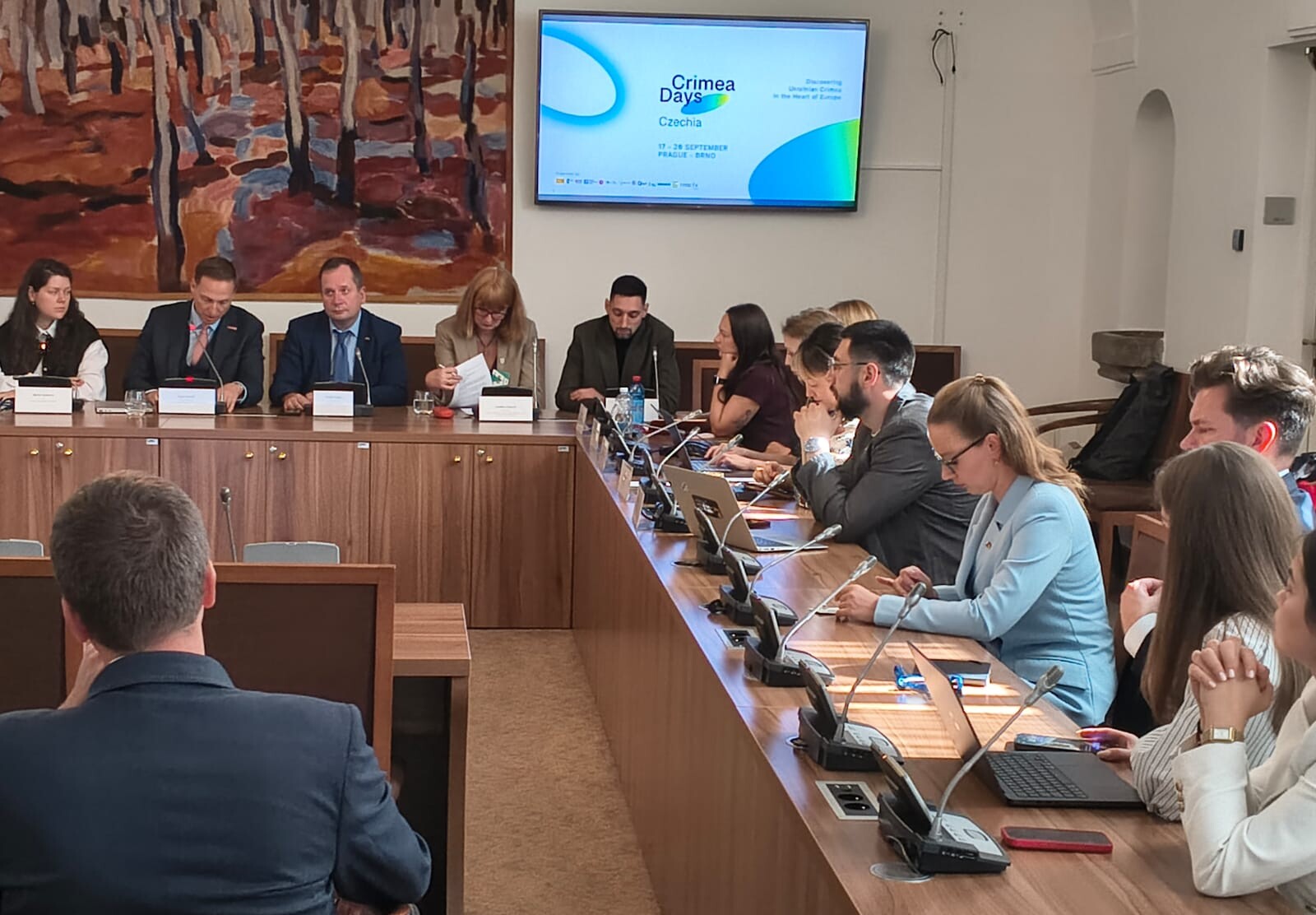
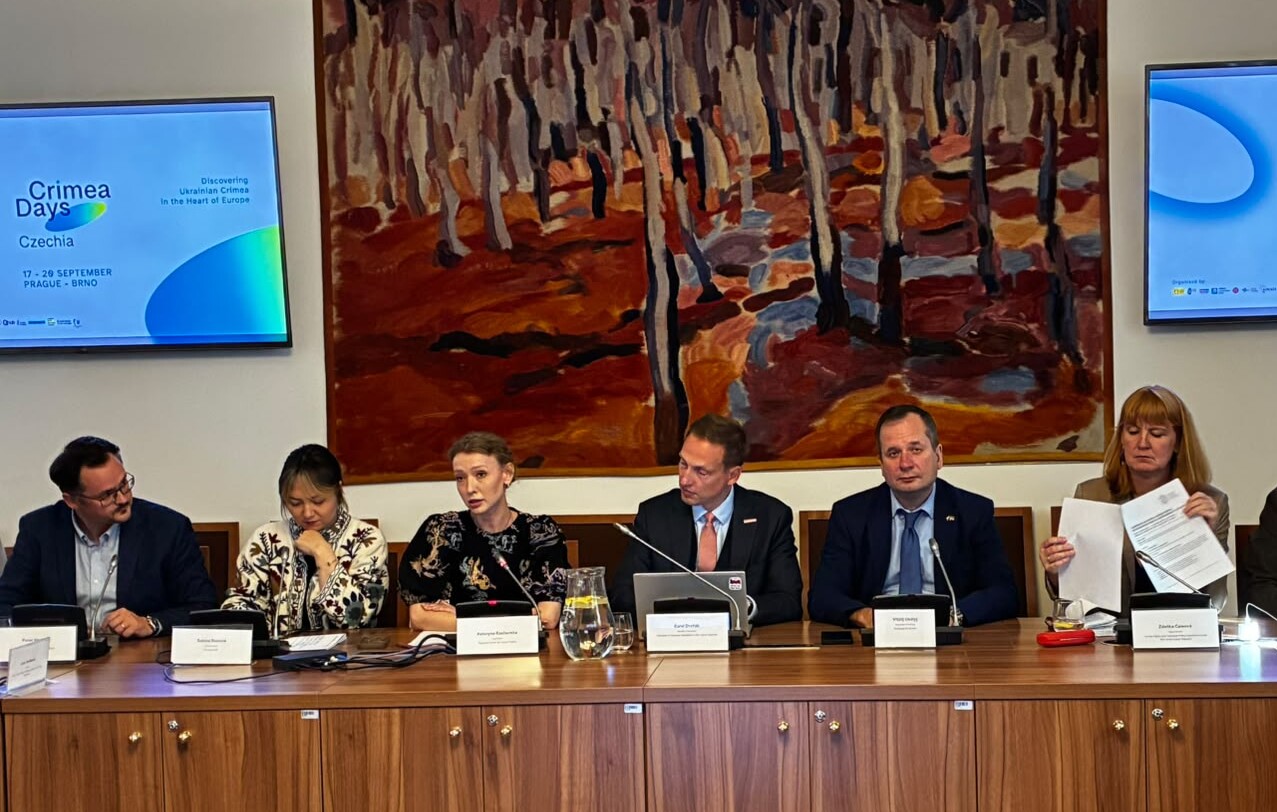
The day continued with the conference “Crimea in Focus: Human Rights, International Law and European Security” at the Parliament of the Czech Republic. The event, held with the support of Karel Dvořák, Member of the Chamber of Deputies of the Parliament, brought together experts to discuss the realities of life under occupation, the impact of Russia’s actions on international law and regional security, and ways to strengthen accountability and support those affected. It was moderated by Pavel Havlíček from the Association for International Affairs.
The conference opened with remarks by Karel Dvořák himself, as well as Vitalii Usatyi, Counsellor-Minister at the Embassy of Ukraine in the Czech Republic, and Zdeňka Caisová, Deputy Director of the Human Rights and Transition Policy Department at the Ministry of Foreign Affairs of the Czech Republic.
One of the speakers was Vladyslav Yesypenko, a Ukrainian journalist and former political prisoner who spent more than four years in Russian captivity. He spoke about his arrest in occupied Crimea in March 2021, his torture by FSB officers and the falsified sentence handed down by an occupation court.
He also spoke about other Ukrainian political prisoners, including his friend Kostyantyn Shyring, who died in a Russian prison in 2023 after being sentenced to 12 years, and 71-year-old Halyna Dovhopola, who remains imprisoned in Russia and recently suffered a stroke. Yesypenko also recalled the cases of journalists Dmytro Shtyblikov, Oleksii Bessarabov and Volodymyr Dudka, as well as journalist Viktoriia Roshchyna, who was tortured and died in Russian captivity in 2024. “I told you these cases so that you know what is being done to Ukrainian journalists and patriots in the occupied territories,” Yesypenko said, calling on Ukraine’s international partners to help secure the release of those still held captive.
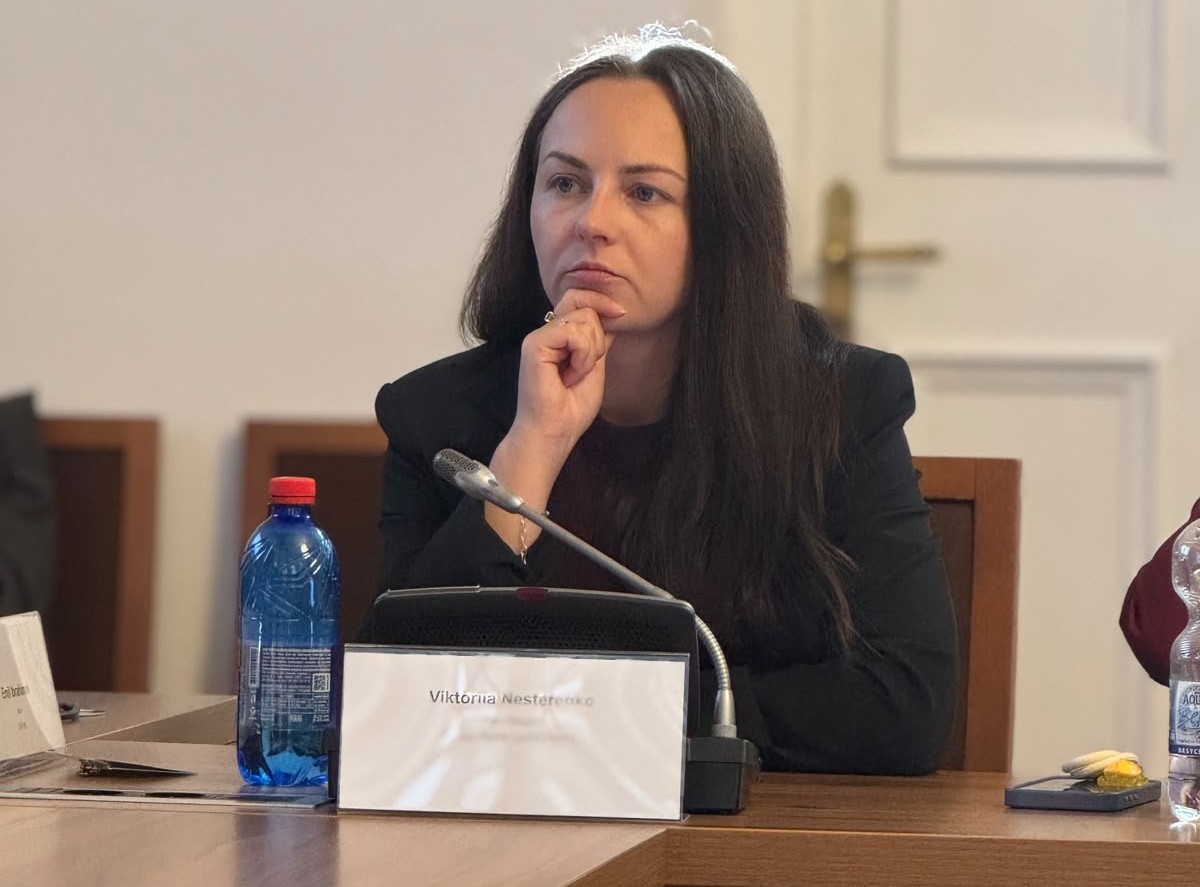
Viktoriia Nesterenko, project manager at the Human Rights Centre ZMINA, added broader figures on the persecution of journalists by Russia: “Today, we know of at least 27 journalists illegally imprisoned by Russia, 17 of them from temporarily occupied Crimea.” She noted that some had been abducted, like citizen journalist and human rights defender Iryna Danylovych, while others had endured torture or inhumane treatment and prolonged detention in punishment cells, including journalist Remzi Bekirov.
The pressure goes beyond physical persecution. Russian occupation authorities are increasingly using economic and legal tools to silence journalists and human rights defenders. In May 2025, Crimean Tatar human rights defender and citizen journalist Lutfiye Zudiyeva was added to Russia’s register of “foreign agents”. By the end of the summer, the practice had expanded to the Crimean Solidarity movement and a number of citizen journalists who had spent years documenting human rights abuses on the peninsula.
“The consequences of this policy are already being felt – Crimea is becoming less visible both in Ukraine and beyond,” Nesterenko said.
The discussion then turned to another increasingly visible dimension of political persecution: the growing number of women being imprisoned by Russia. Iryna Baran El Ghali of the Crimea Human Rights Group said that before Russia’s full-scale invasion, Ukrainian human rights organisations had documented no more than five women among Crimea’s political prisoners. Today, at least 83 civilian women from Crimea and the occupied parts of the Kherson and Zaporizhzhia regions are being held in detention, including 32 from the peninsula. The sentences have also grown dramatically, with terms of 15 and 16 years becoming common and the longest reaching 22 years.
“Women are prosecuted for expressing a pro-Ukrainian position, for supporting relatives who are political prisoners, for alleged participation in the resistance movement, for journalism and civic activity – and increasingly, simply for being the wife or the mother of a man who is already in prison,” Baran said.
The second panel shifted the focus from individual cases of persecution to the broader consequences of Russia’s occupation for international law and European security. Tetiana Zhukova, International Advocacy Manager at the Human Rights Centre ZMINA, argued that the problem is not a lack of international rules, but the failure to enforce them when powerful states choose to ignore them.
“International law without enforcement is vulnerable,” Zhukova said, pointing to the particular challenge posed by Russia as a nuclear power and permanent member of the UN Security Council. “What kind of legal system is it when the victim is expected to comply with every rule, while the aggressor can simply decide not to?“
Zhukova called for stronger accountability mechanisms, including continued support for the International Criminal Court and the Special Tribunal for the Crime of Aggression against Ukraine, as well as the use of universal jurisdiction in national courts. She also stressed the need to keep building the international system for reparations: the Register of Damage for Ukraine should be followed by an effective compensation mechanism and its mandate must include cases since 2014.
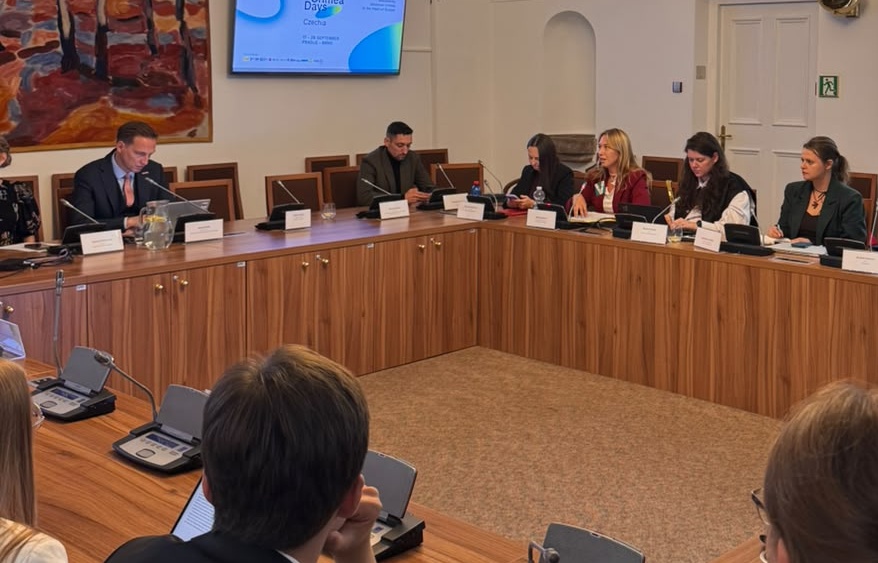
Zhukova linked accountability directly to European security, arguing that aggression cannot be allowed to become a strategy that brings territorial gains or political concessions. Russia’s earlier aggression in Moldova, Georgia, Ukrainian Crimea, Dotetsk and Luhansk was not stopped and the failure to respond helped create the conditions for the full-scale invasion against Ukraine. With every metre of Ukrainian territory Russia occupies, its military infrastructure and hybrid activities move closer to the rest of Europe.
Kateryna Rashevska of the Regional Center for Human Rights stressed that justice for Crimea also needs to be prepared now, rather than postponed until de-occupation. She called for better coordination between Ukrainian and international judicial and human rights mechanisms, stronger protection of evidence and witnesses, and effective compensation for people affected by the occupation, including through the future International Claims Commission and mechanisms involving frozen Russian assets.
But, Zhukova added, the international response cannot lose sight of the people behind the numbers. She called for greater pressure to secure the release of Ukrainian civilian detainees and the return of Ukrainian children, and suggested working with clearly defined groups of people who need to be brought home – including journalists, human rights defenders, women, elderly people and those with serious medical conditions. She also encouraged people to keep political prisoners visible by sharing their stories, writing letters to them and becoming their mentors.
The discussion also touched on sanctions as a tool for making accountability tangible. Sabina Ilias, Co-coordinator of the Crimea SOS, stressed that sanctions are not only a political signal but also a way to limit the machinery of occupation and prevent those responsible for abuses from treating Europe as a safe place for their assets and operations. “Sanctions pressure is not a diplomatic luxury; it is a vital pillar of global defence,” Ilias said, calling for stronger enforcement and targeted measures against those involved in political persecution and human rights abuses in occupied Crimea.
 Photo: Solidarity campaign with Ukrainian detainees in Russian prisons
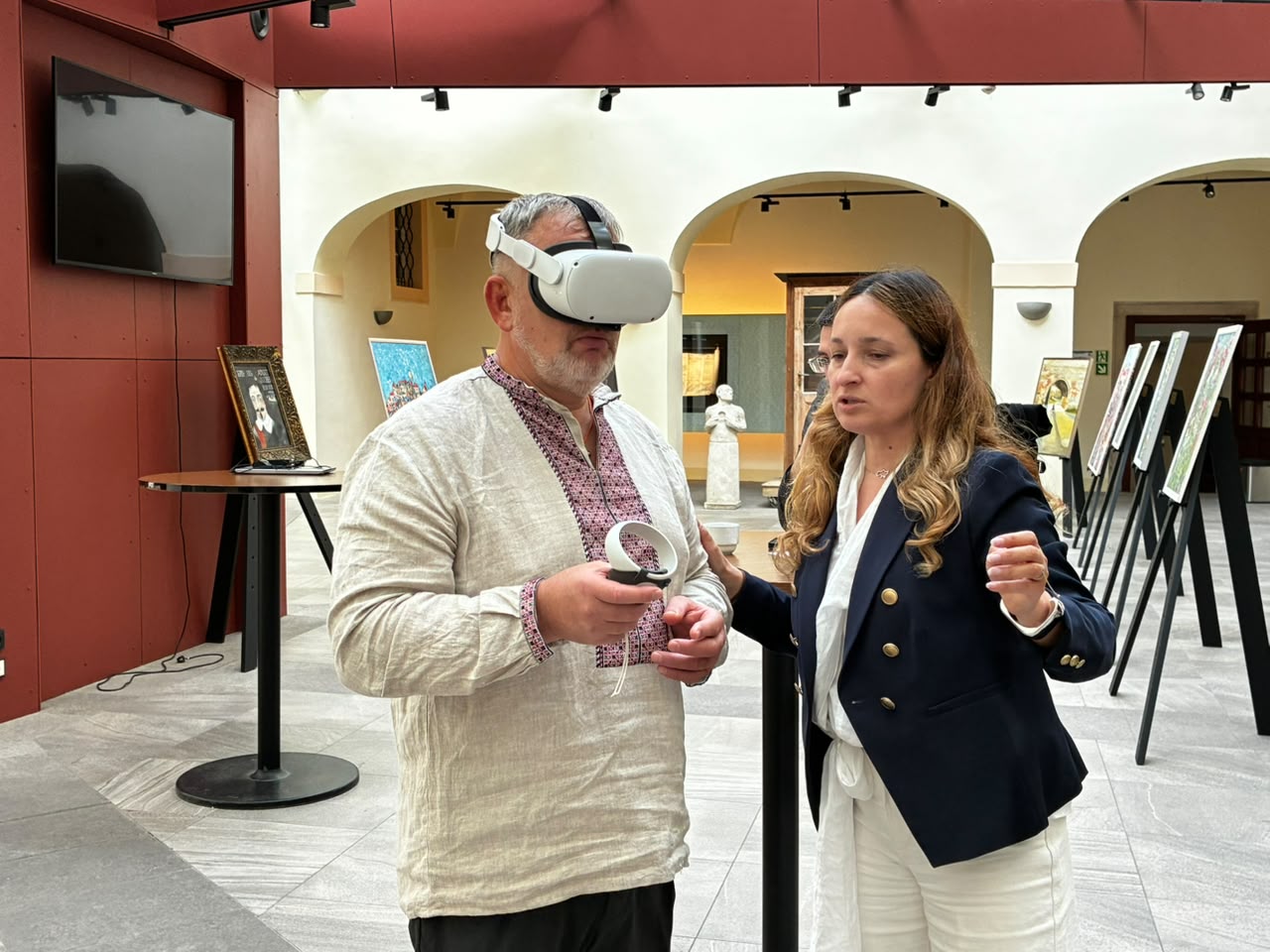
Participants were also invited to experience the Virtual Memory Space: Museum of the Crimean Resistance, a digital immersive 3D project documenting Russian repression, the occupation of Crimea and the stories of political prisoners.
The programme continued beyond the conference hall. In Prague, participants watched “Frozen”, a documentary about enforced disappearances in occupied Crimea. In Brno, the documentary “Chronicle of Occupation” explored the history of occupation of Crimea through the centruries and the Crimean Tatar national movement, while a lecture with Gulnara Abdulayeva at Masaryk University focused on the history and current challenges of Crimean Tatars.
The initiative “Crimea Days is Czechia 2026” are organized by the Human Rights House Crimea and its member organizations, including Crimean Process, Human Rights Centre ZMINA, Crimean Human Rights Group, CrimeaSOS, Regional Center for Human Rights and Centre of Civil Education “Almenda”, in cooperation with partners, including Crimean Projekt Foundation “Q-hub”, CrimeaVox Media, People in Need, Nesehnuti, Prague Civil Society Centre, Generation for Ukraine and the Embassy of Ukraine in the Czech Republic.