“Change is inevitable” and Free Iryna Danylovych: the ZMINA team joined the Women’s March to become the voice of women prisoners held by the Kremlin
On 8 March, International Women’s Day, a Women’s March took place in Kyiv. This was the first such event in the capital since the start of Russia’s full-scale invasion. Human rights defenders, activists, representatives of civil society organisations and movements joined the march.
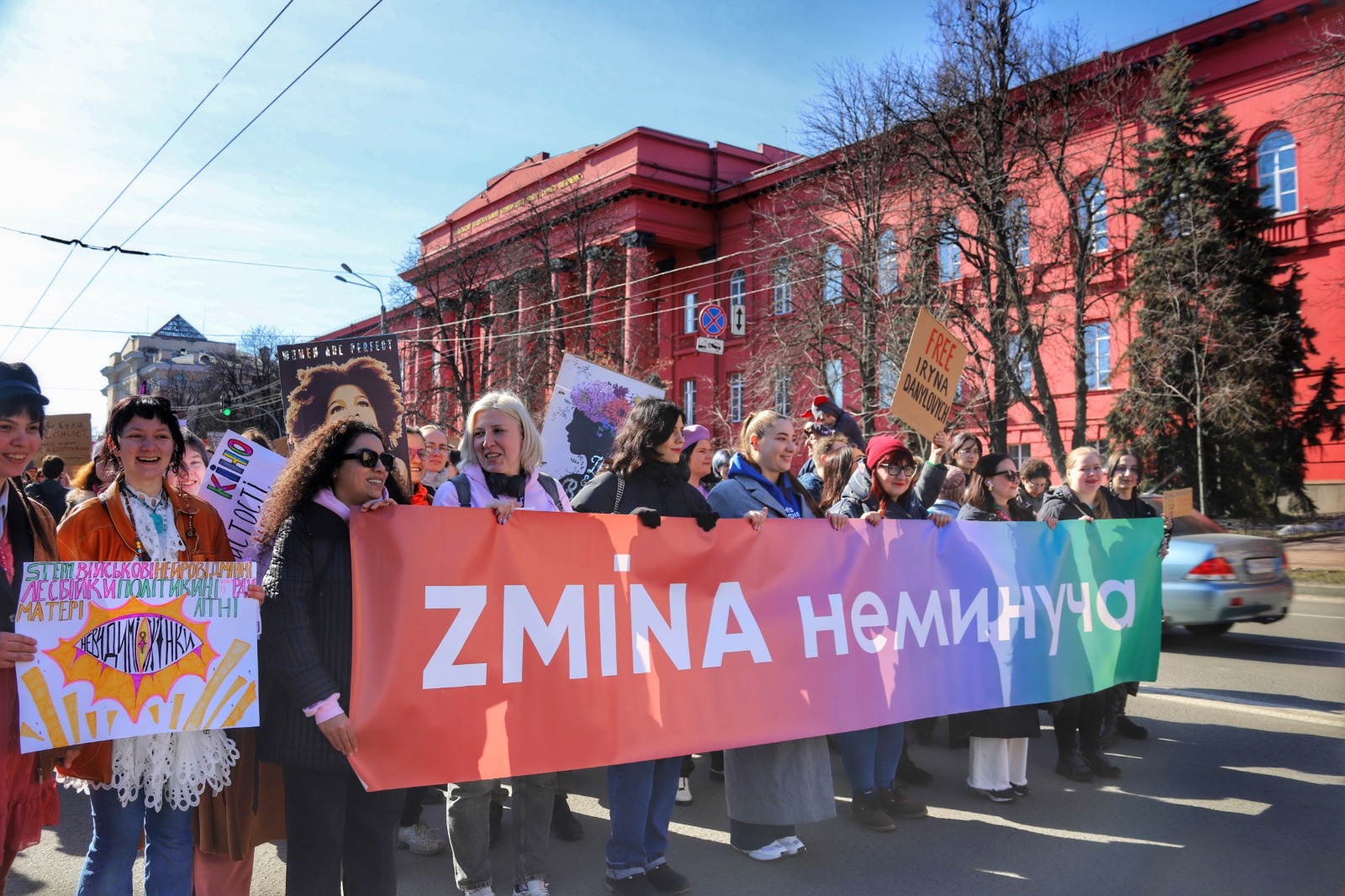
This year’s march was dedicated to protecting women’s rights in wartime. Participants emphasised the need to create effective mechanisms to counter sexual harassment and discrimination in the Armed Forces of Ukraine, to strengthen guarantees for the rights of women military personnel, and to provide systematic support for Ukrainian women held in Russian captivity. A separate demand was to prevent the narrowing of women’s rights during the revision of civil legislation.
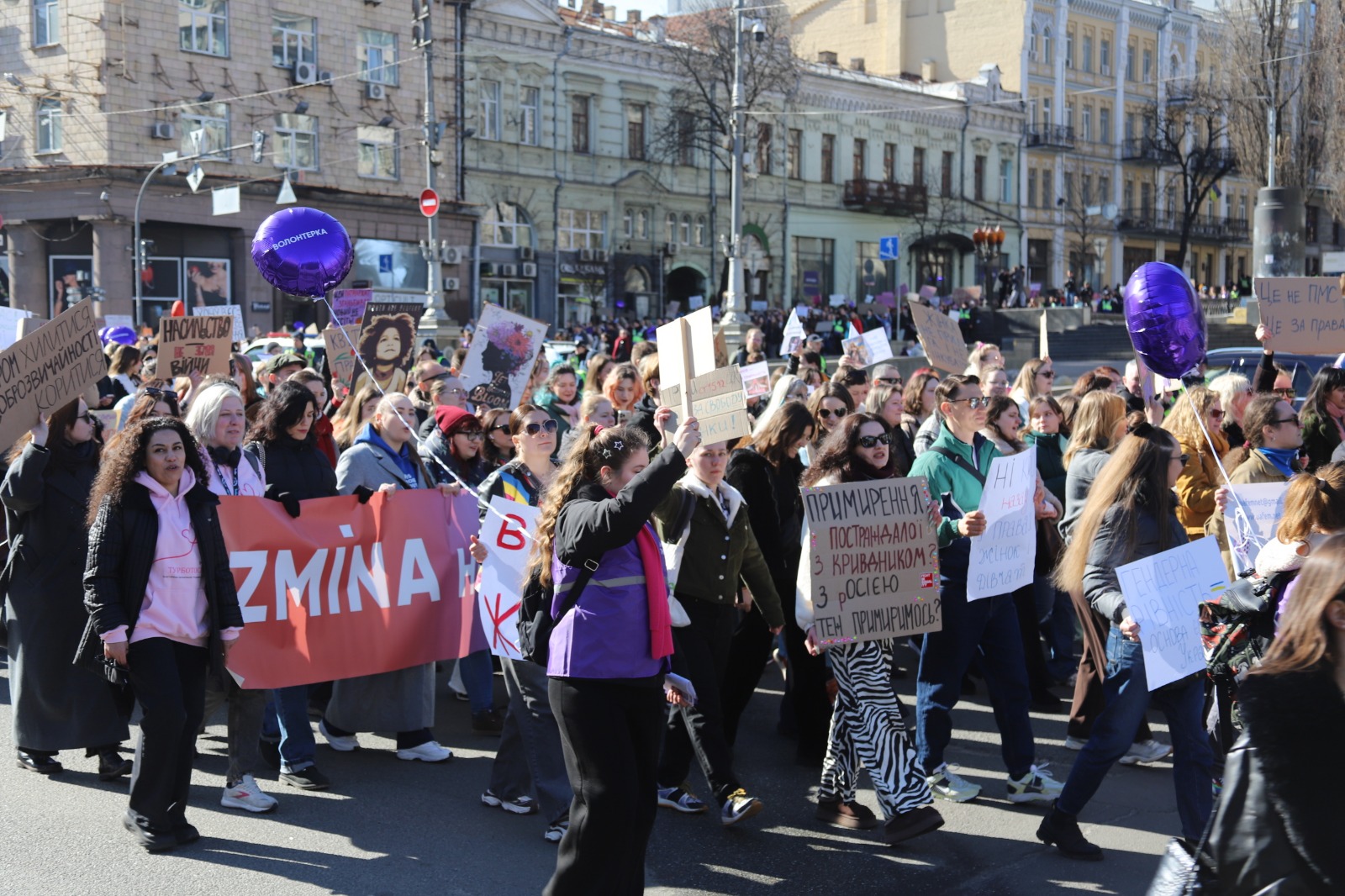
The participants of the march gathered in Taras Shevchenko Park, and then marched through the central streets of the city. People carried placards demanding the protection of women’s rights, support for women in the military, and the release of Ukrainian women held in Russian captivity.
Among the participants was also the team of the Human Rights Centre ZMINA, which formed its own group carrying a banner “Change is inevitable“.
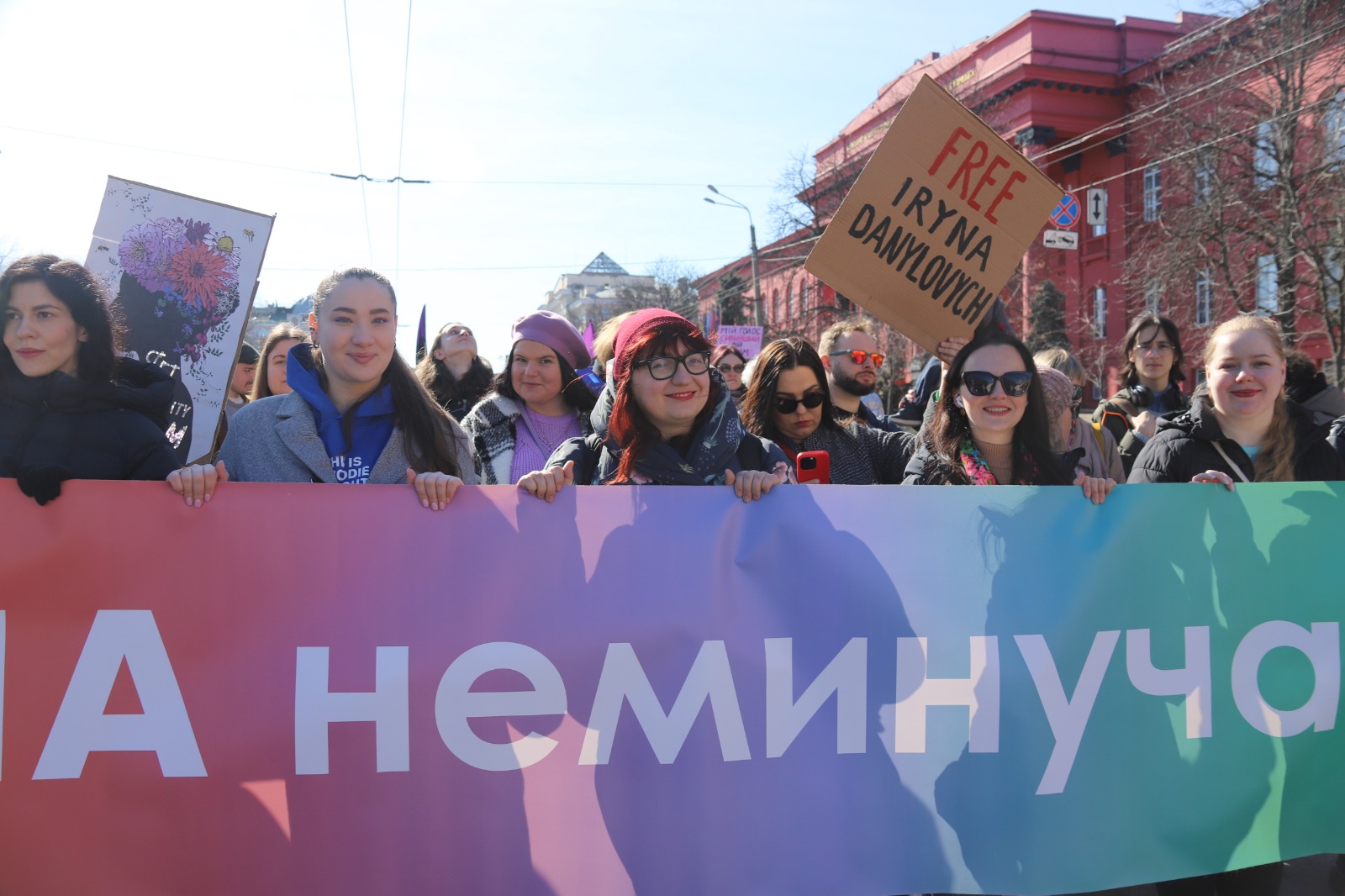
Tetiana Pechonchyk, Head of the Board of the Human Rights Centre ZMINA, spoke during the rally and emphasised that one of the main reasons for human rights defenders participating in the March was to draw attention to Ukrainian women held in Russian captivity.
“We also came here for those who cannot be with us today. I joined the Women’s March to remind people of our fellow women in Russian captivity, of the hundreds of Ukrainian civilian detainees and women prisoners of war who are still waiting to be released“, she said.
Pechonchyk held a placard demanding the release of Crimean human rights defender and journalist Iryna Danylovych, a nurse from Feodosia who, after the occupation of Crimea, was involved in human rights activities and covered the trials of Crimean Tatars.
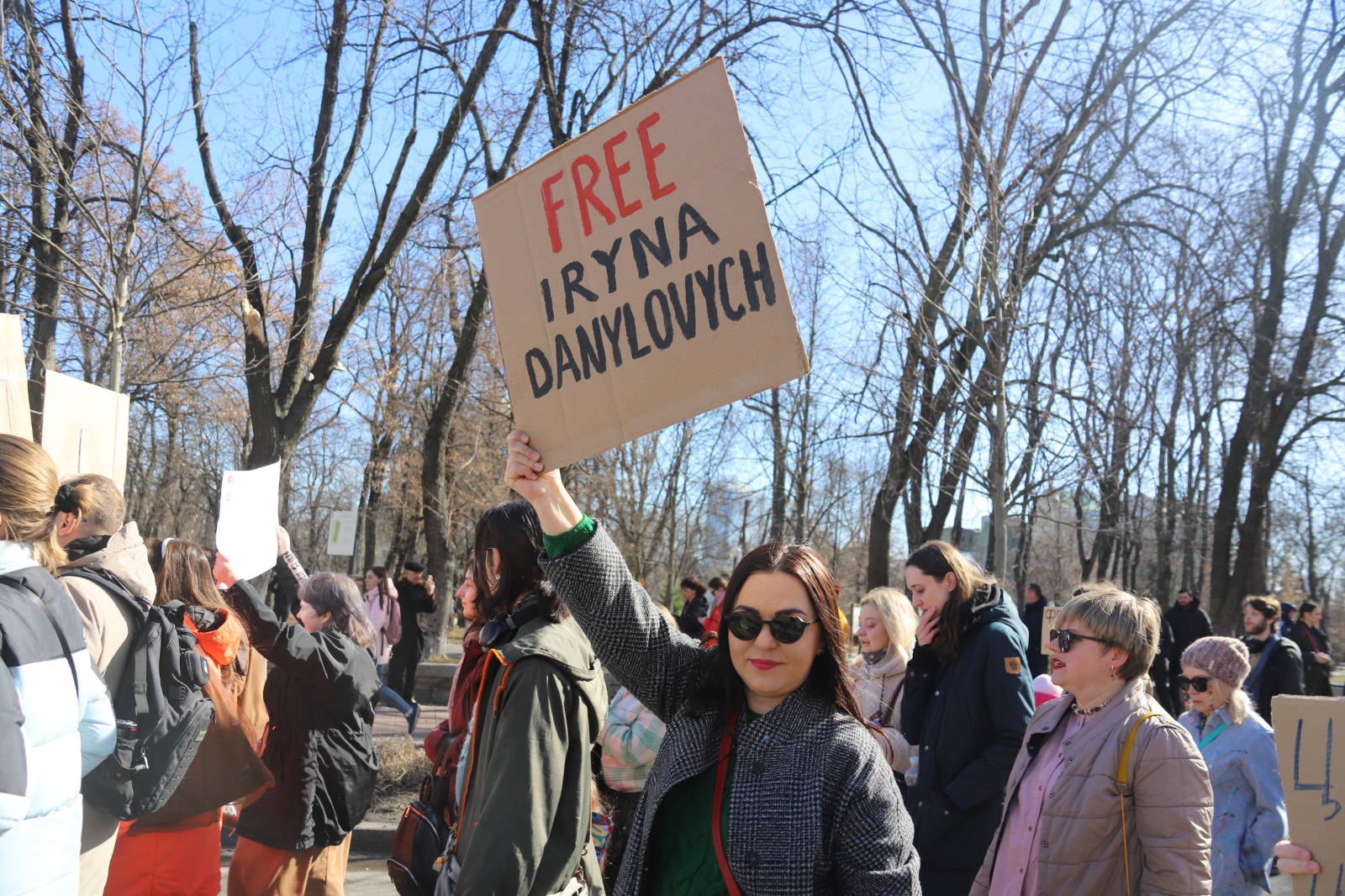 Photo: Tetiana Pechonchyk
In April 2022, Danylovych was abducted by FSB officers. Her whereabouts were unknown for 13 days. Subsequently, Russian security forces fabricated a criminal case against her, claiming that they had allegedly found explosives in her glasses case.
“Iryna was sentenced to six years of imprisonment, four of which she has already served. We take part in such rallies to remind everyone that Iryna Danylovych must be released. And together with her, hundreds of other Ukrainian women, civilians and prisoners of war, who are held in Russian captivity“, Pechonchyk stressed.
She emphasised that human rights defenders will continue to speak about these women until the last of them is released.
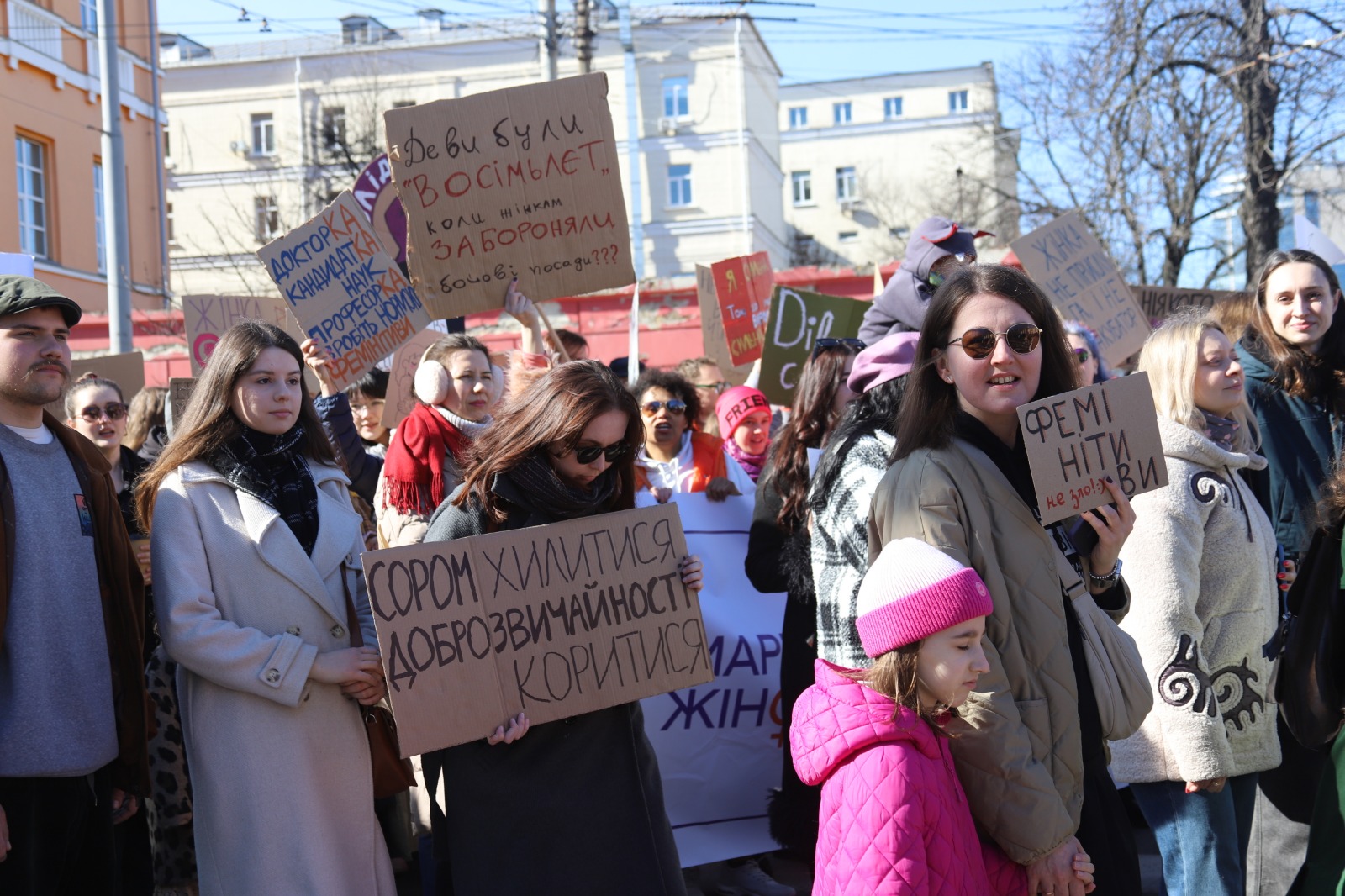
According to Iryna Yuzyk, Project Manager of the Human Rights Centre ZMINA, who also took part in the March, 15 organised groups from various human rights and civil society organisations participated in the event. However, many people joined independently – they simply came with placards.
One of the main demands of the March, as Yuzyk noted, was the withdrawal of the draft of the new edition of the Civil Code of Ukraine, which human rights organisations criticised for provisions that may restrict women’s rights.
In particular, concerns have been raised about provisions:
- introducing the concept of “good morals“, which may allow for the subjective assessment of a person’s behaviour;
- allowing marriage from the age of 14 by court decision;
- restricting the possibility of divorce, in particular during pregnancy or within one year after the birth of a child;
- defining marriage exclusively as a union between a man and a woman.
Human rights defenders emphasise that such norms contradict European standards and may negatively affect the rights of women and other vulnerable groups.
About the Women’s March
The Women’s March is an initiative that brings together activists, representatives of civil society organisations and concerned citizens.
The first such march took place in 2018, and the last march before Russia’s full-scale invasion was held in 2021.
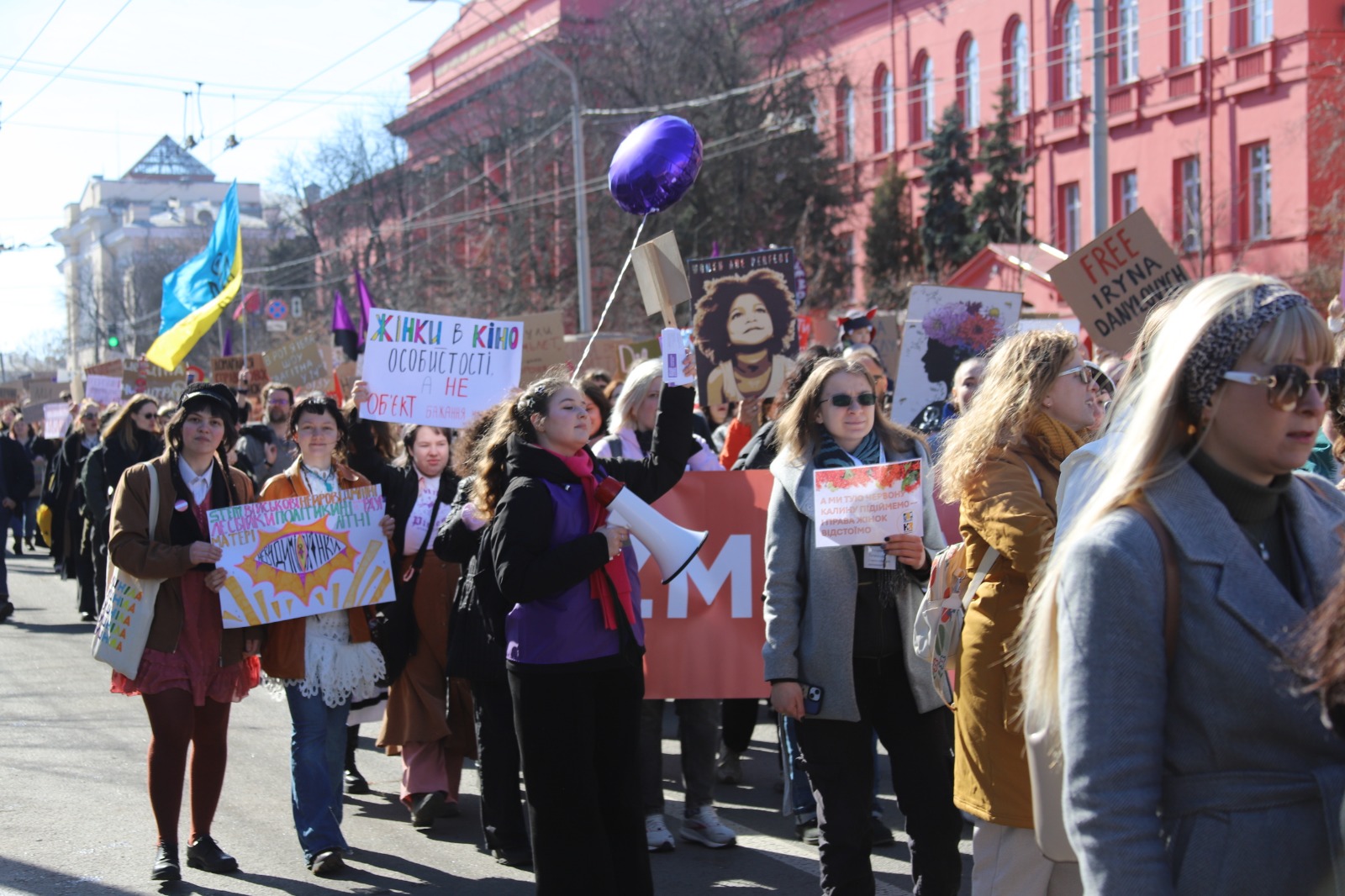
Photo credit: Oleksandra Yefymenko