Czechia holds Crimea Days to highlight rights abuses in occupied Ukrainian territories
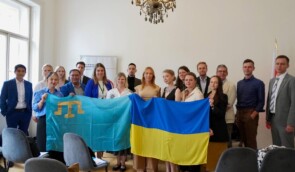
Crimea Days were held in the Czech Republic from September 17 to 20 to draw the attention of politicians and the public to the problems faced by people in Ukraine’s temporarily occupied territories.
The events took place in Prague and Brno with the participation of Ukrainian human rights organizations and Czech partners. People in Need, the Prague Civil Society Centre, and Nesehnutí joined the organizing effort.
The Czech Republic actively supports human rights work around the world, including in Ukraine. At the same time, attention to the Ukrainian issue is gradually declining, so it needs to be sustained.
– Tetiana Zhukova
Tetiana Zhukova, Senior International Advocacy Manager at the ZMINA Human Rights Center, said that the Czech Ministry of Foreign Affairs had previously worked closely with Ukrainian organizations. This included imposing sanctions on those involved in crimes and supporting political prisoners.
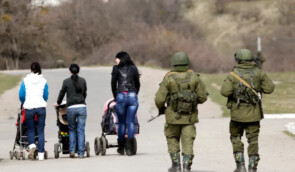
According to Zhukova, it is important to counter claims that handing over the occupied territories could supposedly bring the war to an end. She stressed that the problem concerns not only the territories themselves, but also the people who have lived for years under persecution and indoctrination. The history, culture, and art of the Crimean Tatars were also discussed during Crimea Days.
The Czech Parliament hosted a conference titled “Crimea in Focus: Human Rights, International Law, and European Security.” Legislators, representatives of the Czech Ministry of Foreign Affairs and the Office of the President, human rights defenders, students, and experts took part. The conference was co-organized by Karel Dvořák, a member of parliament from the STAN party.
Participants discussed the impact of the occupation on human rights, international law, and European security. Ukrainian representatives also submitted recommendations for a parliamentary resolution on the temporarily occupied territories. At the same time, the prospects for its adoption remain unknown.
At Charles University in Prague, Maria Sulialina, Tetiana Zhukova, and Kateryna Rashevska gave a lecture on the legal and humanitarian challenges arising during the war. At Masaryk University in Brno, historian and journalist Gulnara Abdullayeva spoke about the Crimean Tatar national movement and the problems facing the Crimean Tatar community after the occupation.
The program also included film screenings featuring journalist and former political prisoner Vladyslav Yesypenko and director Muslim Umerov. Crimea Days concluded with a cultural event titled “Crimean Coffee Session – A Journey Through the Cities of Crimea,” dedicated to the peninsula’s music and art.
The organizers were the House of Human Rights Crimea and its member organizations: the Crimea Process, the ZMINA Human Rights Center, the Crimean Human Rights Group, CrimeaSOS, the Regional Center for Human Rights, and the Almenda Center for Civic Education. The event was held with the participation of Czech partners, Ukrainian civil society organizations, and the Embassy of Ukraine in the Czech Republic.
Source: Mezha