Shadow Report 2026: ZMINA took part in presenting an independent assessment of Ukraine’s progress on human rights on its path to EU accession
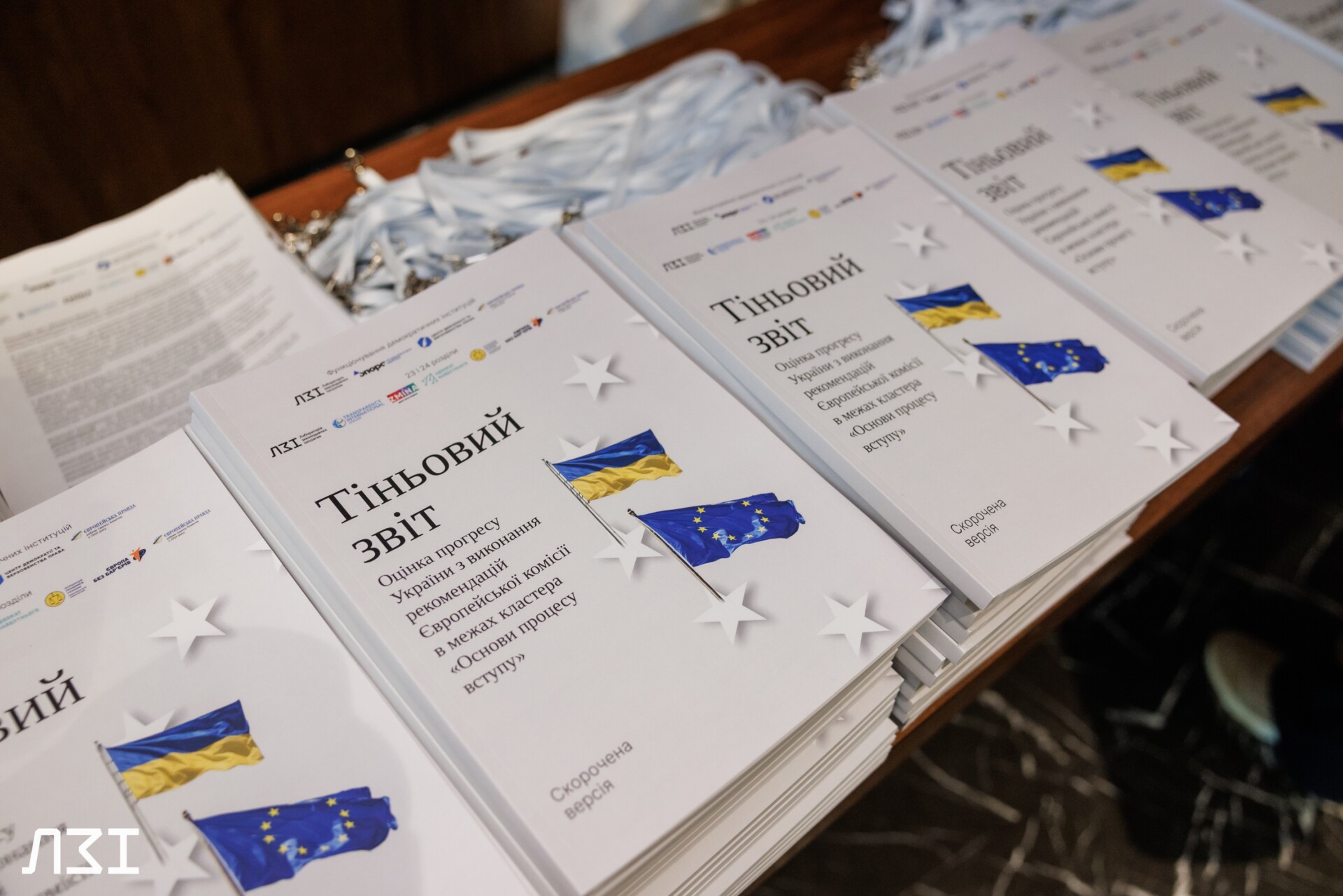
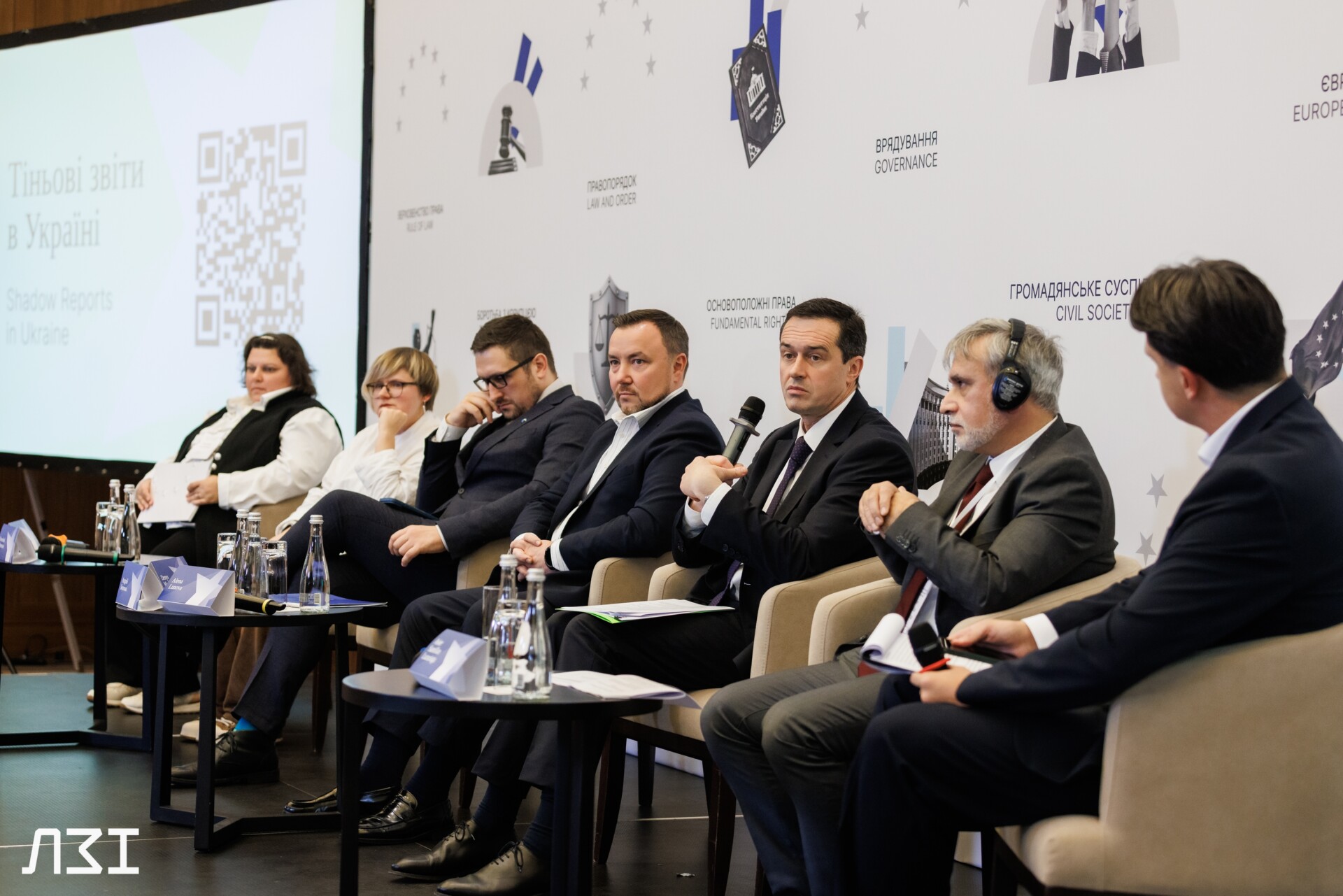
A coalition of civil society organisations, coordinated by the Agency for Legislative Initiatives (ALI), has prepared a new shadow report – an independent assessment of government policies and Ukraine’s progress in meeting its commitments to the EU under key chapters of the accession negotiations. The report, comprising approximately 1,500 pages of analysis and recommendations, was presented in Kyiv on 19 October.
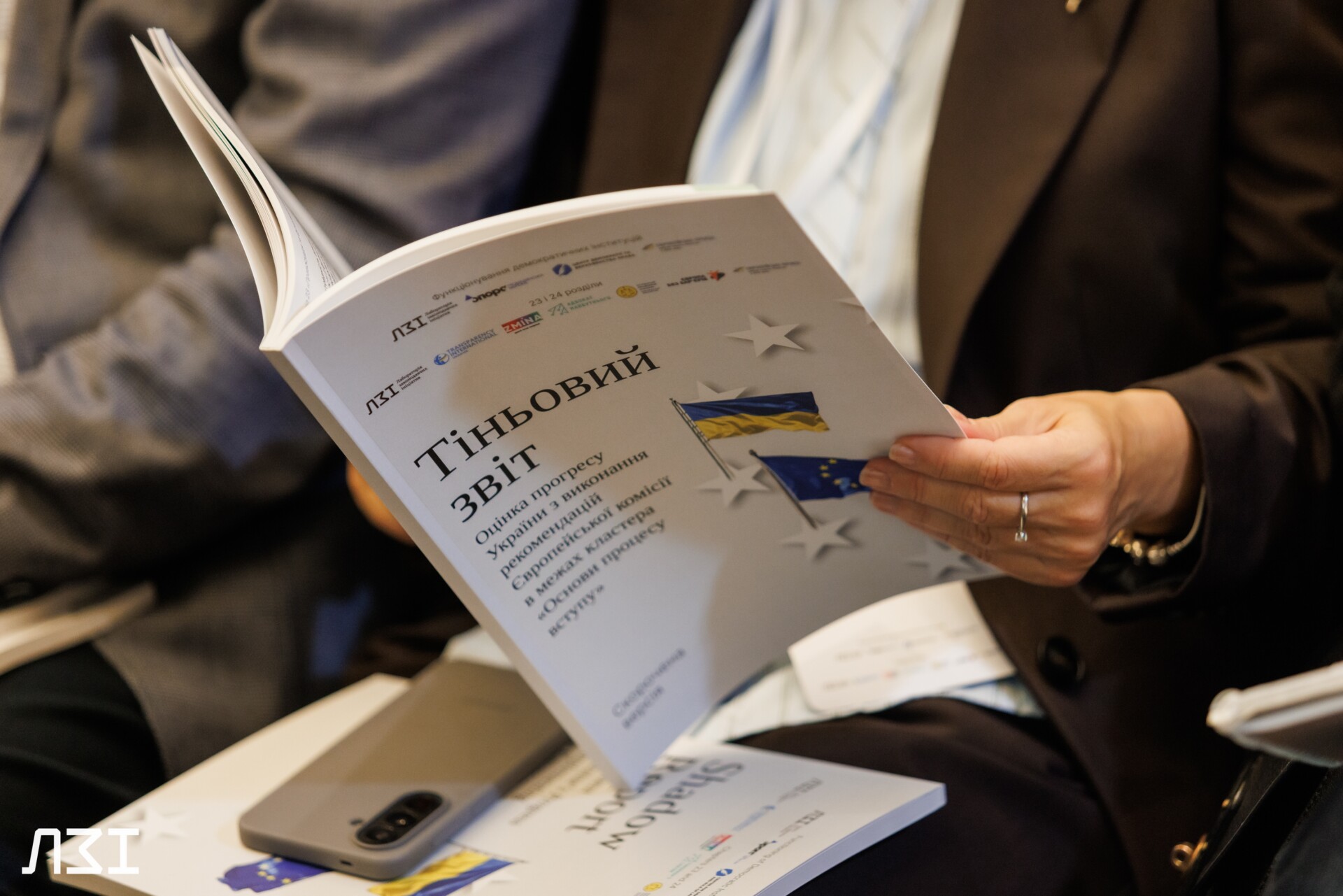
The report covers Chapter 23, “Judiciary and Fundamental Rights”, and Chapter 24, “Justice, Freedom and Security”, of the EU accession negotiations, as well as another component of the first negotiating cluster, “Fundamentals” – “Functioning of Democratic Institutions”.
The assessment of Chapters 23 and 24 covered the period from September 2025 to August 2026. For “Functioning of Democratic Institutions”, experts examined developments up to September 2025.
This is the third annual shadow report prepared by the coalition of civil society organisations assessing Ukraine’s progress in implementing the European Commission’s recommendations under the “Fundamentals” cluster. Previous reports were published in 2024 and 2025.
Nine organisations contributed to the preparation of the 2026 shadow report. The coalition put forward more than 500 recommendations covering both legislative changes and institutional measures.

Together with ten other organisations and experts, ZMINA contributed to monitoring reforms aimed at protecting human rights and fundamental freedoms, including issues related to justice during wartime, citizenship, migration, asylum and combating human trafficking. A total of 208 recommendations were made to help Ukraine fulfil its EU accession commitments.
Oleksandra Egert, Deputy Executive Director for Operations at the Agency for Legislative Initiatives, noted that the coalition had already presented the report to partners in Brussels twice this year, as in previous years: “It is very important for us to provide our partners with a balanced analysis. A large team of people worked on this report. We hope to close the Fundamentals cluster fairly quickly.”
 Andrii Borovyk, Oleksandra Egert, Asier Santillan
Andrii Borovyk, Executive Director of Transparency International Ukraine, thanked the civil servants who provided timely and thorough responses to requests from the analysts preparing the report.
He noted that Ukraine had made some progress in meeting EU accession requirements, but much remained to be done: “I hope that, together with all stakeholders, we can drive change over the next 12 months and shorten the list of things that still need to be done.”
Asier Santillan, Head of the Governance and Rule of Law Section at the EU Delegation to Ukraine, highlighted the importance of civil society’s engagement with government authorities in preparing the shadow report: “This gives us a perspective on the situation that differs from the official position. Civil society organisations not only monitor developments but also suggest ways forward and make recommendations.”
 Asier Santillan
According to Santillan, 2026 is particularly significant because the first cluster of EU accession negotiations was opened in June (this cluster is the first to open and the last to close): “This shadow report is therefore a valuable resource for understanding our starting point for work on the entire first cluster – in other words, the baseline from which we will work towards meeting the interim benchmarks. It also provides an opportunity to hear civil society’s ideas on how to address the various challenges that the country still faces.”
Vsevolod Chentsov, Deputy Prime Minister for European and Euro-Atlantic Integration of Ukraine, spoke about the establishment of a joint Ukraine–EU working group to advance key reforms: “We are carefully reviewing everything in the report and will take it into account in the working group’s activities. We will meet for intensive sessions in a few weeks.”
According to Denys Maslov, Minister of Justice of Ukraine, the country is making progress in fulfilling its EU integration commitments: “Many of the adopted measures are now being implemented, including those relating to the selection of judges and changes to the verification of judges’ declarations of integrity, among others.”
He stressed that progress should not be measured by the number of draft laws or strategies introduced. What matters is putting the adopted changes into practice, with all branches of government and civil society playing an important role in this process.
During the discussion of the monitoring findings, Alena Lunova, Advocacy Director at the Human Rights Centre ZMINA, noted that despite some progress on human rights, much more remains to be done. She also stressed the importance of parliament’s involvement in discussions on rule of law issues and meaningful consultations with civil society when preparing government decisions.
“Human rights cannot be treated as a separate issue – they are relevant to every area of government work. Many gaps stem from the failure to adopt laws, and sometimes parliament may even take unnecessary steps. It is important to discuss not only the substance of decisions but also how they are developed, particularly the consultation process,” Lunova said.
She cited the development of the National Human Rights Strategy as an example. According to Lunova, representatives of civil society organisations reviewed the draft strategy in March and submitted their comments, but around 90% of these were not taken into account. The organisations later saw the signed version of the strategy.
 Alena Lunova
Lunova believes that more meaningful engagement with civil society organisations is needed when developing the strategy’s implementation plan. She also noted that, given the pace of reforms, some assessments in the report may quickly become outdated, as certain decisions are adopted after the monitoring period has ended.
The shadow report provides a civil society perspective on Ukraine’s progress in fulfilling its EU integration commitments, helping to identify achievements, highlight problems and gaps, and develop recommendations for further action.
Alena Lunova identified implementing the roadmaps, developing an implementation plan for the National Human Rights Strategy and advancing the necessary legislative changes as key priorities. She stressed that alongside questions of values, concrete steps are also essential – including passing bills and adopting secondary legislation.
“Cooperation with civil society is the foundation of resilience. It is essential not only to ensure that expert opinions are taken into account in decision-making, but also to build trust between public authorities and society – trust that our enemy is trying to undermine. We need to restore and strengthen this trust through consultations, because we are all in the same boat,” stressed ZMINA’s Advocacy Director.
The shadow report “Assessment of Ukraine’s Progress in Implementing the European Commission’s Recommendations under the Fundamentals Cluster” was prepared by a coalition of civil society organisations coordinated by the Agency for Legislative Initiatives (ALI). The coalition comprises ALI, Transparency International Ukraine, the Human Rights Centre ZMINA, Tomorrow’s Lawyer, the Ukrainian Bar Association, Europe Without Barriers, the Civil Network OPORA and the Centre for Democracy and Rule of Law, with media support from European Pravda. Its contents are the sole responsibility of the authors and do not necessarily reflect the views of the European Union.
The full text of the 2026 shadow report is available on the Human Rights Centre ZMINA’s website here.
Photo credit: Agency for Legislative Initiatives.