ZMINA joined discussion on supporting people affected by war at Tochka Skhodu forum in Kyiv
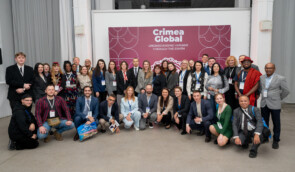
On 22 October 2026, Kyiv hosted the forum “Preserving and Restoring Human Capital During Wartime”, organised by the civil society organisation and media outlet Tochka Skhodu.
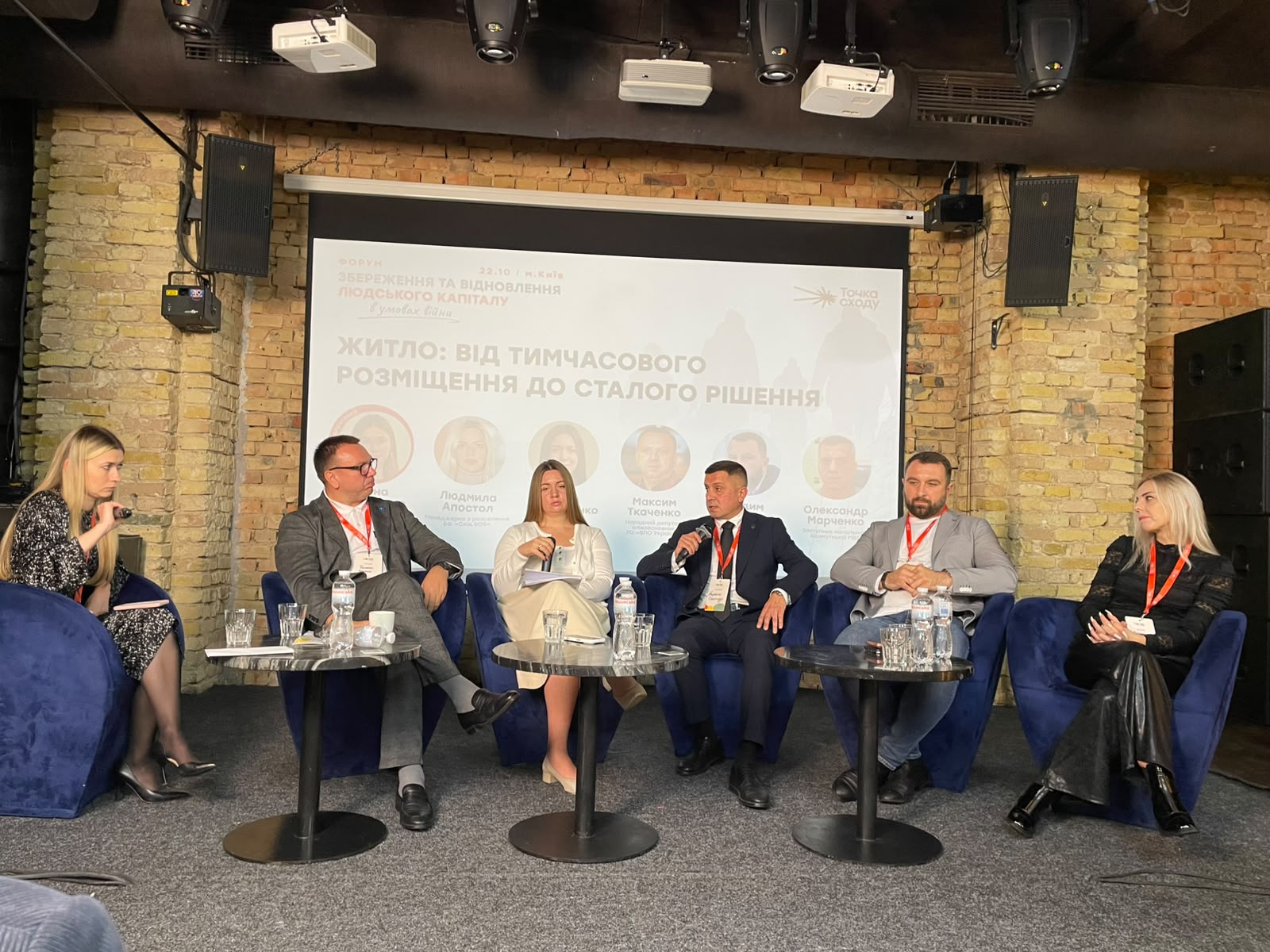
The forum brought together representatives of government institutions, local and regional communities, media outlets, charitable foundations and civil society organisations, including the Human Rights Centre ZMINA.
The event focused on the challenges facing Ukrainians in the temporarily occupied territories, internally displaced persons (IDPs) and those who have moved abroad, as well as the role of the state and local communities in supporting them.
Alena Lunova, Advocacy Director at ZMINA, took part in a discussion titled “A Community Without Territory: How Not to Lose People”, which explored how communities can maintain contact with residents living under occupation, internally displaced people and Ukrainians abroad.
In her view, people from occupied territories, IDPs and Ukrainians abroad need a clear point of contact for communicating with the state and accessing support. The government alone cannot fully fulfil this role, but local communities can, as it requires ongoing engagement with people, an understanding of their needs and trust.
“Some people remain in their communities, while others from those communities are still living in occupied territories, have been internally displaced or have moved abroad. They all need a point of contact. No ministry can fulfil that role. This should be the responsibility of those who work with people every day, understand their needs and circumstances, and have their trust. Relocated local self-government bodies that maintain ties with their communities could also play this role,” Lunova explained.
ZMINA’s Advocacy Director also noted that relocated local self-government bodies can and should maintain contact with residents who remain under occupation. However, their powers must be clearly defined, and the safety of such communication must be guaranteed. At present, communication with people in temporarily occupied territories may be viewed through the lens of national security risks, creating risks for both residents and those who maintain contact with them.
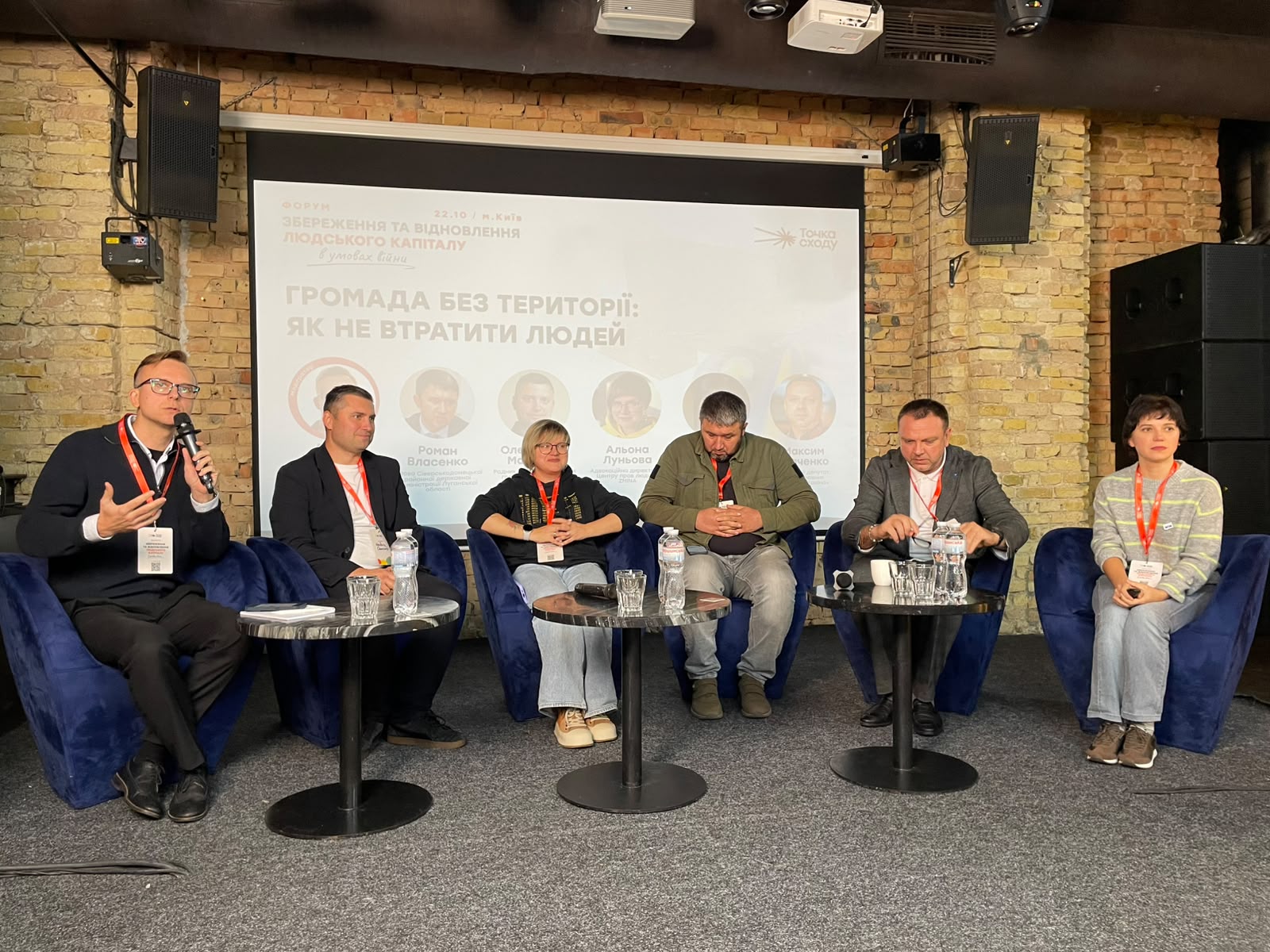
Oleksandr Mahdalits, Adviser to Ukraine’s Minister for Communities, Territories and Internally Displaced Persons, spoke about efforts to strengthen the ministry’s cooperation with civil society organisations and IDP councils.
He noted that a draft strategy for the reintegration of temporarily occupied territories is being developed and is already publicly available. According to Mahdalits, the document has not yet been finalised, so the public can review it and submit proposals for its revision.
Roman Vlasenko, Head of the Sievierodonetsk District State Administration in the Luhansk region, stressed the need for a clear government strategy for communicating with people in the temporarily occupied territories and reintegrating these communities. He also emphasised that strategic documents alone are not enough: specific mechanisms for implementation must be established, and those responsible for carrying them out must be identified.
Olha Stukalo, Editor-in-Chief of the media outlet Recovery Window, presented the findings of a study titled “Map of Problems and Solutions: IDP Experiences and Institutional Perspectives on Recovery”. According to Stukalo, the study revealed a lack of a shared understanding of the role of internally displaced people, who are simultaneously viewed as a vulnerable group, a resource and a problem. The study highlights the need to move away from a “service provider – aid recipient” model towards a partnership in which IDPs are fully involved in decision-making and community recovery. Key conditions for integration include access to housing, economic independence, opportunities to fulfil their professional potential, recognition of displaced people’s experiences and respect for their dignity.
Maksym Tkachenko, a Ukrainian MP and co-founder of the civil society organisation VPO Ukraine, raised the question of whether government institutions can meet the needs of internally displaced people in practice.
The discussion also addressed the need for effective support for IDPs and the state’s responsibility for implementing decisions that affect their lives.
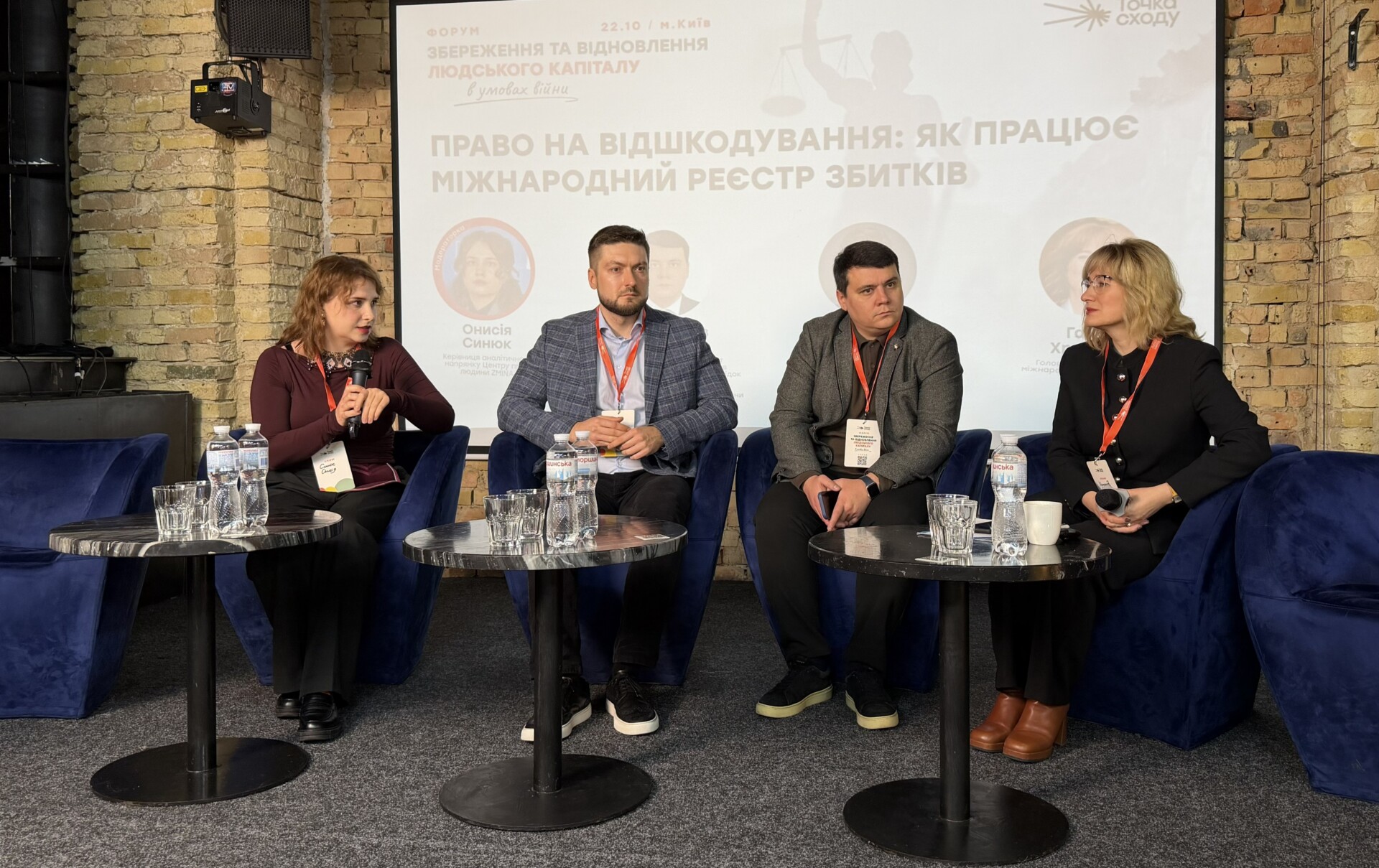
Onysiia Syniuk, Head of the Research Department at ZMINA, also attended the forum. She moderated a panel discussion titled “The Right to Compensation: How the Register of Damage for Ukraine Works”, which explored access to compensation mechanisms for people affected by Russian aggression. The discussion covered the Register of Damage for Ukraine, the establishment of the International Claims Commission for Ukraine, and the role of the state and local communities in informing people about these opportunities.
Forum participants also discussed evacuating people and arranging accommodation for them, access to housing, support for young people from temporarily occupied territories, and the rehabilitation and readjustment of military personnel following their release from Russian captivity.