“Good customs” vs human rights: ZMINA brought together more than 60 participants to discuss the risks of the new Civil Code
On 14 May 2026, a coordination meeting entitled “Good Customs vs Human Rights: What Common Approaches Could Be Used to Advocate for an Adequate Version of the Civil Code of Ukraine?” took place in Kyiv, organised by the Human Rights Centre ZMINA. The event brought together more than 60 participants, including lawyers, media experts, civil activists, and representatives of human rights and anti-corruption organisations, as well as state authorities. The main topic of discussion was the risks posed by the draft new Civil Code of Ukraine (registration No. 15150).
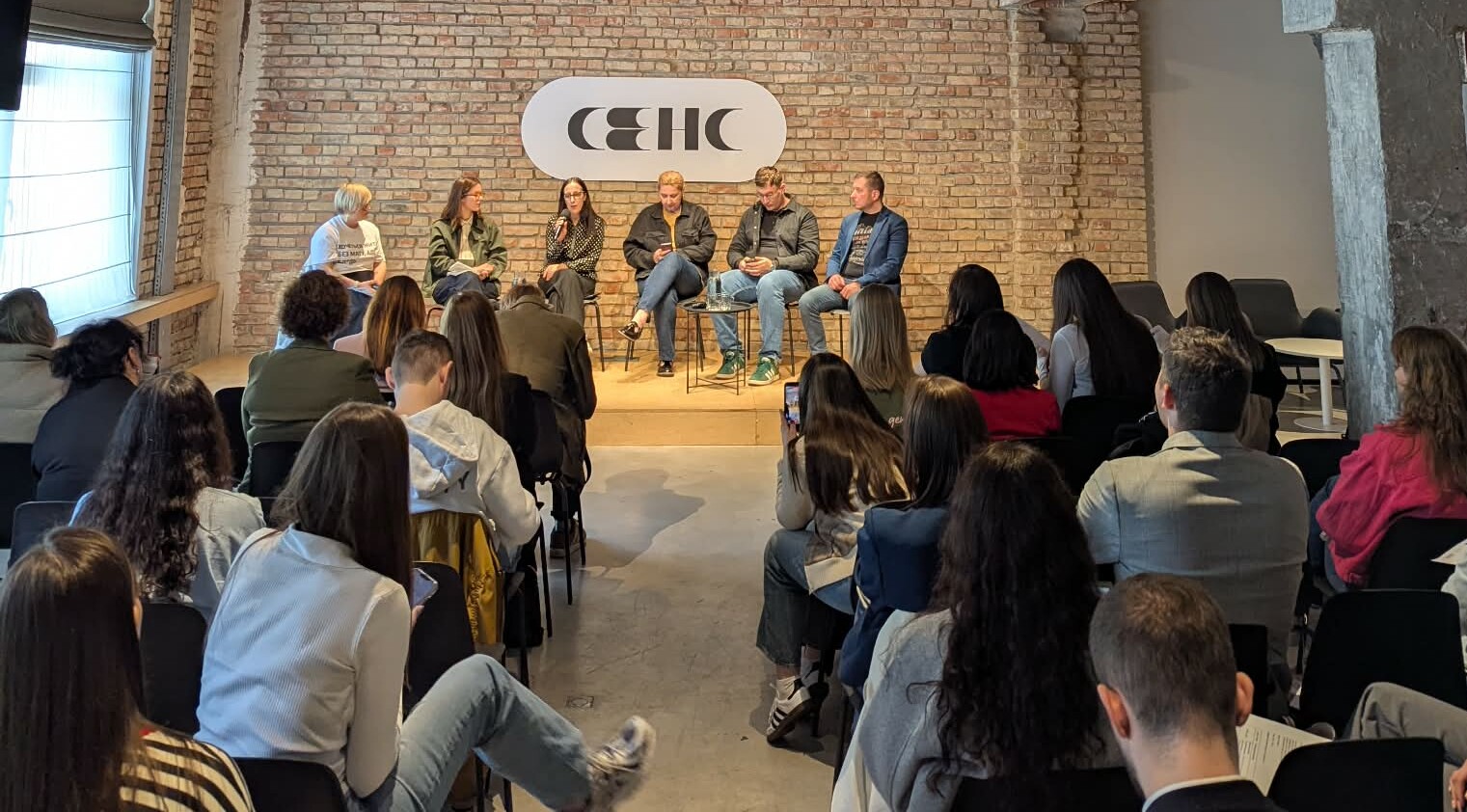
Opening the event, Tetiana Pechonchyk, Head of the Board of the Human Rights Centre ZMINA, stressed that the draft new Civil Code concerns a wide range of human rights issues – from protection against discrimination to the rights of children, persons with disabilities, military personnel, the LGBTQI+ community, and digital rights.
“We noticed that many discussions are taking place in different circles, but there is no common platform where we can exchange views and discuss what we can do together. That is precisely what today’s event is dedicated to“, she noted.
 Photo: Tetiana Pechonchyk
The event moderator, Alena Lunova, Advocacy Director at the Human Rights Centre ZMINA, emphasised that the discussion should serve as a space for an open conversation about the risks that may arise if the code is adopted.
“We really want today to be a frank discussion of the problems we may face if the Civil Code is adopted“, Lunova said, adding that 10 speakers from different areas of human rights protection had joined the discussion.
During the first panel, lawyer and representative of the Holka civic initiative, Yurii Melnyk, focused on the threats to property rights and the protection of public assets.
According to him, the draft code introduces a “presumption of removal of information from the register”, which could simplify the legalisation of the unlawful transfer of forests, coastlines, or historical monuments into private ownership.
“In effect, the legislator is forcing courts into narrower limits and shaping the concept of a bona fide purchaser in a way that is intended to break the current judicial practice“, Melnyk said.
 Photo: Alena Lunova, Oksana Hinchuk, Yuliia Sachuk, Oksana Romaniuk, Yurii Melnyk
Danylo Hloba, Deputy Director for Legal Affairs at YouControl, Head of the Board of the Open Data Association of Ukraine, and a lawyer, drew attention to the lack of transparency in the preparation of the document and the risks it poses to the right to information and digital rights.
“Even if this were a perfect document, changing the country’s main civil law without broad public and professional discussion is unacceptable“, he stressed.
Hloba also criticised the provisions concerning the “digital profile” and the “right to be forgotten”, which, according to him, may create risks of censorship and restrictions on access to information of public importance. As an example, he referred to the possibility of manipulatively interpreting the concept of “public interest”, which could potentially allow information about public figures or corruption cases to be concealed.
Yuliia Sachuk, Head of the NGO Fight For Right, stated that the draft code does not comply with modern international standards for the protection of the rights of persons with disabilities and effectively preserves the Soviet approach to legal incapacity.
“Every person, regardless of diagnosis, has the right to be recognised as a holder of rights and to exercise their rights. However, the draft Civil Code offers no movement in this direction“, she stressed.
Sachuk pointed out that the document fails to take into account the provisions of the United Nations Convention on the Rights of Persons with Disabilities and does not contain systemic solutions regarding the legal capacity of persons with psychosocial or intellectual disabilities.
 Photo: Yuliia Sachuk
Oksana Romaniuk, Executive Director of the Institute of Mass Information, stated that a number of provisions in the draft create serious risks for freedom of expression and journalism.
“If a media outlet merely mentions a person, that individual will be able to demand the publication of their response without any limitations. This could turn journalism into a notice board“, she said.
Romaniuk also criticised the provisions concerning the “presumption of innocence”, which, according to her, could effectively block anti-corruption investigations until a court verdict is issued, as well as mechanisms for the “preventive prohibition” of publications through court proceedings.
 Photo: Oksana Romaniuk
Oksana Hinchuk, Advocacy Adviser at the Ukrainian Child Rights Network, noted that despite the code authors’ declarations of a “child-centred approach”, the document does not ensure genuine consideration of the best interests of the child.
“The child is recognised as a rights holder, but we do not see the child being placed at the centre of this approach. In many important matters, no consideration is given to the child’s views or interests“, she noted.
Hinchuk also drew attention to the absence of mechanisms for protecting children’s digital privacy and real guarantees for ensuring the best interests of the child.
Iryna Fedorovych, Director of the Social Action Centre, criticised the very concept of “good customs”, which is repeatedly mentioned throughout the draft text.
“We are mixing legal concepts with categories that are entirely non-legal and creating a norm that allows discrimination to be justified by referring to “good customs“”, she stressed.
 Photo: Iryna Fedorovych
According to Fedorovych, the proposed provisions also contradict Ukraine’s current anti-discrimination legislation and European standards.
Oleh Maksymiak, Advocacy Manager at the NGO Fulcrum UA, reported that a coalition of human rights organisations had already prepared 95 pages of amendments to the draft code, which were submitted to the leadership of the Ukrainian parliament.
He stressed that the concept of “good customs” is mentioned 45 times in the draft and could potentially be used to justify state interference in citizens’ private lives.
“Any contract could be challenged on the grounds that it allegedly does not comply with “good customs”. This even concerns wills or a person’s right to decide what happens to their body after death“, Maksymiak noted.
 Photo: Alena Lunova, Olena Temchenko, Iryna Fedorovych, Oleh Maksymiak, Anastasiia Soloviova, Halyna Kavun
He also drew attention to the risks posed to the rights of LGBTQ+ people, women, and family law, including the narrowing of the concept of family, compulsory spousal reconciliation procedures, and state interference in matters related to changing a surname after divorce.
Halyna Kavun, Head of the Board of the Kyiv Military and Security Trade Union Organisation, stressed that the draft code also creates risks for military personnel, veterans, and internally displaced persons.
“Military personnel are a vulnerable category, yet the draft allows restrictions to be imposed on their digital profile and access to their own social media accounts and personal information“, she noted.
Kavun also criticised the provisions restricting the civil legal capacity of persons with mental disorders, stressing that they could particularly affect veterans with post-traumatic stress disorder.
Olena Temchenko, an expert at the NGO Ukrainian Human Rights Initiatives, stated that the draft code entrenches the outdated institution of legal incapacity: “This was a chance to change the system, but what we are seeing is not reform, but the consolidation of Soviet practice.”
 Photo: Oleh Maksymiak, Anastasiia Soloviova, Halyna Kavun
Anastasiia Soloviova, a lawyer at the Human Rights Centre ZMINA, drew attention to numerous legal inaccuracies and gaps in the text of the document.
“The draft Civil Code is not human-centred. It contains many provisions that do not comply with current legislation or even refer to non-existent mechanisms“, she noted.
Member of Parliament Olesia Otradnova stated that amendments to the draft law may be submitted until 19 May, after which specialised working groups involving experts and civil society representatives are expected to begin their work. The MP called for dialogue and constructive work on the amendments.
Participants in the meeting stressed the need for broad public and professional discussion of the draft Civil Code of Ukraine, as well as the involvement of human rights organisations in further work on the document.
The event was organised with the support of the European Union and the International Renaissance Foundation within the framework of the joint initiative “Whole Society Accession”. The material reflects the views of the authors and does not necessarily reflect the position of the European Union or the International Renaissance Foundation.