PACE discussed Russia’s accountability for crimes against Ukrainian children: Onysiia Syniuk raises concerns over their militarisation and indoctrination
During the summer plenary session of the Parliamentary Assembly of the Council of Europe in Strasbourg, the Parliamentary Network on the Situation of the Children of Ukraine held a meeting on holding Russia accountable for crimes committed against Ukrainian children.
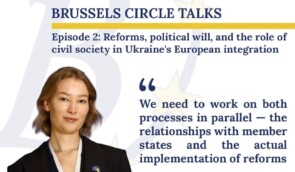
 Onysiia Syniuk. Photo credit: Ukrinform
The meeting was chaired by one of the network’s members, Dutch Senator Carla Moonen. Participants discussed the documentation of crimes against Ukrainian children, the preservation of evidence, Russia’s accountability, and the future work of international mechanisms aimed at returning deported and forcibly displaced children.
The meeting was attended by Onysiia Syniuk, Head of the Research Department at Human Rights Centre ZMINA. In her remarks, she noted that Russian officials continue to act as though they do not expect to be held accountable for the crimes they have committed. As an example, she cited amendments to Russia’s citizenship legislation requiring children as young as 14 to take an oath of allegiance to the Russian Federation when receiving their first passport.
She also referred to the case of three Ukrainian teenagers whom a Russian court sentenced in March this year to between seven and eight years in prison on “terrorism” charges. All three were detained while still minors and later tried as Russian citizens in closed proceedings without access for independent observers.
Syniuk also referred to the appointment of Yana Lantratova, Russia’s new human rights commissioner, who is under investigation by Ukrainian law enforcement authorities over the deportation of Ukrainian children from the occupied part of the Kherson region.
In her remarks, Onysiia Syniuk also raised the issue of the legal assessment of Russia’s policy of indoctrinating and militarising Ukrainian children.
“The nature and consequences of this policy must be considered together in determining its proper classification under international law – as the crime against humanity of persecution, as evidence of genocidal intent, and as attacks on schools amounting to grave crimes against children“, she said.
According to Onysiia Syniuk, propaganda promoting service in the armed forces of the occupying state does not, in itself, constitute a serious violation of international humanitarian law and therefore does not amount to a war crime. However, when combined with imposed citizenship, the coercion of children into loyalty to the occupying state and other elements of Russian policy, it requires proper legal scrutiny.
The ZMINA representative also called on states to enforce arrest warrants issued by the International Criminal Court, increase sanctions pressure on individuals, Russian businesses and state-owned companies implicated in crimes against Ukrainian children, and support international investigative mechanisms and Ukrainian non-governmental organisations that document these crimes and work to locate and facilitate the return of deported children.
For reference
The Parliamentary Network on the Situation of the Children of Ukraine was established by PACE in 2024 as a permanent platform for coordinating the efforts of parliamentarians, international organisations, governments and civil society to protect Ukrainian children affected by Russia’s aggression.