One year after the attack on NABU and SAPO: ZMINA presents study on systemic pressure on anti-corruption actors
The Human Rights Centre ZMINA presented the analytical study “Systemic Pressure on Anti-Corruption Actors: Practices of 2025–2026” during the public expert discussion “One Year After the Attack on NABU and SAPO: How to Protect Anti-Corruption Actors”, held in Kyiv on 21 July 2026. The event brought together representatives of anti-corruption bodies, civil society, parliament, the media and the international community.
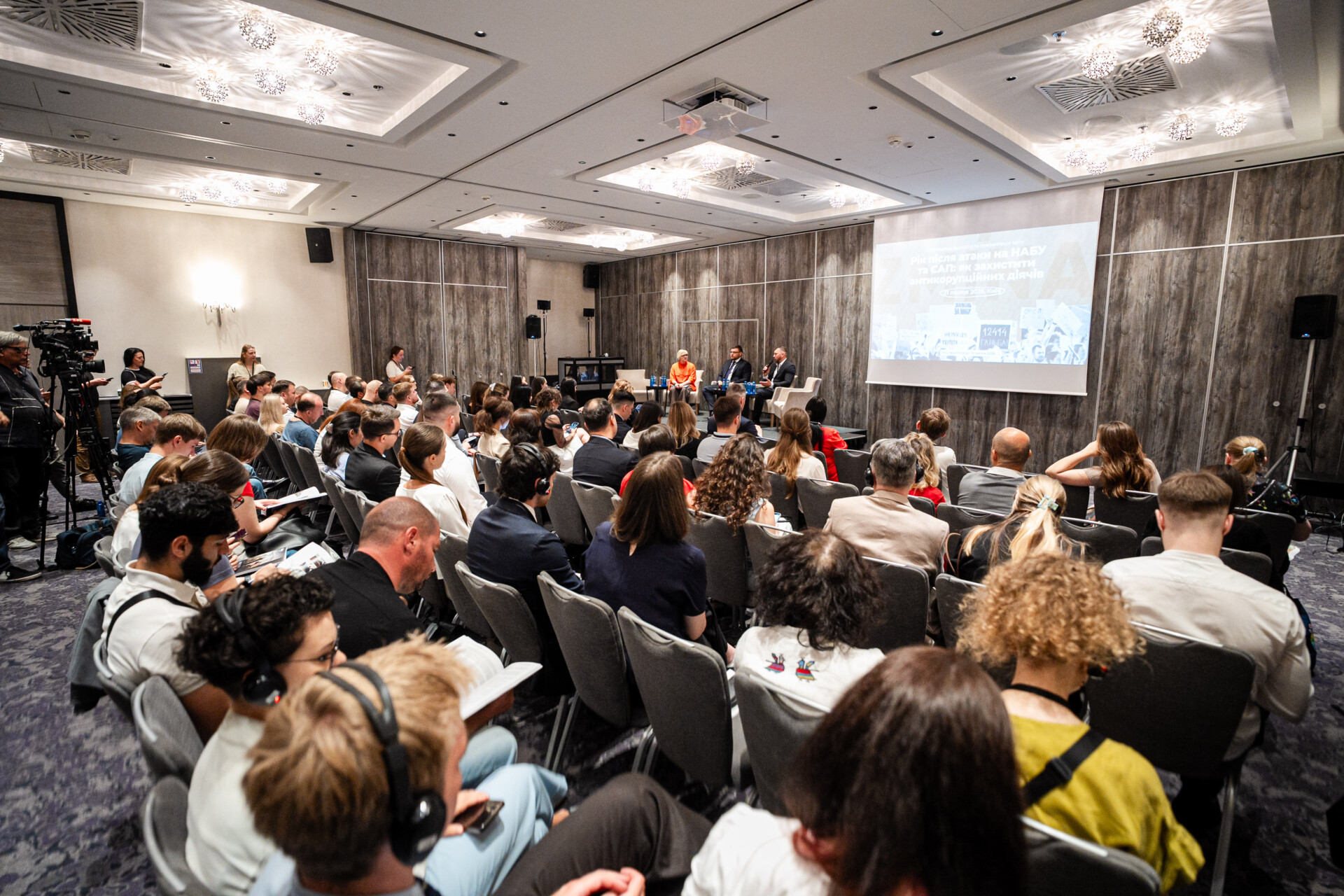
The discussion featured Semen Kryvonos, Director of NABU; Oleksandr Klymenko, Head of SAPO; Alena Lunova, Advocacy Director at the Human Rights Centre ZMINA; Pavlo Demchuk, Senior Legal Adviser at Transparency International Ukraine; Hanna Chekhovych, Project Manager at ZMINA; Valeriia Naumenko, Documenter at ZMINA; Maryna Demura, Lawyer and Analyst at ZMINA; Olena Shcherban, Board Member of the Anti-Corruption Action Centre; Vitaliy Shabunin, Head of the Board of the Anti-Corruption Action Centre; Yevhen Tokar, Head of a NABU Detective Unit; Anastasiia Radina, Member of the Ukrainian Parliament; Mykhailo Tkach, Head of the Investigations Department at Ukrainska Pravda; and Zinaida Averina, an active participant in the cardboard protests of July 2025. The discussion was moderated by journalists Olena Trybushna and Vlasta Lazur.
The event began with opening remarks by Alena Lunova, Advocacy Director at ZMINA; Semen Kryvonos, Director of NABU; and Oleksandr Klymenko, Head of SAPO.
 Alena Lunova, Semen Kryvonos, Oleksandr Klymenko
Alena Lunova noted that the discussion was taking place one year after mass protests against an attempt to restrict the independence of NABU and SAPO. She added that the event was also taking place against the backdrop of ongoing public protests, demonstrating the continued public demand for government accountability and respect for human rights.
“Over the past year, we have monitored the situation and can now describe how the authorities persecute and exert pressure on representatives of bodies and organisations engaged in anti-corruption work“, Alena Lunova said.
Semen Kryvonos stressed that last year’s “cardboard” protests demonstrated a clear public rejection of corruption and a demand for open dialogue between the authorities and society: “The cardboard signs protected more than just the independence of the anti-corruption bodies. The public placed its trust in us, and we must prove worthy of that trust. We have been doing so and will continue to do so“.
 Semen Kryvonos
He also called for the discussion to address not only individual instances of abuse targeting employees of anti-corruption bodies, but also how large-scale attacks on independent institutions had become possible.
“The purpose of this event is to develop ways to prevent such events from recurring. We need to discuss not only specific incidents, but also how law enforcement and judicial institutions came to be involved in unprecedented attacks on anti-corruption bodies“, the NABU Director said.
Oleksandr Klymenko said that the authorities had failed to learn from the events of July 2025. Criminal proceedings against NABU detectives remain ongoing, some of the seized property has not been returned, and judges hearing the relevant cases are facing pressure.
“The lessons have not been learned. We must not forget this situation or simply let it slide. There can be no dialogue until the lessons have been learned“, Oleksandr Klymenko stressed.
 Oleksandr Klymenko
He also noted that independent anti-corruption bodies serve as an important safeguard against the concentration of power and the rollback of democratic reforms.
“Unreformed bodies effectively attacked institutions that had undergone reform and operate independently. It was a war between new institutions and a new approach to state-building on the one hand, and the old rules on the other“, the Head of SAPO said.
The team of the Human Rights Centre ZMINA then presented the findings of the analytical study “Systemic Pressure on Anti-Corruption Actors: Practices of 2025–2026“.
The study analysed 29 documented cases of pressure on anti-corruption actors and people associated with them between 11 July 2025 and 31 May 2026. These included 21 cases involving NABU employees, four involving former NABU detectives, two involving civic activists, one involving a person close to an anti-corruption actor and one involving a witness in a related case.

The study is based on testimony from anti-corruption actors, court monitoring materials, legal opinions provided by lawyers, procedural documents and open sources. The researchers analysed not only individual criminal proceedings, but also the combined impact of criminal procedural actions and institutional, political and information-related pressure on people engaged in anti-corruption work.
“Most of the individual incidents we analysed were already known from news reports. What is new about our study is that, for the first time, we brought 29 cases together into a single dataset and assessed whether the pressure was systemic against clear criteria, rather than simply asserting it“, explained Hanna Chekhovych, co-author of the study and Project Manager at ZMINA.
 Hanna Chekhovych
According to Chekhovych, the authors did not assess the guilt of the individuals involved in the criminal proceedings. Instead, they examined whether mechanisms that were formally lawful could, when used in combination, have served not only to investigate crimes but also to deter anti-corruption work.
“The answer to this question affects not only the 29 people covered by our study – it also determines whether the next detective will dare to take on a sensitive case or the next whistleblower will dare to speak out“, Hanna Chekhovych added.
Pavlo Demchuk stressed that systematising such cases is important not only for documenting violations, but also for developing evidence-based public policy.
“This is a research and advocacy tool that uses a defined methodology to analyse cases of possible pressure and assess them against clear criteria. This provides a sound basis for concluding that the pressure is indeed systemic“, the Senior Legal Adviser at Transparency International Ukraine said.
According to Demchuk, the report also has practical value for future legislative changes and improvements to public policy in the area of the rule of law.
“The report identifies specific issues that need to be addressed and prevented from recurring. This is precisely the value of such a report: it provides an additional tool for developing evidence-based public policy“, Pavlo Demchuk explained.
 Olena Trybushna, Pavlo Demchuk, Hanna Chekhovych, Valeriia Naumenko, Maryna Demura
As part of the study, ZMINA documented 30 criminal proceedings involving 28 people. Searches were conducted in 24 of the 29 cases, including 20 conducted as “urgent” searches without prior authorisation from an investigating judge.
Valeriia Naumenko, Documenter at ZMINA, described the approaches used to document these cases and said that she and her colleagues had identified recurring practices during their analysis, including searches, the seizure of electronic devices even from relatives, and the use of force.
“Our analysis revealed not merely isolated problematic decisions or actions, but recurring practices. These include urgent searches, the seizure of electronic devices, the use of force and subsequent judicial oversight“, Valeriia Naumenko said.
Maryna Demura, Lawyer and Analyst at ZMINA, presented the study’s legal analysis of the documented cases. This section assessed the actions of state authorities under domestic law and the European Convention on Human Rights. In particular, the researchers analysed whether suspicions were well-founded, the quality and sufficiency of the evidence, the proportionality of interference with human rights, the effectiveness of judicial oversight and respect for human dignity.
 Maryna Demura
The analysis found that the documented practices showed indications of potential violations of Articles 3, 5, 6, 8 and 18 of the European Convention on Human Rights, concerning the prohibition of torture, the right to liberty and security, the right to a fair trial, the right to respect for private and family life, and the prohibition on applying restrictions on rights for purposes other than those for which they were prescribed.
“We analysed not only whether a particular action was formally provided for by law. It was also important to determine whether it was necessary and proportionate, and whether procedural mechanisms were being used for a different purpose“, Maryna Demura explained.
According to Demura, the legal analysis identified problems with the application of several criminal procedure safeguards, particularly in relation to whether suspicions were well-founded, the admissibility and sufficiency of evidence, the effectiveness of judicial oversight and respect for human dignity: “Procedural safeguards exist to protect human rights in criminal proceedings. In the study, we examined whether these standards had been observed in specific cases. In a number of situations, we identified circumstances that may indicate violations of the rights guaranteed by the Convention“.
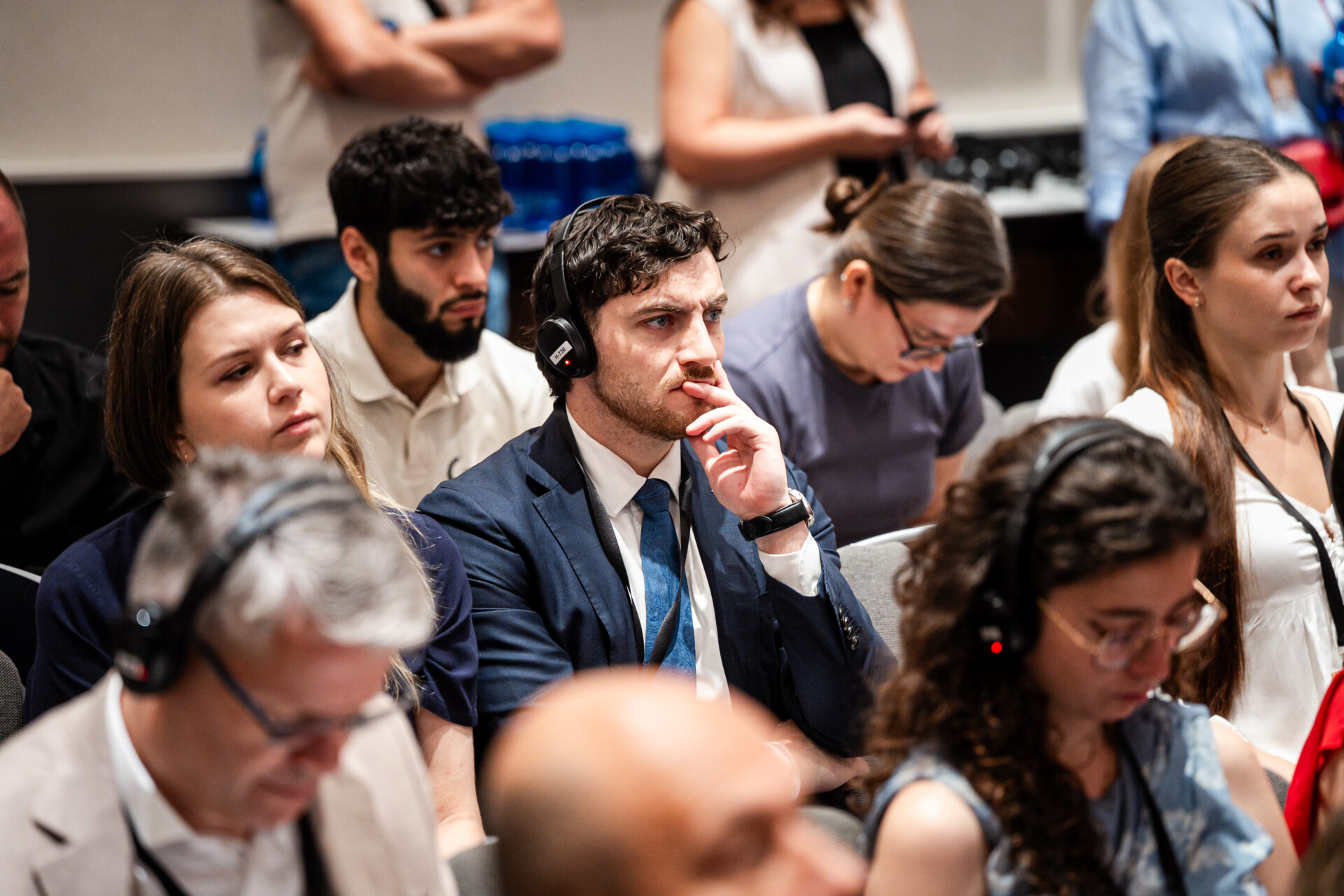
According to Maryna Demura, it is particularly important to assess not only each individual incident, but also the circumstances as a whole, including the recurrence of the same practices in relation to different people.
The study also draws attention to the fact that, in 2025–2026, criminal procedural measures targeting anti-corruption actors took place alongside political and information-related pressure. This included an attempt to place NABU and SAPO under different authority through legislative changes, as well as information campaigns promoting narratives about alleged “Russian links” within the anti-corruption bodies. The researchers concluded that, taken together, these practices may have intensified the chilling effect on the anti-corruption community.
The researchers also analysed the outcomes of known criminal proceedings opened as part of this wave of persecution. To date, none of the proceedings involving allegations of high treason or aiding an aggressor state has resulted in a conviction. The high treason proceedings against NABU detective Viktor Husarov were closed due to insufficient evidence of his involvement. The only judgment delivered in this series of related cases was an acquittal: on 20 May 2026, a court found Yusuf Mameshev not guilty after he had been prosecuted following his testimony in the case involving Ruslan Mahamedrasulov, Head of a NABU Detective Unit. When the study was completed, the defence was reviewing the case files in the proceedings against Ruslan Mahamedrasulov and NABU employee Vitalii Tiebiekin, while the case against Vitaliy Shabunin, Head of the Board of the Anti-Corruption Action Centre, was at the preparatory hearing stage.
 Ruslan Mahamedrasulov
Based on the findings of the study, ZMINA prepared recommendations for the President of Ukraine, the Verkhovna Rada, the Cabinet of Ministers, law enforcement and prosecution authorities, the judiciary, the Ministry of Justice, the media and international organisations.
Among other measures, ZMINA recommends developing a state policy to protect people engaged in anti-corruption and human rights work, strengthening guarantees for the independence of anti-corruption bodies, ensuring effective judicial oversight of searches conducted without prior court authorisation, and preventing disproportionate interference with the rights of anti-corruption actors and their family members.
Following the presentation of the study, the participants discussed how the identified practices of pressure affect the work of anti-corruption bodies, civil society and the media, as well as which mechanisms could help protect anti-corruption actors from unlawful persecution.
 Vlasta Lazur, Olena Shcherban, Yevhen Tokar, Vitaliy Shabunin, Mykhailo Tkach, Anastasiia Radina, Zinaida Averina
During the discussion, Yevhen Tokar, Head of a NABU Detective Unit, described how the events of July 2025 had affected the work of NABU and its employees. He cited his own experience of a search conducted as part of criminal proceedings concerning a road traffic accident that had effectively gone uninvestigated for several years.
According to Tokar, during the search, law enforcement officers seized some of the electronic devices found in his home and copied data from his wife’s phone. However, they never explained to the detective what evidence they were seeking in connection with the road traffic accident.
“As I understand it, everything on the phone was copied, including messages, photographs and so on. In my professional opinion as someone working in the criminal justice system, this was a clear act of arbitrariness – a completely unjustified interference with my home and private life“, the Head of a NABU Detective Unit said.
He added that, before July 2025, it had twice been determined that the case, opened back in 2021, contained insufficient evidence to serve anyone with a notice of suspicion. However, following the events of 21 July 2025, the proceedings were reactivated and Yevhen Tokar himself was served with a notice of suspicion.

Olena Shcherban, Board Member of the Anti-Corruption Action Centre, legal expert, activist and attorney representing NABU detective Ruslan Mahamedrasulov, stressed that the searches in his case had been conducted on the basis of information that, according to her, was not corroborated by the criminal case materials.
“What frightens me most about this case is that searches without a court order were conducted on the basis of entirely falsified and fabricated information. Fabricated accounts and facts were used as grounds for urgent searches“, Olena Shcherban said.
 Olena Shcherban
According to Shcherban, none of the statutory oversight mechanisms worked in Ruslan Mahamedrasulov’s case, from prosecutorial supervision to judicial oversight: “Not a single level of oversight did what it should have done and asked: what are the grounds for this, and where is the evidence that they actually exist? The danger is that if such pieces of paper can be used without proper verification, a note like this could be written about anyone tomorrow“.
Vitaliy Shabunin, Head of the Board of the Anti-Corruption Action Centre, stressed the need to identify those responsible for exerting pressure on anti-corruption bodies, civil society and the media.
“Our discussions generally lack names. Those responsible always have names“, he said, adding that, in his view, the events of July 2025 were not separate actions by different law enforcement agencies, but a coordinated attack organised by President of Ukraine Volodymyr Zelenskyy.
 Yevhen Tokar, Vitaliy Shabunin, Mykhailo Tkach
Vitaliy Shabunin also said that pressure on anti-corruption organisations had continued since the events of July 2025, including through media attacks and new criminal proceedings.
Anastasiia Radina, Member of the Ukrainian Parliament, discussed parliament’s role in protecting the independence of anti-corruption bodies. According to Radina, legislative initiatives to reform the State Bureau of Investigation, revise the procedure for appointing the Prosecutor General and improve criminal procedure have already been introduced in the Verkhovna Rada, but some of them remain stalled.
Mykhailo Tkach, Head of the Investigations Department at Ukrainska Pravda, discussed the role of the media in reporting on pressure on anti-corruption actors. He stressed that the situation had not changed sufficiently since the events of July 2025 to conclude that the attacks on independent institutions had ended.
Mykhailo Tkach also noted that there were currently no signs that the authorities had learned from the events of July 2025. In his view, the current political crisis centres on a simple question: whether the authorities are prepared to choose victory in the war and the fight against corruption.
“These events – both those that took place a year ago and those happening now – revolve around a simple question: will the people leading our country finally decide whether we steal or do not steal, whether we fight or steal, whether we win or steal? These are simple matters“, the journalist said.
 Mykhailo Tkach, Anastasiia Radina
According to Tkach, one of the key signs of genuine change would be an end to pressure on anti-corruption bodies and those responsible for it being held to account.
“When the pressure on anti-corruption bodies ends and those responsible for it say, “Let them do their jobs; we are not protecting anyone” – then claims that the authorities are listening to society will be sincere“, Mykhailo Tkach said.
He added that there were currently no such signs and that, on the contrary, there were indications of continued pressure on independent institutions.
Zinaida Averina, an active participant in the cardboard protests of July 2025, discussed public resistance to attempts to restrict the independence of NABU and SAPO and explained why public participation had become an important part of protecting the anti-corruption infrastructure.
 Zinaida Averina
According to Averina, the 2025 protests gave rise to a committed community centred on the independence of anti-corruption institutions, whose members are prepared to take to the streets again whenever necessary.
She also stressed that continuing to ignore public demands could further increase distrust in the authorities.
“The next time there are grounds for widespread public discontent, the protests may be directed at the country’s leader. This would be extremely dangerous for us as a state amid the full-scale war“, the protest participant said.

A video of the event is available on ZMINA’s Facebook page.
The full analytical report is available in Ukrainian and English.
Photo credit: Artem Halkin / ZMINA