Torture, civilian detainees and Russia’s accountability: ZMINA joined the OSCE Supplementary Human Dimension Meeting in Vienna
On 29-30 June 2026, Vienna hosted the OSCE Supplementary Human Dimension Meeting III, dedicated to the prevention of torture and ill-treatment. The meetings serve as one of the key platforms for dialogue between OSCE participating States, international organisations and civil society on the implementation of human rights commitments.
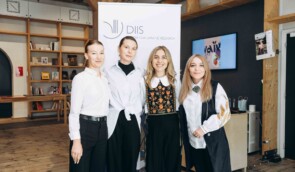
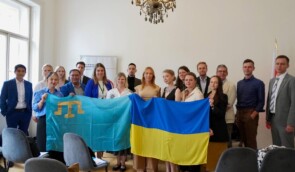
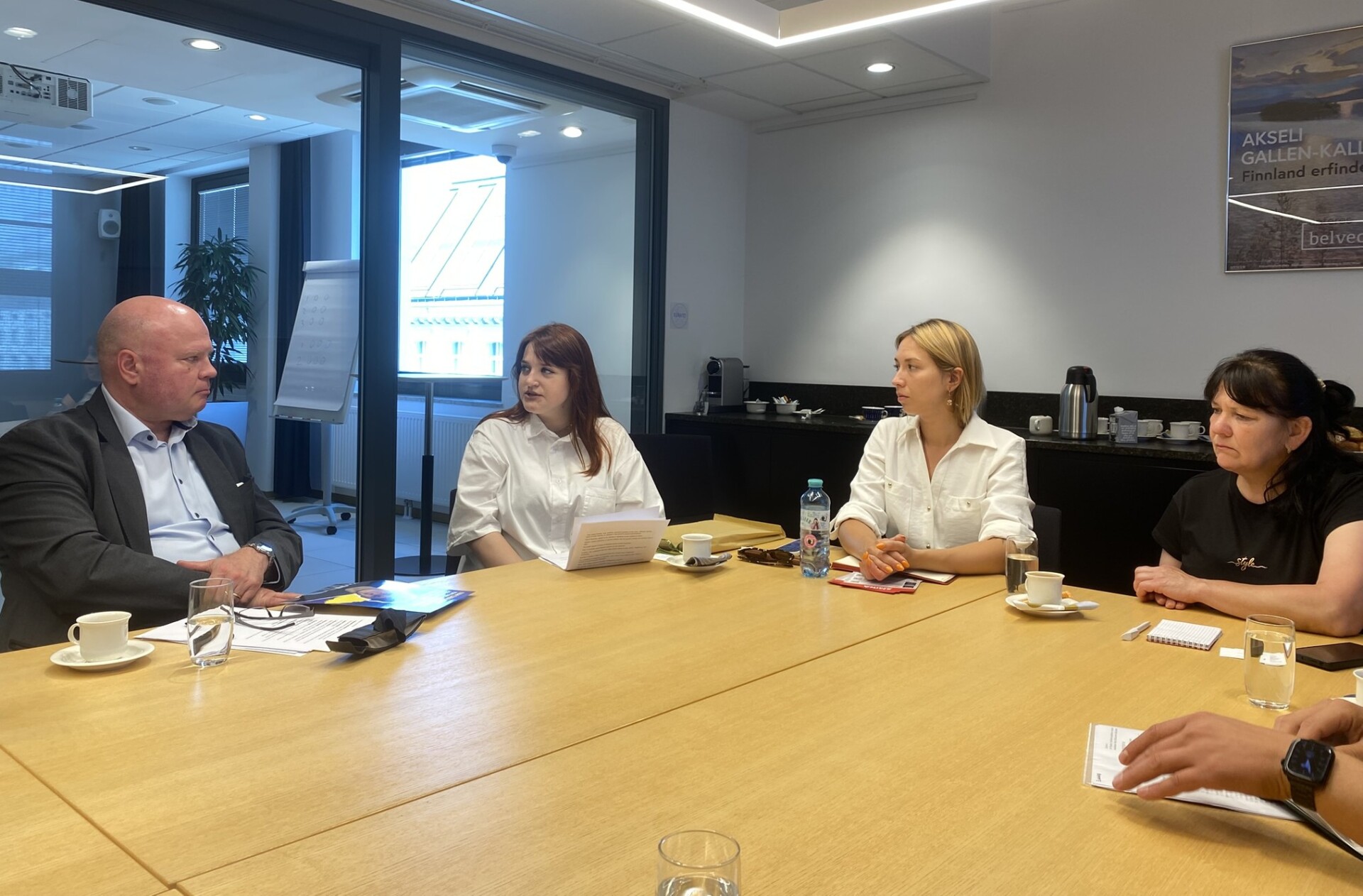
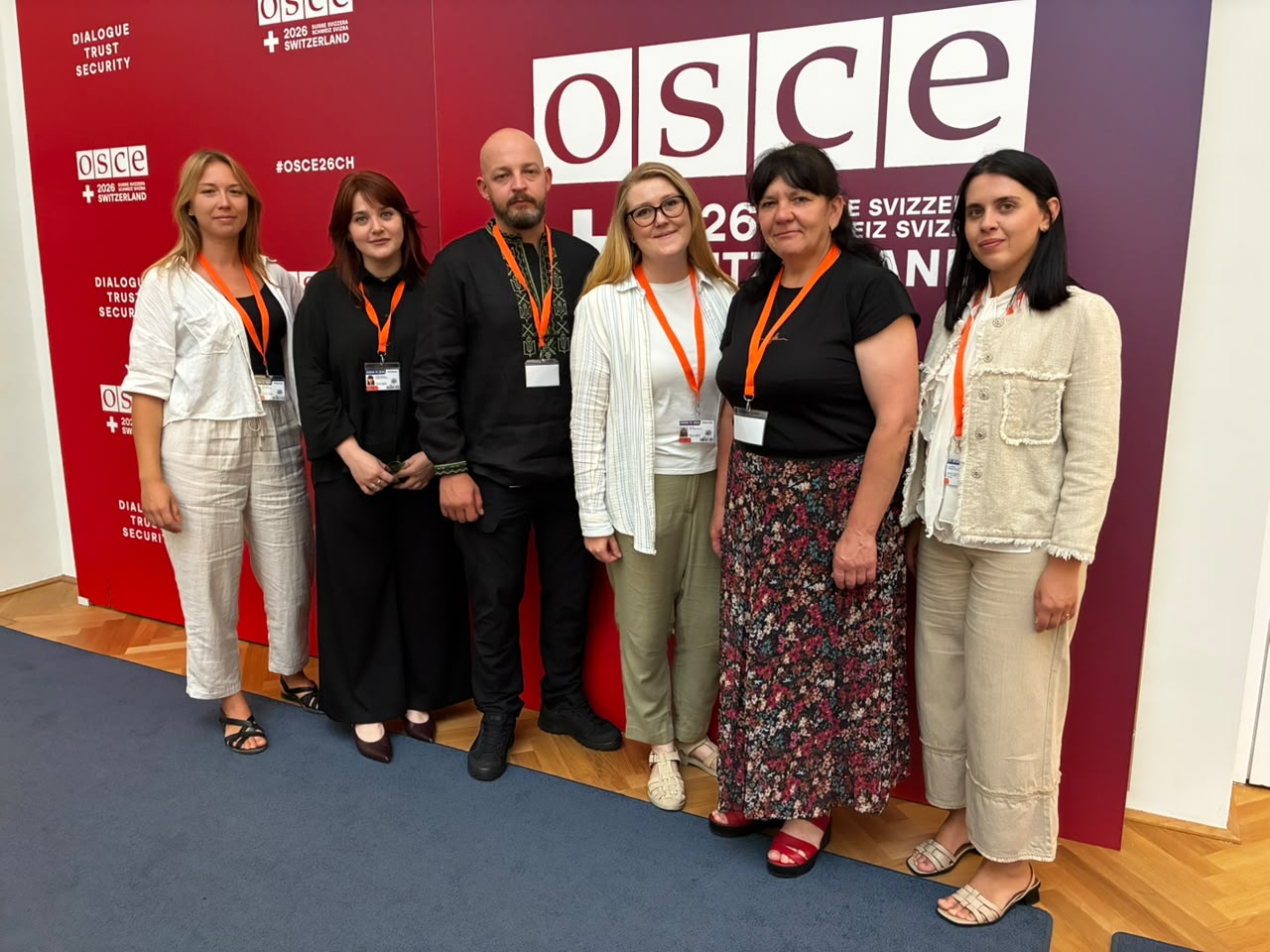 Photo: Tetiana Zhukova, Yelyzaveta Sokurenko, Serhii Mosinzovyi, Iryna Zahorodnia, Maryna Zabavska, Liubov Smachylo
Human Rights Centre ZMINA took part in the event. The organisation was represented by Yelyzaveta Sokurenko, Head of the War Crimes Documentation Department; Tetiana Zhukova, Senior International Advocacy Manager; and Iryna Zahorodnia, Communications Manager; alongside Liubov Smachylo, Head of Analytics Department, Legal Expert in International Law at the Media Initiative for Human Rights (MIHR); Andrii Atamanchuk, representative of the Office of the Prosecutor General of Ukraine; Maryna Zabavska, the mother of Ivan Zabavskyi, a Ukrainian civilian unlawfully imprisoned by Russia; and Serhii Mosinzovyi, a former Ukrainian prisoner of war who survived more than two and a half years in Russian captivity.
During the first session, “Safeguards and accountability in criminal justice procedures“, dedicated to the prevention of torture, Tetiana Zhukova said that Russia uses arbitrary detention, torture and fabricated criminal cases as part of its systematic policy of persecuting Ukrainians.
“Since the start of Russia’s aggression in 2014, ZMINA has documented the suffering, destruction and pain that the “Russkiy mir” (Russian world) brings wherever it reaches. Russian troops bring not only the unlawful occupation of territory, but also the systematic persecution of Ukrainians“, she said.
Tetiana Zhukova stressed that Russia abducts people from their homes, holds them incommunicado, subjects them to physical and psychological torture, forces them to sign fabricated confessions, sentences them to lengthy prison terms and transfers them to remote penal colonies in Russia, where international monitoring mechanisms, including the International Committee of the Red Cross, have no access.
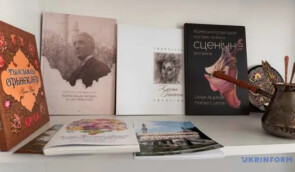
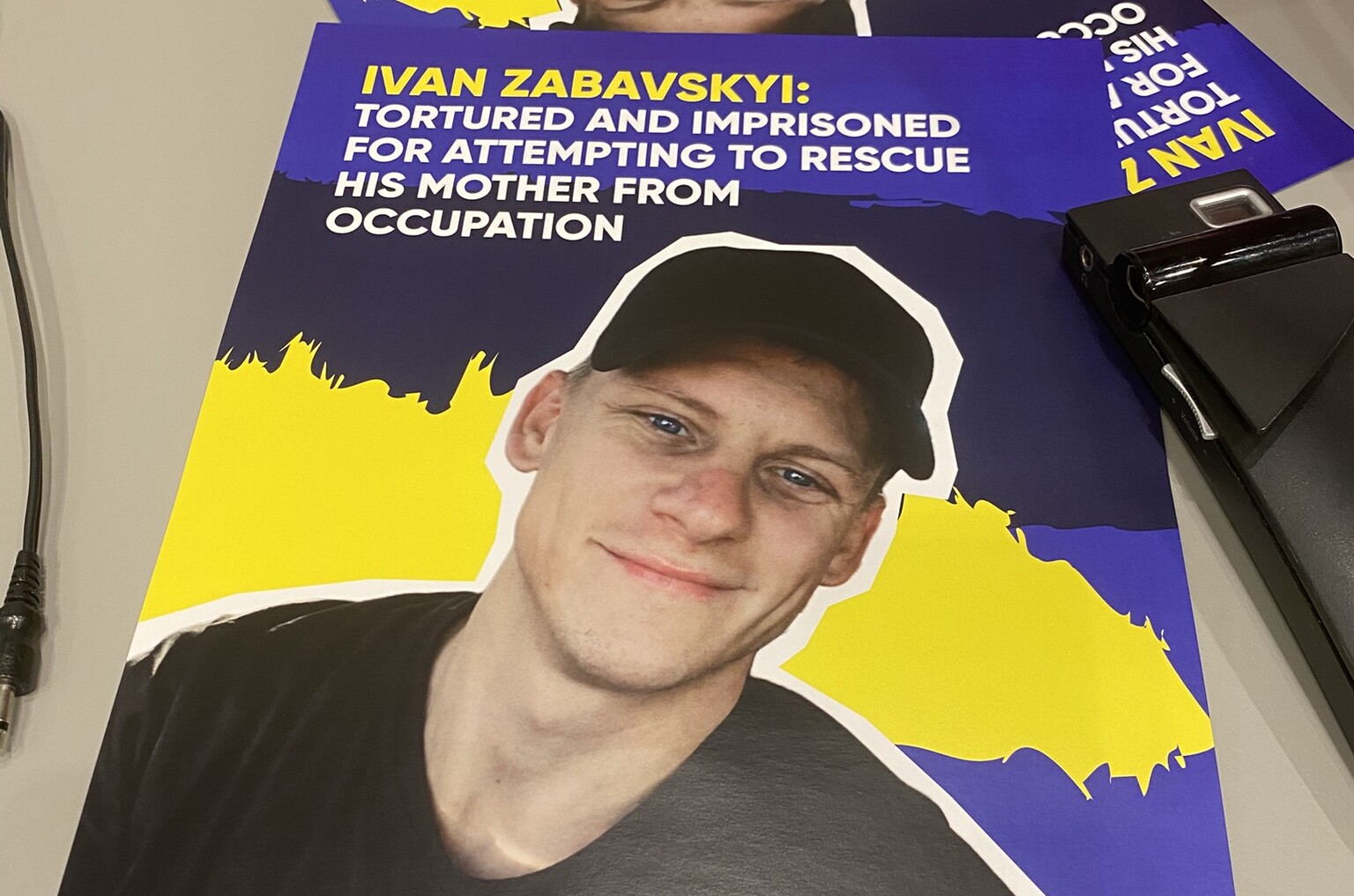 Photo: Brochure about Ivan Zabavskyi, a civilian detainee
The Senior International Advocacy Manager at ZMINA also drew particular attention to the case of Ukrainian civilian Ivan Zabavskyi, as well as three members of the OSCE Special Monitoring Mission – Dmytro Shabanov, Maksym Petrov and Vadym Holda – whom Russia continues to hold unlawfully following fabricated convictions.
“We must unite to secure the release of the thousands of people who remain in Russian captivity and do everything possible to ensure that Russia and its citizens who commit international crimes understand that there will be no impunity. Everyone who commits crimes under international law must be held accountable“, she concluded.
On 30 June, Human Rights Centre ZMINA, together with the Media Initiative for Human Rights (MIHR), the Permanent Delegation of Ukraine to the International Organisations in Vienna, the Permanent Delegation of Norway to the OSCE and the Permanent Delegation of Denmark to the International Organisations in Vienna, co-hosted the side event “Torture as a Tool of Persecution: Russian Practices Against Ukrainian Civilians and Prisoners of War“.
Discussion, moderated by Ambassador Yurii Vitrenko, Permanent Representative of Ukraine to the International Organisations in Vienna, covered the systematic use of torture by the Russian authorities against Ukrainian civilians and prisoners of war, the role of torture in fabricating criminal cases, the documentation of these crimes, and mechanisms for holding those responsible to account.
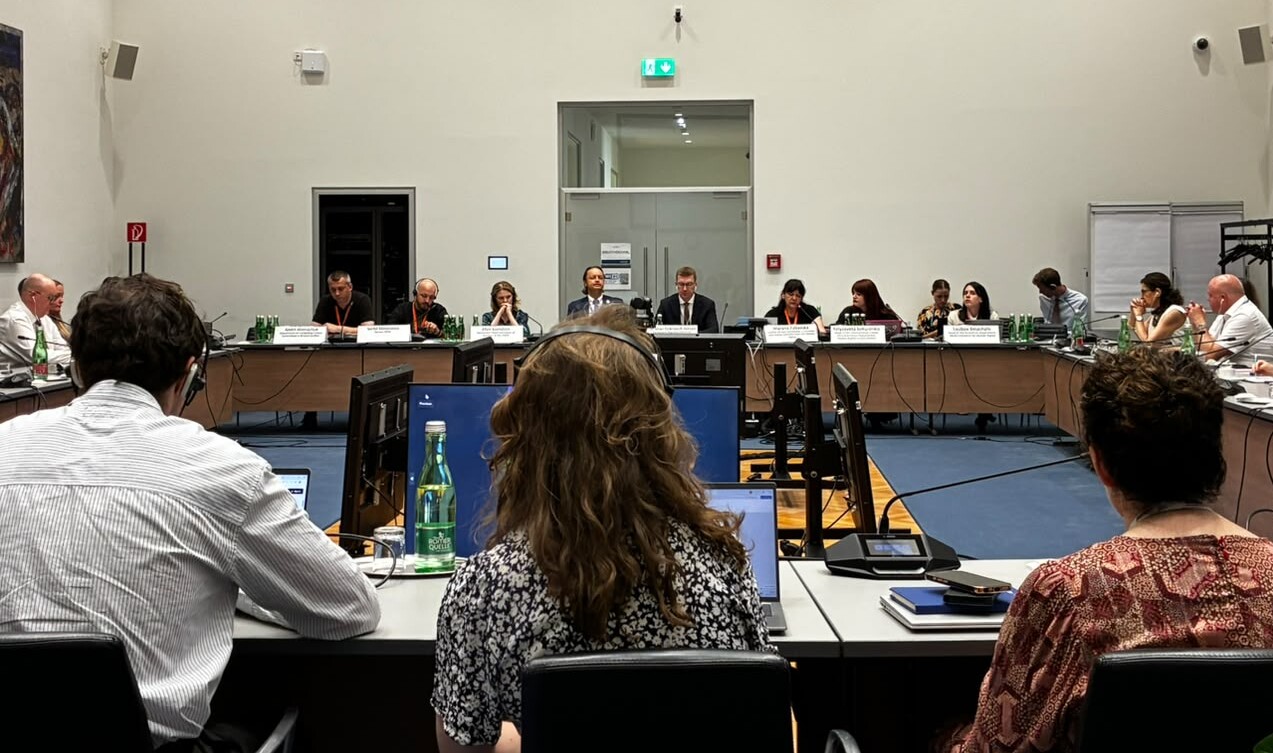
Ambassador Ellen Svendsen, Norway’s Permanent Representative to the OSCE, stressed in her opening remarks that documenting international crimes, supporting civil society and using international accountability mechanisms remain critical to combating impunity.
Liubov Smachylo presented findings from the documentation of these crimes, showing that the torture of Ukrainian civilians and prisoners of war is not the result of isolated acts or abuses by individual soldiers, but rather a systematic practice employed at every stage of unlawful deprivation of liberty.
According to Liubov Smachylo, since the start of the full-scale invasion, at least 3,895 Ukrainian civilians have been detained by Russian representatives in the temporarily occupied territories of Ukraine. At the same time, at least 2,047 civilians are known to have been unlawfully deprived of their liberty by Russia and, in most cases, held incommunicado.
“These figures are based on years of documenting war crimes. The Media Initiative for Human Rights alone has carried out 68 field missions, during which it documented testimonies from 869 victims and witnesses of war crimes, including 704 civilians and 165 released Ukrainian prisoners of war“, the MIHR representative said.
Liubov Smachylo also stressed that human rights defenders have so far identified 240 places where Ukrainians have been unlawfully detained in the temporarily occupied territories and in Russia.
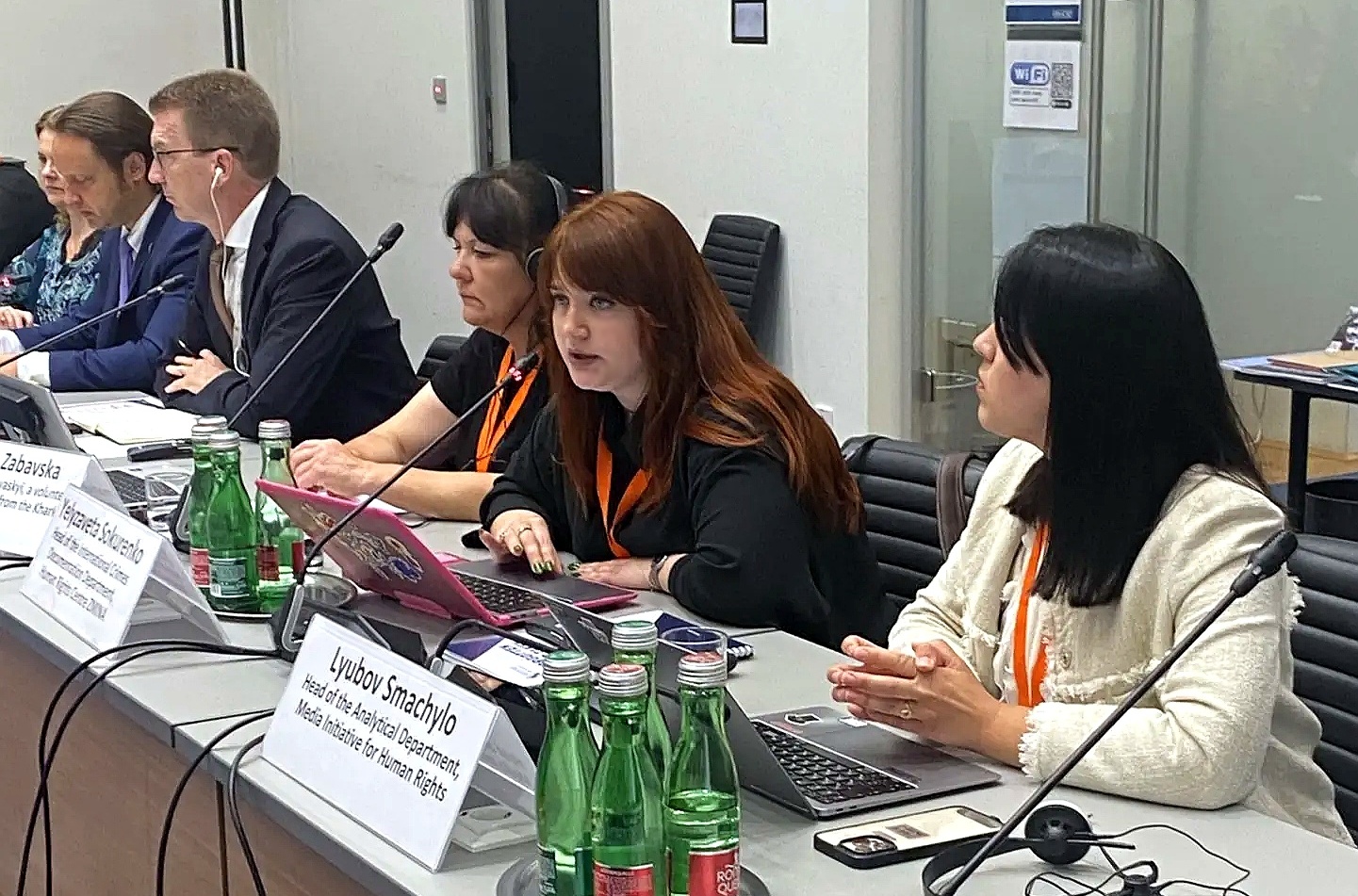
Yelyzaveta Sokurenko noted that documenting cases of torture reveals a clear pattern in the way they are used.
“Torture is not used at random. It serves specific purposes: to force people to incriminate themselves, obtain “evidence” for criminal cases, justify unlawful detention and create the appearance of lawful persecution“, she stressed.
Yelyzaveta Sokurenko added that every institution in Russia plays a distinct role in sustaining this system of unlawful persecution: “The direct perpetrators commit the violence, investigators turn its consequences into procedural documents, prosecutors present those materials as “evidence”, and judges effectively endorse the prosecution’s version of events by handing down lengthy prison sentences. State-controlled media also play a separate role by publicly legitimising these repressions“.
According to the Head of ZMINA’s War Crimes Documentation Department, these practices result in unlawful convictions of Ukrainian civilians who have previously been subjected to torture, psychological pressure and incommunicado detention. In this context, the international community should view such cases as part of a single system of violations rather than as isolated criminal proceedings, she noted: “We call on the international community not to exclude these people from negotiation processes simply because Russia has handed down unlawful convictions against them. Torture lies at the heart of most of these cases, which means that any discussion of their status must take into account the fact that their “confessions” were obtained under coercion and that they were denied a fair trial“.
She also drew attention to international legal standards, noting that, under Article 15 of the UN Convention against Torture, any statement obtained through torture is inadmissible as evidence. Yelyzaveta Sokurenko stressed that a confession obtained under coercion cannot serve as a lawful basis for criminal prosecution and that, when it becomes the primary or sole evidence in a case, the entire proceedings cease to meet the standards of a fair trial.
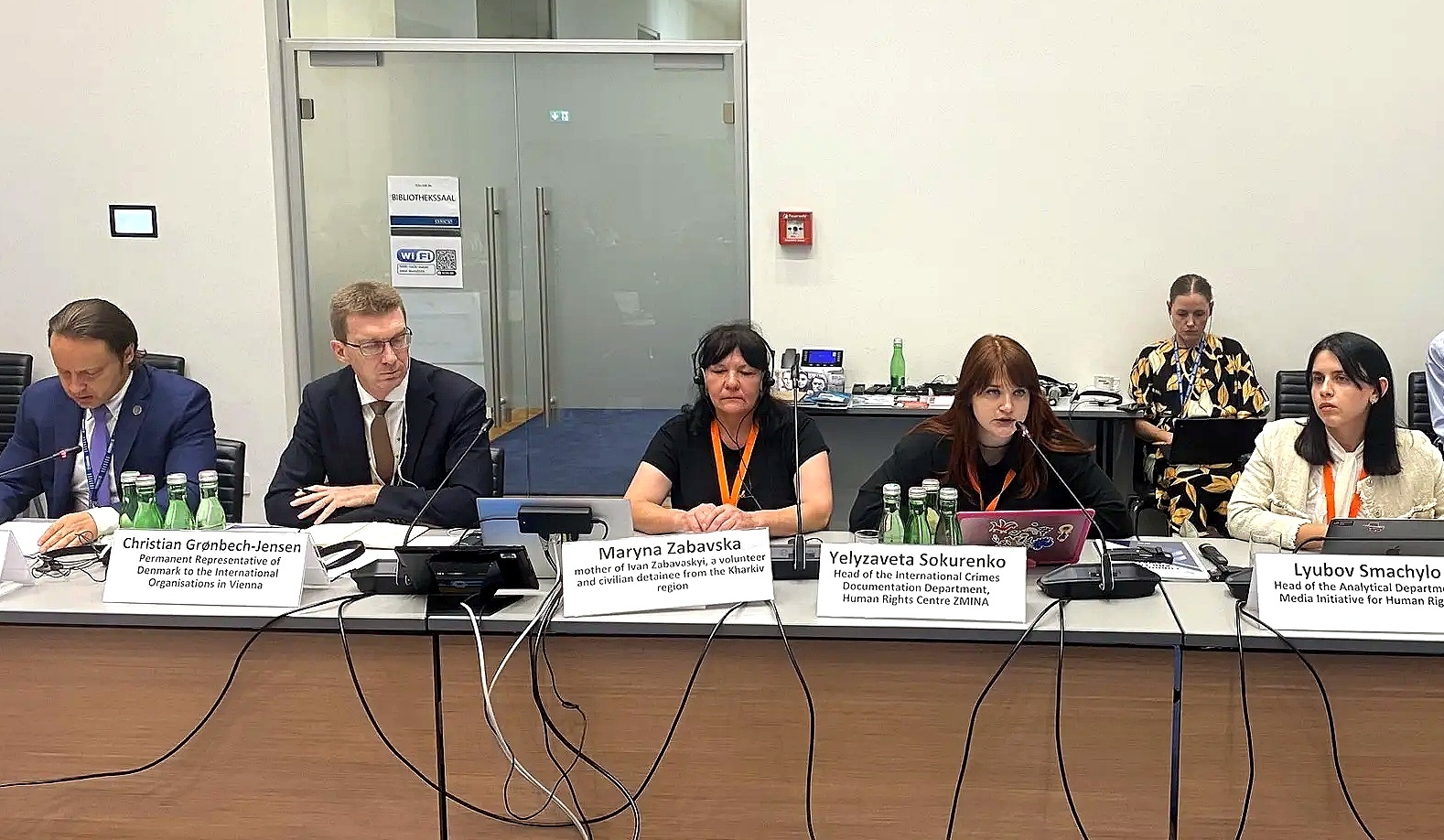
The ZMINA representative noted that the Russian Federation’s ongoing practice of holding Ukrainian civilians without officially acknowledging their detention, granting them access to a lawyer, allowing contact with their families or providing judicial oversight constitutes arbitrary deprivation of liberty and creates conditions conducive to torture and enforced disappearances.
“The systematic and recurring nature of these practices, their geographical scope, their standardised methods, and the involvement of the military, security services, investigators, prosecutors, judges and occupation administrations of the Russian Federation indicate that these acts may constitute not only war crimes but also crimes against humanity“, Yelyzaveta Sokurenko stressed.
Concluding her remarks, she called on the OSCE participating States to demand that the Russian Federation provide comprehensive information on all unlawfully detained Ukrainian civilians, grant independent international monitors access to all official and unofficial places of detention, guarantee detainees access to independent lawyers and doctors, as well as regular confidential contact with their families, and ensure prompt, independent and effective investigations into all allegations of torture. Yelyzaveta Sokurenko also stressed the need to establish an effective international mechanism for securing the release and return of Ukrainian civilians whom Russia continues to hold unlawfully after arbitrarily labelling them as “spies”, “terrorists” or “convicted criminals”.
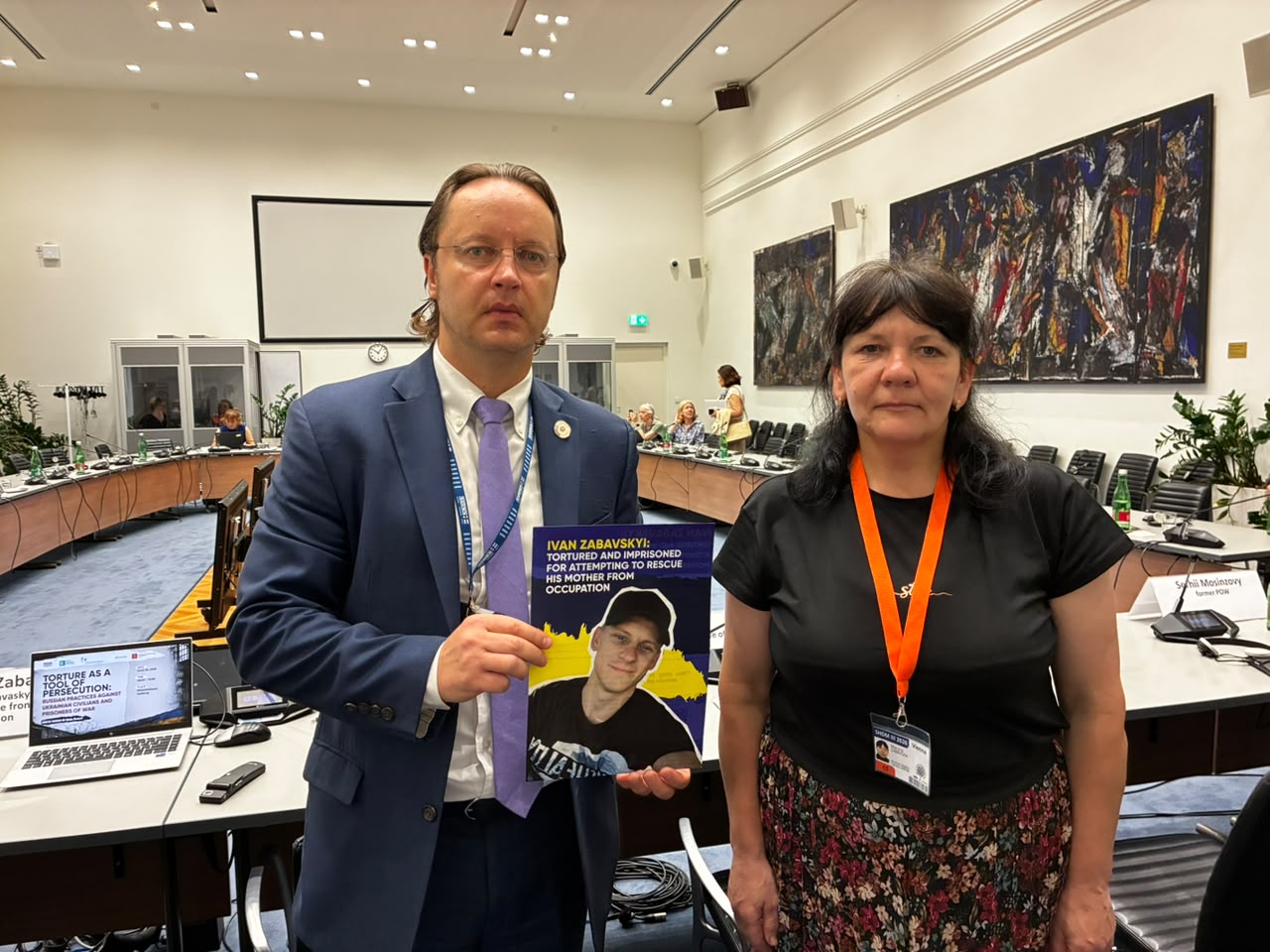 Photo: Ambassador Yurii Vitrenko, Permanent Representative of Ukraine to the International Organisations in Vienna, and Maryna Zabavska, mother of a civilian detainee Ivan Zabavskyi
Maryna Zabavska, the mother of Ivan Zabavskyi, a Ukrainian civilian unlawfully imprisoned by Russia, shared the story of her son, who had travelled to evacuate her from the occupied territory but was himself abducted by Russian soldiers.
“My son has now spent four years in Russian captivity. He was unlawfully sentenced to eleven years in prison. For ten months, he was beaten every day, tortured with electric shocks, and subjected to hunger and cold. His ribs were broken, and he was repeatedly struck on the head. It was a living hell“, she said.
She said that over the course of the full-scale war, she had lost everything – her sister, her home and all her belongings.
“The only thing I have left in my life is my son. I ask all of you to help bring him home“, she appealed to the international community.
Serhii Mosinzovyi, a former Ukrainian prisoner of war, who spent two years, seven months and 14 days in Russian captivity, also shared his own experience. He witnessed the Olenivka attack and survived repeated torture, the consequences of which he continues to live with today.
“I do not want to go into detail about everything I endured in Russian captivity. The consequences of the torture will stay with me forever. But today, my main goal is to help bring back as many Ukrainians as possible who remain in Russian captivity“, he said.
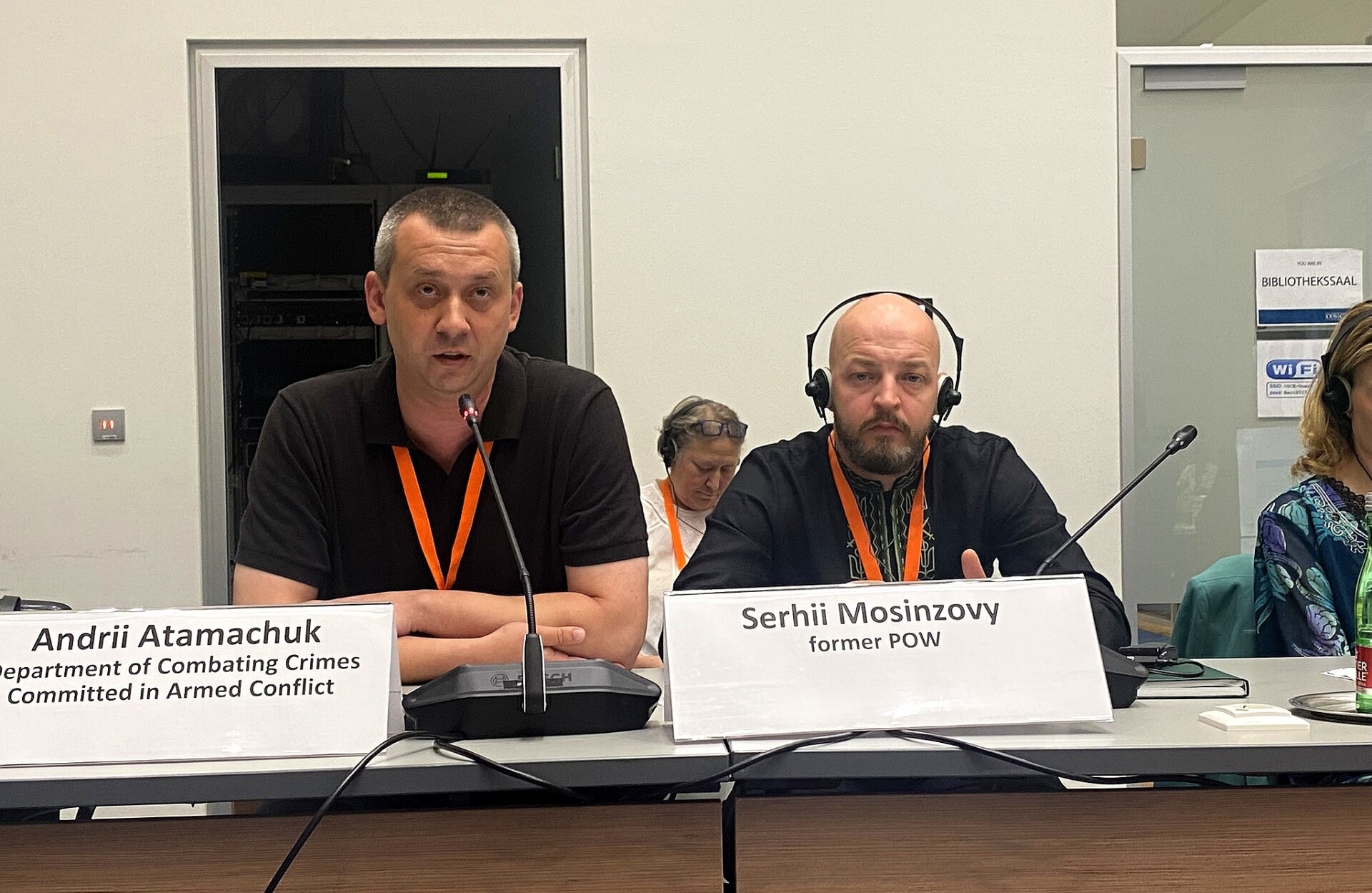 Photo: Andrii Atamanchuk, a representative of the Office of the Prosecutor General of Ukraine, and Serhii Mosinzovyi, a former Ukrainian prisoner of war
Andrii Atamanchuk, a representative of the Office of the Prosecutor General, spoke about the work of Ukrainian law enforcement authorities in documenting and investigating international crimes, stressing the importance of cooperation between state institutions, human rights organisations and international justice mechanisms.
According to Andrii Atamanchuk, since the start of the full-scale invasion, more than 238,000 war crimes have been registered in Ukraine, including more than 1,200 criminal proceedings concerning torture and ill-treatment of prisoners of war and civilians in places of unlawful detention. Overall, the number of crimes committed against civilians and prisoners of war exceeds 40,000.
“Of the more than 7,600 Ukrainian service members who have returned from Russian captivity, not a single one has said they were treated in accordance with international humanitarian law. We continue to document unlawful executions, torture, sexual violence, the use of electric shocks, mock executions, the denial of medical care and systematic psychological abuse. If you open the Geneva Conventions, you will struggle to find a single provision that the Russian Federation has not violated“, Andrii Atamanchuk stressed.
He added that similar methods of torture are used in dozens of places of detention both in the temporarily occupied territories of Ukraine and in Russia, demonstrating the deliberate and systematic nature of these crimes.
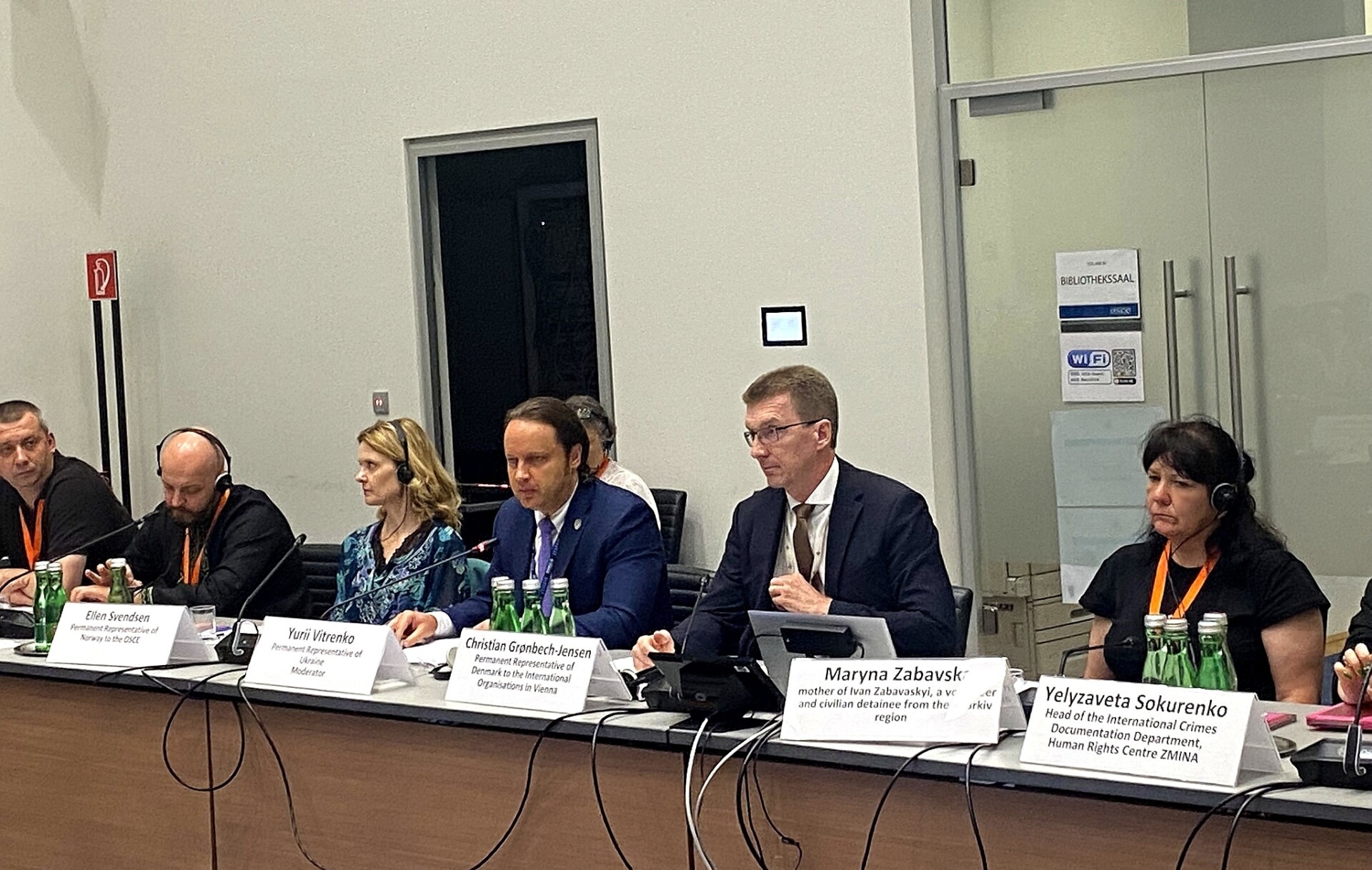
Ambassador Kristian Grønbech-Jensen, Denmark’s Permanent Representative to the International Organizations in Vienna, said that the testimonies shared by the Ukrainian speakers provided further evidence of the systematic nature of Russia’s crimes.
“Today, we heard deeply moving testimonies from people who have survived torture or continue to fight for their loved ones. They remind us that these are not isolated incidents, but part of Russia’s systematic use of torture and ill-treatment“, he said.
Addressing Maryna Zabavska and Serhii Mosinzovyi directly, the Ambassador added: “Your testimonies have made an important contribution to our shared understanding of the scale of these crimes. Speaking about what you have endured requires tremendous courage“.
The Ambassador said that documenting these crimes, investigating them and prosecuting those responsible remain essential to delivering justice.
“All those responsible for torture and other grave human rights violations must be held accountable. But justice is about more than court judgments. It also means supporting victims and ensuring their right to rehabilitation and reparation“, he concluded, reaffirming Denmark’s unwavering support for Ukraine.
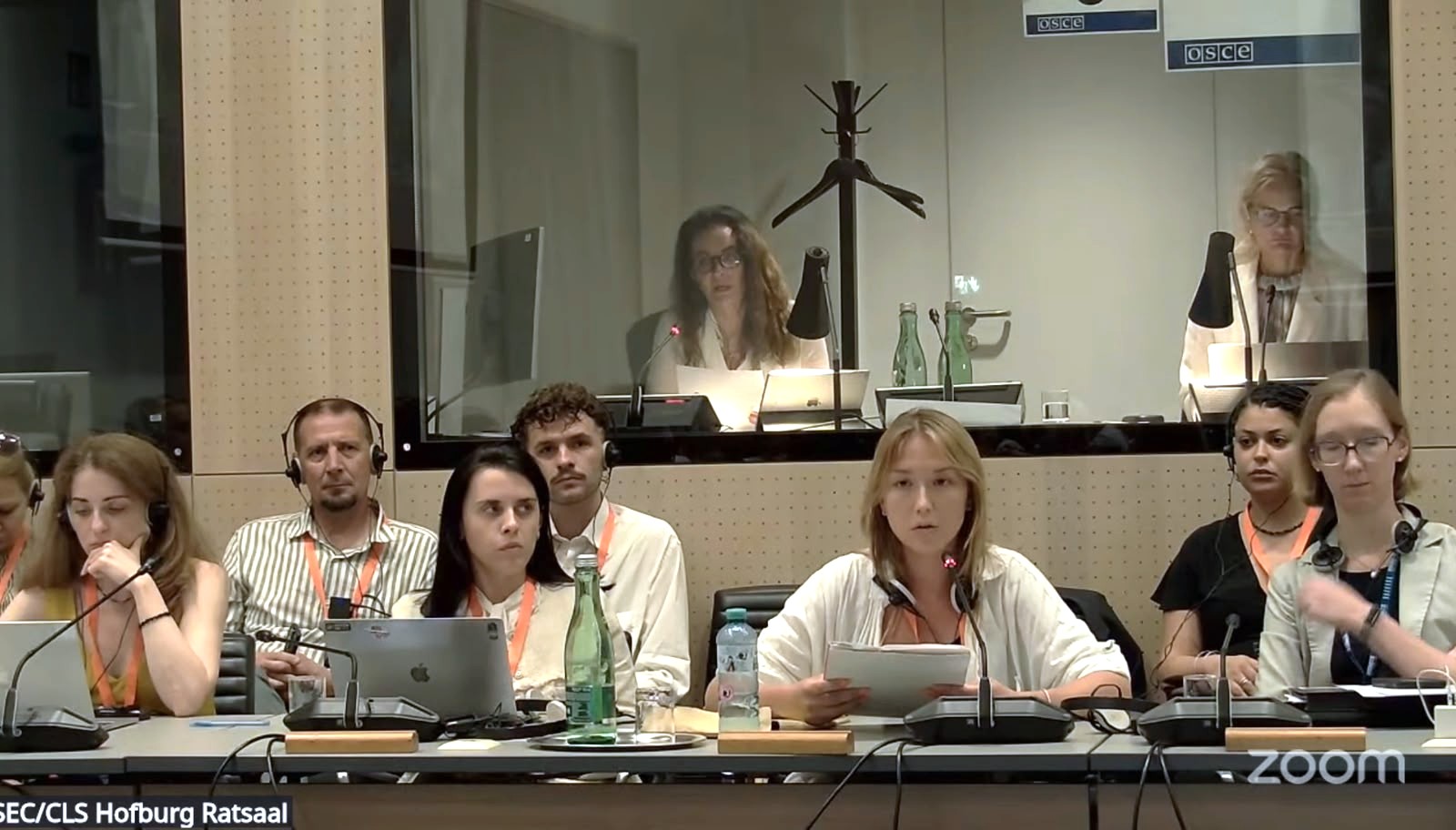
Tetiana Zhukova addressed the conference during its third session, “Justice for torture victims: Fighting impunity, and ensuring redress and rehabilitation”, which focused on combating impunity for torture and ensuring victims’ rights to justice and reparation.
She stressed that human rights defenders work every day with people who have survived international crimes and continue to document patterns of torture that recur across authoritarian regimes: “We document the full range of torture practices. People held in the basements of Pinochet’s secret police in Chile endured methods of abuse strikingly similar to those used by the Khmer Rouge regime in Cambodia and now employed by the Russian Federation, including in the territories of Ukraine it temporarily occupies“.
According to Tetiana Zhukova, the key difference is that Russian officials continue to enjoy impunity: “They persecute, abduct, torture, unlawfully convict and execute civilians and prisoners of war, and then go on holiday to Marbella in Spain. This shows that the international justice system is still missing essential elements“.
The ZMINA representative called on the OSCE participating States to continue supporting the documentation of international crimes, review the implementation of the recommendations issued under previous OSCE Moscow Mechanisms and consider launching a new one, support the work of the International Criminal Court, the Special Tribunal for the Crime of Aggression and the international compensation mechanism, and make greater use of universal jurisdiction and targeted sanctions. She also stressed that international efforts should focus not only on holding those responsible to account but also on securing the swift release of all Ukrainian civilian detainees and prisoners of war, particularly elderly people and those in need of medical care.
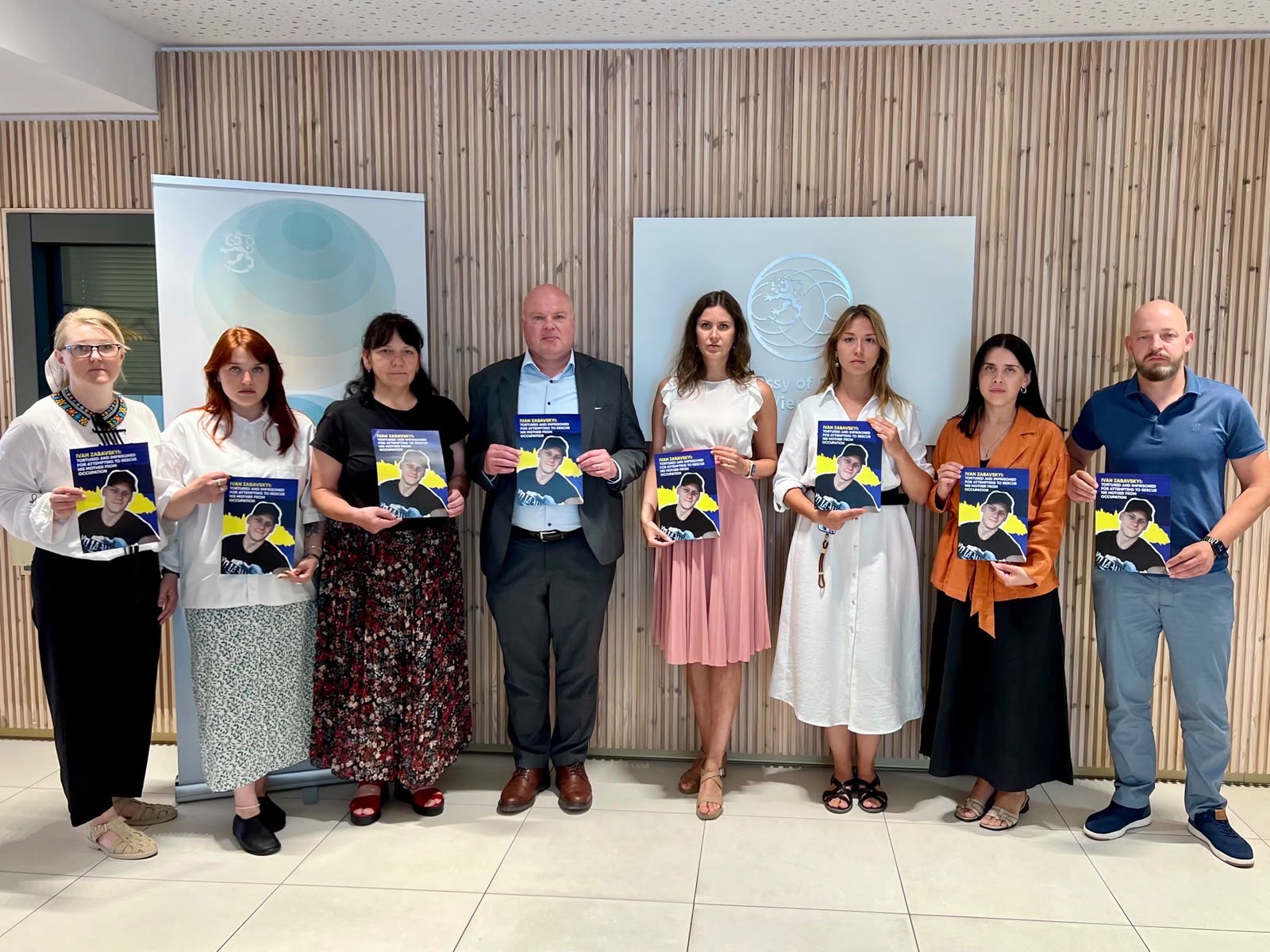
In addition to taking part in the official sessions and co-organising the side event, representatives of Human Rights Centre ZMINA and the Media Initiative for Human Rights (MIHR) held a series of advocacy meetings with diplomats from OSCE participating States.
The human rights defenders outlined the documented practice of using torture to fabricate criminal cases against Ukrainian civilians and called on the OSCE participating States to increase international pressure on Russia.
“Torture is used to manufacture a body of evidence. People are forced to confess to crimes they did not commit. That is why we insist that civilians whom Russia has unlawfully convicted must remain among the priorities in negotiations on their return home“, Yelyzaveta Sokurenko stressed during a meeting with Ambassador Vesa Häkkinen, Head of Mission at Finland’s Permanent Representation to the OSCE.
She explained that physical violence, electric shocks, psychological pressure, threats against family members, the denial of medical care and prolonged incommunicado detention are not used at random but as a means of forcing people to sign statements required by the investigators.
The Ukrainian civil society delegation also called on diplomats to raise publicly the issue of Ukrainian civilians unlawfully imprisoned by Russia, demand that the International Committee of the Red Cross be granted access to them, and use all available diplomatic tools to increase international pressure on Russia.
On 12 May, during the second OSCE Supplementary Human Dimension Meeting in Vienna, ZMINA organised the side event “Digital Threats to Civil Society in Ukraine Amid War and Transformation” in cooperation with the Delegation of the European Union to the International Organizations in Vienna, the Human Rights House Foundation, the Netherlands Helsinki Committee, the Anti-Corruption Action Centre and the Digital Security Lab. The participants discussed how Russia’s full-scale war against Ukraine has created not only physical but also significant digital threats for activists, journalists and human rights defenders.
For reference
The OSCE Supplementary Human Dimension Meeting is a thematic conference organised by the Organization for Security and Co-operation in Europe (OSCE). It focuses on current issues related to human rights, democracy and the rule of law. The meetings bring together diplomats from OSCE participating States, representatives of international organisations and civil society.
ZMINA joined the event within the project “Seeking justice+supporting victims addressing atrocity crimes in the context of the Russian armed aggression in Ukraine”, implemented with the support of the Swiss Federal Department of Foreign Affairs. The views and ideas presented herein are solely those of the author(s) and do not reflect the stance or policies of Swiss Federal Department of Foreign Affairs and Swiss government.