Human rights defenders discuss cognitive occupation of Ukrainian territories in the framework of Crimea Days in Czechia
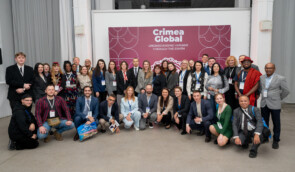
On September 18, the second day of Crimea Days continued in Prague and Brno with discussions about life under Russian occupation, human rights violations and the international response to what is happening in Crimea and other occupied Ukrainian territories. The programme brought together human rights defenders, diplomats, researchers and journalists to talk about people staying under occupation, those persecuted for resisting it and the tools available to keep their cases visible and seek justice.
 Photo: Diplomatic briefing. Credit: Office of Democratic Forces of Belarus
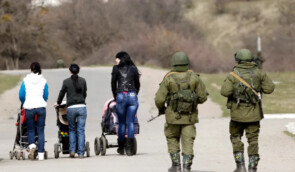
In Prague, participants met with the representatives of the Czech Ministry of Foreign Affairs. The conversation focused on a simple but often overlooked fact: an occupied territory is not just land, it is also the people who remain there. In Crimea, Russian control goes far beyond the military presence: independent voices are being silenced, civic life is being dismantled, children are being subjected to militarisation and indoctrination, Ukrainians are being forcibly transferred and deported.
Viktoriia Nesterenko, Project Manager at the Human Rights Centre ZMINA, spoke about what happens to those who continue to document life under occupation. At least 27 Ukrainian journalists are currently unlawfully detained by Russia, including 17 from Crimea. Activists, human rights defenders and citizen journalists are increasingly targeted through legal and administrative pressure, including designation as “foreign agents”. One of the examples is Crimean Solidarity, a grassroots movement that for years documented political persecution, supported political prisoners and their families, and helped keep their cases in the public eye. Under growing pressure from the Russian authorities, the movement has now ceased its activities.
The question of accountability ran throughout the day. Participants discussed the need to strengthen existing international justice mechanisms, including the International Criminal Court, the Special Tribunal for the Crime of Aggression against Ukraine and universal jurisdiction, as well as implement targeted sanctions against those responsible for repression. The message was clear: justice cannot wait until the occupation is over, evidence needs to be documented and preserved, accountability mechanisms need to be used now.
 Photo: meeting at the Czech Ministry of Foreign Affairs
The same message was brought to a diplomatic briefing with representatives from different regions of the world, held with the support of the Office of Democratic Forces of Belarus. Human rights defenders put faces and names to the reality of Russian captivity, speaking about Ukrainian civilian detainees, including 71-year-old Halyna Dovhopola, who recently suffered a stroke, Tofik Abdulhaziiev, who remains in Russian custody despite a serious medical condition, and Iryna Danylovych, a Crimean citizen journalist who suffered severe hearing loss in detention.
The speakers called on diplomats to keep these cases on the international agenda, help bring Ukrainians held by Russia home and ensure that the names of political prisoners do not disappear from public attention. It is also important to remember that this is not where the story ends: behind the thousands of people imprisoned or deported are millions who remain in occupied territories and face daily pressure, indoctrination, militarisation and attempts to erase their Ukrainian identity.
 Photo: Diplomatic briefing. Credit: Office of Democratic Forces of Belarus
The programme then moved to Charles University, where Tetiana Zhukova of the Human Rights Centre ZMINA spoke about a less visible side of occupation: control over people’s minds. War is often associated with tanks, soldiers, weapons and destroyed buildings. But, Zhukova argued, physical occupation is only part of the picture: before and alongside military control comes an attempt to change how people see reality, their own identity and what they consider normal.
Using Crimea as an example, Zhukova outlined five steps of cognitive occupation. Firstly, make the occupation look legal: in Crimea, this included the so-called “referendum” in March 2014, followed by Russia’s claimed incorporation of Crimea into its Constitution and the immediate imposition of Russian laws, citizenship and administrative institutions. Secondly, destroy independent media and control the flow of information: within the first year of occupation, the number of media outlets fell by 88%, from around 3,000 operating under Ukrainian law to 232. Thirdly, persecute those who continue to speak out: activists, journalists, religious leaders and other public figures were targeted, with the abduction and killing of Crimean Tatar activist Reshat Ametov becoming one of the early examples. Fourthly, make Ukrainian identity itself dangerous: people expressing a pro-Ukrainian position in occupied Crimea have faced accusations of terrorism, extremism or treason, including the case of Sakha Mangubi, who was abducted in 2024 and later faced terrorism-related charges. And finally, make people part of the system themselves: through propaganda, indoctrination and militarisation, including the integration of Ukrainians who collaborate with the occupation authorities into the occupation administration.
The lecture ended with a question: what remains of an occupation when the soldiers are gone? The answer, Zhukova suggested, can be found in transformed schools, media, laws, memories and ideas about what is considered normal. But she also stressed that cognitive occupation is never complete as long as people continue to speak, document what is happening and preserve their identity.
Mariia Sulialina of the Centre of Civil Education “Almenda” then focused on children, explaining how indoctrination and militarisation are used to reshape their worldview and draw them into the occupying system. Kateryna Rashevska of the Regional Center for Human Rights provided a legal perspective on these practices and their implications under international law.
 Photo: Screening of “Chronicles of Occupation”
The day also included a screening of “Chronicles of Occupation”, followed by a discussion with Muslim Umerov of Crimea Vox. The film traces centuries of Russian control over Crimea, from the Russian Empire to the present day, while also telling the story of the Crimean Tatar national movement and its struggle to preserve its identity and return to its homeland.
In Brno, the programme continued with a screening of “Frozen”, a documentary about enforced disappearances in occupied Crimea, followed by a discussion with Ukrainian journalist and former political prisoner Vladyslav Yesypenko.
The final days of Crimea Days also turned to culture. On September 20, the “Crimea Qave Session – a journey through the cities of Crimea” brought together music, art and networking around Crimean Tatar culture, organised by the Q-hub and Crimea Vox. The evening featured DJ Elmar, Aziza Eskender and Lenara Osmanova, as well as an exhibition by Crimean artist Aider Khatip.
 Photo: Crimea Qave Session – a journey through the cities of Crimea. Credit: Q-hub
Another part of the programme is the photo exhibition “Crimea Through the Eyes of Citizen Journalists: 10 Years in Captivity” by ZMINA, installed with the support of Nesehnuti. Presented at the Faculty of Social Studies of Masaryk University (str. Joštova 218) in Brno, the exhibition shows Crimea through the photographs of citizen journalists who documented arrests, searches, trials and everyday repression under Russian occupation. The exhibition is open to the public until September 30, with free entry during the university building’s regular opening hours.
The initiative “Crimea Days is Czechia 2026” is organised by the Human Rights House Crimea and its member organisations, including Crimean Process, Human Rights Centre ZMINA, Crimean Human Rights Group, CrimeaSOS, Regional Center for Human Rights and Centre of Civil Education “Almenda”, in cooperation with partners, including Crimean Projekt Foundation “Q-hub”, CrimeaVox Media, People in Need, Nesehnuti, Prague Civil Society Centre, Generation for Ukraine and the Embassy of Ukraine in the Czech Republic.