More than 100 Maidan cases remain in court as limitation periods threaten further closures: ZMINA presents report
Thirteen years after the Revolution of Dignity, a significant proportion of cases involving crimes against protesters have yet to reach final court decisions. As of September 2026, more than 100 criminal proceedings were still before the courts, while around 100 people had already been released from criminal liability, primarily due to the expiry of limitation periods. Cases involving particularly serious crimes could also be at risk of closure in 2028–2029.
 Asier Santillan, Tetiana Pechonchyk, Natalia Sokolenko
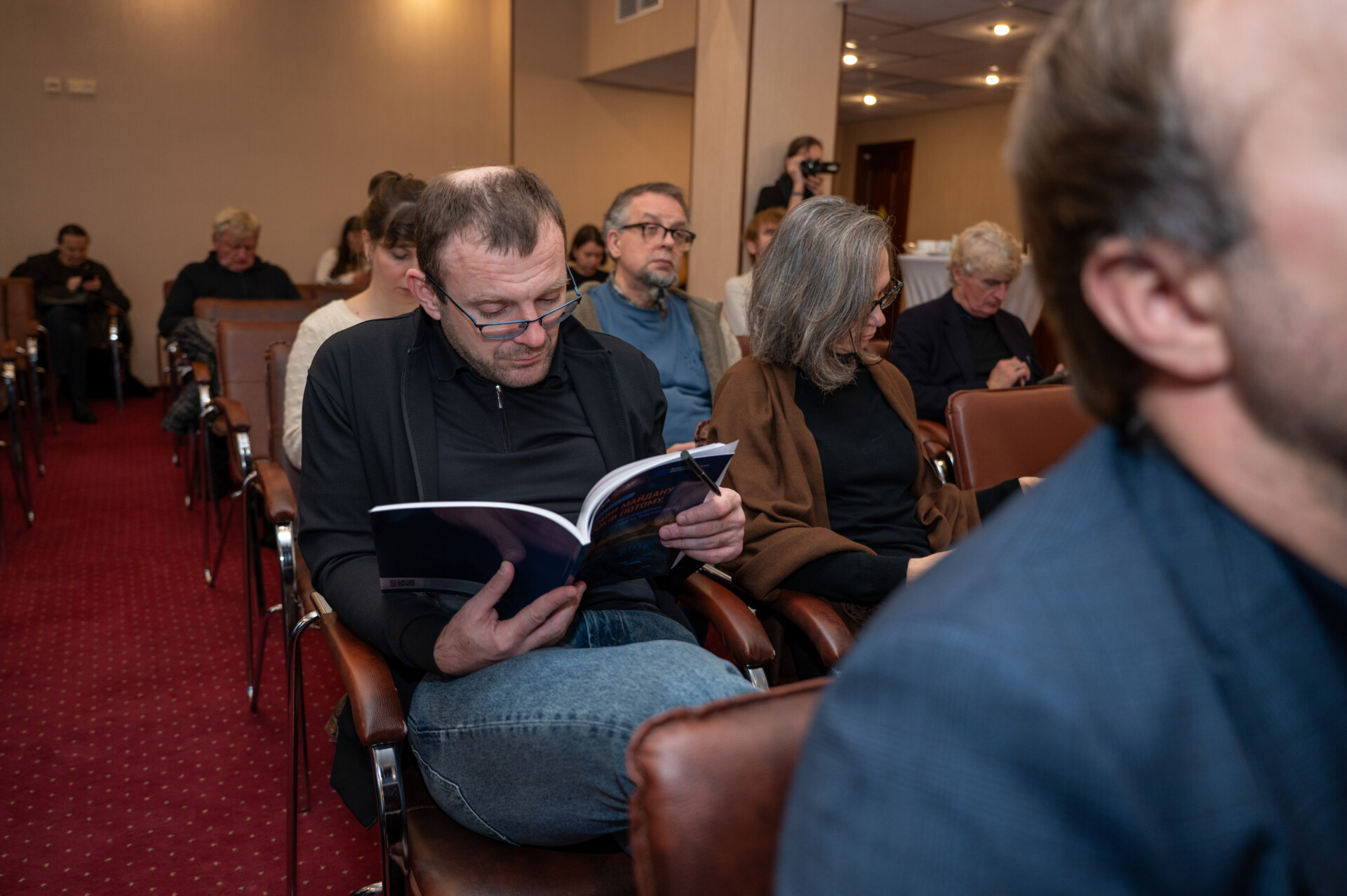
On 20 November 2026, the Human Rights Centre ZMINA presented its analytical report, Maidan Cases 13 Years On: Investigations, Trials and the Impact of Time. The event brought together lawyers representing victims, a representative of the Prosecutor General’s Office, families of those injured or killed during the Revolution of Dignity and representatives of civil society organisations and the media.
Participants in the presentation and discussion included a lawyer representing victims in the Maidan cases, chair of the Advocacy Advisory Panel’s board and report co-author Oksana Mykhalevych; head of the Maidan Cases Department at the Prosecutor General’s Office Oleksii Donskyi; chair of the NGO Families of the Heavenly Hundred Nataliia Dyhdalovych, whose husband, Andrii Dyhdalovych, was killed during the Revolution of Dignity; and writer and director of the Protasiv Yar festival Svitlana Povalaieva, mother of fallen soldiers and Revolution of Dignity participants Vasyl Ratushnyi and Roman Ratushnyi.
The event opened with remarks from the chair of the board of the Human Rights Centre ZMINA, Tetiana Pechonchyk, and the head of the European Integration, Governance, Rule of Law and Civil Society Section at the EU Delegation to Ukraine, Asier Santillan.
Pechonchyk said that the report, prepared by the Human Rights Centre ZMINA, brings together information on criminal proceedings related to the 2013–2014 Revolution of Dignity and provides an overview of the progress of investigations and court proceedings as of September 2026.
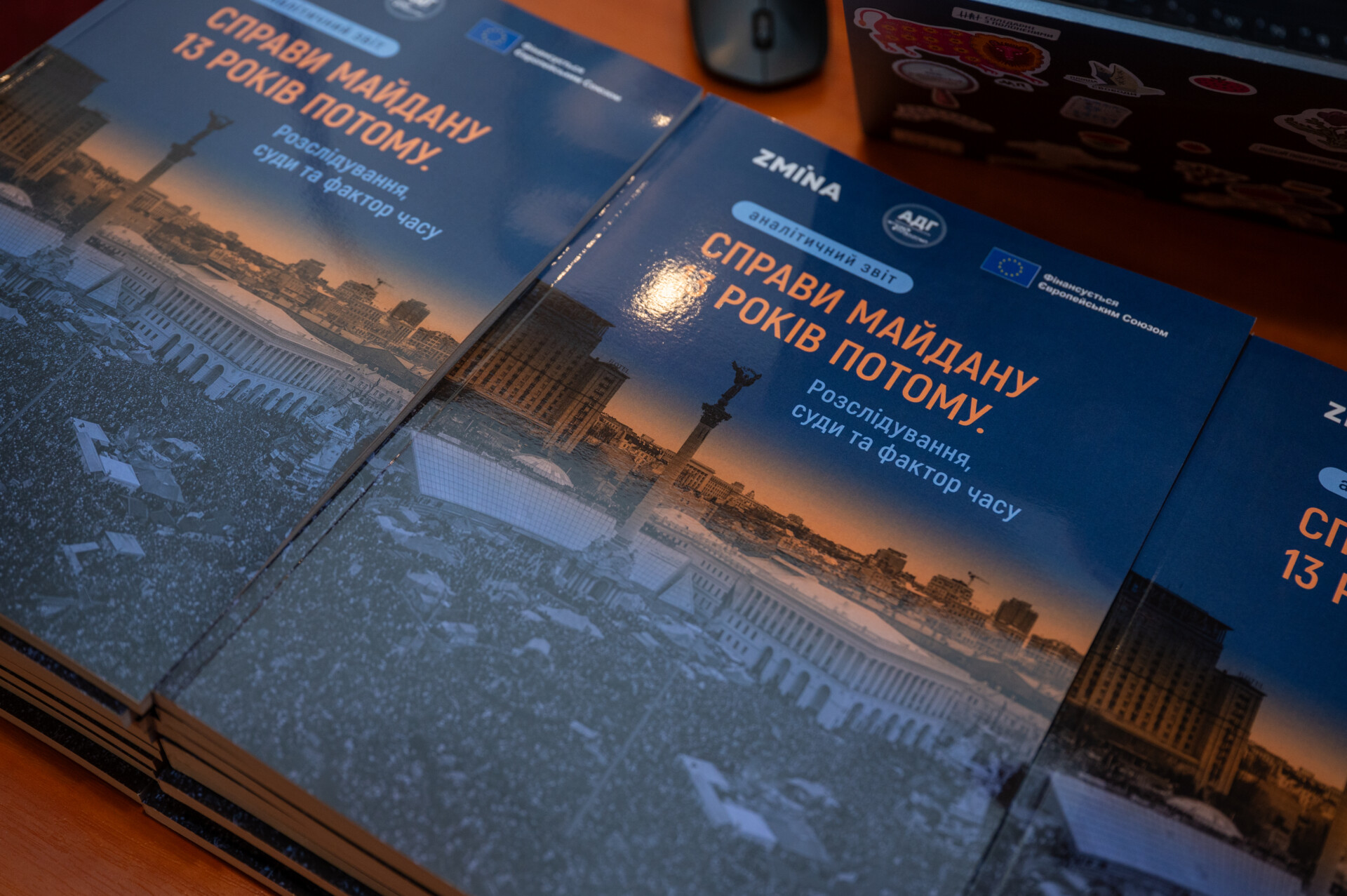
Pechonchyk added that the report covers more than 400 criminal proceedings concerning crimes committed during the Revolution of Dignity and related events. These proceedings involve more than 600 suspects and defendants, ranging from former President Viktor Yanukovych, ministers and judges to officers of Berkut, a special-purpose unit, so-called titushky (hired thugs), officers of the State Automobile Inspectorate and investigators. Around 2,000 people have been officially recognised as victims in these cases, including those who suffered physical injuries, unlawful detention, torture and other forms of ill-treatment, as well as relatives of protesters who were killed.
As of September 2026, courts of first instance had delivered more than 100 verdicts. At the same time, more than 100 people had been exempted from criminal liability, primarily due to the expiry of limitation periods, while more than 100 proceedings were still before the courts. Some pre-trial investigations are also ongoing.
Santillan emphasised that the Revolution of Dignity was a powerful demonstration of Ukraine’s commitment to European values, democracy and human rights. He said that the demand for justice for crimes committed during the protests remains relevant 13 years later, as many families have yet to receive answers or see final court decisions. He also stressed the importance of holding judges accountable for issuing rulings used to persecute protesters.
Santillan noted that Ukraine had made significant progress towards European integration, but judicial reform remains one of the key requirements for EU accession, particularly in the context of negotiations under the first cluster, “Fundamentals”. He stressed that efforts to advance the Maidan cases are directly linked to fulfilling these commitments.
“This event is extremely important because it demonstrates how organisations representing Maidan activists and victims, together with prosecutors investigating these cases, are working to achieve justice and fulfil one of the key requirements for Ukraine’s EU membership,” Santillan said.

What is happening with the Maidan cases 13 years on
One of the report’s main findings is the significant gap between establishing the circumstances of crimes and holding those responsible accountable. In most incidents, investigators have established what happened, gathered evidence, identified those involved and referred the cases to court. In many cases, courts have already issued decisions establishing some of these facts. However, this does not necessarily mean that everyone involved has been punished: some defendants remain in hiding, some proceedings have been closed due to the expiry of limitation periods and some court decisions have yet to become final.
The report’s authors emphasise that a distinctive feature of the Maidan cases is that the vast majority of crimes are attributed to representatives of the state itself — law enforcement officers and government officials. In effect, the state is investigating crimes committed by members of its own institutions. This has been one of the factors complicating both pre-trial investigations and court proceedings.
Oksana Mykhalevych noted that although the pursuit of justice is far from over, most incidents during the Maidan protests have already been documented in court decisions. She described this as an important achievement given the numerous obstacles faced by victims, their legal representatives and investigators.
“This was possible primarily thanks to every victim and every family of those killed who, throughout all these years, have followed the cases, worked with pre-trial investigation bodies and state authorities and helped move the process forward,” said the lawyer representing victims in the Maidan cases, chair of the Advocacy Advisory Panel’s board and co-author of the analytical report.
 Oksana Mykhalevych
Mykhalevych warned of the risk posed by the expiry of limitation periods. According to her, limitation periods have already expired in some cases involving serious crimes, and in 2028–2029, the risk of closure could extend to proceedings concerning particularly serious crimes, including killings and the infliction of grievous bodily harm during the events on Instytutska Street.
“It is our duty to prevent cases involving the shooting and killing of people from being closed due to the expiry of limitation periods. Where defendants have not fled to Russia or the occupied territories, every effort must be made to bring these cases to a verdict,” she stressed.
Mykhalevych identified another important task: preserving materials documenting the Revolution of Dignity, including not only records from pre-trial investigations and court proceedings but also video footage and other evidence available online that is gradually disappearing. She believes these materials should be systematically organised and preserved, including for future use in the Museum of the Revolution of Dignity.
In closing, the lawyer emphasised that the report not only documents the facts already established and the current status of the cases but also provides recommendations to state authorities on how to improve investigations and court proceedings in cases involving crimes against protesters.
Why the cases remain unresolved and what can be changed
Donskyi thanked the report’s authors for providing a systematic overview of judicial practice and stressed that the number of final court decisions in the Maidan cases remains insufficient. According to him, 101 people have been convicted in final judgments establishing their guilt, while 129 people have been exempted from criminal liability on non-exonerating grounds.
“Even this ratio points to a deeply troubling trend in the final judicial assessment of these events,” Donskyi said.
He also said that some of the killings committed during the Revolution of Dignity remain unsolved. Of the killings on 22 January 2014, only the murder of Yurii Verbytskyi has been solved, while some of the killings on 18 February also remain unsolved. In total, more than 5,000 crimes were committed against participants in the Revolution of Dignity.
Donskyi identified several factors that complicated the investigations, including the large scale of the crimes, the involvement of numerous law enforcement officers, attempts to conceal evidence and the destruction of documents. He noted that the full-scale war cannot explain why the investigations have taken so long, as work on these cases had already been under way for eight years before the invasion began.
Donskyi also addressed the Russian narrative alleging that a coup took place in Ukraine in 2014. According to him, the facts established during the criminal proceedings indicate the opposite: Russia’s hybrid aggression preceded the protests, and Ukrainian law enforcement officers and government officials became instruments of that aggression. He stressed that evidence from the criminal proceedings and court decisions confirms the involvement of Russian officials in coordinating the actions of Ukrainian law enforcement officers.
 Oleksii Donskyi
Donskyi identified the lack of clear procedural rules setting out deadlines and procedures for hearing cases and preventing delays as the main problem in the Maidan court proceedings.
“The main problem is the absence of strict rules that would establish even basic timeframes and procedures for hearing cases. Our criminal procedural legislation allows criminal proceedings to be dragged out,” he explained.
To address the situation, the Prosecutor General’s Office, together with victims and their legal representatives, has raised the need to amend the Criminal Procedure Code. In particular, the proposed changes would require courts to hear such cases within a reasonable time and establish clearer requirements for the frequency of hearings as limitation periods approach expiry.
Concerns of victims and families of those killed during the Revolution of Dignity
A separate part of the discussion focused on reflecting on the Revolution of Dignity 13 years later and the issues that remain unresolved for the families of the fallen Heroes of the Heavenly Hundred. For them, prolonged court proceedings are not merely a matter of shortcomings in legislation or the organisation of the courts – they also represent years of waiting for the truth to emerge and for those responsible to be held accountable.
Nataliia Dyhdalovych spoke about the families’ experiences. She stressed that over the past 13 years, many families have been left without legal representation, while frequent changes of investigators and repeated delays in court hearings have made it difficult to follow the progress of their cases. At the same time, relatives of those killed, who are coping with bereavement and health problems, are often physically unable to attend numerous hearings in different courts.
 Nataliia Dyhdalovych
Dyhdalovych also pointed out that more than 50 close relatives of those killed during the Maidan protests who had been officially recognised as victims in the criminal proceedings have died over the years.
“More than 50 members of the Heroes’ families — parents, wives, brothers and sisters who were recognised as victims — have died during this time. We will no longer be here. We will be gone,” she said.
According to Dyhdalovych, the families need more than the commemoration of their loved ones – above all, they need the investigations and court proceedings to be brought to a conclusion. She stressed the importance of holding accountable not only those who directly carried out the killings but also everyone who facilitated the crimes.
“We are grateful that the memory of our loved ones is being honoured, but what matters most to us is the investigation. What matters most is that these cases are brought to their conclusion and those responsible are convicted, and that the actions of the criminal authorities and everyone who facilitated these killings are properly assessed,” she stressed.
Svitlana Povalaieva linked the decline in public attention to the Maidan cases to the fact that Ukrainian society had not had time to come to terms with the Revolution of Dignity, both as a historical event and as a tragedy. It was immediately followed by the occupation of Crimea, the outbreak of hostilities in eastern Ukraine and, later, the full-scale invasion. Many of those who had taken part in the Maidan protests went on to defend the country, while new losses and hardships compounded the trauma they had experienced in 2014.
Povalaieva believes that the lack of a comprehensive account of the events in court decisions also affects public interest in the issue. She argued that clear, accessible judgments establishing the circumstances of the crimes could attract greater attention from the media and the public. At the same time, she urged people not to assume that the Maidan cases have stalled: information about the court proceedings is publicly available, but the public needs to follow them more closely.
 Svitlana Povalaieva
Povalaieva stressed that preserving the memory of the Revolution of Dignity is important not only for the families of those killed but also for understanding Ukrainian statehood and the country’s history.
“This is our point of no return. It is the fiery flower of our statehood in full bloom, something generations before us worked towards,” she emphasised.
The full video recording of the event is available on the Facebook page of the Human Rights Centre ZMINA here.
The full analytical report is available here.
The analytical report and its presentation were prepared by the Human Rights Centre ZMINA with financial support from the European Union. The content of the report is the sole responsibility of the Human Rights Centre ZMINA and does not necessarily reflect the views of the European Union.