An event on the lawmaking of the Verkhovna Rada took place in Vienna on the margins of the OSCE: ZMINA spoke about the role of civil society
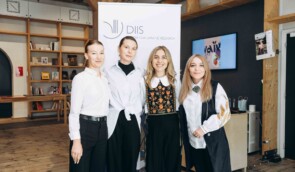
On 17 March 2026, in Vienna, on the margins of the OSCE Supplementary Human Dimension Meeting, an event “Parliament’s Lawmaking: Ukraine Between the War and European Integration” took place. The event was organised by the Human Rights Centre ZMINA in cooperation with the Netherlands Helsinki Committee and was dedicated to discussing how the Verkhovna Rada supports democratic lawmaking in the context of two complex processes taking place in the country — war and European integration.
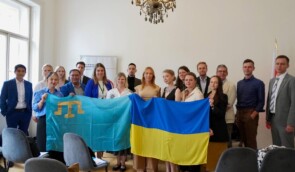
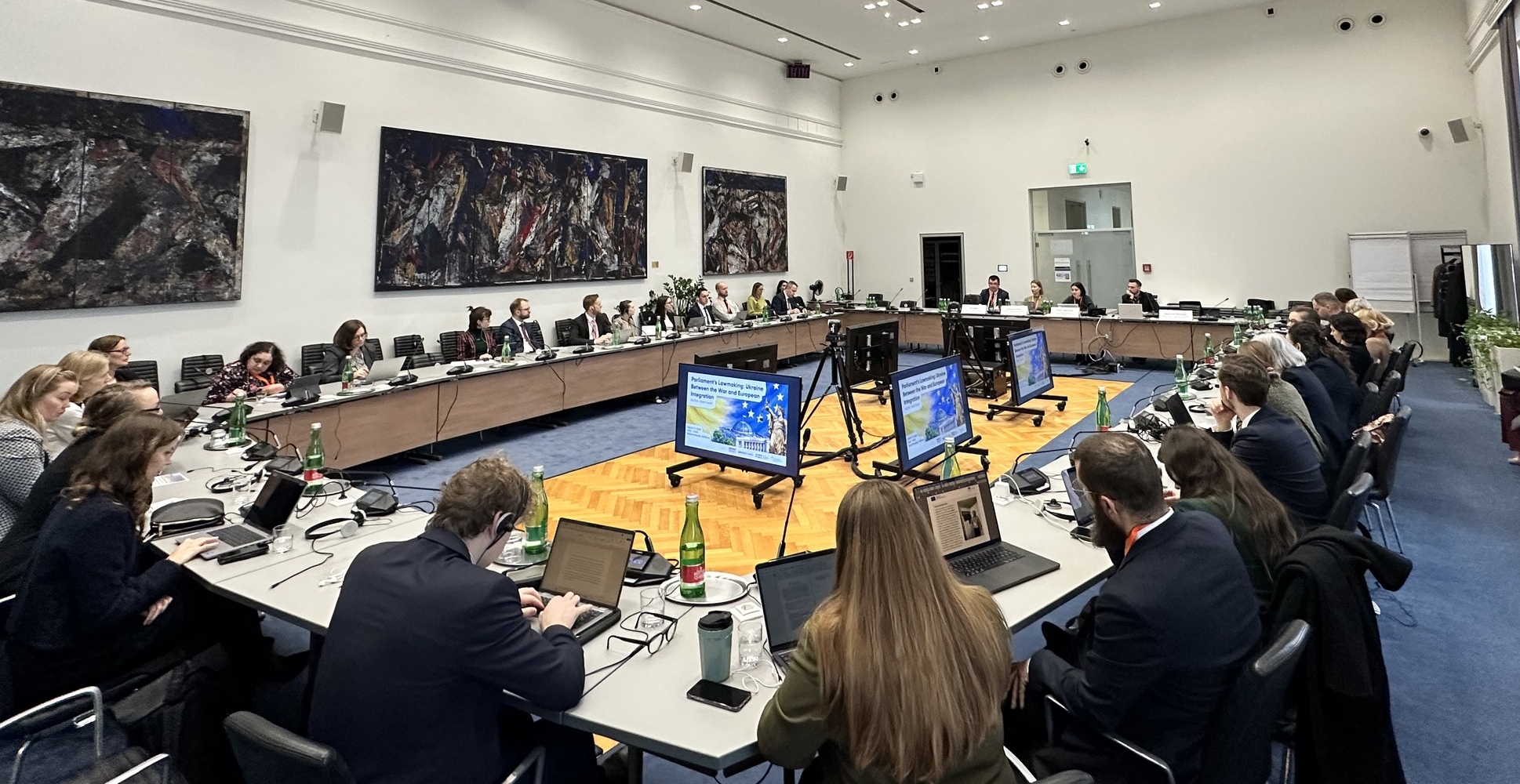 Photo credit: Permanent Mission of Ukraine to International Organisations in Vienna
Among the speakers were Igor Kogut, Director of the Ukrainian Parliamentary Institute and leading specialist of the Faculty of Law of the National University of Kyiv-Mohyla Academy; Oleksandr Zaslavskyi, Deputy Executive Director for Analytical Work of the Agency for Legislative Initiatives; Anastasiia Datsiv, Advocacy Manager for European Integration of the Human Rights Centre ZMINA; and Halyna Petrenko, Director of the NGO Detector Media. The event was moderated by Dinara Gagoshidze, Programme Officer of the Netherlands Helsinki Committee.
Igor Kogut began the discussion by highlighting the extraordinary challenges facing the Verkhovna Rada since the start of Russia’s full-scale invasion. He emphasised that the war is not only a threat to Ukraine but also a challenge to democratic values worldwide. Despite this, the Ukrainian parliament has demonstrated institutional resilience.
With the introduction of martial law, MPs adopted an important and symbolic decision: the Verkhovna Rada would continue holding plenary sittings while adapting security measures. Public access was restricted, databases were closed, and session broadcasts were temporarily suspended. Committees remained active, parliamentary diplomacy intensified, and communication with the public, particularly through social media, became more active.
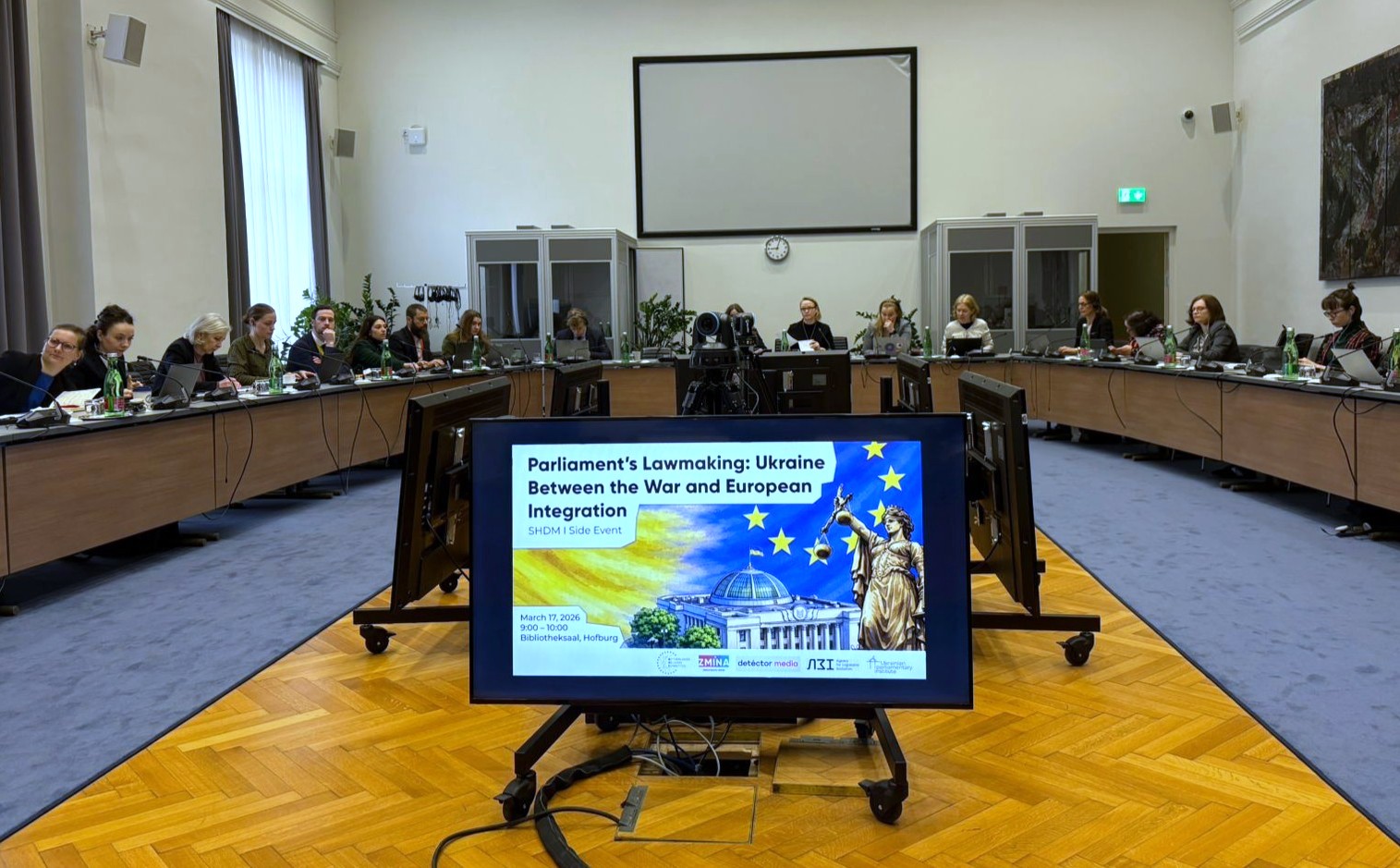
Oleksandr Zaslavskyi presented a detailed overview of the parliament’s lawmaking activity during the war. “From 24 February 2022 to the present, the Verkhovna Rada has adopted 1,055 laws, exceeding the figure of the pre-war period (654 laws),” he noted.
Zaslavskyi emphasised that European integration has become a key legislative priority: “Since the start of the full-scale invasion, parliament has passed 91 laws on European integration, which generally receive broad support among MPs. However, draft laws on European integration often undergo a longer adoption process than others.“
He also highlighted several areas of the Ukrainian parliament’s work where positive progress has been made. In particular, the Verkhovna Rada has generally adapted to the restrictions imposed by martial law and has also adopted the framework Law “On Lawmaking”, which provides for the introduction of a methodology for assessing the impact of draft laws. Although the law itself will come into force one year after the end of martial law, parliament is already implementing this tool on a pilot basis at committee level. Significant progress has been made in the implementation of gender legal expertise, in particular with the support of the Agency for Legislative Initiatives.
Zaslavskyi paid particular attention to the work on adopting a comprehensive code of conduct for MPs with a special parliamentary committee to ensure adherence to high ethical standards. He also emphasised that the full integration of impact assessment methodologies and gender legal expertise, the adoption of a code of conduct, and the continuation of reforms in line with the updated roadmap are important steps towards further improving the work of the Verkhovna Rada.
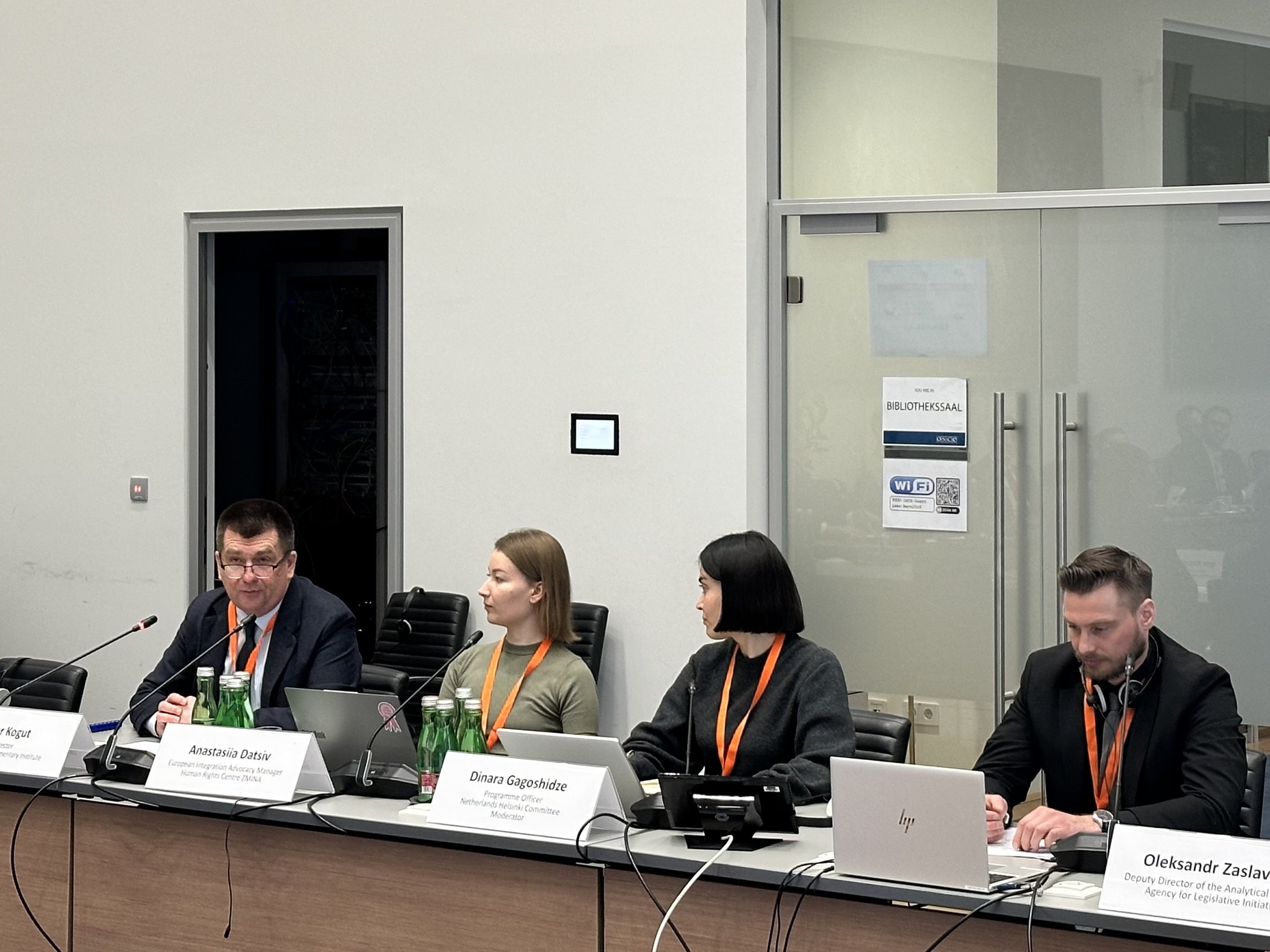 Photo credit: Permanent Mission of Ukraine to International Organisations in Vienna
Anastasiia Datsiv focused on the role and involvement of civil society in lawmaking and in engaging with parliament and the government on matters of European integration.
“A unified voice of civil society ensures consistency in advocacy messaging, particularly in communication with the parliament and the government. One of the key outcomes of such cooperation is the preparation of shadow reports to the European Commission Enlargement Reports. Following their publication, civil society draws the attention of Members of Parliament to the recommendations, as shadow reports contain very specific guidance on laws or draft laws that need to be improved or adopted,” she noted.
Datsiv pointed out that the two parallel processes currently shaping Ukraine’s development – full-scale war and European integration – have differing effects on the state of democracy. According to her, the war poses serious challenges to the functioning of democratic governance, whereas European integration, on the contrary, helps to strengthen it.
ZMINA’s Advocacy Manager for European Integration emphasised that, in these conditions, civil society has adapted and expanded its role, particularly in shaping public policy. At the same time, European integration opens up further opportunities for its involvement in lawmaking, envisaging an active role at all stages of the EU accession process.
Datsiv added that Ukrainian civil society is currently actively involved in the work of government and parliamentary groups, as well as committees of the Verkhovna Rada, and at the same time independently supports the parliament by preparing analytical reviews of draft laws to ensure they are amended in line with European and international standards.
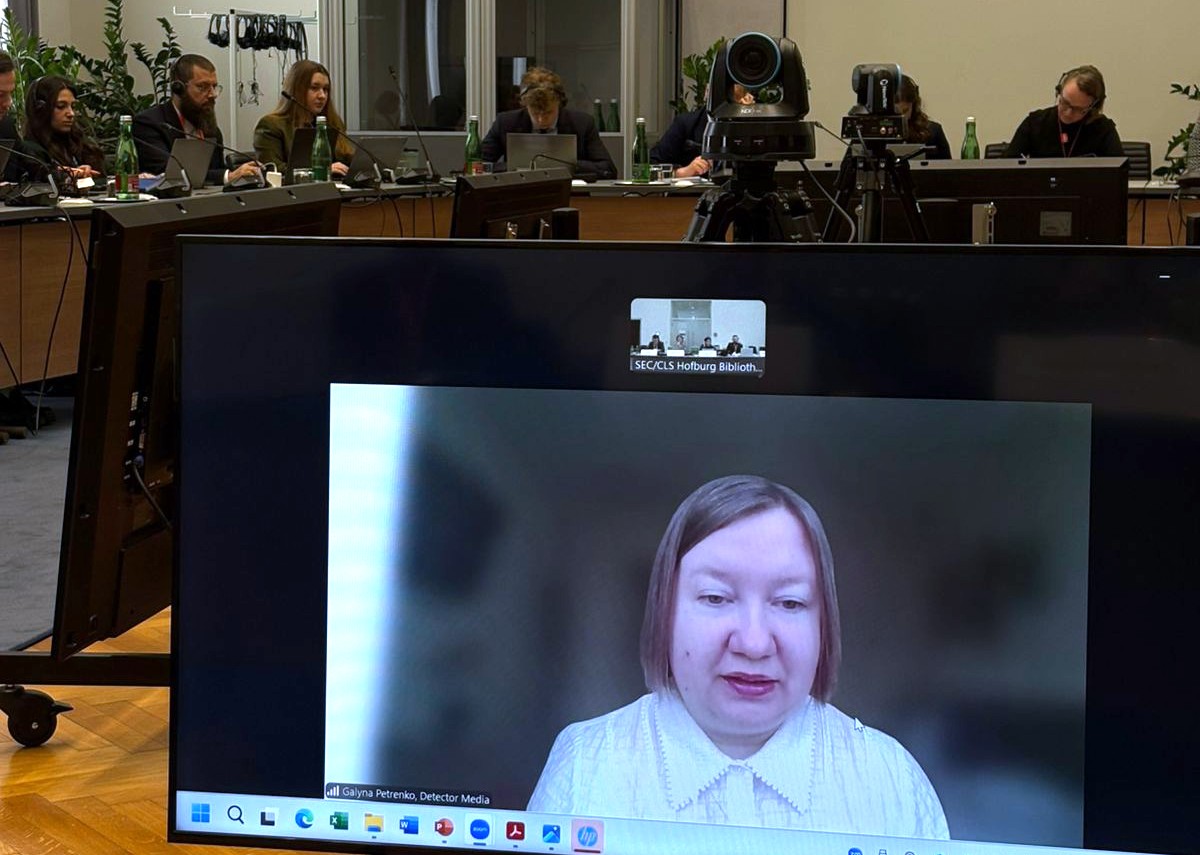 Photo: Halyna Petrenko
Halyna Petrenko spoke about the gradual restoration of journalists’ access to the work of the Verkhovna Rada. She noted that the process is proceeding gradually and, although full access has not yet been restored, significant progress has already been made: “Since May 2024, journalists have been granted partial access to the parliament building, initially limited to the press centre. In September 2025, the Verkhovna Rada adopted Draft Law No. 13719, which allowed for the resumption of live broadcasts of sessions via the “Rada” TV channel. Since January 2026, committees have been required to publish minutes and acts, as well as ensure remote access for the media and civil society organisations.“
Petrenko added that these measures have been implemented without incident and pave the way for ensuring further transparency in parliament.
The event was held with the financial support of the Netherlands Helsinki Committee.
For reference. The OSCE Supplementary Human Dimension Meeting is a thematic conference organised by the Organization for Security and Co-operation in Europe (OSCE), focusing on specific topical issues in the fields of human rights, democracy and the rule of law. The Supplementary Meeting is attended by diplomats from OSCE participating States, representatives of international organisations and civil society.