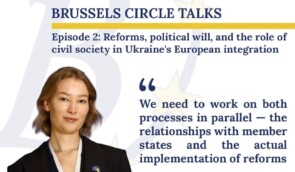
Democracy under pressure from war: Tetiana Pechonchyk contributed to the preparation and presentation of DRI’s annual report on the state of democratic institutions in Ukraine
On 26 May 2026, Tetiana Pechonchyk, Head of the Board of the Human Rights Centre ZMINA, took part in the presentation of the annual report, Review of Ukrainian Democratic Institutions During Wartime – 2025, prepared by Democracy Reporting International (DRI) in partnership with the Centre of Policy and Legal Reform (CPLR) and the Reanimation Package of Reforms Coalition (RPR Coalition).
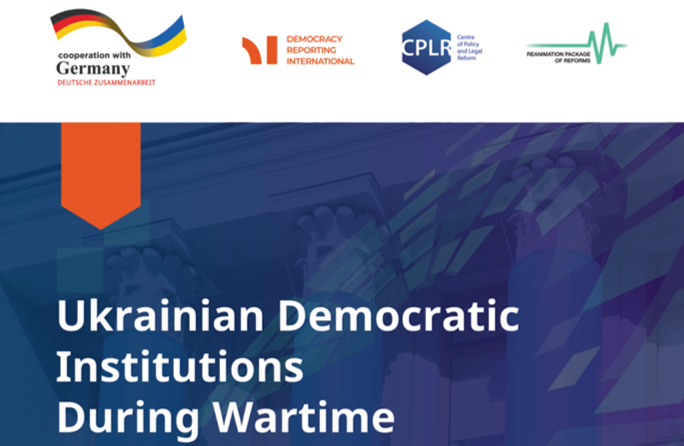
Tetiana Pechonchyk is one of the report’s co-authors. The Human Rights Centre ZMINA also contributed to the chapter on human rights, the activities of the Ukrainian Parliament Commissioner for Human Rights, and the situation of human rights defenders in Ukraine. The analysis is based, in part, on ZMINA’s research and monitoring of the persecution of human rights defenders and civil society activists.
The event was held in a hybrid format at EuropeanHub and served as a platform for an expert discussion among specialists, government officials, civil society representatives, and international partners. During the presentation, the authors outlined the key findings of the study, which examines the transformation of Ukrainian democracy during the fifth year of the full-scale war.
The discussion was moderated by Olha Lymar, Executive Director of the RPR Coalition. She stressed the importance of continuing democratic reforms even under martial law.
“Ukraine is supported as a democratic state. Therefore, it is very important for us that, despite the restrictions imposed by martial law, we not only preserve democracy but also demonstrate progress, particularly in the context of our European integration path“, she noted.
Stanislav Liachynskyi, Director of DRI’s Ukraine Office, highlighted the scale of the analytical work undertaken. According to him, dozens of experts worked on the 128-page document for nearly five months, analysing how Ukrainian democracy is evolving and responding to the challenges of the fifth year of the full-scale war.
Olesia Myhal, DRI Ukraine Project Manager and editor of the report, emphasised that the authors assessed not only the formal adoption of decisions and legislation, but also how checks and balances, institutional independence, and accountability function in practice.
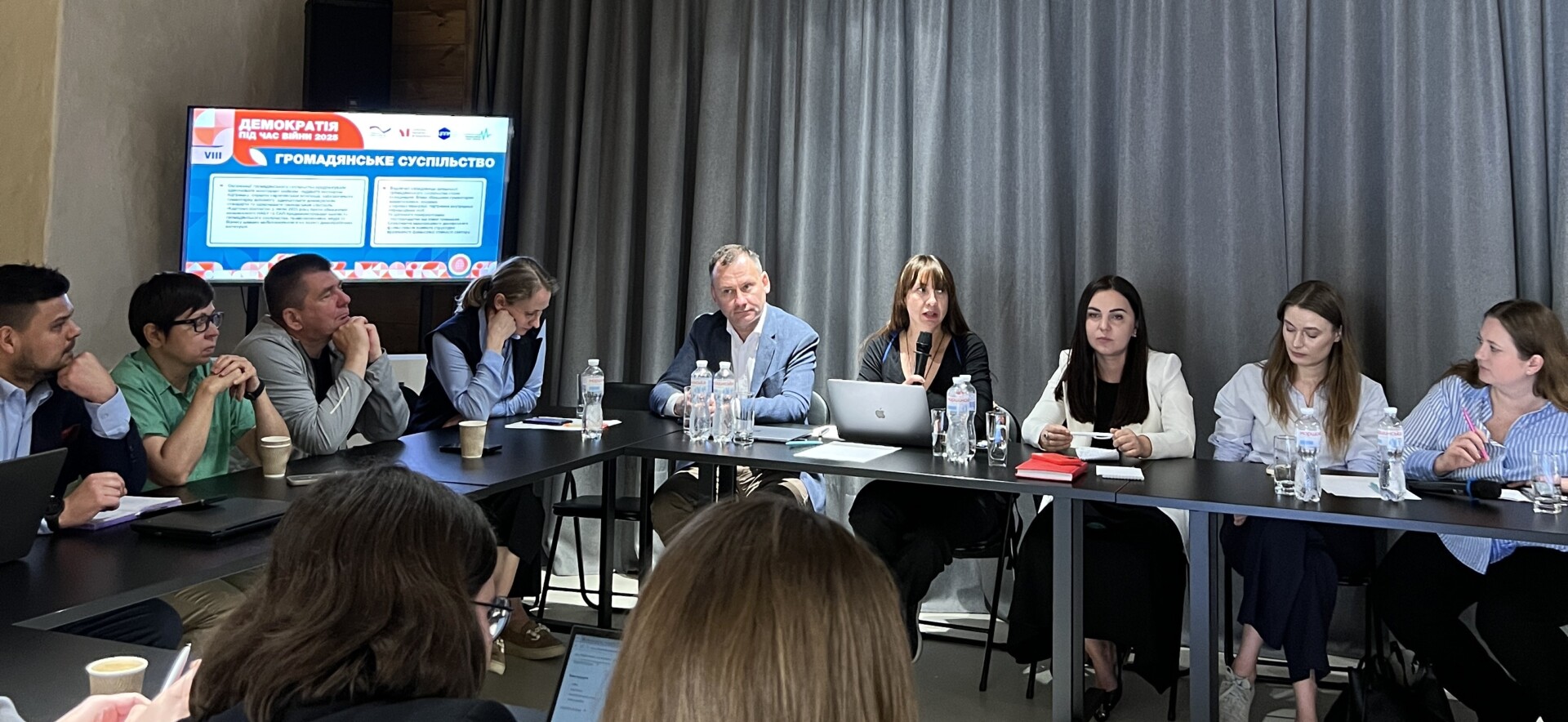
During the discussion, Viktoriia Melnyk, Coordinator of CPLR’s European Integration Programme, drew attention to the imbalance within the “triangle of power” and the need to strengthen the institutional capacity of the government and parliament. CPLR expert Iryna Shostak noted that, despite the war, the Verkhovna Rada has continued to operate uninterruptedly and highlighted the resumption of parliamentary broadcasts and greater openness of parliament to the media and the public among the positive developments.
Particular attention was paid to human rights issues and democratic safeguards during wartime.
Tetiana Pechonchyk presented the chapter of the report devoted to human rights and mechanisms for their protection. She emphasised that one of the key achievements of 2025 was the establishment of the Office of the Military Ombudsman following the adoption of the relevant law by parliament.
“For the first time, the state has recognised the need for a specialised mechanism for military personnel, of whom there are around one million in Ukraine and who are particularly vulnerable to rights violations due to various restrictions and the closed nature of the system in which they serve“, she noted.
At the same time, the head of ZMINA pointed out that the new mechanism is not independent and falls under the president’s authority.
Speaking about the institution of the Ukrainian Parliament Commissioner for Human Rights, she noted that the Ombudsman retains “A” status under the UN Paris Principles, which set standards for the independence of national human rights institutions. According to her, the number of complaints submitted to the Ombudsman increased by 24% in 2025, while the institution’s funding and staffing levels have also grown. At the same time, legislative risks of the Ombudsman’s politically motivated dismissal remain, and the appointment procedure still does not provide for the participation of civil society or human rights organisations.
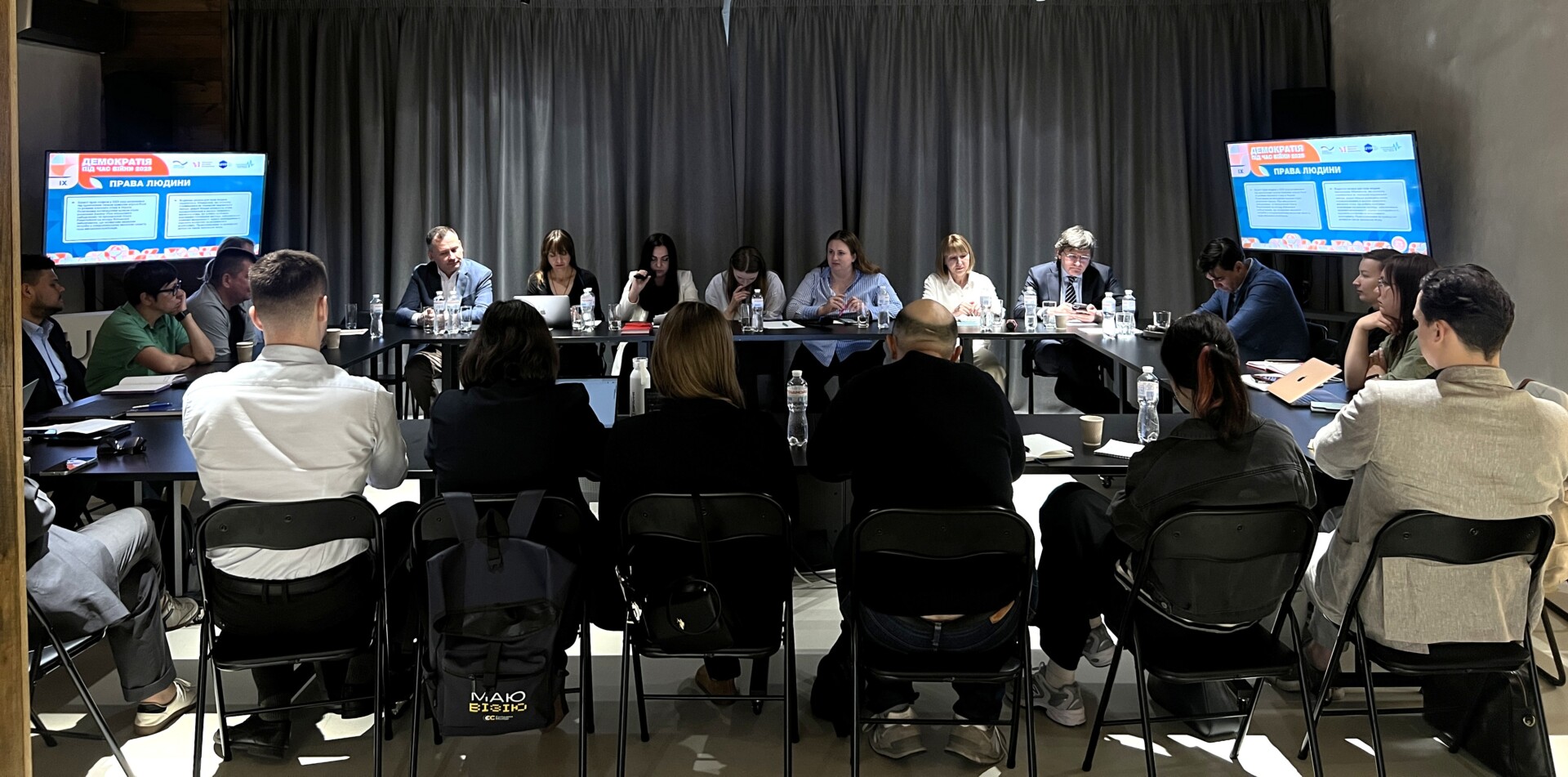
During the discussion, Anna Isichko, Deputy Director of the Centre for Democracy and Rule of Law, emphasised that in times of war, civil society remains one of the key factors underpinning democratic resilience and public oversight of government.
The report specifically notes that human rights protection in Ukraine continues to evolve under the dual pressure of the full-scale war and the prolonged period of martial law. Among the priorities identified by the authors are strengthening the independence of the Military Ombudsman institution, reforming the Office of the Ukrainian Parliament Commissioner for Human Rights in line with international standards, protecting human rights defenders, and aligning state human rights policy with Ukraine’s obligations under the EU accession process.
The 2025 report is available here.
Last year, DRI also presented a study on the state of democratic institutions during wartime, involving representatives of civil society and the human rights community, including ZMINA. At that time, Tetiana Pechonchyk noted that the human rights section of the report focused primarily on the activities of the Ukrainian Parliament Commissioner for Human Rights as the key institution responsible for human rights protection. Among the positive trends, the Head of the Board of ZMINA highlighted the growing number of complaints submitted to the Ombudsman, as well as the strengthening of the Ombudsman’s regional network of representative offices.