Third Czech–Ukrainian Discussion Forum held in Prague: Onysiia Syniuk discussed the systematic nature of Russian crimes and accountability
The third Czech–Ukrainian Discussion Forum took place in Prague on 7–8 September 2026, focusing on security and defence, Ukraine’s recovery and progress towards EU membership, business cooperation between the two countries, and war crimes, law and accountability.
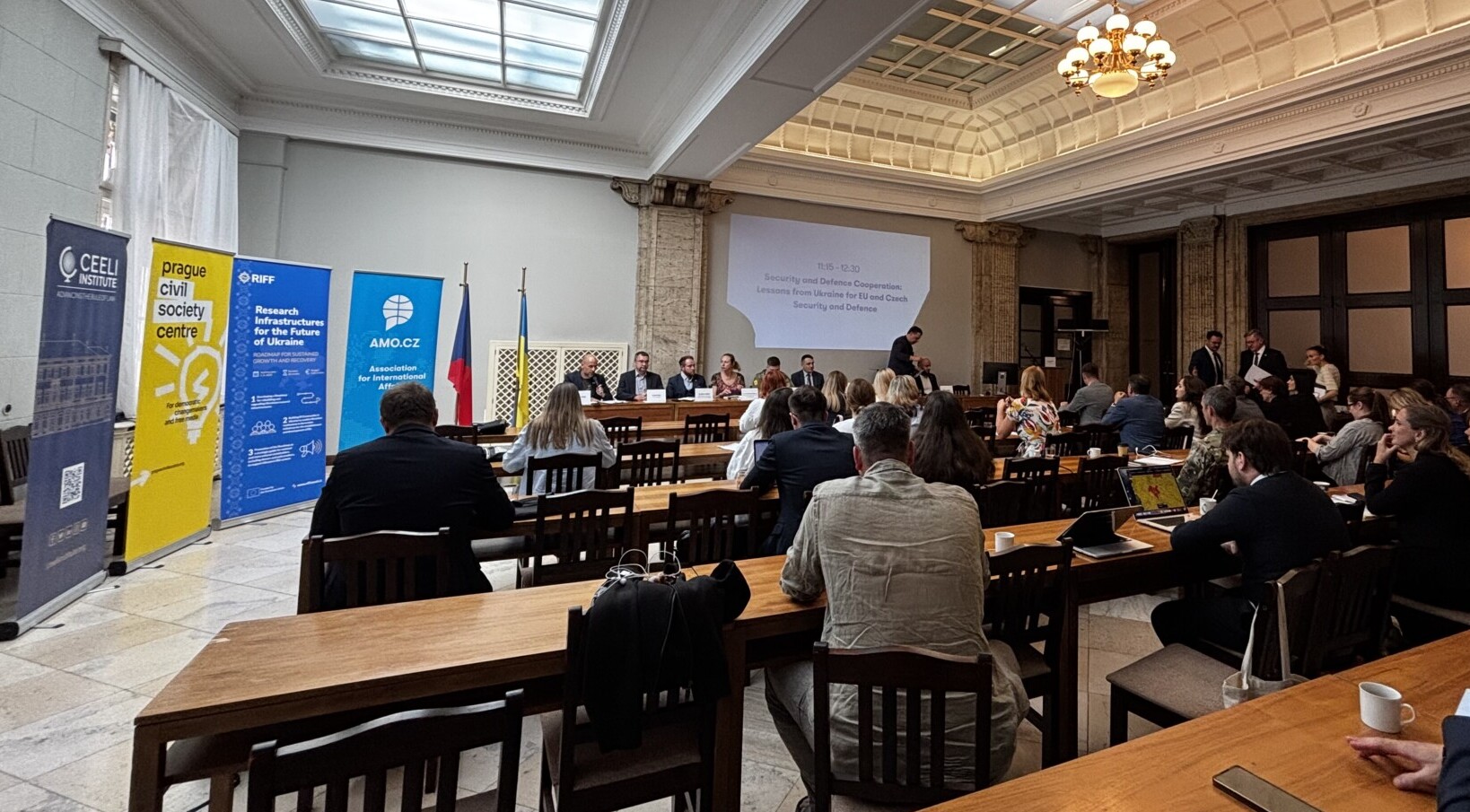
The forum brought together representatives of Czech and Ukrainian organisations, state institutions and others working to support Ukraine. The main sessions on 8 September took place at the Czech Ministry of Industry and Trade. Onysiia Syniuk, Head of the Research Department at the Human Rights Centre ZMINA, spoke on the panel “War Crimes, Law and Accountability”, organised by the CEELI Institute.
In her remarks, Syniuk discussed the need to move beyond documenting individual Russian crimes to analysing them as part of Russia’s systematic state policy. This approach, she explained, is needed in particular to investigate crimes against humanity and establish that they have been committed. It involves identifying not only the direct perpetrators but also the commanders and political leaders who support this policy and ensure its implementation.
 Ondřej Kundra, journalist; Onysiia Syniuk; Robert Strang, Executive Director of the CEELI Institute; and Petr Pojman, criminologist, political analyst and founder of the Team4Ukraine initiative
Syniuk also highlighted Russia’s violation of the law of occupation. She explained that Russia treats occupied Ukrainian territories as its own, even though occupation neither changes their status nor transfers sovereignty to the occupying power. Many other crimes and violations stem from this breach. She cited unlawful detentions, enforced disappearances, torture and policies towards children as examples of practices that have changed since Russia’s illegal incorporation of the occupied territories.
“At the start of the full-scale invasion, unlawful detentions were largely carried out by Russian military personnel. Over time, Russian law enforcement agencies became increasingly involved in the repression. Following the attempted annexation, Russia established a full network of security and law enforcement agencies in the occupied territories, answerable to its central authorities. Some of those previously detained unlawfully are now facing formal charges, and their cases are being referred to court, giving the repression a veneer of legality”, said ZMINA’s Head of the Research Department.
Syniuk pointed to Russia’s treatment of Ukrainian children as another example of how its policy has evolved. While removing children from occupied territories was one of its main methods in the early stages, Russia has now introduced a systematic policy aimed at erasing Ukrainian identity within these territories. Schools now follow Russian curricula, the network of militarised youth organisations is expanding, and Russian political leaders openly describe these organisations’ role in preparing future recruits for the Russian army.
“Understanding how the situation has evolved is crucial: it helps us identify Russia’s objectives, determine which violations require accountability and which rights will need to be restored, and anticipate Russia’s next steps”, Syniuk said.
 Robert Strang, Onysiia Syniuk, Petr Pojman, Ondřej Kundra
She stressed that the peace process and efforts to hold Russia accountable for international crimes must proceed in parallel. Accountability for these crimes must not become a bargaining chip in peace agreements.
Finally, Syniuk emphasised the importance of supporting the International Criminal Court as the only institution currently able to prosecute Russia’s most senior officials, who enjoy immunity.