ZMINA and OMCT submitted a report to the UN Committee against Torture on Ukraine’s implementation of recommendations issued at its 82nd session
The Human Rights Centre ZMINA, in cooperation with the World Organisation Against Torture (OMCT), has prepared a submission to the UN Committee against Torture on Ukraine’s implementation of the recommendations the Committee identified as priorities for follow-up.
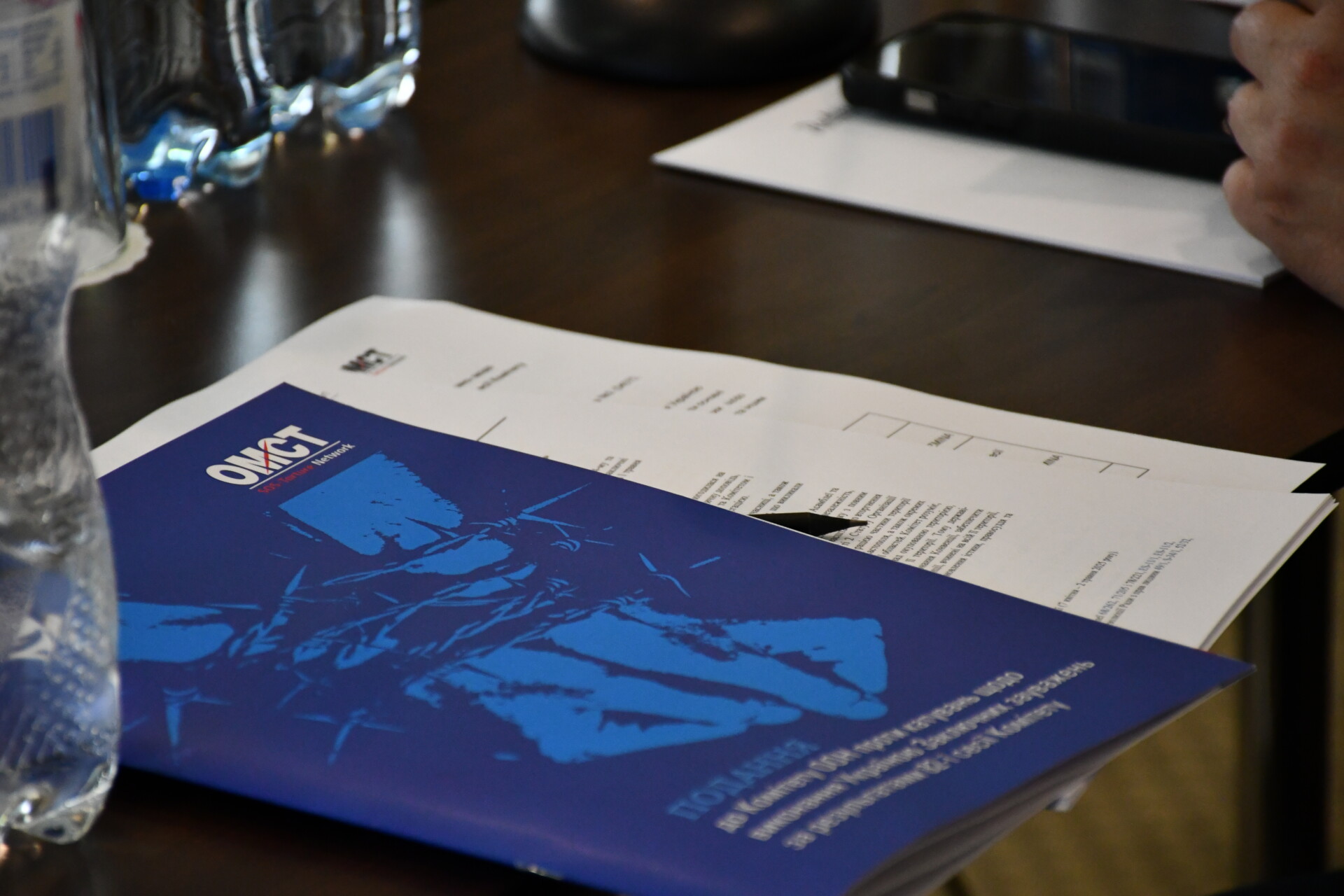
This submission builds on ZMINA and OMCT’s ongoing work to monitor Ukraine’s implementation of the UN Committee against Torture’s recommendations and compliance with its obligations under the Convention against Torture and Other Cruel, Inhuman or Degrading Treatment or Punishment. In May 2025, a coalition comprising ZMINA, the Ukrainian Legal Advisory Group, Ukraine Without Torture and Freerights, with support from the World Organisation Against Torture (OMCT), submitted an alternative report to the Committee on Ukraine’s efforts to combat torture. The coalition subsequently presented the report in Geneva during the review of Ukraine’s seventh periodic report.
Following the review, the Committee adopted its concluding observations, setting out recommendations for Ukraine as a State party to the Convention.
The Committee selected certain recommendations for a separate follow-up procedure, requiring the State to demonstrate progress in implementing them as a matter of priority and within a short timeframe, and to report separately on that progress. Following the review of Ukraine’s seventh periodic report, the Committee identified Paragraphs 12(c), 18(a), 18(b) and 24(c) of its concluding observations as priorities for follow-up. These concern detainees’ right to a medical examination by an independent doctor, procedural safeguards for prisoners of war, holding superiors accountable for torture committed by their subordinates, and safety in places of detention. Under this procedure, civil society can provide its own assessment through a submission to the Committee.
Information submitted by civil society, including the submission prepared by ZMINA and OMCT, is available here.
Drawing on findings from monitoring visits by the National Preventive Mechanism, responses to information requests, legislation and case law, ZMINA and OMCT assessed each of the four recommendations as partially implemented by Ukraine:
- Medical examinations for detainees – despite a stronger regulatory framework, this right is not adequately upheld in practice. This is due to unrecorded detention, including when people are taken to Territorial Centers of Recruitment and Social Support, and the lack of designated officers responsible for safeguarding detainees’ rights in some units of the police, the National Anti-Corruption Bureau of Ukraine (NABU) and the State Bureau of Investigation (SBI).
- Safeguards for prisoners of war – there are still no specific departmental regulations governing their detention, and a recent Supreme Court ruling revealed that prisoners of war had been questioned without procedural safeguards.
- Accountability of superiors for torture – efforts to hold senior prison officials accountable are only beginning to take shape, and such cases remain isolated. A further risk is the spread of “hidden” torture (intimidation and threats without direct physical violence), which is harder to detect, document and prove.
- Safety in places of detention – staff training now covers the principles of dynamic security, but video recording of the actions of Internal Security Department officers remains optional rather than mandatory.
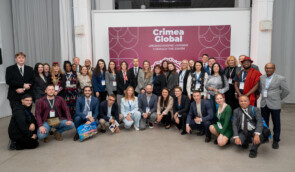
 Participants in an expert discussion of the submission to the UN Committee against Torture on Ukraine’s implementation of the concluding observations issued following the Committee’s 82nd session
Maryna Demura, a human rights defender, noted that the monitoring findings show that, despite tangible legislative progress, the central problem remains the gap between law and practice.
“We should acknowledge the positive steps the State has taken by creating posts for officers responsible for safeguarding detainees’ rights, requiring prison staff to display identification numbers and providing adequate material conditions for prisoners of war. Yet these measures do not currently protect people when they are most vulnerable: at the moment of detention. Our greatest concern is the practice of taking people to Territorial Centers of Recruitment and Social Support without documenting it. When their actual deprivation of liberty goes unrecorded, they are left without any procedural safeguards, including the right to medical care. Similarly, the lack of mandatory video recording of the actions of the Internal Security Department in prisons leaves room for ill-treatment that is difficult to prove”, she stressed.
The full submission is available in Ukrainian and English.
For reference
The UN Committee against Torture is a UN treaty body that monitors States parties’ compliance with the Convention. Every few years, States report to the Committee on their implementation of the Convention. After reviewing each report, the Committee adopts concluding observations containing recommendations.