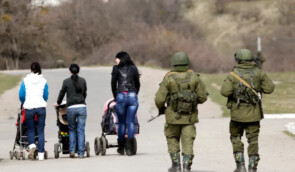
Issues concerning residents of occupied territories must be part of negotiations – ZMINA
On 4 September 2026, a roundtable with newly appointed diplomats from the US Embassy in Ukraine took place in Kyiv to discuss current human rights challenges amid Russia’s aggression. During the meeting, Tetiana Pechonchyk, Head of the Board of the Human Rights Centre ZMINA, outlined how issues concerning Ukraine’s temporarily occupied territories and the protection of their residents should be taken into account in any potential negotiations to end the war.
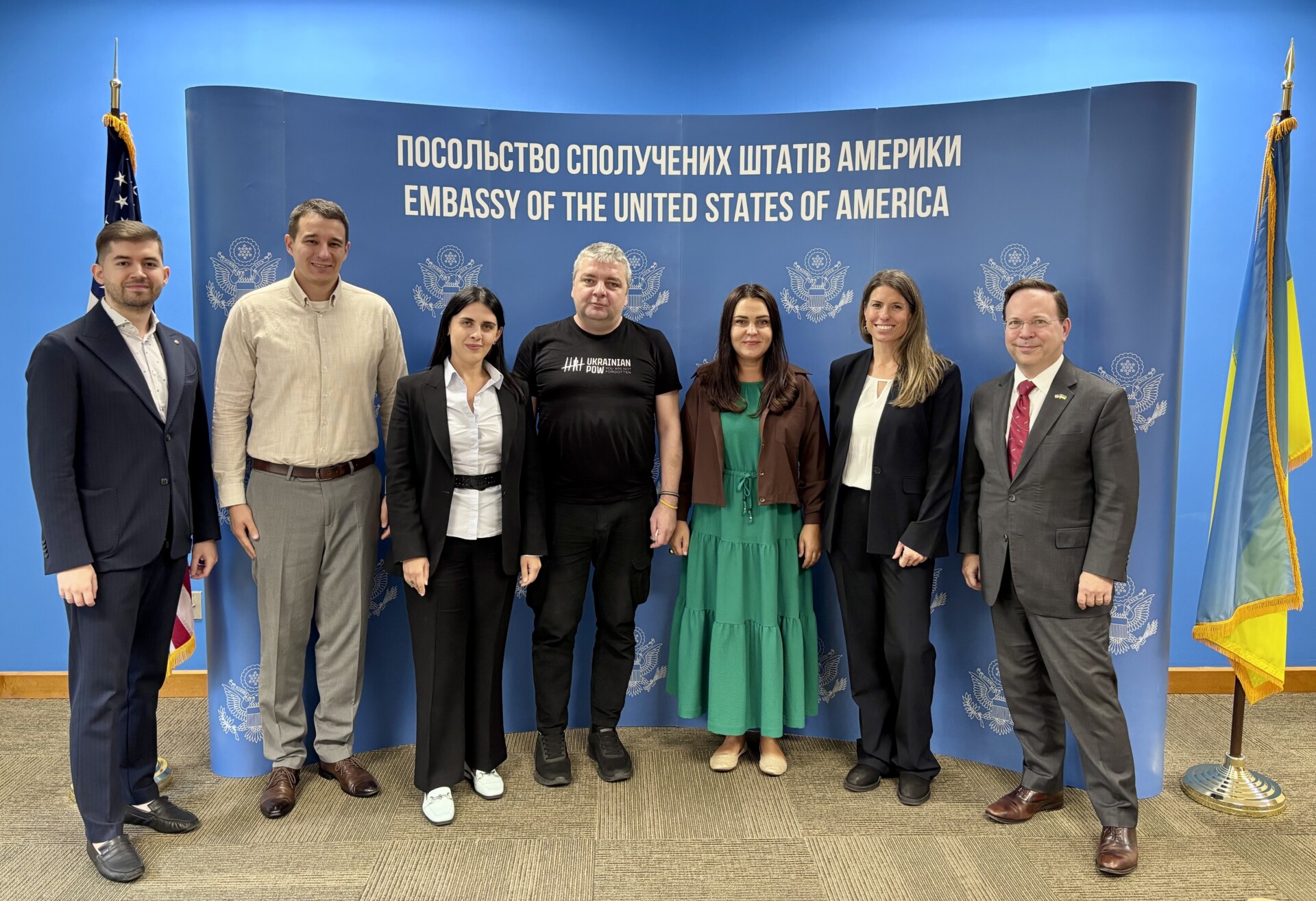
Pictured in the centre, from left to right: Liubov Smachylo (Media Initiative for Human Rights), Maksym Butkevych (Principle of Hope) and Tetiana Pechonchyk (ZMINA), alongside staff from the US Embassy in Ukraine
ZMINA stresses that any agreements, whether a ceasefire, a truce, a “freeze” in the conflict or another arrangement, must go beyond military and territorial issues. Specific humanitarian obligations for Russia as the occupying power must form a distinct part of the negotiations to ensure the basic rights and safety of people who continue to live in Ukraine’s temporarily occupied territories (TOT).
In 2025, the Coalition of Organisations Dealing with the Protection of the Rights of Victims of the Armed Aggression against Ukraine twice publicly called for the inclusion of the “human dimension” in the negotiating agenda.
During the roundtable at the US Embassy, Pechonchyk outlined a more detailed approach to prioritising these demands. The focus is on measures that can provide immediate relief to people living under prolonged occupation, for which concrete implementation mechanisms can be proposed, and on which practical agreements could be reached.
One critical issue is ensuring that Ukrainian citizens can leave the temporarily occupied territories safely and on an ongoing basis, without having to travel through Russia or hold Russian documents. Humanitarian corridors could provide an initial mechanism, but in the longer term, lasting arrangements must be established for crossing the line of contact, along with corresponding checkpoints for entering and leaving the occupied territories.
Another absolute priority is the release and return of Ukrainian civilians unlawfully held by Russia in the occupied territories and in Russia itself. Particular emphasis was placed on the need to grant independent international missions access to places of detention where available information suggests Ukrainian prisoners of war and civilians may be held. Such monitoring is essential both to assess detention conditions and to establish the whereabouts of Ukrainian citizens, information that is often unavailable at present.
Other issues that must remain on the negotiating agenda include safe and independent humanitarian access to the occupied territories, particularly to provide medical care and medicines, and an end to the recruitment of residents of occupied territories into the Russian armed forces. Human rights defenders also propose discussing mine clearance at civilian infrastructure sites, the preservation and repatriation of the bodies of those killed, and an end to the unlawful seizure of individuals’ property in the occupied territories.
The central message is that a potential cessation of hostilities would not, in itself, end human rights violations in the occupied territories. Ukraine and its international partners must therefore begin developing a concrete humanitarian agenda and mechanisms for implementing it now. This approach aims to alleviate people’s suffering while they await an end to the occupation or an opportunity to leave for Ukrainian government-controlled territory.
For reference: the Coalition comprises the NGO Donbas SOS, NGO CrimeaSOS, CF Right to Protection, CF East SOS, NGO Civil Holding GROUP OF INFLUENCE, the Human Rights Centre ZMINA, CF Stabilization Support Services, the Crimean Human Rights Group and NGO Crisis Insight.