Second Pathways to Peace conference held in Toronto: ZMINA joined discussions on return of unlawfully detained civilians
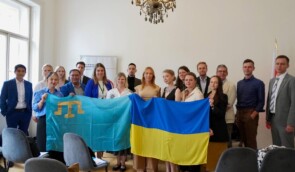
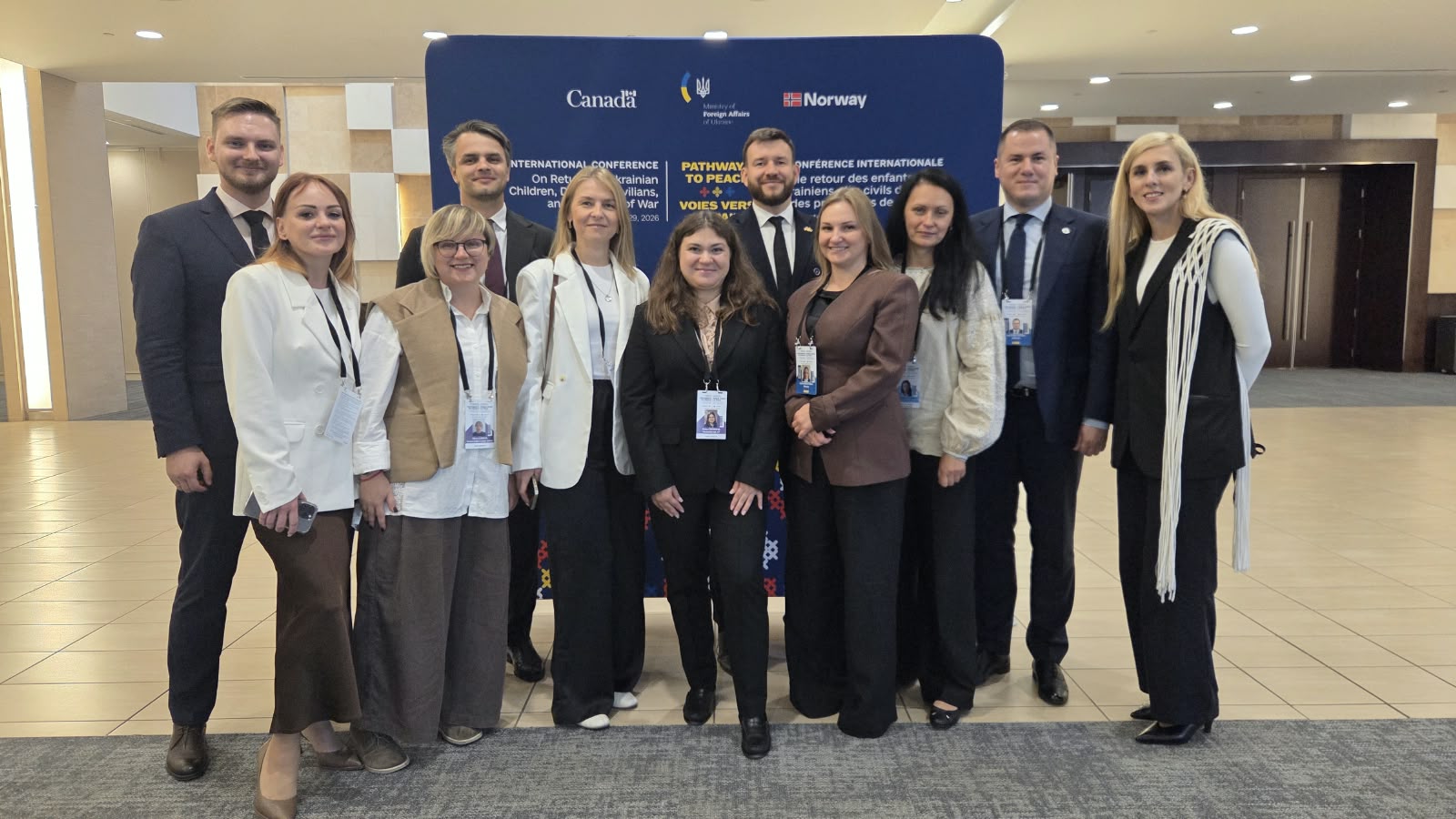
On 28–29 September 2026, Ukraine, Canada and Norway jointly hosted the second Pathways to Peace international conference in Toronto, Canada, focusing on the return of Ukrainian children, unlawfully detained civilians and prisoners of war. The conference brought together 83 delegations representing 72 countries and 11 international organisations.
 Photo: Bring Kids Back UA
 Participants discussed international coordination to secure the return of Ukrainian children, civilians and prisoners of war, access by international humanitarian organisations, as well as their protection, rehabilitation and reintegration.
The first day featured plenary sessions and speeches by Ukrainians who had experienced Russian occupation and captivity. Among those who shared their stories were Yulian Pylypei, a Ukrainian Marine Corps officer who defended Mariupol and was later released from Russian captivity, as well as Matvii Chos and a young woman from temporarily occupied Crimea, who spoke about life under Russian occupation and the militarised education system.
 Yulian Pylypei
 Andrii Sybiha, Ukraine’s Foreign Minister, also addressed the participants in a video message. He stressed the systematic nature of Russia’s crimes against Ukrainians in captivity and called on international partners to increase pressure on Russia to secure the return of those unlawfully detained.
The second day of the conference focused on three areas: the return of Ukrainian children, unlawfully detained civilians and prisoners of war. Representatives of states, the Ukrainian authorities, international organisations and civil society took part in the thematic sessions. Participants discussed practical mechanisms for tracing people, determining their whereabouts, securing access to them and bringing them home.
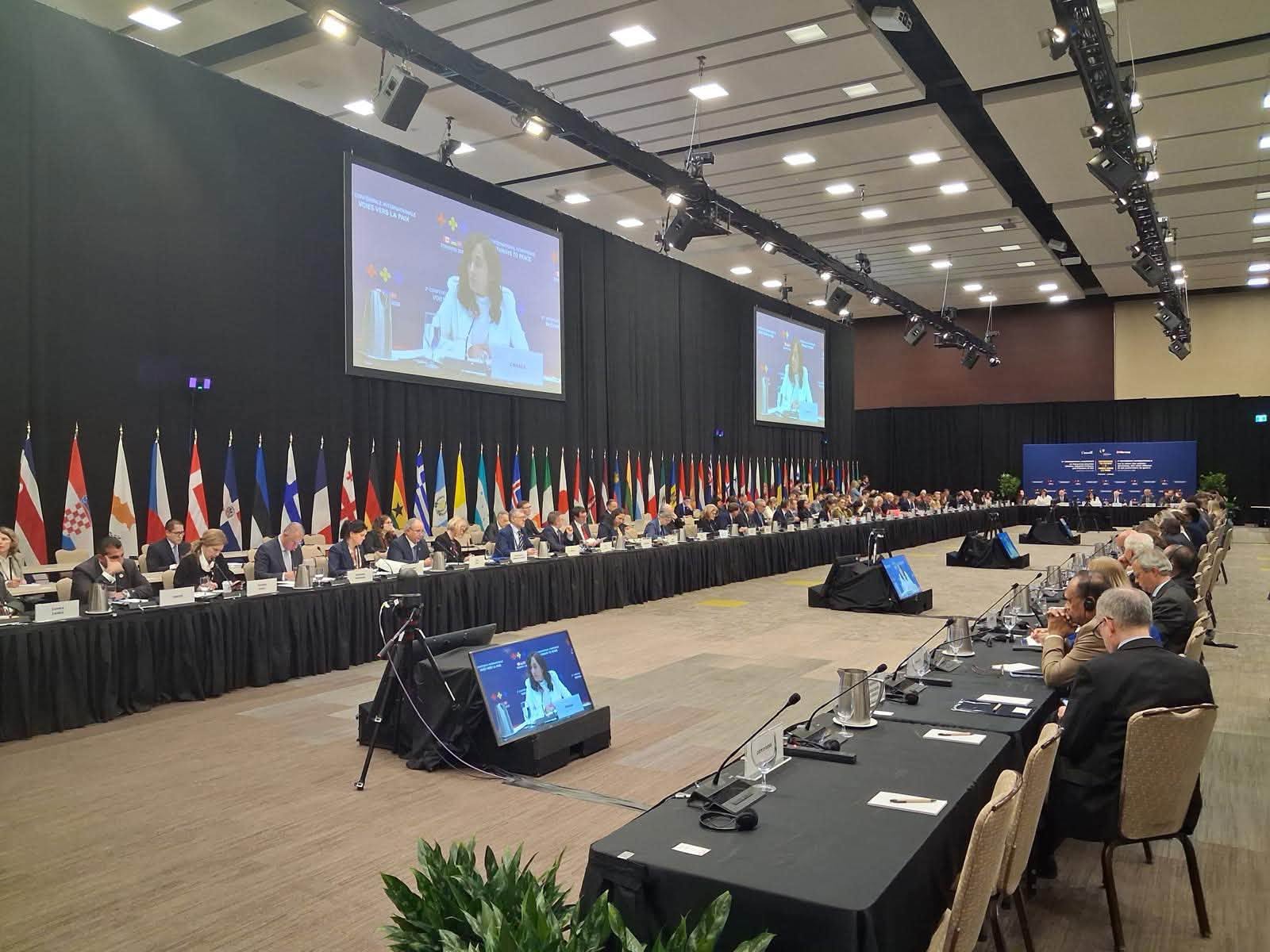
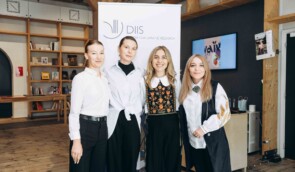
Alena Lunova, Advocacy Director at the Human Rights Centre ZMINA, represented the organisation at the conference and took part in a thematic session on Ukrainian civilians unlawfully detained by Russia. The session was held on 29 September as a closed-door discussion chaired by Norway. Representatives of states, the Ukrainian government and international organisations, as well as civil society experts, were invited to take part.
During the session, participants focused on Ukrainian civilians unlawfully detained by Russia on its territory and in the temporarily occupied territories of Ukraine. Key issues included tracing detainees and determining their whereabouts, obtaining information about them, access for international humanitarian organisations to places of detention, and mechanisms for their return.
Alena Lunova stressed that civilians unlawfully detained by Russia are an extremely diverse group, including people persecuted for resisting the occupation, journalists, medical workers, local authorities, older people and those who are seriously ill.
ZMINA’s Advocacy Director added that Ukraine uses available information about the whereabouts and condition of detained civilians to compile lists of unlawfully detained people and works to secure their return through various channels, including direct talks between the Ukrainian and Russian ombudspersons and engagement with partner countries.
Lunova also stressed that international efforts must be coordinated to secure the release of civilians. She said that securing access for international organisations to places where Ukrainians are held in Russia and the temporarily occupied territories should be one of the immediate priorities. According to Lunova, at least 186 such places of detention have been identified, although there may be more.
“Access for international missions and the International Committee of the Red Cross is critical. It should be seen not only as a means of monitoring and documenting violations, but first and foremost as a means of protecting the lives and health of those being held”, she stressed.
Alena Lunova also called for concrete mechanisms for the release of civilians, including grouping people on existing lists and identifying members of the international coalition that could take responsibility for their return. She said priority should be given to medical workers, older women and OSCE representatives who have been unlawfully detained by Russia for a long time.
 Marharyta Shabanova, wife of imprisoned OSCE staff member Dmytro Shabanov
 At the end of the conference, participants adopted the Toronto Pledge, setting out joint commitments for further action to secure the return of Ukrainian children, unlawfully detained civilians and prisoners of war.
Regarding unlawfully detained civilians, participants condemned Russia’s practice of unlawful detention and called on Russia to provide information about their whereabouts, allow them to communicate with their families and lawyers, and release them unconditionally. States agreed to step up efforts to document cases of unlawful detention, intensify diplomatic efforts and pursue practical mechanisms for the release and return of civilians.
Regarding Ukrainian children, participants reaffirmed their support for the Bring Kids Back UA initiative and the work of the International Coalition for the Return of Ukrainian Children. States committed to supporting efforts to trace children and determine their whereabouts, verify individual cases, expand practical mechanisms for their return, and further develop rehabilitation and reintegration programmes.
Regarding prisoners of war, participants called on Russia to comply with international humanitarian law, grant international organisations access to places of detention, provide complete lists of prisoners of war and investigate cases of executions and torture.
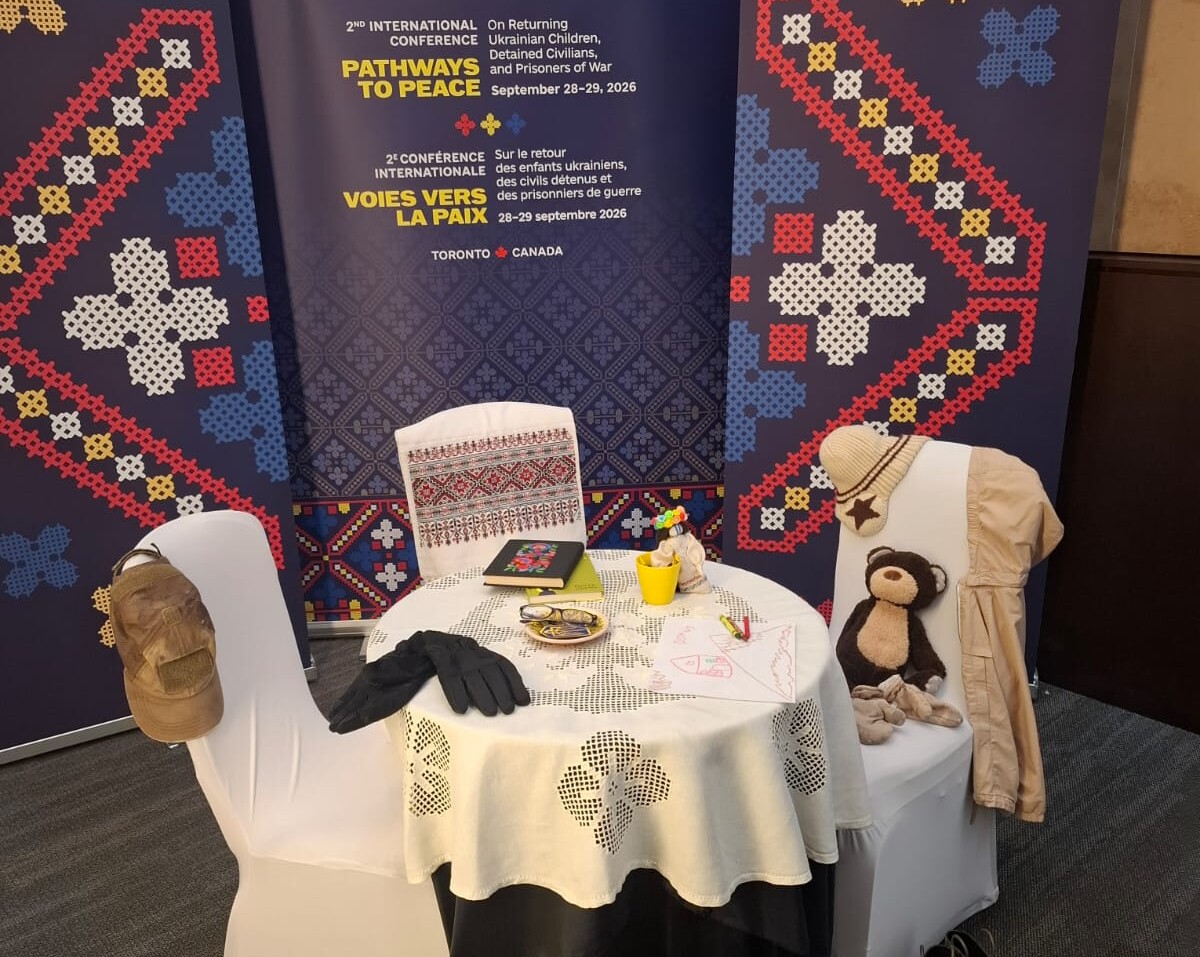
The conference also resulted in new international steps to support the return of Ukrainian children. The EU imposed sanctions on 10 individuals and 17 organisations involved in the deportation, forcible transfer and indoctrination of Ukrainian children.
Honduras joined the International Coalition for the Return of Ukrainian Children as its 52nd member, while two more countries joined the Safe Pathways Home mechanism. A total of 54 delegations signed the conference’s joint communiqué, which remains open for other states and international organisations to join.
On 11 May 2026 in Brussels, the Coalition for the Return of Ukrainian Children presented new mechanisms reflecting a joint statement by 40 Ukrainian civil society organisations containing 12 specific recommendations for coalition member states. In the statement, the organisations called on coalition members to increase political and sanctions pressure on Russia, support mechanisms to identify Ukrainian children and facilitate their return, ensure the enforcement of International Criminal Court arrest warrants, and expand support for the reintegration and rehabilitation of children who have returned to Ukraine.