Yelyzaveta Sokurenko drew the OSCE’s attention to Russia’s persecution of Ukrainian civilians at the Warsaw Human Dimension Conference
On 14 October 2026, a side event titled “Russia’s Policy of Unlawfully Detaining Ukrainian Civilians: Implications for Lasting Peace” was held in Warsaw during the OSCE Warsaw Human Dimension Conference. The event was co-organised by the Human Rights Centre ZMINA, the Ukrainian Legal Advisory Group (ULAG), the Ukrainian Archive of Mnemonic and the Norwegian Helsinki Committee.
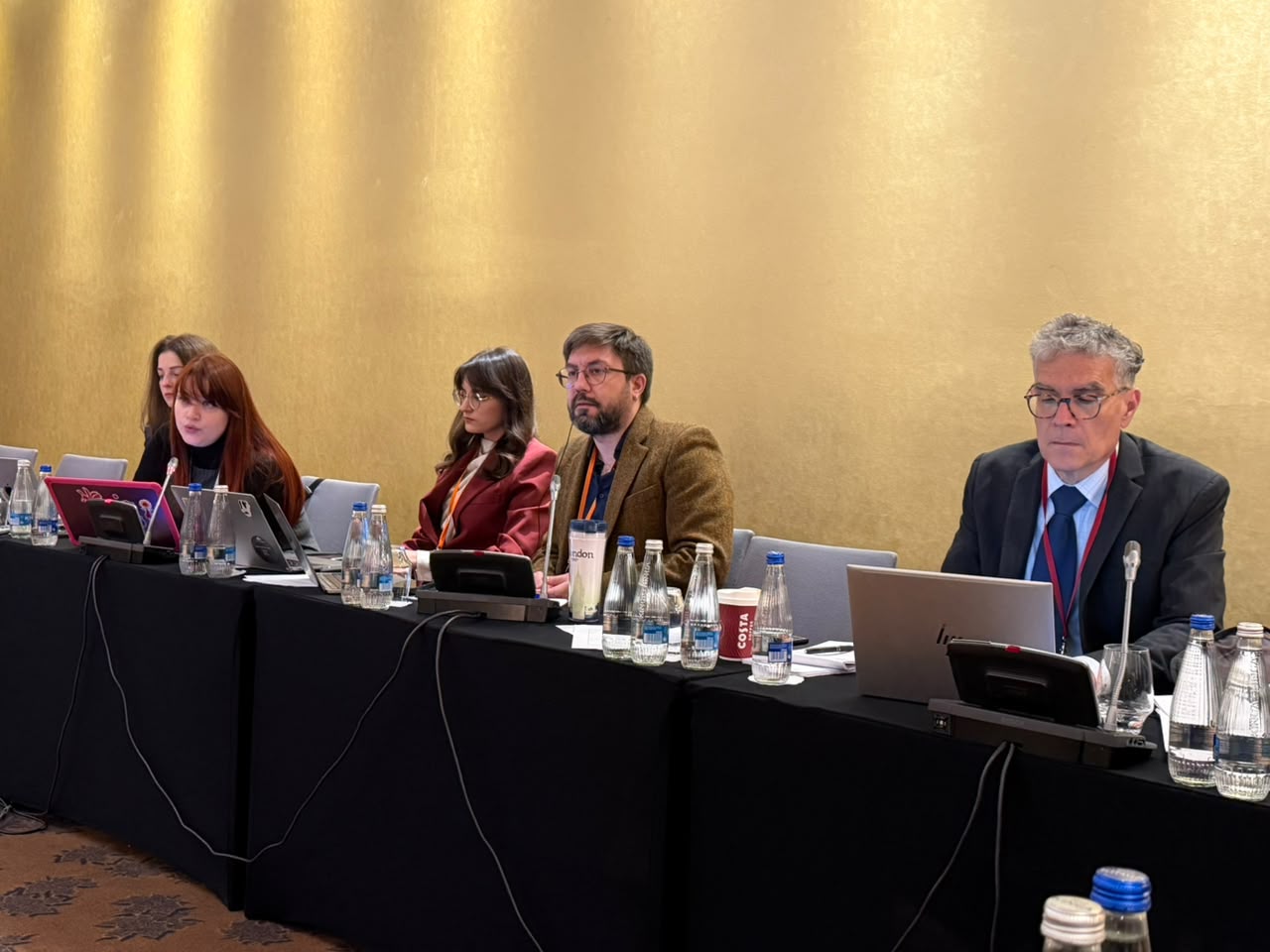
Participants discussed Russia’s systematic practice of unlawfully detaining Ukrainian civilians, its links to Russia’s policies of occupation and repression, and the need to secure the release of those unlawfully detained and hold those responsible to account. Particular attention was paid to how the treatment of civilians affects prospects for ending the war and establishing an effective international mechanism to monitor a potential ceasefire.
The speakers were Anton Naumliuk, an independent journalist cooperating with Mnemonic’s Ukrainian Archive; Ievgeniia Kapalkina, a lawyer at ULAG; and Yelyzaveta Sokurenko, Head of the International Crimes Documentation Department at the Human Rights Centre ZMINA. The discussion was moderated by Anna Farifonova, Coordinator of the International Justice Programme at the Helsinki Foundation for Human Rights.
In her remarks, Yelyzaveta Sokurenko stressed that the arbitrary detention and enforced disappearance of Ukrainian civilians should be viewed not only as individual international crimes but also as part of a broader pattern of persecution of civilians in occupied territories.
For more than a decade, ZMINA has monitored human rights violations in the occupied territories of Ukraine and documented international crimes, including arbitrary detention, enforced disappearance, torture and the politically motivated criminal prosecution of civilians.
According to Yelyzaveta Sokurenko, documented cases show that Russian occupation forces often detain people not for specific actions but because of their previous professional activities, political views, ties to the Ukrainian state or expressions of Ukrainian identity.
The victims include local government officials, former military personnel and law enforcement officers, civil society activists, volunteers, journalists and ordinary residents of occupied territories. People could be detained for working in Ukrainian government institutions, taking part in pro-Ukrainian demonstrations, having contact with Ukrainian military personnel, posting on social media, making transfers through Ukrainian banks or simply because of information found on their phones.
“People were persecuted not only for what they had allegedly done, but also for who they were or who the occupation authorities believed them to be,” said the Head of the International Crimes Documentation Department at ZMINA.
She also highlighted how Russia’s repressive practices in occupied territories have evolved. Following the full-scale invasion in 2022, Russian military and security forces carried out mass arbitrary detentions during so-called filtration procedures, searches and raids. People were held in basements, seized police stations, military commandant’s offices and other makeshift detention facilities, often without access to lawyers or contact with their families.
Such detentions were used not only to identify people whom the occupation forces suspected of involvement in resistance activities. They also served to gather information about local residents, assess their loyalty, intimidate communities and prevent potential resistance.
As an example, Yelyzaveta Sokurenko cited testimonies from victims in the Kharkiv region who described Russian forces’ plans to detain as many local residents as possible. One victim reported that Russian forces wanted to force almost every man in Kupiansk through a detention centre to prevent possible uprisings.
“Arbitrary detention was used as a tool to establish control over occupied territories, rather than merely as a response to specific actions by individuals. Over time, alongside mass detentions, the authorities increasingly resorted to institutionalised forms of persecution – politically motivated criminal proceedings on charges of espionage, sabotage, terrorism, treason and other offences under Russian law,” she stressed.
According to Yelyzaveta Sokurenko, in some cases, civilians were detained in 2022 and held incommunicado for months or even years before being formally charged much later. The criminal prosecution was thus intended to create an appearance of legality for their continued detention.
“The institutionalisation of repression does not mean that earlier practices have ceased. Rather, it reflects an expansion of the methods used to persecute people and the involvement of various state institutions – from the military and intelligence services to investigative bodies, prosecutors, courts and the penitentiary system,” the ZMINA representative explained.
However, Yelyzaveta Sokurenko stressed that not every instance of arbitrary detention or enforced disappearance automatically constitutes persecution as a crime against humanity. For such a legal classification, all elements required under international criminal law must be established, including the intentional and severe deprivation of fundamental rights on discriminatory grounds and the context of a widespread or systematic attack against a civilian population.
This approach has practical implications for investigations, as it allows investigators to examine not only the actions of direct perpetrators but also how the entire system of repression operates – from identifying groups of people to target and organising detentions to keeping people in custody and pursuing subsequent criminal prosecutions.
According to the Head of the International Crimes Documentation Department at ZMINA, investigations must establish the roles played by military personnel, members of the security forces, officials responsible for detention facilities, as well as investigative, prosecutorial and penitentiary authorities. A separate challenge is to establish the involvement of Russia’s senior political, military and security leadership in developing, coordinating and implementing this policy.
 Ievgeniia Kapalkina, Yelyzaveta Sokurenko, Anna Farifonova, Anton Naumliuk
 Anton Naumliuk presented the findings of a study into the abduction of Ukrainian civilians in Crimea, which he had conducted over the previous six months with the Ukrainian Archive team at the international human rights organisation Mnemonic.
The study covers cases of abduction dating back to the start of Russia’s occupation of Crimea in 2014, as well as cases in which civilians were detained in other occupied territories of Ukraine and subsequently transferred to the peninsula.
The research team identified at least 230 cases of abduction. Naumliuk emphasised that this figure includes only cases in which the victims could be identified by name. The actual number of people unlawfully detained may be significantly higher, as many have been held in secret for years, with their whereabouts concealed from their families, lawyers and the outside world.
“The abduction of Ukrainian civilians in occupied territories is part of a policy aimed at occupying, seizing and maintaining control over territory, and suppressing any signs of disloyalty or opposition to the occupation,” the journalist said.
According to Naumliuk, during the first months of the occupation, abductions were often carried out by members of pro-Russian armed groups. They targeted people perceived as a threat to the occupation authorities. Those abducted were often tortured and, in some cases, killed. Russian law enforcement agencies denied involvement in these incidents and failed to investigate them.
One of the first documented cases was the abduction of Crimean Tatar activist Reshat Ametov, who had protested against the occupation in Simferopol’s main square. He was forcibly taken away by men wearing military uniforms without insignia. Twelve days later, Ametov’s body was found bearing signs of torture.
According to the study, 23 people were abducted during the first months of the occupation. Five of them remain missing, while Reshat Ametov’s death was confirmed.
From late 2014 onwards, abductions gradually developed into an institutionalised system of repression involving officers of Russia’s Federal Security Service (FSB) and other state agencies. Researchers identified a further 20 such cases between late 2014 and the start of the full-scale invasion in early 2022. In 80% of these cases, the victims were Crimean Tatars who had shown disloyalty to the Russian authorities.
Anton Naumliuk explained that the system of abductions involved not only the direct perpetrators but also other institutions and individuals, including prosecutors, courts, detention facility officials and lawyers who collaborated with Russian security forces. A typical case began with a search conducted by security personnel, after which the person was taken to an undisclosed location. Relatives and independent lawyers were told that the person was not being held in any detention facility, while appeals to law enforcement and oversight bodies yielded no results.
According to the journalist, victims were sometimes held in basements, subjected to electric shocks and threatened with murder and sexual violence in an attempt to force them to confess to crimes they had not committed. Criminal proceedings and court trials were then used to create an appearance of legality for their detention.
The scale of abductions increased significantly following the start of the full-scale invasion. According to Anton Naumliuk, Crimea became one of the main locations where civilians abducted both on the peninsula and in other occupied territories of Ukraine were held.
The journalist also highlighted cases of people held incommunicado for years without formal charges. Among them is Oleksandr Babych, the mayor of Hola Prystan in the Kherson region, who was abducted at the start of the full-scale invasion. His whereabouts were concealed for three years; the only known detail is that he was taken to Russia. His subsequent fate remains unknown.
Anton Naumliuk concluded that the 230 documented cases of civilian abductions on the occupied peninsula do not reflect the full scale of the problem, as the actual number of people unlawfully detained is much higher.
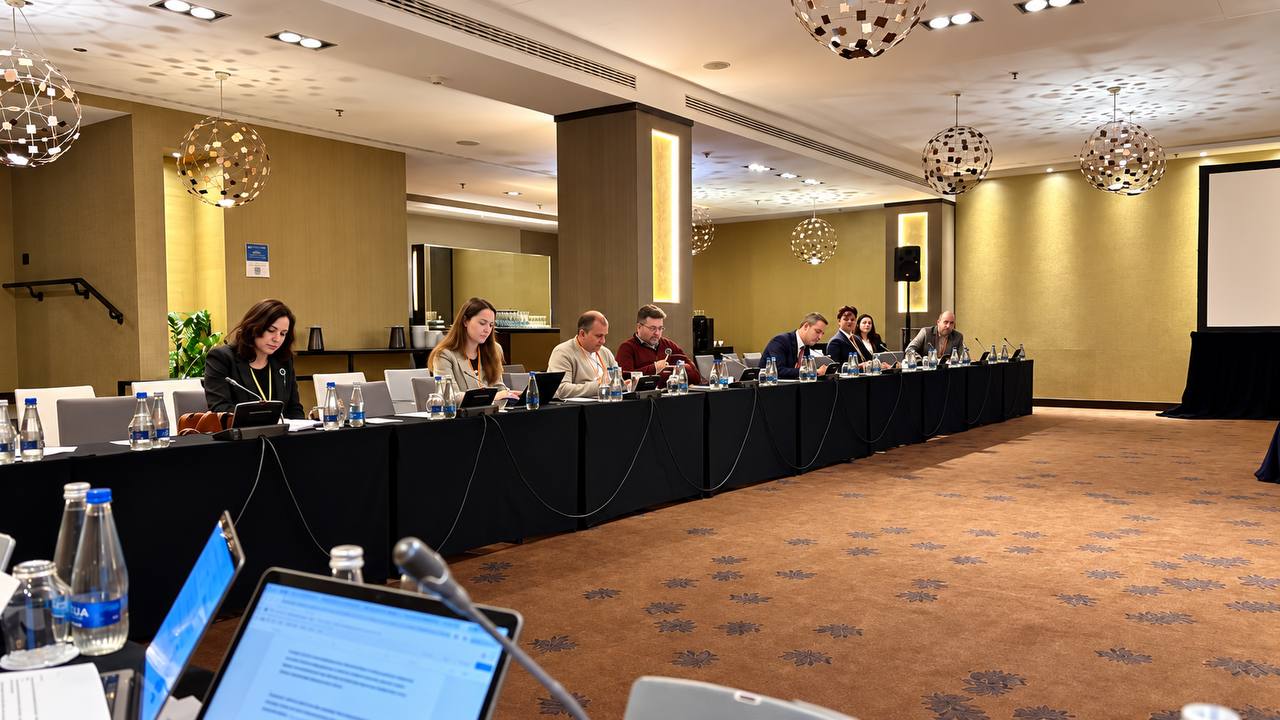
Ievgeniia Kapalkina focused on the legal and institutional lessons learned from the unlawful detention of civilians and the practical steps the OSCE and its participating States should take when preparing for potential ceasefire agreements.
She stressed that the detention of civilians during armed conflict must be assessed under international humanitarian law and international human rights law. Unresolved cases of unlawful detention and the failure to adequately address violations undermine the trust needed to implement future agreements.
The lawyer paid particular attention to the case of three former staff members of the OSCE Special Monitoring Mission to Ukraine – Dmytro Shabanov, Maksym Petrov and Vadym Golda. All three were carrying out official duties under the mission’s mandate and were entitled to functional immunity for acts performed in the course of their duties. Russia detained them in April 2022 in temporarily occupied Ukrainian territory and later convicted them on charges of espionage and treason.
According to Ievgeniia Kapalkina, the case concerns not only the rights of the three unlawfully detained individuals but also the safety and independence of future international monitoring missions.
“Lasting peace cannot be based on a ceasefire alone. It also requires addressing humanitarian issues, securing the release of unlawfully detained people and ensuring that violations receive proper legal assessment,” the lawyer stressed.
She noted that future international monitoring mechanisms must have clear guarantees for the safety of their personnel and the independence of their operations. International status alone is not enough to protect staff without effective procedures for responding to detention, intimidation or interference with their official duties.
Ievgeniia Kapalkina urged the OSCE and its participating States to continue calling for the release of the three former mission staff members, coordinate their efforts with Ukraine and raise the issue in international forums. Until they are released, efforts must focus on securing access to them, ensuring adequate detention conditions and medical care, and enabling regular contact with their families.
The ULAG lawyer also stressed that efforts to document violations and preserve evidence must continue regardless of any negotiations. The release of unlawfully detained civilians should not depend on the completion of proceedings to hold those responsible accountable. Equally, their release does not remove the need to investigate the crimes committed.
The speakers’ remarks demonstrated that the unlawful detention of Ukrainian civilians cannot be viewed merely as a series of isolated incidents. Documented practices point to the systematic nature of the repression Russia uses to suppress resistance in occupied territories.
 Ievgeniia Kapalkina, Anna Farifonova, Anton Naumliuk
 During her visit to Warsaw, Yelyzaveta Sokurenko also met with representatives of the OSCE diplomatic corps and international partners. These meetings provide an opportunity to discuss the documentation of human rights violations, the unlawful detention of Ukrainian civilians, international accountability for Russia’s crimes and further international efforts to secure the victims’ release and hold those responsible to account.
On 13 October, the Human Rights Centre ZMINA co-organised a side event titled “Under Fire: Journalists and Volunteers Facing New Challenges of Drone Warfare” during the OSCE Warsaw Human Dimension Conference. Participants discussed the threats posed by drone attacks to journalists and volunteers working near the front line and called on international partners to help protect them.