Who could be the next Ombudsman? ZMINA brought experts together to discuss building an independent human rights institution
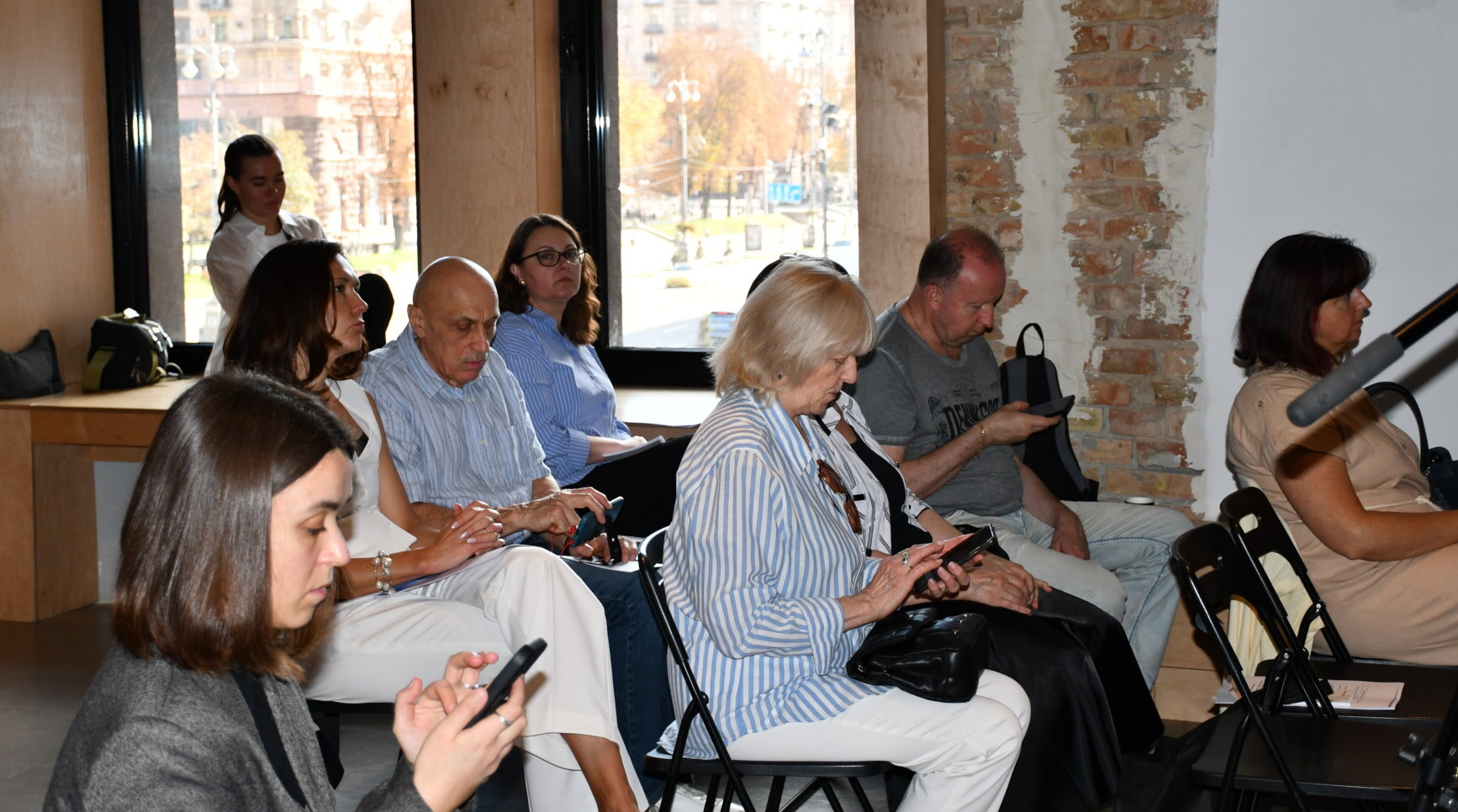
On 17 September 2026, the Human Rights Centre ZMINA held an expert discussion entitled “Who could be the next Ombudsman? International standards and Ukrainian practice for nominating and electing the Ukrainian Parliament Commissioner for Human Rights”. The event brought together human rights advocates, representatives of international organisations and experts in the field.
 Alena Lunova, Svitlana Kolyshko, Oleksandr Pavlichenko, Anastasiia Datsiv, Mykola Komarovskyi (joining online)
Participants discussed the procedure for selecting and appointing the Ukrainian Parliament Commissioner for Human Rights, particularly as the draft Law “On the Ukrainian Parliament Commissioner for Human Rights” (No. 13181, registered on 17 April 2025) is being prepared for its second reading.
Opening the event, Alena Lunova, Advocacy Director at ZMINA, stressed the importance of discussing the procedure for appointing the Ombudsman ahead of the second reading of the proposed new version of the Law on the Commissioner.
During the event, Anastasiia Datsiv, Advocacy Manager at ZMINA, presented the analytical note “Public participation in the procedure for the nomination of candidates and the election of the Ombudsman”. The note examines international standards and European practices for appointing the leadership of national human rights institutions, alongside Ukrainian practices for nominating and electing the Commissioner.
The analysis draws on key international instruments, including the Paris Principles, the General Observations of the Sub-Committee on Accreditation (SCA) of the Global Alliance of National Human Rights Institutions (GANHRI), the Venice Principles, and recommendations and resolutions of the Council of Europe’s Committee of Ministers and Parliamentary Assembly.
 Anastasiia Datsiv
According to Anastasiia Datsiv, all these standards require national human rights institutions to be independent. The procedure for selecting and appointing their leadership is crucial to ensuring that independence – it must be transparent, open, based on clear criteria and involve civil society.
The note also examines practices in Sweden, Norway, Poland, Bulgaria and Moldova. In Sweden, appointment procedures vary between human rights institutions but involve representatives of academia, the legal profession and civil society organisations. In Norway, parliament publicly announces the selection process and accepts nominations from all interested parties, including individual citizens.
The presentation was followed by an expert discussion. Participants examined how the Ombudsman is appointed in Ukraine, how the process could be improved and what role civil society could play.
Alena Lunova moderated the discussion.
The speakers were:
- Svitlana Kolyshko, Project Manager for Human Rights and Access to Justice at the United Nations Development Programme in Ukraine;
- Oleksandr Pavlichenko, Executive Director of the Ukrainian Helsinki Human Rights Union;
- Mykola Komarovskyi, lawyer at the Kharkiv Human Rights Protection Group;
- Anastasiia Datsiv, Advocacy Manager at the Human Rights Centre ZMINA.
Svitlana Kolyshko noted that the lack of a clear selection procedure had repeatedly called into question the independence and legitimacy of the Ombudsman institution. In her view, this concerns not only trust in the individual holding the office but also trust in the institution as a whole.
“If questions about the legitimacy of the appointment remain unresolved, the new Commissioner may need to spend the first six months to a year rebuilding trust and establishing relationships with civil society”, said Svitlana Kolyshko.
 Svitlana Kolyshko
She recalled that reforming the procedure for appointing the Ombudsman was not a new topic of discussion. Since 2009, international recommendations have repeatedly highlighted the need to improve it. According to Kolyshko, earlier discussions had already produced proposals for a procedure involving civil society, but parliament did not take these into account in its subsequent deliberations.
She also noted that the Ombudsman institution currently holds “A” status accreditation, but recommendations concerning the appointment procedure and financial independence remain relevant.
Mykola Komarovskyi highlighted the provisions of draft law No. 13181 and opportunities to revise it ahead of its second reading. In his analysis for the Kharkiv Human Rights Protection Group, he examined the procedure for appointing the Commissioner as a key factor in ensuring the institution’s independence. As currently drafted, the bill allows nominations only from the Chairperson of the Verkhovna Rada or a group comprising at least one quarter of parliament’s constitutionally prescribed membership (113 MPs). It makes no provision for an open competition, public consultations or civil society involvement in the selection process.
During the expert discussion, Mykola Komarovskyi stressed the need to reform this procedure and ensure greater civil society participation.
“The central issue is the appointment of the Commissioner. The appointment procedure needs substantial revision”, Komarovskyi said.
He suggested introducing an open selection process, broadening the range of those entitled to nominate candidates and reviewing the parliamentary committee’s role in the process.
Oleksandr Pavlichenko suggested examining how the existing procedure could work in practice and whether the opportunities to nominate independent candidates under current legislation are being fully used.
He noted that civil society had sought to participate in the election of the Commissioner on several occasions over the years, but had not always been able to meaningfully influence the process.
According to Pavlichenko, improving the situation requires three things: political will to support the Ombudsman institution, an appropriate legal framework and effective use of the mechanisms available under the law.
He also stressed the need to clearly define the Ombudsman’s role.
“The Ombudsman is a mediator between the state and the individual, not a prosecutor”, Pavlichenko said. In his view, strengthening the institution should not simply mean granting it punitive or coercive powers, as its influence rests primarily on its authority and its ability to bring issues to public attention.
 Oleksandr Pavlichenko
Anastasiia Datsiv discussed how European integration offers Ukraine opportunities to improve its national human rights protection system and strengthen the Ombudsman institution. She highlighted the importance of Ukraine joining the European Union Agency for Fundamental Rights and fulfilling its rule of law commitments.
“European practices are not perfect, but Ukraine now has an opportunity to use this process of transformation to build an effective model and perhaps set a higher standard”, she said.
The participants concluded by stressing the need to further improve the legislation and practice governing the election of the Commissioner, particularly by formally establishing a transparent procedure and a role for civil society in the process.
Read the full analytical note “Public participation in the procedure for the nomination of candidates and the election of the Ombudsman” in Ukrainian and English.