ZMINA held a roundtable discussion and presented a study on prisoners’ access to justice in Ukraine
On 12 June 2026, Human Rights Centre ZMINA held a roundtable discussion during which its experts presented the analytical report “Prisoners’ access to justice: national legislation and practice” and discussed current challenges related to the exercise of this right in Ukraine.
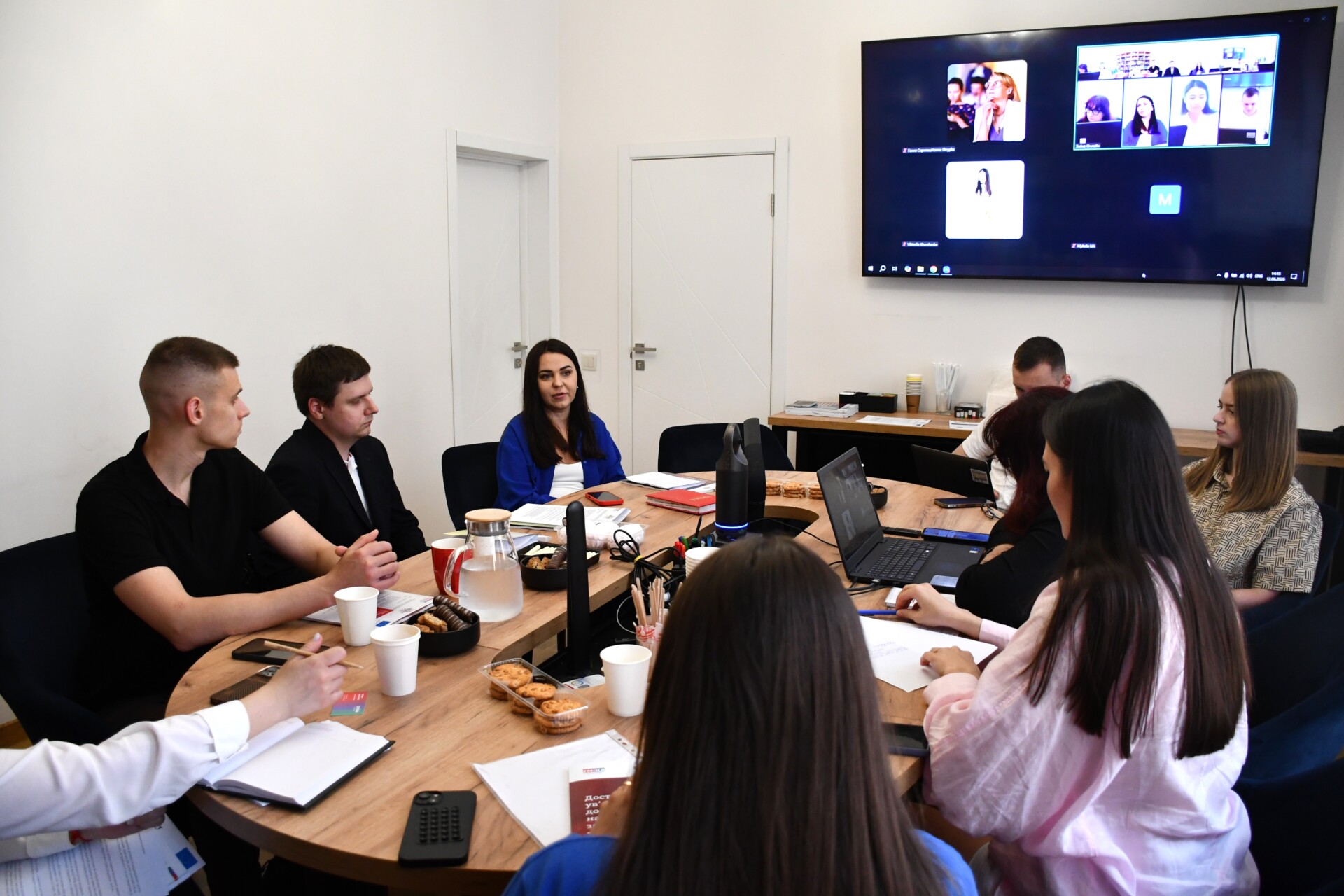
The event brought together representatives of the Coordination Centre for Legal Aid Provision, the Department for the Implementation of the National Preventive Mechanism of the Secretariat of the Ukrainian Parliament Commissioner for Human Rights, and specialised civil society organisations, including experts in the protection of human rights in places of detention.
Tetiana Pechonchyk, Head of the Board of Human Rights Centre ZMINA and co-author of the report, stressed that the organisation has been systematically working for many years to protect the rights of people in places of detention and to support the development of the National Preventive Mechanism (NPM).
“Since the launch of the National Preventive Mechanism, we have played an active role in its development as monitors, trainers, and organisers of educational programmes aimed at strengthening the monitoring community. The Ukrainian NPM operates under the ‘ombudsman plus’ model, in which civil society plays an important role. Today, we not only work to prevent torture but also monitor compliance with human rights standards across different types of places of detention and develop recommendations to improve public policy“, she said.
 Photo: Tetiana Pechonchyk
Tetiana Pechonchyk also noted that the study forms part of the international DIGNITY project, which examines barriers to access to justice for prisoners in Ukraine, Greece, and Portugal. According to her, the project aims not only to document existing challenges but also to develop practical solutions and advocate for the necessary reforms.
Maryna Demura, human rights expert at Human Rights Centre ZMINA and co-author of the report, presented the study’s findings. The research analysed national legislation, international standards, the case law of the European Court of Human Rights, and the impact of martial law on the exercise of procedural rights by people deprived of their liberty. In addition to the legal analysis, the study included a field research component based on 19 semi-structured interviews with representatives of the State Criminal-Executive Service of Ukraine, administrations of pre-trial detention centres and penitentiary institutions, legal aid and private practice lawyers, National Preventive Mechanism monitors, representatives of civil society organisations, and a person with lived experience of detention.
 Photo: Iryna Krushelnytska, Maryna Demura, Olena Myronova
As the report’s authors noted, the findings showed that despite the existence of legal safeguards, prisoners’ actual access to justice remains uneven and largely depends on the administrative practices of individual institutions. Key challenges identified included difficulties in lawyers’ access to their clients, restrictions on the confidentiality of communications with legal counsel, delays in granting lawyers access to places of detention, the limited effectiveness of certain complaints mechanisms, and a low level of legal awareness among prisoners.
During the discussion of the study’s findings, Dmytro Yahunov – lawyer, Doctor of Political Sciences, Candidate of Sciences in Public Administration, Associate Professor, Honoured Lawyer of Ukraine, and Ukraine’s member of the European Committee for the Prevention of Torture (CPT) – stressed the importance of access to legal assistance as one of the key safeguards against ill-treatment.
“From the perspective of the European Committee for the Prevention of Torture, access to a lawyer, legal representation in disciplinary proceedings, and effective mechanisms for protecting prisoners’ rights are essential components of preventing ill-treatment. The right of an individual to a defence is also a matter of transparency within both the institution itself and the penitentiary system as a whole“, he stressed.
 Photo: Dmytro Yahunov
Hanna Skrypka, legal consultant at NGO Protection For Prisoners of Ukraine, highlighted the practical obstacles prisoners face when seeking legal assistance and submitting complaints.
“Prisoners still do not have the ability to fully submit electronic requests or complaints from their own devices. In addition, people are often forced to reapply for legal aid because they receive no information about whether their application has been received and reviewed. It is important to establish a transparent mechanism for communication and for informing applicants about the outcomes of the review of their requests“, she noted.
Particular attention during the presentation was paid to the impact of martial law on the criminal justice system. The study documented the expanded use of pre-trial detention, increased risks of merely formal judicial oversight, and additional obstacles to the exercise of the right to defence. The authors also highlighted problems related to access to legal information and digital services in places of detention, which remain limited and uneven.

Following the presentation of the study’s findings, participants took part in a thematic discussion focused on the challenges identified during the research and possible ways to address them. In particular, they discussed the effectiveness of existing mechanisms for protecting prisoners’ rights, ensuring confidential communication with lawyers, the role of the National Preventive Mechanism, cooperation between the legal aid system and the administrations of places of detention, and the impact of martial law on the exercise of procedural rights. Participants also exchanged practical recommendations on how to improve access to justice without requiring legislative amendments.
The analytical report “Prisoners’ access to justice: national legislation and practice” is available at the following link (in Ukrainian).

This report was prepared within the framework of the project “DIGNITY: bridging views for a rights-based approach to pre-trial detention”, implemented with the support of the European Commission in partnership with the Themistocles and Dimitris Tsatsos Foundation – Centre for European Constitutional Law (CECL) and the European Prison Litigation Network (EPLN). The views and opinions expressed in this report are solely those of the authors and do not necessarily reflect the views or policies of the European Commission, CECL, or EPLN.
This report forms part of the broader study “Pre-Trial Detainees’ Barriers to Enforcing Rights and Accessing Justice from Detention”, edited by EPLN, which analyses the legislation and practice of three countries: Greece, Portugal, and Ukraine.