ZMINA joins UN roundtable on protecting civic space in Europe and Central Asia
On 22 June 2026, Ana More, Head of the Civil Society Protection Programme at Human Rights Centre ZMINA, took part in the online roundtable discussion, “Strengthening Civic Space and Protecting Civic Actors in Europe and Central Asia”, organised by the United Nations Development Programme (UNDP), UN Women, the United Nations Population Fund (UNFPA) and the Office of the United Nations High Commissioner for Human Rights (OHCHR).
Other speakers included Veronika Lapina, Protection Coordinator for Human Rights Defenders in Eastern Europe, the South Caucasus and Central Asia at Front Line Defenders; Sarah Davies, Regional Programme Manager at Kvinna till Kvinna; and Georgina Kominovska, the UN Youth Delegate from North Macedonia. The event was moderated by Robert Bernardo, Head of the Governance and Peacebuilding Team at UNDP and Saranbaatar Bayarmagnai of OHCHR’s Civic Space Unit.
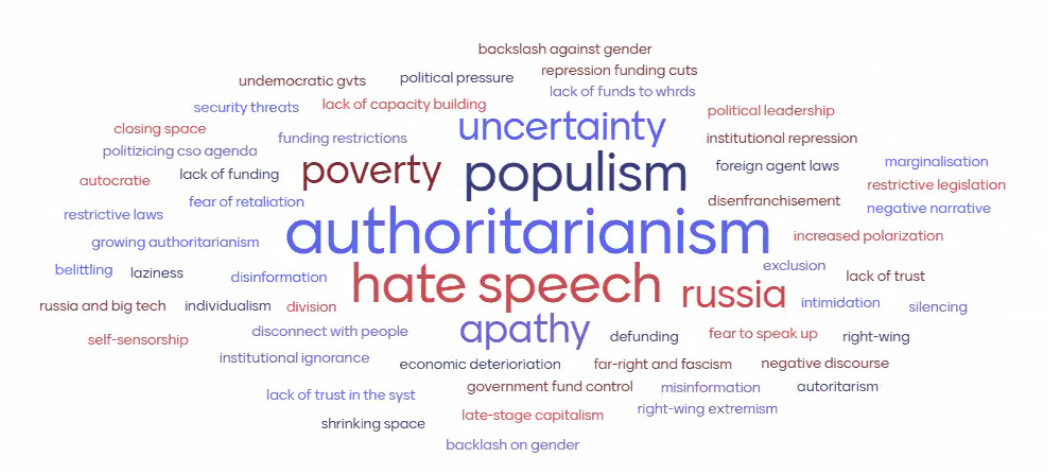
The discussion focused on the challenges facing civil society, human rights defenders, women’s organisations and the LGBTIQ community across the region. One of the central themes was the backlash against gender equality and increasing pressure on human rights.
During her remarks, Ana More stressed that the threats facing civil society and human rights in Ukraine cannot be viewed separately from Russia’s aggression.
“I was surprised that colleagues in the region do not see Russia as a sufficiently serious threat. No feminist or LGBTIQ activism would be possible under Russian occupation. Yet, despite being in the fifth year of full-scale resistance, 5,000 people took part in the largest-ever Equality March in Kyiv yesterday. Of course, we also face internal challenges and threats“, she said.
The ZMINA representative also drew attention to the counter-protests surrounding the Equality March (Editor’s note: The tenth KyivPride took place in Kyiv on 21 June) and the growing influence of conservative movements opposed to LGBTIQ activism. According to her, some of these campaigns in Ukraine have links to Russian influence, although their sources of support are not limited to Russia alone.
Ana More presented recommendations from ZMINA’s 2025 analytical report and announced the preparation of a new study on LGBTIQ activism in Ukraine. She also spoke about an advocacy campaign against certain provisions of the draft Civil Code, which could form part of a broader backlash against gender equality.
The Head of the Civil Society Protection Programme at ZMINA called on international partners to help maintain international attention on cases of pressure against activists, noting that public responses from international institutions remain an important mechanism for protecting civic actors. She also stressed the need to strengthen partnerships between civil society and state institutions with the support of international programmes.
The roundtable was the first in a series of planned consultations aimed at developing a common UN system approach to protecting civic space in the countries of Europe and Central Asia.
In late April, ZMINA presented its analytical report, “The situation of human rights defenders and civic activists in Ukraine in 2025”. The event brought together more than 80 participants. During the discussion, human rights defenders, researchers, representatives of state institutions and international organisations examined key trends in the development of civil society, the risks affecting its work, and the security challenges faced by activists, journalists and human rights defenders in the context of the war.
The full analytical report is available on ZMINA’s website.