Being present: Alena Lunova took part in a discussion on How Not to Lose People under Occupation at Docudays UA
On 8 June 2026, Alena Lunova, Advocacy Director at the Human Rights Centre ZMINA, took part in the discussion “Being present: How Not to Lose People under Occupation”, held as part of the RIGHTS NOW! human rights programme of the Docudays UA International Human Rights Documentary Film Festival.
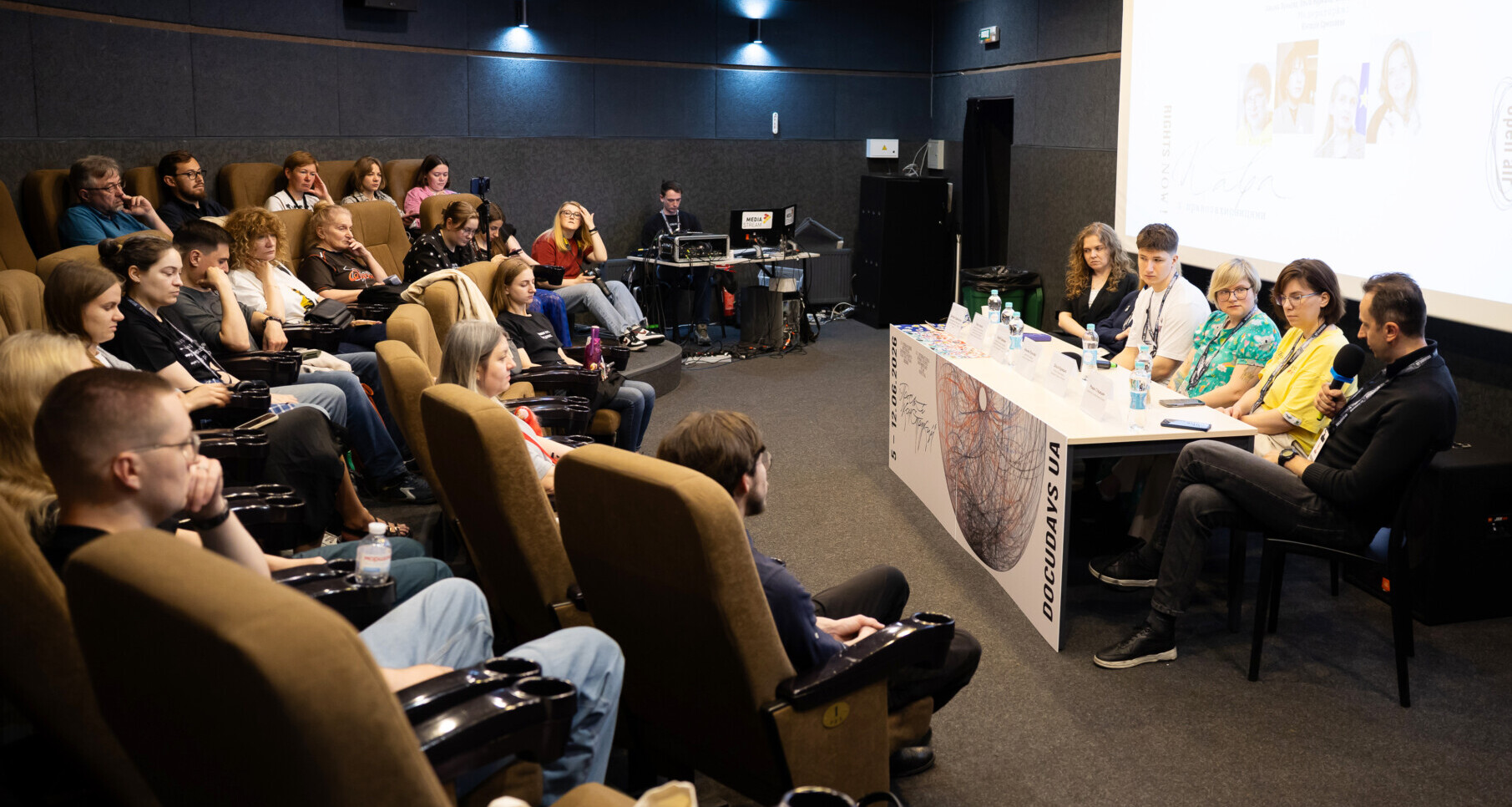
 Photo: Yevheniia Motorevska, Volodymyr Yavorskyi, Daria Kasianova, Yaroslava Sementsova (with a microphone), Alena Lunova, Anastasiia Bahalika
During the event, participants discussed why the experiences of people living in the temporarily occupied territories of Ukraine are receiving less and less public attention, how the state is shaping policies concerning these citizens, and what challenges Ukraine will face during the future reintegration of the occupied territories.
The discussion also featured Volodymyr Yavorskyi, Programme Director at the Centre for Civil Liberties; Daria Kasianova, Chair of the Board of the Ukrainian Child Rights Network; Yaroslava Sementsova, analyst at the Regional Centre for Human Rights; and Anastasiia Bahalika, Director of the Human Rights Department at the NGO Docudays and journalist. The discussion was moderated by Yevheniia Motorevska, Head of the War Crimes Investigations Unit at The Kyiv Independent.
During the discussion, Volodymyr Yavorskyi pointed out that Ukraine’s state policy on the occupied territories is largely shaped through a security lens, while the humanitarian dimension often remains overlooked.
“Today, the authorities often act as if a person who remains under occupation is either collaborating with Russia or is somehow to blame for their situation. Many state decisions stem from precisely these assumptions“, he noted.
Daria Kasianova spoke about efforts to return children from the occupied territories and the Russian Federation. According to her, the widespread perception that only supporters of the “Russkiy Mir” (Russian world) ideology remain in the occupied territories does not reflect reality.
“Among the children we bring back are children whose parents are in captivity, children whose parents have been killed, and children whose relatives are being persecuted by the occupation authorities. Every such return is a highly complex operation. Just recently, we helped bring back a girl whose mother had been sentenced by the occupation authorities to 20 years’ imprisonment for assisting the Ukrainian military“, she said.
Kasianova also stressed the importance of supporting children’s adaptation and reintegration after their return.
 Photo: Volodymyr Yavorskyi, Daria Kasianova (with a microphone), Yaroslava Sementsova
Yaroslava Sementsova, who herself left occupied Crimea, stressed the need to move away from oversimplified explanations of life under occupation.
“People did not choose occupation. One day, they woke up in their homes and found that their home was occupied. People have the right to remain in their homes, continue their work, and live their lives“, stressed the analyst at the Regional Centre for Human Rights.
Sementsova also drew attention to the challenges of reintegrating people leaving occupied territories and to the insufficient preparedness of state policies to address the consequences of years of occupation.
Alena Lunova stressed that Ukraine needs a comprehensive policy for citizens living in the temporarily occupied territories or those who have left them.
“It is difficult to say that there is currently a government body responsible for shaping policy specifically for people from occupied territories. Not regional policy, not security policy, but policy focused on people themselves“, she noted.
According to Lunova, a positive example was the existence of a dedicated ministry responsible for issues related to the temporarily occupied territories. She also noted that there are currently state support programmes for young people, including simplified admission procedures to Ukrainian educational institutions and other support mechanisms for young people from the temporarily occupied territories.
At the same time, ZMINA’s Advocacy Director warned against practices that could create additional barriers for people from the occupied territories: “I believe it is very dangerous to introduce special screening procedures or additional requirements for people from occupied territories. We must see people first and foremost, not only the risks“, she said.
 Photo: Yaroslava Sementsova, Alena Lunova (with a microphone), Anastasiia Bahalika
Anastasiia Bahalika spoke about how the issue of occupation is represented in Ukraine’s information space.
“In reality, very few people in Ukraine are completely unaffected by the issue of occupation. Even if someone does not have relatives in the occupied territories, they almost always have friends, acquaintances, or friends of friends who have been affected by it. That is why there is a demand for conversations about occupation“, she noted.
Bahalika also drew attention to the staffing crisis in journalism and the need to pass on knowledge to a new generation of journalists who will work on issues related to occupation, war crimes, and human rights.
According to her, this is why Docudays UA launched the “Being Present” information campaign, which aims to make the experiences of people living in the temporarily occupied territories more visible to Ukrainian society.
Particular attention was also paid to the issue of collaboration with the occupying authorities. Responding to a question about the need to review approaches to liability for collaboration, Alena Lunova noted that the current legislation requires amendments: “The legislation on collaborative activities was adopted in great haste and without proper discussion. These problems are not being resolved through judicial practice, and we are already seeing decisions that many people consider unfair“.
The participants agreed that Ukrainian society needs more discussions about the realities of life under occupation, and that state policy should take into account the complexity of this experience while maintaining ties with the millions of Ukrainian citizens who remain in the temporarily occupied territories.
As a reminder, on 7 June, the discussion “Enemies Everywhere? The Line Between Security and the Reintegration of People from Occupied Territories” took place as part of the RIGHTS NOW! human rights programme of the Docudays UA festival. The participants explored how the state can protect itself from genuine security risks while at the same time avoiding the alienation of millions of citizens who remain in the temporarily occupied territories or leave them.
Photo credit: Valeriia Landar, Docudays UA