Security, democracy, Russian recruitment, the pursuit of justice and AI: What was discussed at Crimea Global 2026
On 19 October 2026, the fourth international conference “Crimea Global. Understanding Ukraine through the South” took place in Kyiv. This year’s theme was “Navigating a World of Great Powers”. Experts, journalists, human rights defenders and academics from Asia, Africa and Latin America joined their Ukrainian counterparts to discuss security challenges, Russia’s recruitment of foreign nationals, transitional justice and the impact of artificial intelligence on democracy.
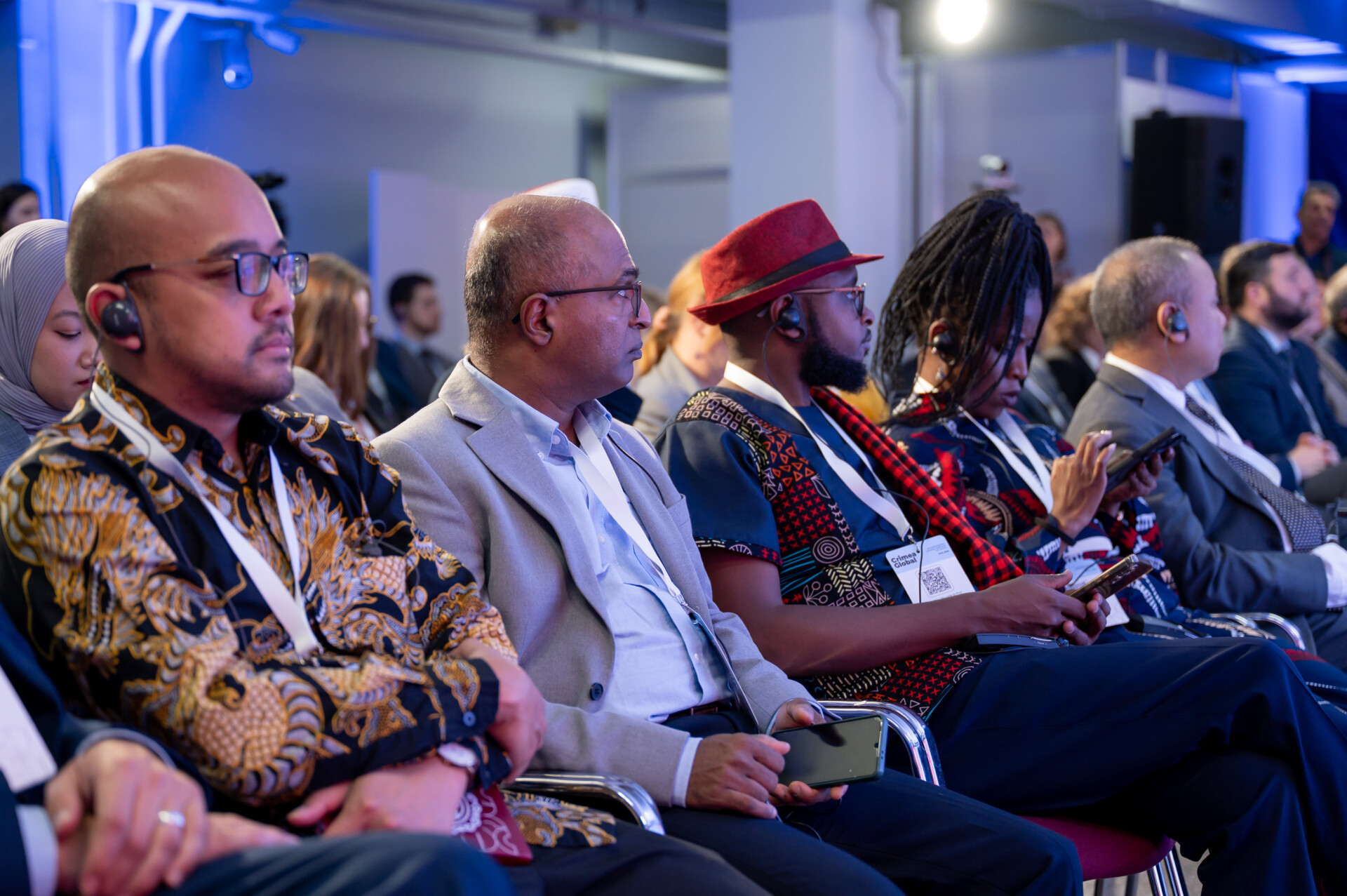
This year, guests from Myanmar, Indonesia, Sri Lanka, Kenya, Brazil, Mexico and Egypt travelled to Ukraine. Participants from Chile, Colombia, Oman, Cuba, the Philippines and Syria also joined online.
Crimea Global: Building connections, trust and finding solutions
The opening ceremony was moderated by Alim Aliev, Deputy Director of the Ukrainian Institute, founder of Crimean Fig literary project.
The opening ceremony featured a performance by members of the band Shatur-Gudur, who represent the Defence Forces of Ukraine and Cultural Forces. They performed a musical composition titled NoMan, dedicated to Ukrainian soldiers who lost their lives defending Ukraine. The composition incorporates lines from the Crimean Tatar national anthem, written by Noman Çelebicihan, a Crimean Tatar political and public figure, one of the organisers of the first Qurultay, head of the government of the Crimean People’s Republic proclaimed in 1917, and the first mufti of Crimea’s Muslims. He was killed by the Bolshevik authorities.
 Members of the band “Shatur-Gudur”
Olha Kuryshko, Permanent Representative of the President of Ukraine in the Autonomous Republic of Crimea, welcomed participants. She thanked international guests for their willingness to visit Ukraine amid Russia’s full-scale aggression, as well as the partners who have supported the initiative for four years.
Kuryshko also emphasised the importance of international guests gaining firsthand insight into the realities of life in Ukraine, particularly the consequences of Russian aggression and the stories of people who have experienced occupation, deportation and other crimes committed by Russia. She said that such experiences foster a deeper understanding of Ukraine and help build long-term partnerships essential to restoring a just peace.
 Olha Kuryshko
Yevhen Perebyinis, Deputy Minister of Foreign Affairs of Ukraine, stressed that the occupation of Crimea and Russia’s full-scale aggression had demonstrated the global consequences of disregarding state sovereignty. He highlighted the impact of Russia’s war on food security and freedom of navigation in the Black Sea, as well as Russia’s recruitment of foreign nationals.
“When law gives way to force, the threat extends far beyond the borders of the state subjected to aggression. This undermines international security as a whole and erodes trust in the international legal order,” Yevhen Perebyinis stressed.
 Yevhen Perebyinis
Refat Chubarov, Chairman of the Mejlis of the Crimean Tatar People, stressed that the occupation of Crimea in 2014 marked the beginning of the large-scale erosion of the international security system. He also drew attention to the situation of Crimean Tatars, Karaites and Krymchaks.
“The issue of the occupation of Crimea must be viewed not only in the context of restoring Ukraine’s territorial integrity. It is inseparably linked to the protection of the rights of Ukraine’s Indigenous Peoples,” Refat Chubarov stressed.
 Refat Chubarov
Maria Tomak, co-organiser of the conference, explained that the event aimed not only to introduce international guests to Ukraine but also to hear their perspectives.
“It has always been important to us not simply to bring people here to show them Ukraine, the consequences of the war, and our history and culture. It is equally important to give them a voice, listen to them, understand their perspectives and find common ground for further dialogue,” Maria Tomak emphasised.
 Maria Tomak
Marites Vitug, a Filipino journalist and mentor to Crimean political prisoner Ernes Ametov, joined online. She drew parallels between Ukraine’s struggle and the Philippines’ efforts to resist China’s coercive actions at sea.
“The Philippines and Ukraine are like-minded countries. We both stand against domination and unilateral actions by great powers that resort to force, coercion and intimidation,” Marites Vitug said. She also drew attention to more than 200 Crimean political prisoners unlawfully detained by Russia.
 Marites Vitug
Know-How à la Kyiv: Ukraine as a Provider of Security and Resilience Expertise
Participants from Mexico, Chile, Indonesia, Oman and Ukraine discussed how other countries could benefit from Ukraine’s experience in resisting Russian aggression and how to build partnerships with countries where perceptions of Russia are shaped by historical, political and information-related factors. The discussion was moderated by Dr. Hanna Shelest, Security Studies Program Director at the Foreign Policy Council Ukrainian Prism.
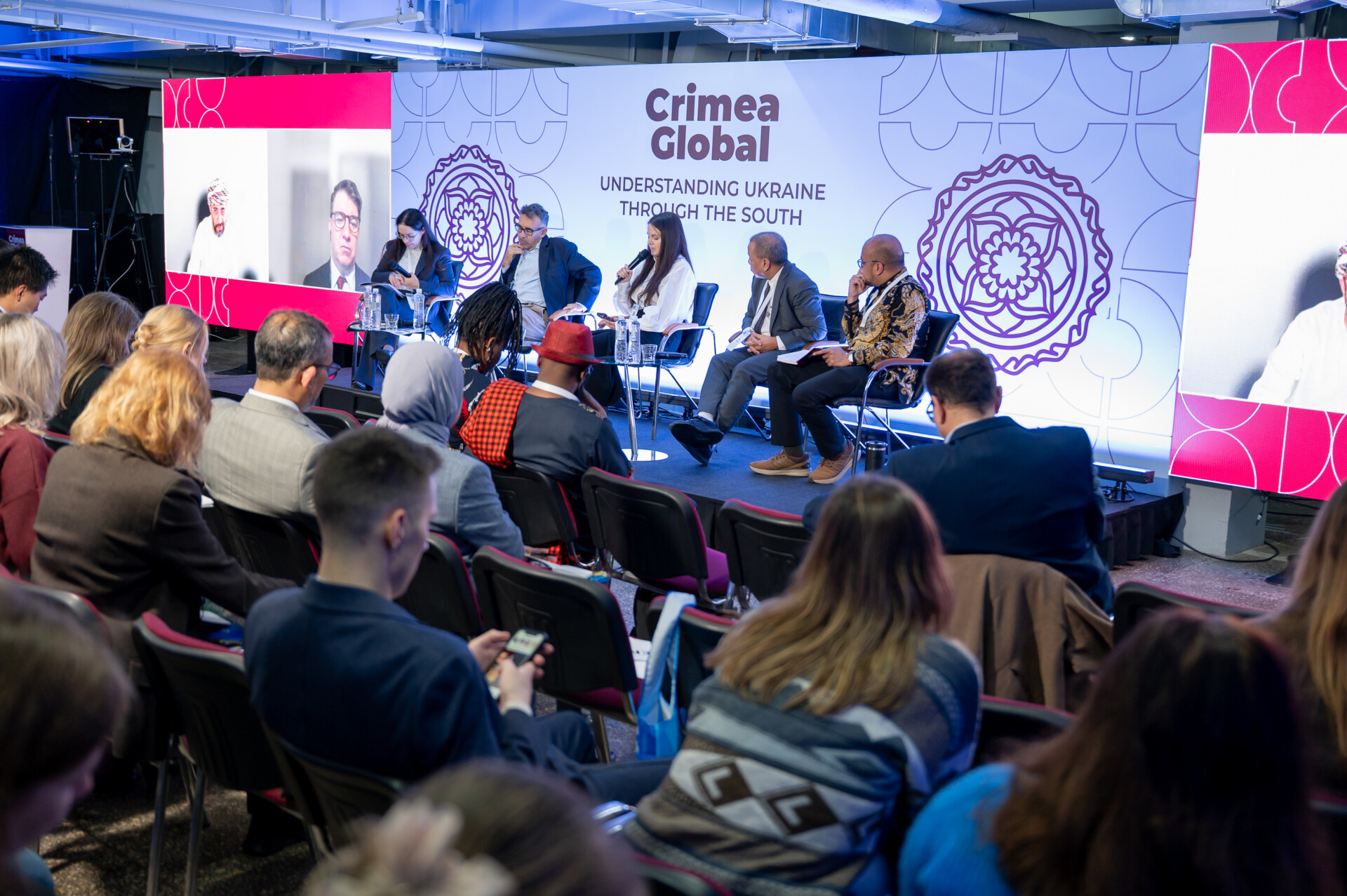
Dr. Angel Jaramillo Torres, Internationalist at El Colegio de Mexico, said that the main lesson Mexico could learn from Ukraine’s experience was the importance of international law. He also emphasised the right of states to self-defence and the need for tailored communication with societies where Russia retains a positive image.
Juan Pablo Toro, Senior Research Fellow at the Chilean think tank AthenaLab, stressed that geographical distance does not negate shared interests. He said Ukraine’s experience could be valuable in combating organised crime, ensuring maritime security and restoring critical infrastructure.
 Hanna Shelest, Angel Jaramillo Torres (holding the microphone), Liudmyla Redutova, Soe Myint, Radityo Dharmaputra
Radityo Dharmaputra, Senior Research Fellow at Airlangga University in Indonesia, believes that Ukraine has become an example of resilience and rapid military innovation.
“The way Ukraine defends itself, its resilience, its use of drones and artificial intelligence – you are developing these technologies remarkably quickly,” Dharmaputra said. He suggested that cooperation with Indonesia should begin with small but practical areas of collaboration. He also highlighted cultural diplomacy as a way to strengthen ties, particularly through connections with the Crimean Tatars, an Indigenous people of Ukraine who practise Islam.
Dr. Yousuf Al Bulushi, Chairman of the Muscat Policy Council in Oman, stressed that Ukraine and the Middle East face the same threats – drone and missile attacks on cities, energy infrastructure and ports.
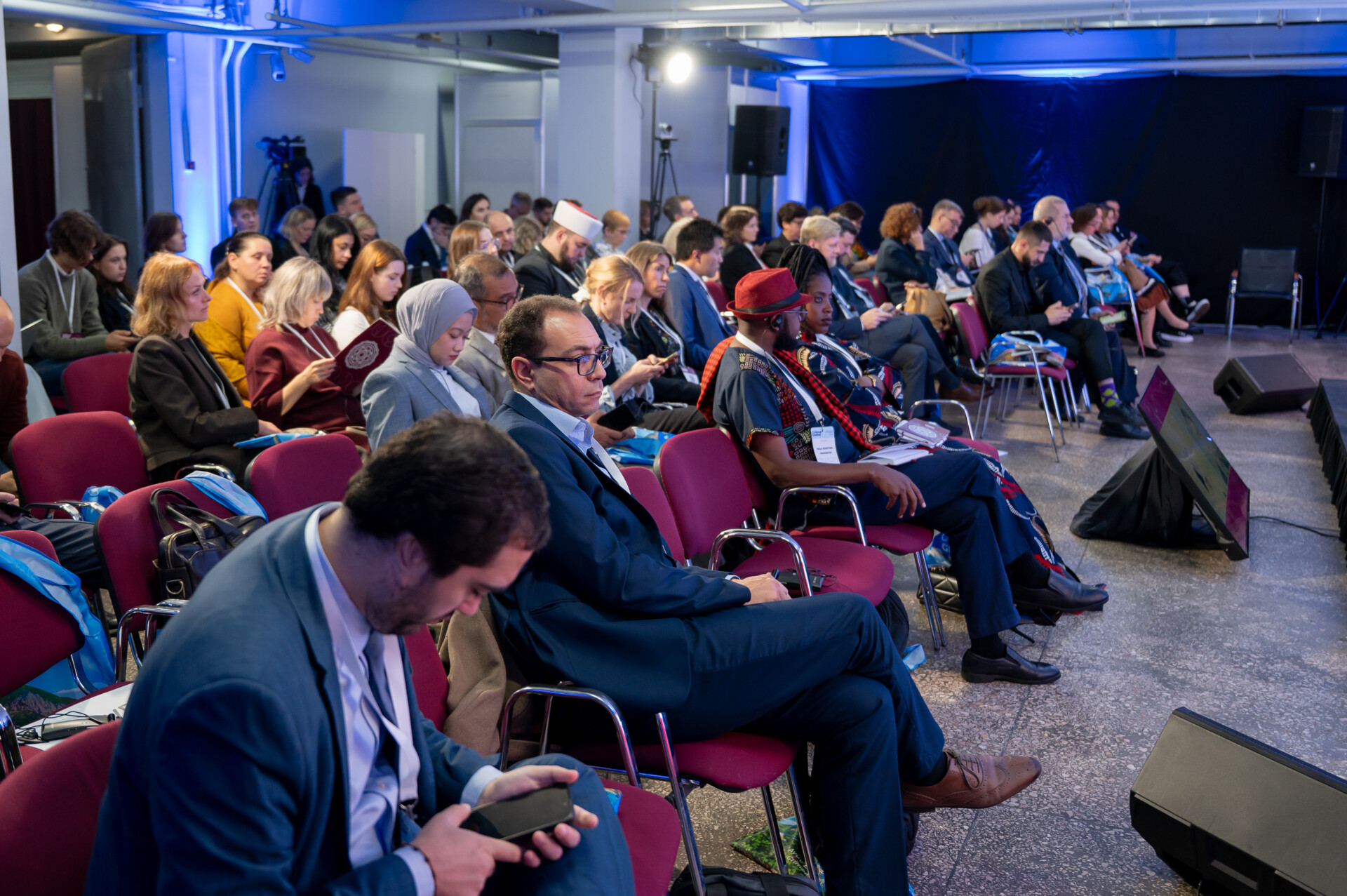
Liudmyla Redutova, Head of Legal and Government Relations at Technological Forces of Ukraine, recalled that Ukraine had been developing its defence expertise since 2014, when Russia occupied Crimea. The main lesson, she said, was that “a threat left unaddressed will grow and will not disappear on its own“. She also stressed that this expertise had been gained “at an enormous cost – the lives of our soldiers and our country’s resources“.
Countering the Predator: How to Stop Russia’s Recruitment of Foreigners
Last year’s discussion at Crimea Global on Russia’s predatory recruitment practices preceded a wave of investigations into foreign nationals fighting on Russia’s side. This year, participants from Ukraine, Kenya, Cuba, the United States and other countries discussed emerging trends. The panel was moderated by Maria Tomak, a researcher at Truth Hounds and co-organiser of the conference.
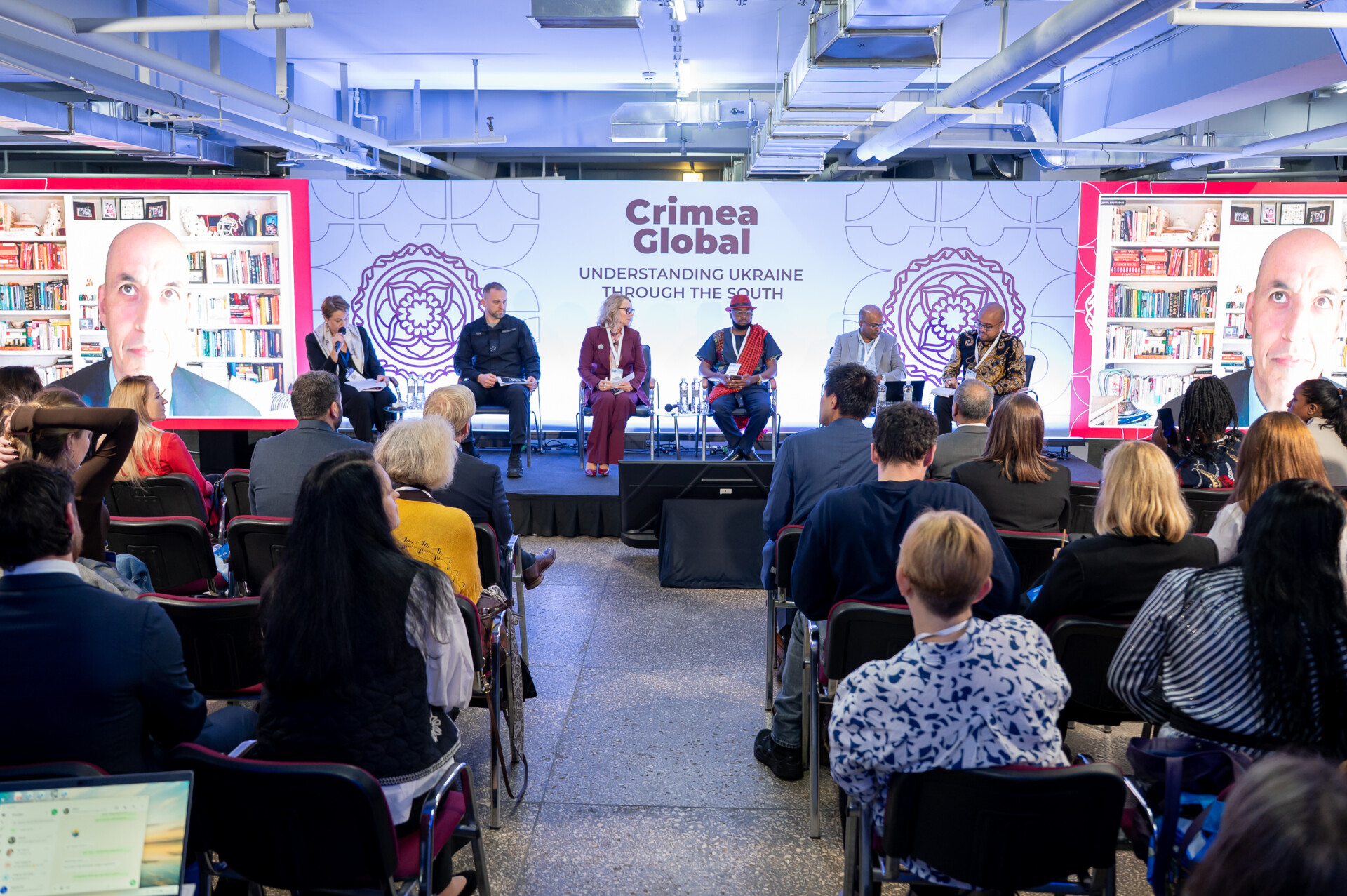
Brig. Gen. Dmytro Usov, Secretary of the Coordination Headquarters for the Treatment of Prisoners of War, presented the latest figures.
“As of October 2026, Russia had recruited 45,959 foreigners from 151 countries into its armed forces. During the full-scale war, Ukrainian security and defence forces have captured nationals of 59 countries,” Dmytro Usov said.
 Dmytro Usov
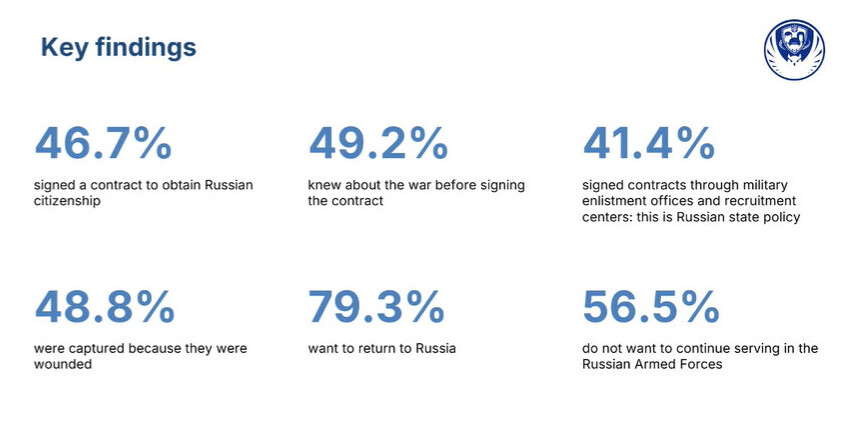
The number of foreigners who have signed contracts with Russia’s Ministry of Defence has increased each year, from 94 in 2022 to 16,085 in 2025. Russia planned to recruit 18,500 people in 2026. As of October, 16,168 such contracts had already been recorded.
According to a survey of foreign prisoners of war, 49% knew before signing their contracts that they would be fighting against Ukraine. Nearly 47% cited the possibility of obtaining Russian citizenship as one of their reasons for signing. At the same time, Usov said that efforts by Ukraine’s Ministry of Foreign Affairs and bodies responsible for prisoners of war had helped reduce recruitment and, in some cases, stop it altogether. He named Nepal, Sri Lanka, Cuba, China, Ghana, Nigeria and Egypt among the countries where these efforts had made a difference.
Paul King’ori Wangechi, Producer and Host at Kenya’s Tuko Media Limited, said that recruiters target drivers, security guards, cooks, domestic workers and former law enforcement officers.
“They are promised better working conditions in Russia for the same types of jobs – as drivers, security guards, officials, cooks and domestic workers. They are also told that salaries will be quite high,” he explained. According to Wangechi, some people do not realise what they are getting into, while others hope to earn money quickly and return home but end up on the front line.
Liubov Abravitova, Director of Africa and Regional African Organisations Directorate General, Ministry of Foreign Affairs of Ukraine, stressed that recruitment is a systematic practice accompanied by propaganda.
“The narrative is that foreigners are going to fight against the West, against Europe. This is how Moscow misinforms them,” Abravitova said.
Dr. Erich de la Fuente, Professor of International Relations at Florida International University (Cuba/United States), who joined online, said that the situation in Cuba differed from that in other countries. He claimed that the number of Cubans serving in the Russian army could reach tens of thousands and that the recruitment process was being coordinated with the knowledge of the Cuban authorities. He also warned that Cubans could recruit people from other Latin American countries into the war because they share a common language.
Transitional Justice: What We Can Learn from Recent Examples
Even decades after a war ends, thousands of victims may still be denied justice. The experiences of Sri Lanka, Colombia, Syria and Ukraine show that the end of an armed conflict or the fall of a dictatorship does not guarantee that those responsible will be held accountable or that victims’ rights will be protected.
Participants discussed efforts to locate missing persons, hold perpetrators accountable and provide reparations, as well as the challenges involved in addressing the consequences of widespread human rights violations. The panel was moderated by Tetiana Katrychenko, Head of the Media Initiative for Human Rights (MIHR).
 Tetiana Katrychenko, Kateryna Busol (holding the microphone), Saroj Pathirana
Saroj Pathirana, a journalist and researcher, discussed the consequences of delayed justice in Sri Lanka, where the civil war lasted from 1983 to 2009. He said that the Office on Missing Persons had received around 22,000 applications, yet over the years it had managed to establish the fate of only about 30 people.
Veronika Hoelker, Researcher and Knowledge Management Coordinator at the International Center for Transitional Justice (ICTJ) in Colombia, explained that her country had been using transitional justice mechanisms for more than two decades, adapting them in response to victims’ experiences and needs. The first mechanism, established before the conflict had ended, focused largely on criminal accountability, but it soon became clear that court proceedings alone were not enough to protect victims’ rights.
“We realised very quickly that transitional justice is not just about criminal accountability,” she said.
Following the 2016 peace agreement, Colombia established a system combining the Truth Commission, a mechanism for searching for missing persons and the Special Jurisdiction for Peace. Those who acknowledge responsibility and help establish the truth may receive restorative sanctions instead of imprisonment, such as participating in searches for missing persons, demining operations and the reconstruction of affected communities. According to Veronika Hoelker, publicly acknowledging responsibility carries enormous symbolic significance for society.
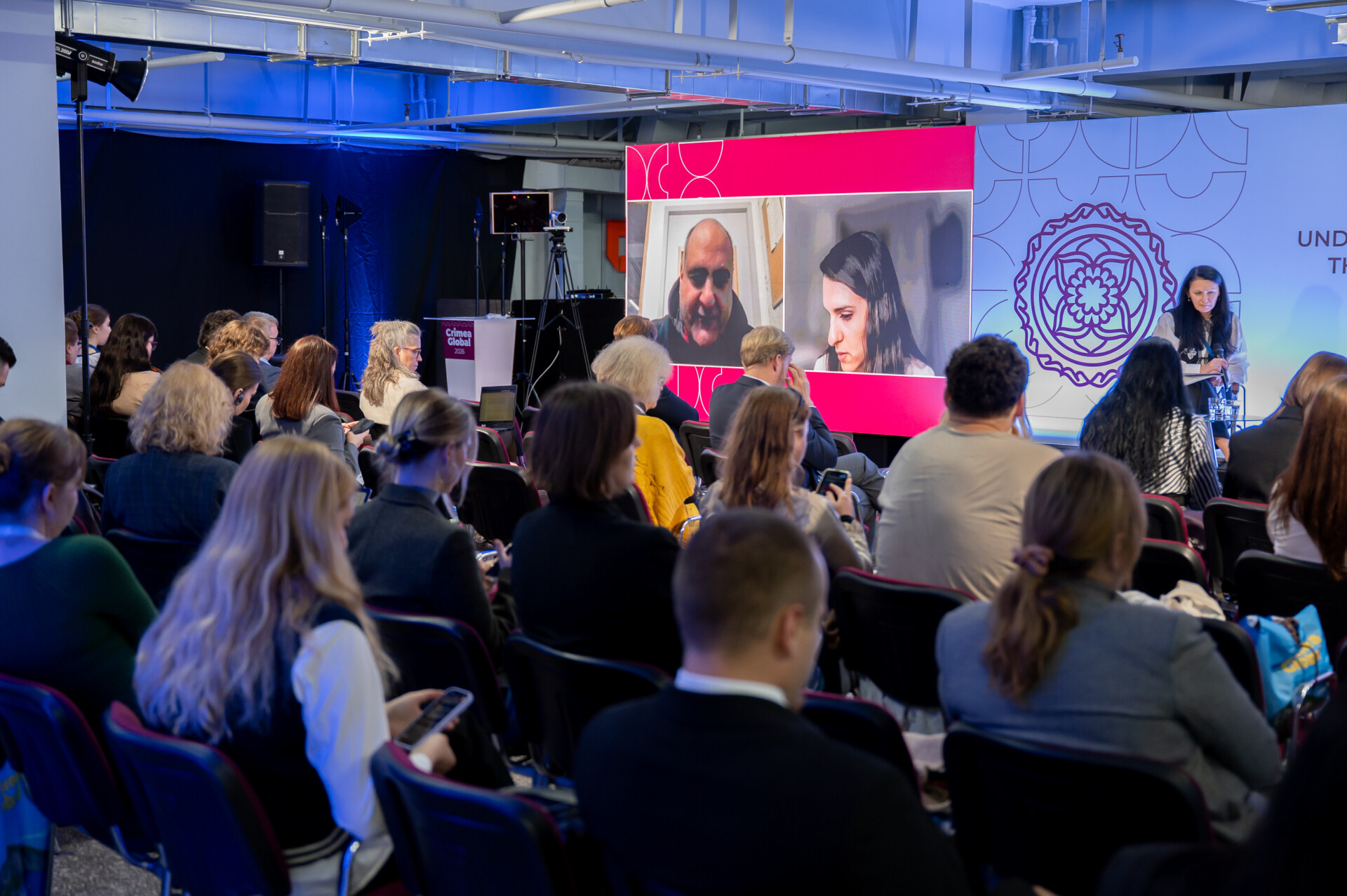
Assaad Al Achi, an independent consultant from Syria, discussed the challenges the country has faced since the fall of Bashar al-Assad’s regime in December 2024. Several months later, the transitional authorities established commissions on missing persons and transitional justice, involving civil society and the Syrian diaspora in their work. However, he said, fundamental questions remain: who should be recognised as victims, what period transitional justice should cover and how to address crimes committed after the regime’s fall.
Al Achi stressed that efforts to achieve justice in Syria had begun long before the change of government. Human rights defenders had spent years documenting crimes and advocating for international mechanisms: “We did not wait for the Assad regime to fall before starting work on transitional justice. And I really want to give credit to our Ukrainian friends for all the documentation work you have done, because that is the most important part.”
 Kateryna Busol, Saroj Pathirana
Kateryna Busol, Head of ICTJ’s Ukraine Programme, recalled that Ukraine had begun developing transitional justice mechanisms following the occupation of Crimea and parts of the Donetsk and Luhansk regions, long before the full-scale invasion. She said Ukraine maintained that transitional justice was possible even during an ongoing war and prolonged occupation. She stressed the need to hold accountable not only those who directly committed crimes but also the political and military leadership responsible for planning, financing and supporting the aggression.
Big Brother is Back? How Can Democracy Survive in Times of AI and Great Powers
Participants from Ukraine, Egypt, Myanmar, Kenya and Brazil also discussed how artificial intelligence affects democracy, freedom of expression and the work of human rights defenders and journalists. The discussion was moderated by Tetiana Pechonchyk, Chair of the Board of the Human Rights Centre ZMINA and co-organiser of the conference.
“George Orwell imagined a world in which Big Brother watches everyone. Today, artificial intelligence, mass surveillance, digital propaganda and the rise of authoritarian regimes are turning some of these ideas into reality,” Tetiana Pechonchyk said.
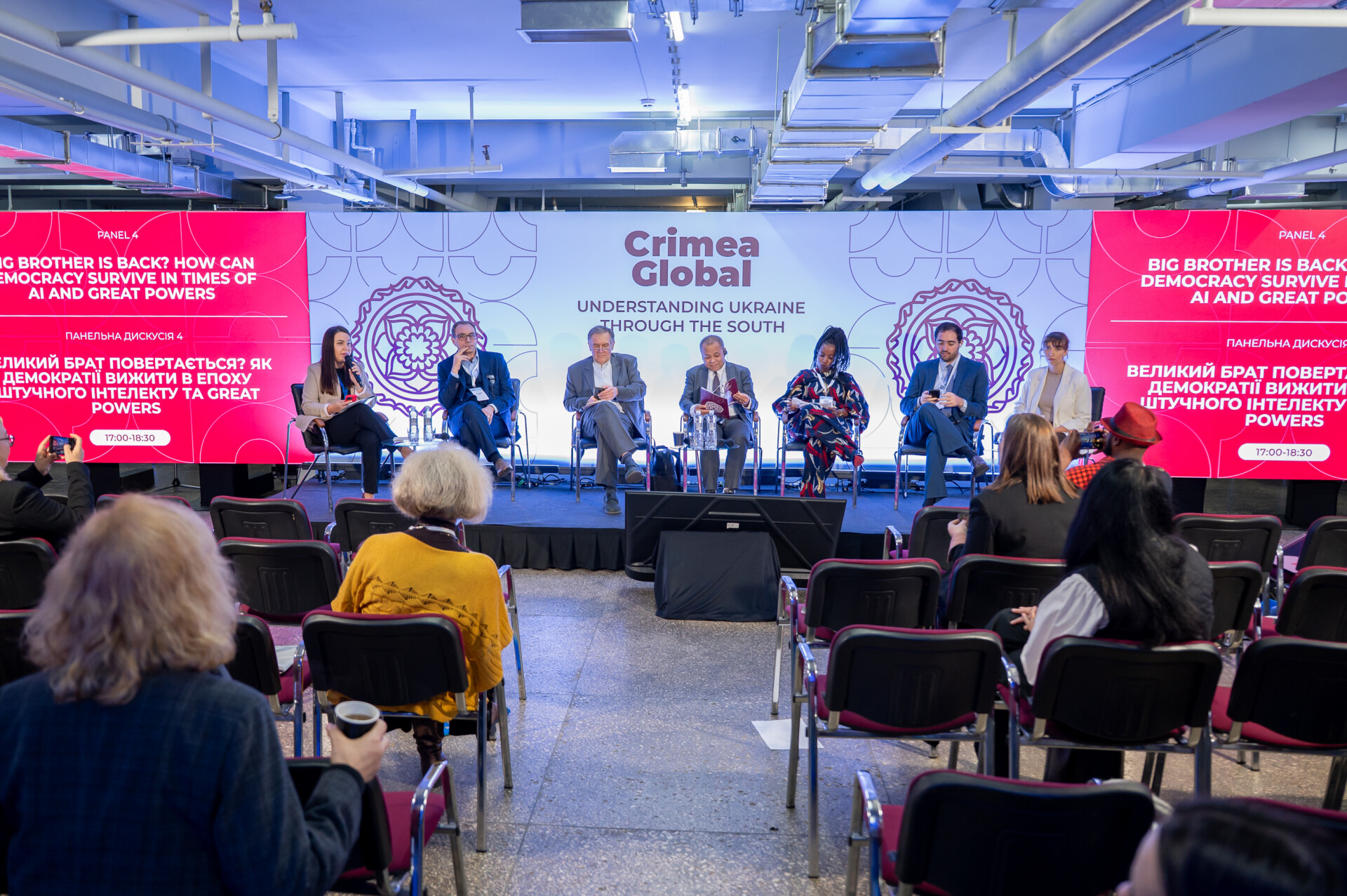
Mohamed Lotfy, Executive Director of the Egyptian Commission for Rights and Freedoms, stressed that authoritarianism was growing stronger in many countries and that democracy could not be taken for granted.
“The world is now sliding down to Egypt’s level. For us, the future looks bleak unless we work to strengthen democracy. We must do this every day,” he said. He also urged human rights defenders to embrace new technologies: “If we do not do this, dictators will get ahead of us and use these technologies to harm us and keep us under surveillance.”
 Tetiana Pechonchyk, Mohamed Lotfy (holding the microphone), Olexiy Haran
Dr. Olexiy Haran, Professor at the Kyiv-Mohyla Academy, attributed the differences between Ukrainian and Russian political cultures to their historical roots.
“In Ukraine, pluralism is the default. We have a history of self-government, Magdeburg rights and private property. This means that Ukraine’s political culture is fundamentally different from Russia’s,” he said.
Soe Myint, Managing Director and Editor-in-Chief of Myanmar-based media outlet Mizzima, said that the newsroom was already using AI tools but warned that disinformation was becoming increasingly sophisticated.
“The danger is no longer limited to fake images or videos. AI makes it possible to create convincing but false content, complete with fabricated facts and figures,” he warned. He also stressed the need to train AI systems to work with minority languages.
Sophie Mugure Njehia, a Kenyan youth leader, spoke about the 2024 protests, when social media helped young people organise but also enabled the authorities to monitor activists. She highlighted the potential of AI to verify electoral registers and conduct independent parallel vote counts.
 Soe Myint, Sophie Mugure Njehia, Rafael Pérez de Azevedo
Pedro Rafael Pérez de Azevedo, President of the Association of Young Entrepreneurs of the State of Rio de Janeiro, who is of Venezuelan origin, warned, citing Venezuela’s experience, that authoritarian leaders who come to power amid demands for change can plunge a country into a deep crisis.
“I am concerned about the extent to which AI can manipulate voters’ decisions in a polarised society. Brazil uses electronic voting, and we have already recorded cyberattacks on our electoral systems from external sources,” he said.
Letters to Political Prisoners and Exhibitions on Russian Mercenaries, Civilian Hostages and Crimean Resistance
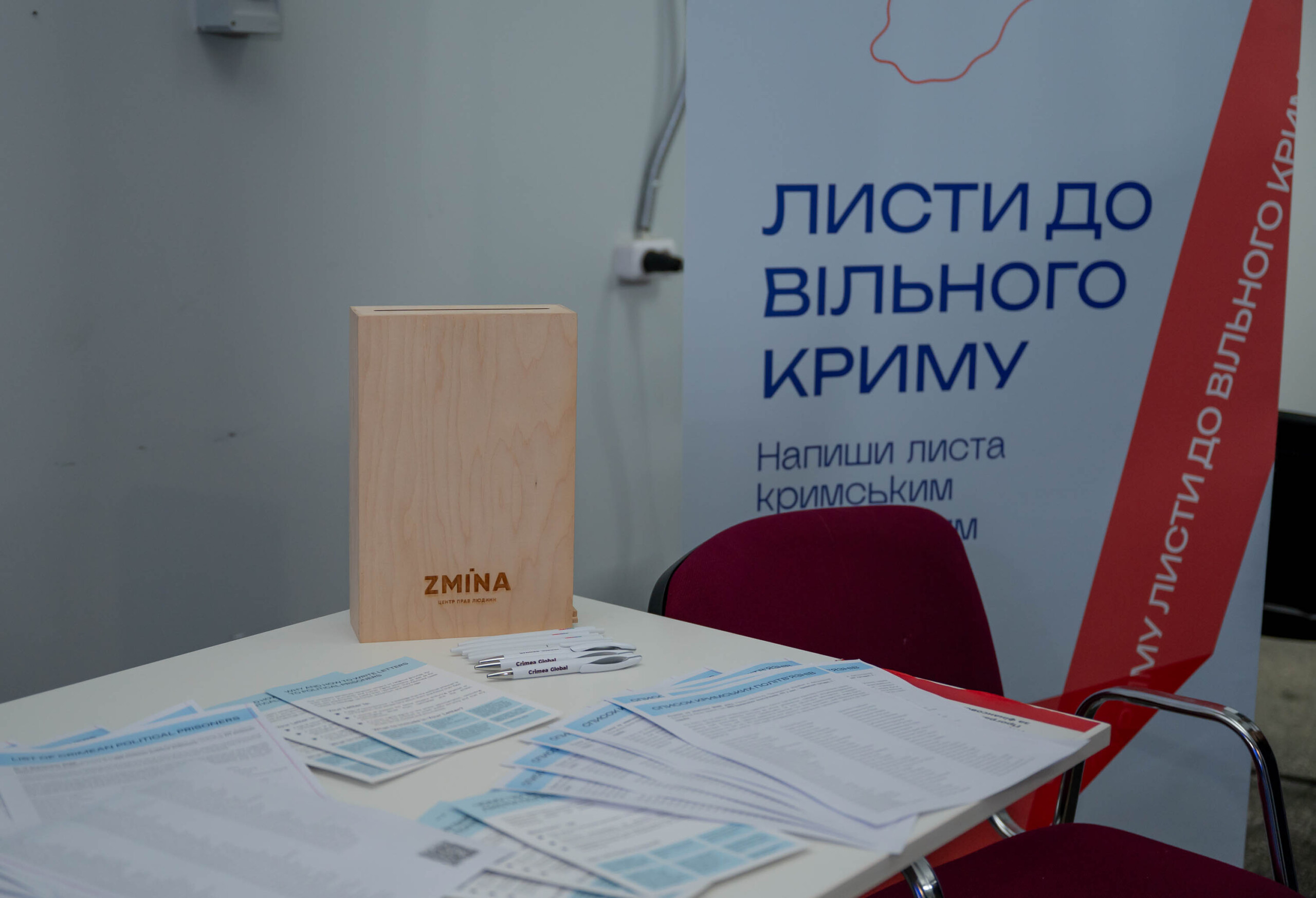
At the fourth international Crimea Global conference, participants could take part in the “Letters to a Free Crimea” initiative and write letters to political prisoners unlawfully imprisoned by Russia. The initiative aims to support political prisoners and remind them that they have not been forgotten and that people are waiting for their return.
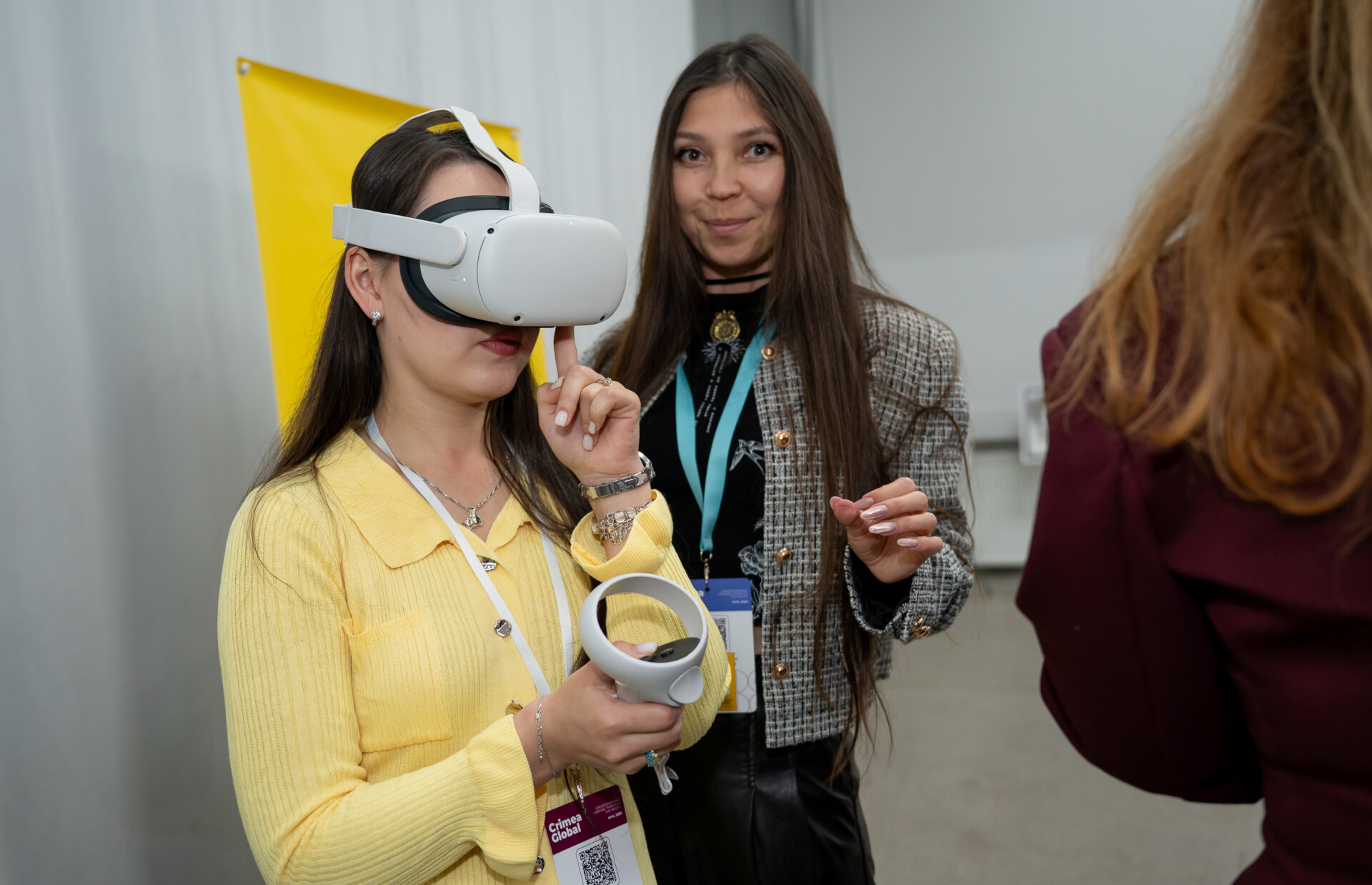
Conference participants could also visit “Virtual Space of Memory. Museum of Crimean Resistance“, an exhibition featuring biographies of political prisoners, documentary materials and artworks telling the stories of people persecuted by Russia in occupied Crimea. The project was created by a team of Ukrainian experts and cultural figures led by Lera Tevfikova (Litvinova), with Leonora Yanko as art curator and Sergiy Nizhynskyi as digital curator.
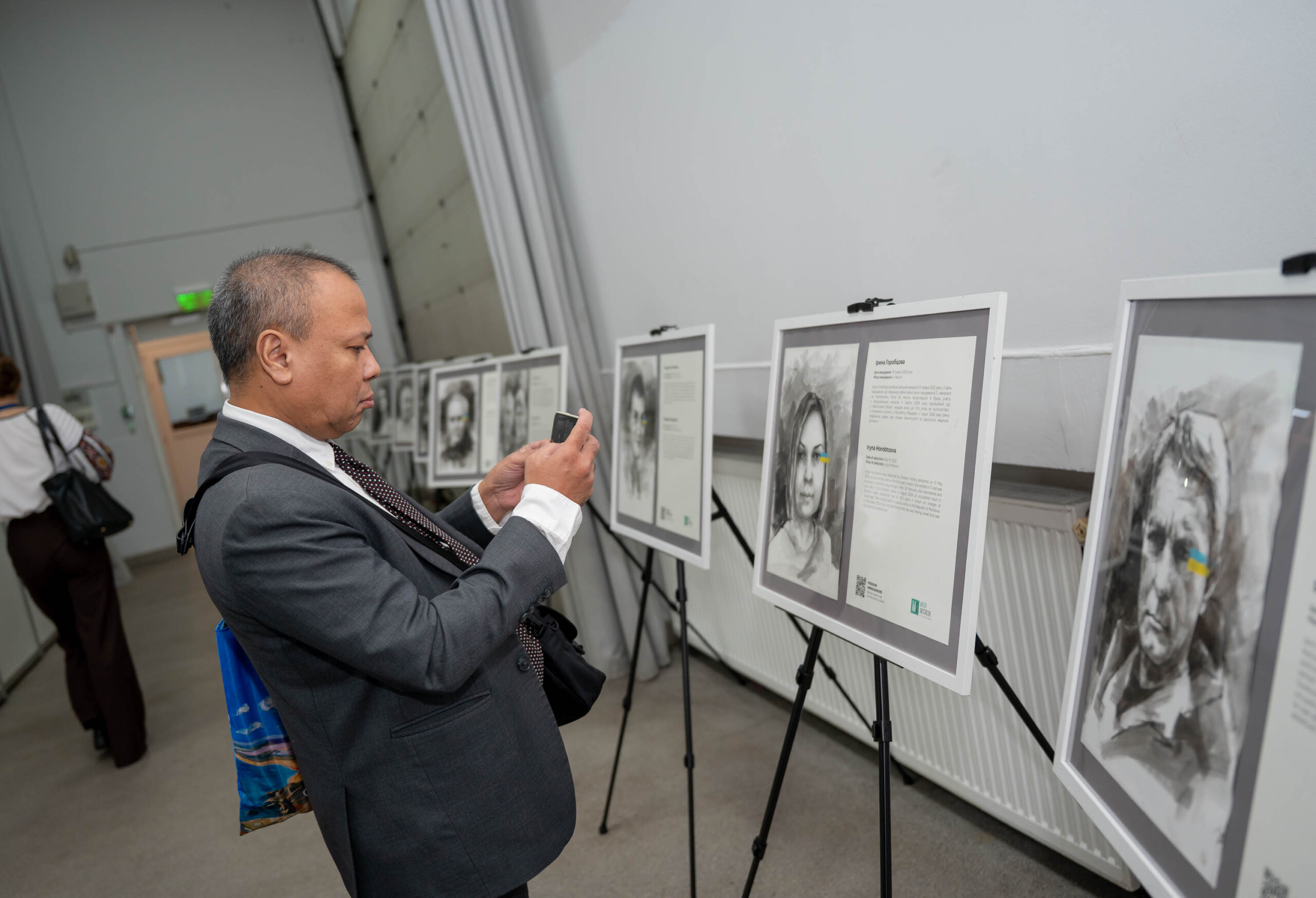
During breaks between panel discussions, participants could also visit the Media Initiative for Human Rights exhibition “Civilians in Captivity: Stories of Unjust Detentions“. Ukrainian artist Anna Movenko created 65 portraits of Ukrainian civilians abducted by Russia in temporarily occupied territories. They include journalists, medical professionals, volunteers and local government officials.
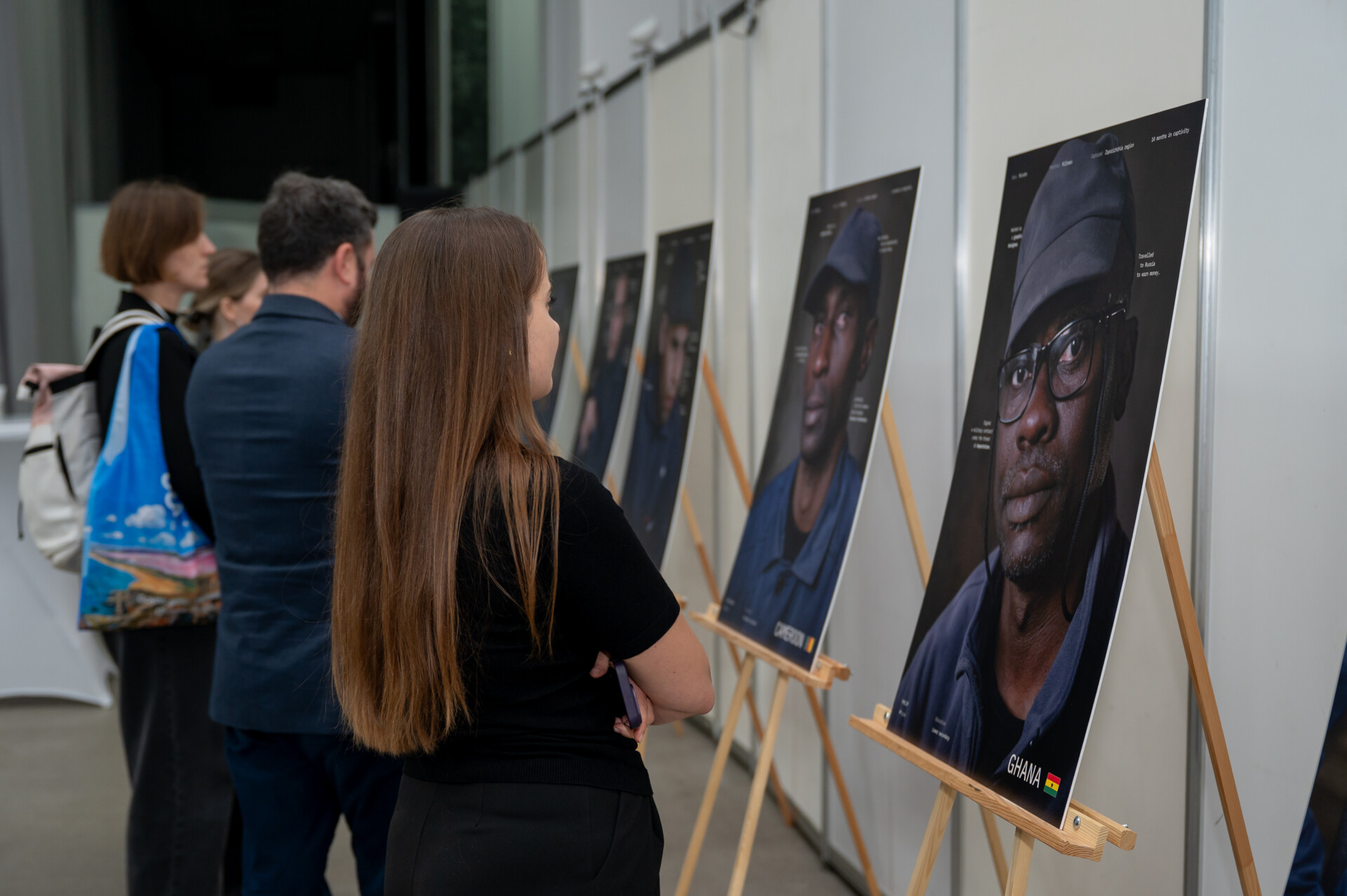
Another exhibition, the documentary photography exhibition “EXPENDABLE. How Russia Uses Foreign Recruits in Its War“, presented for the first time by the Coordination Headquarters for the Treatment of Prisoners of War, explores how Russia recruits foreigners into its army through financial incentives, false promises and deception. The exhibition features portraits and stories of foreigners who fought on Russia’s side and were subsequently captured by Ukrainian forces. The exhibition was created by Tamara Kurushkina.
Roundtable with Senior Officials Ahead of the Conference
As part of Crimea Global’s additional programme, a closed-door roundtable titled “Global Challenges, Local Solutions: What Can Ukraine’s Experience Offer the World?” took place at the Crimea Platform Office on 18 October. Representatives of the Ministry of Foreign Affairs, the Ministry of Agrarian Policy and Food of Ukraine, the Office of the Prosecutor General, the Office of the President, the Verkhovna Rada and the Mejlis of the Crimean Tatar People took part.
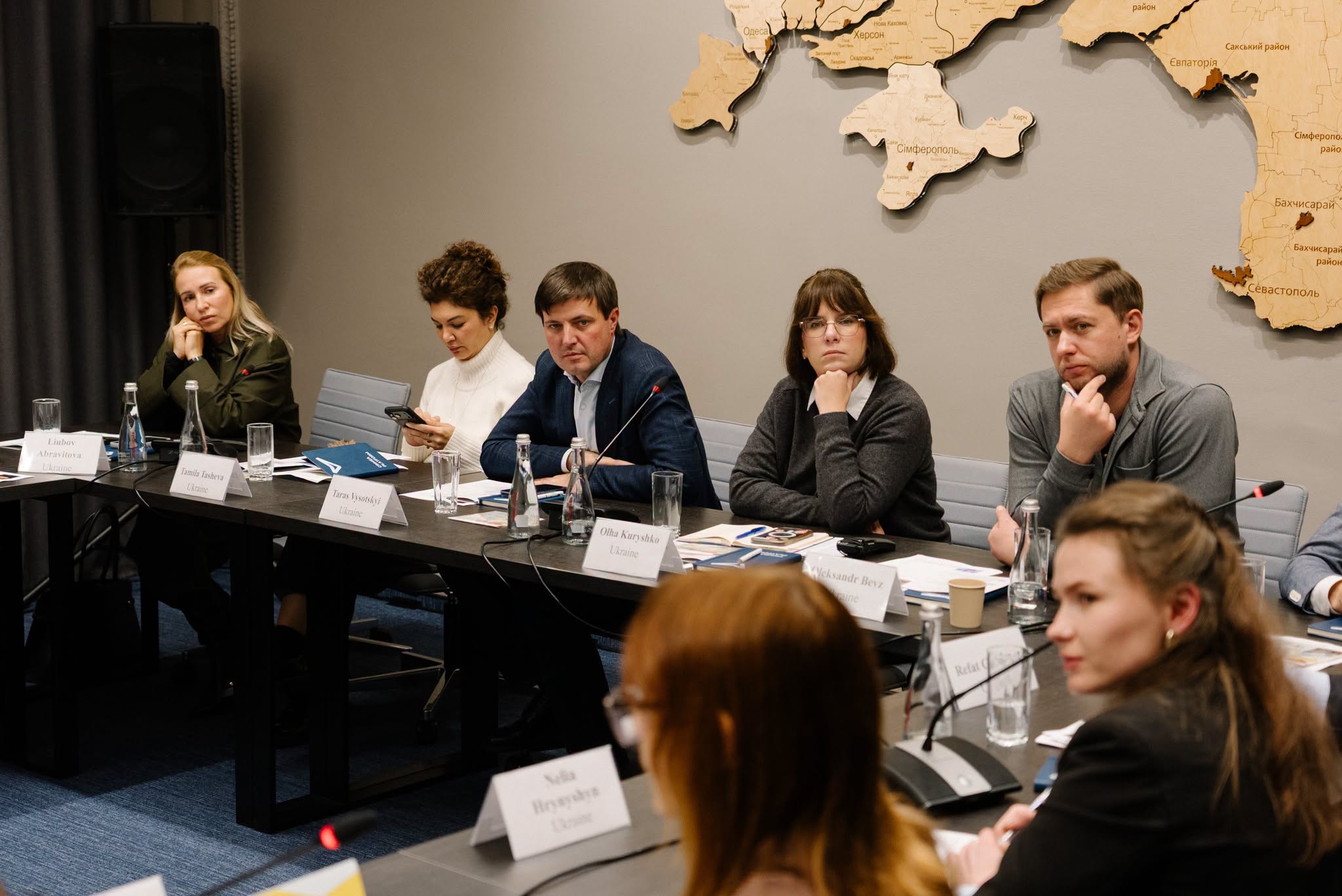
Participants discussed how Ukraine’s experience could help other countries respond to global challenges, particularly in the context of war, weakening international institutions, threats to food and energy security, forced displacement and information warfare.
Visit to the Khanenko Museum
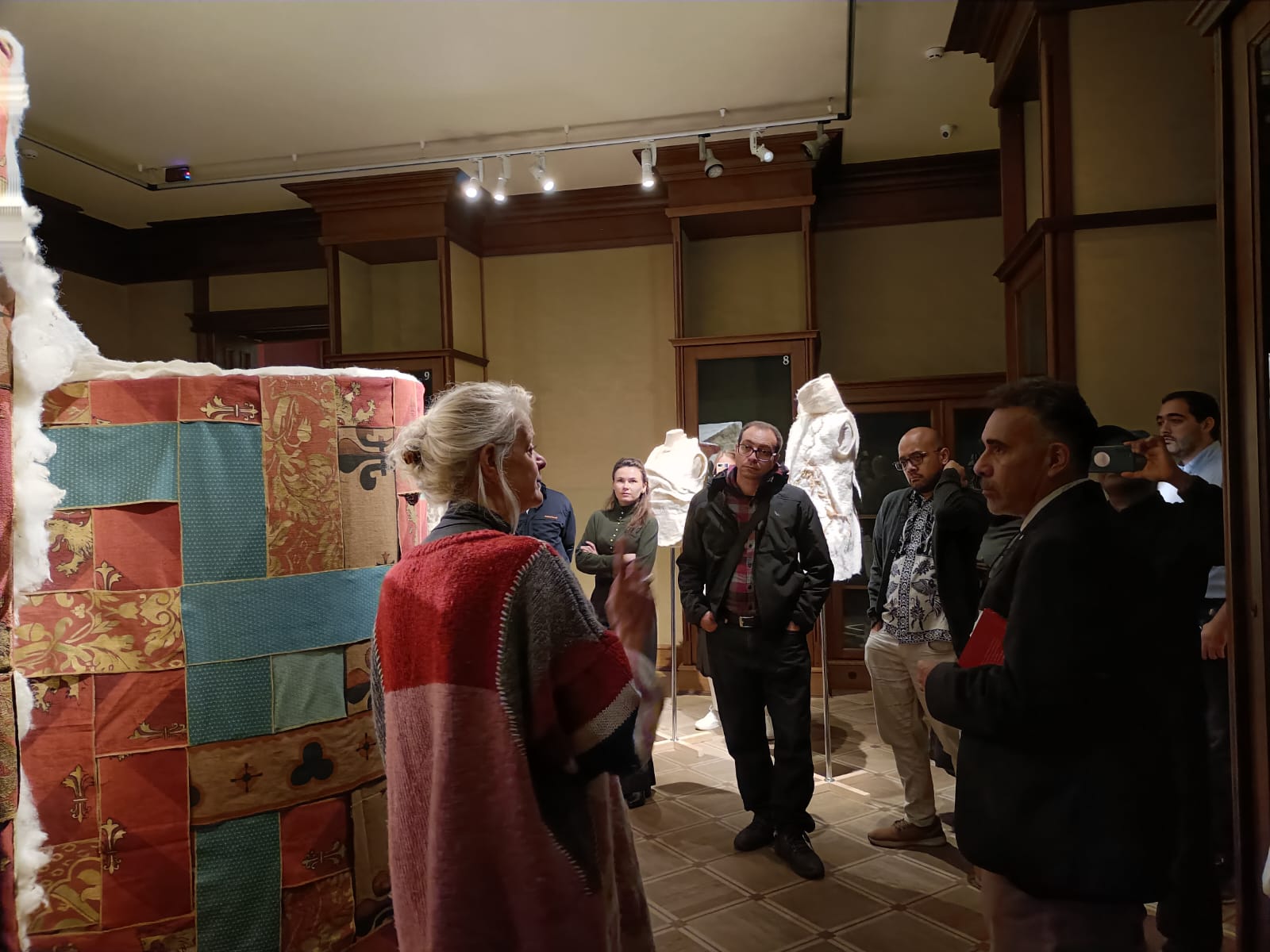
On 20 October, conference participants visited the Bohdan and Varvara Khanenko National Museum of Arts in Kyiv. They also explored the exhibition “FIGHT < CARE < PLAY < CONNECT”, guided by its creator, Dutch artist Marjo van Schaik. The exhibition explores the challenges Ukrainians face amid Russia’s full-scale aggression and how they find the strength to overcome them.
On 15–16 October, a delegation of Crimea Global participants visited Lviv and Kyiv, followed by a visit to the Chornobyl Exclusion Zone on 17 October.
For more information about Crimea Global’s work in previous years and the latest updates, visit the official conference website: https://www.crimea-global.com/
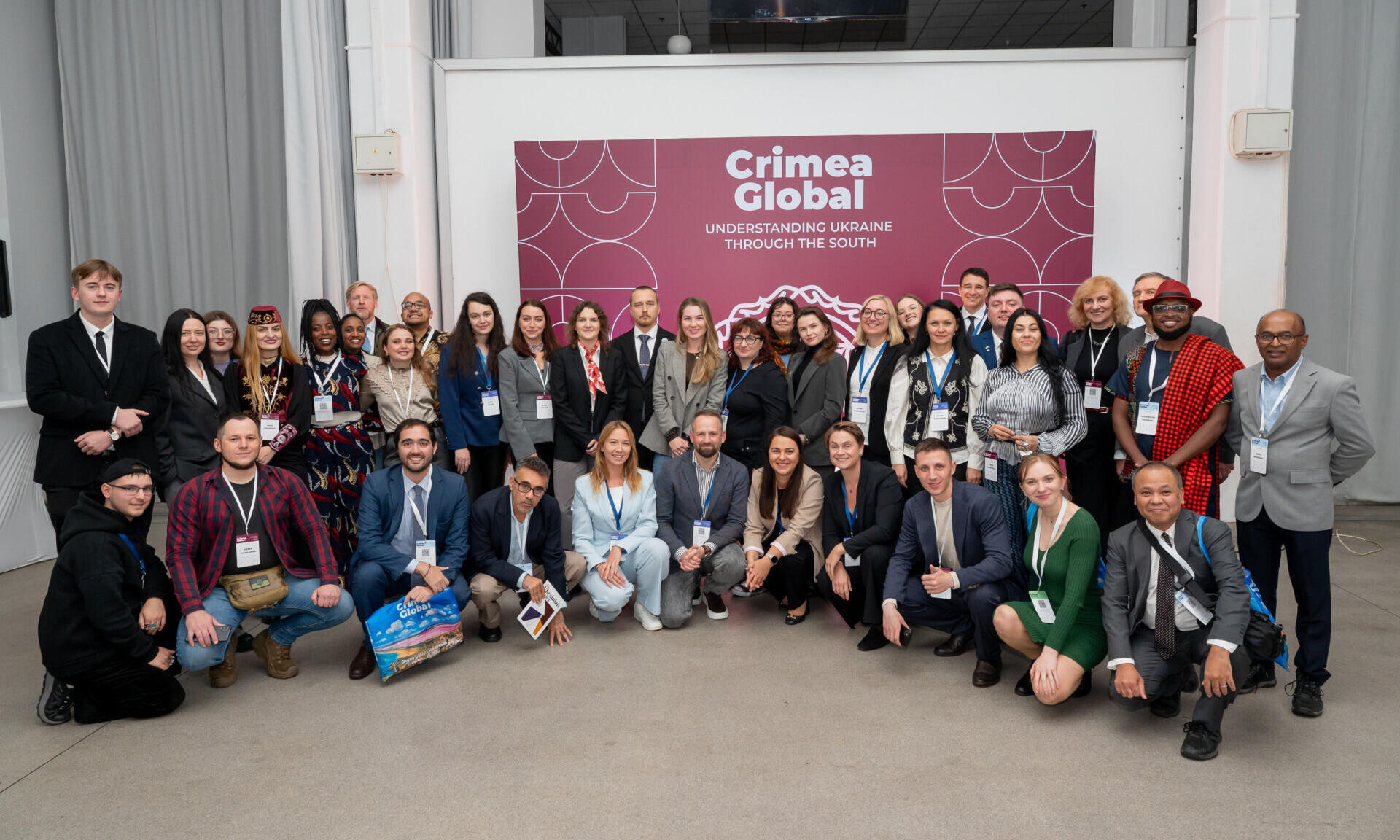
Organisers: Mission of the President of Ukraine in the Autonomous Republic of Crimea / Office of the Crimea Platform, the Human Rights Centre ZMINA, the Media Initiative for Human Rights.
Partners: Ministry of Foreign Affairs of Ukraine, Ukrainian Institute, Transatlantic Dialogue Center.
The event was organised with the support of: International Renaissance Foundation, Askold and Dir Fund, administered by ISAR Ednannia with funding from Norway and Sweden, Hanns Seidel Foundation, Forum 2000 Foundation, and the Czech organisation People in Need as part of the SOS Ukraine initiative.